

Kirjahaku
Etsi kirjoja tekijän nimen, kirjan nimen tai ISBN:n perusteella.
1000 tulosta hakusanalla Anna Katharina Laggner

Ich finde mich selbst - UND HEILUNG GESCHIEHT: von Anna Katharina Lahs
Anna Katharina Lahs
tredition GmbH
2021
nidottu

Ich finde mich selbst - UND HEILUNG GESCHIEHT: von Anna Katharina Lahs
Anna Katharina Lahs
tredition GmbH
2021
sidottu

Anna Katharina Emmerick (auch: Emmerich) wurde als fünftes von neun Kindern, als Tochter der Anna und des Bernhard Emmerick, eines armen Kleinbauern in der Nähe Coesfeld (Westfalen) im Jahr 1774 geboren. Von der Mutter, die kaum lesen konnte, lernte sie früh die Geschichten der Bibel kennen und erfuhr schon als Kind erste Visionen. Als 13-jährige arbeitete sie zunächst als Magd und später als eine in der Umgebung Coesfeld umherziehende Näherin. Auf ihren eigenen Wunsch hin wurde sie 1802 in das Augustinerinnenkloster in Dülmen aufgenommen. Zur gleichen Zeit wurden die biblischen Visionen immer stärker und erste Stigmatisierungen traten auf. Seit dieser Zeit war ihr Leben durch Leiden und Krankheit gekennzeichnet und sie wurde dadurch an ihr Bett gefesselt. Erst um 1813 wurden ihre Leiden öffentlich bekannt, und Clemens Brentano wurde auf sie aufmerksam. Er beschrieb ihre Visionen in den Jahren 1818 bis 1824, leider mit eigenen Interpretationen und Zusätzen. Sein Buch ist deshalb, in Bezug auf heutige Erkenntnisse zu den Visionen der Anna Katharina Emmerick, nur bedingt zu gebrauchen. Am 03.10.2004 wurde Anna Katharina Emmerick durch Papst Johannes Paul II. selig gesprochen. Die päpstliche Kommission bestätigte die Seligsprechung in Bezug auf die Heiligkeit der Person Emmerick, sie gab aber kein Urteil über den Wahrheitsgehalt der Bücher von Clemens Brentano ab. Seit dem Tag der Seligsprechung befindet sich eine Reliquie der Anna Katharina Emmerick beim Heiligen Stuhl.Clemens Brentanos und Anna Katharina Emmericks Begegnungen wurden in dem Film ?Das Gelübde' von Regisseur Dominik Graf verarbeitet. Desweiteren bezieht sich auch Mel Gibson in dem Film ?Die Passion Christi' (2004) auf Visionen der Anna Katharina Emmerick.

Anna Katharina Hahn
OmniScriptum
2026
pokkari
Anna Katharina Schmid
Plaispublishing
2012
nidottu

Anna Katharina von Brandenburg
Turbspublishing
2011
nidottu

Anna Katharina Kränzlein
Populpublishing
2011
nidottu

Anna Katharina Schönkopf
The
2011
nidottu



Today our fatigue feels chronic; our anxieties, amplified. Proliferating technologies command our attention. Many people complain of burnout, and economic instability and the threat of ecological catastrophe fill us with dread. We look to the past, imagining life to have once been simpler and slower, but extreme mental and physical stress is not a modern syndrome. Beginning in classical antiquity, this book demonstrates how exhaustion has always been with us and helps us evaluate more critically the narratives we tell ourselves about the phenomenon. Medical, cultural, literary, and biographical sources have cast exhaustion as a biochemical imbalance, a somatic ailment, a viral disease, and a spiritual failing. It has been linked to loss, the alignment of the planets, a perverse desire for death, and social and economic disruption. Pathologized, demonized, sexualized, and even weaponized, exhaustion unites the mind with the body and society in such a way that we attach larger questions of agency, willpower, and well-being to its symptoms. Mapping these political, ideological, and creative currents across centuries of human development, Exhaustion finds in our struggle to overcome weariness a more significant effort to master ourselves.

Today our fatigue feels chronic; our anxieties, amplified. Proliferating technologies command our attention. Many people complain of burnout, and economic instability and the threat of ecological catastrophe fill us with dread. We look to the past, imagining life to have once been simpler and slower, but extreme mental and physical stress is not a modern syndrome. Beginning in classical antiquity, this book demonstrates how exhaustion has always been with us and helps us evaluate more critically the narratives we tell ourselves about the phenomenon. Medical, cultural, literary, and biographical sources have cast exhaustion as a biochemical imbalance, a somatic ailment, a viral disease, and a spiritual failing. It has been linked to loss, the alignment of the planets, a perverse desire for death, and social and economic disruption. Pathologized, demonized, sexualized, and even weaponized, exhaustion unites the mind with the body and society in such a way that we attach larger questions of agency, willpower, and well-being to its symptoms. Mapping these political, ideological, and creative currents across centuries of human development, Exhaustion finds in our struggle to overcome weariness a more significant effort to master ourselves.

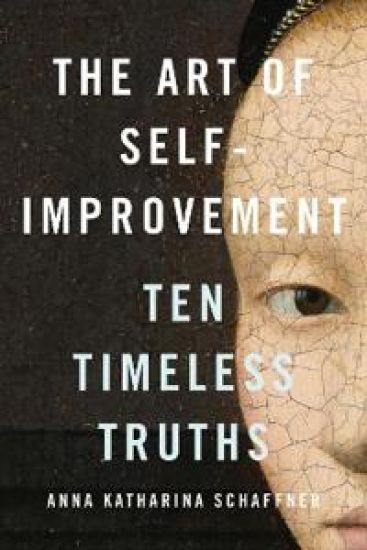
A brilliant distillation of the key ideas behind successful self-improvement practices throughout history, showing us how they remain relevant today “Schaffner finds more in contemporary self-improvement literature to admire than criticize. . . . [A] revelatory book.”—Kathryn Hughes, Times Literary Supplement Self-help today is a multi-billion-dollar global industry, one often seen as a by-product of neoliberalism and capitalism. Far from being a recent phenomenon, however, the practice of self-improvement has a long and rich history, extending all the way back to ancient China. For millennia, philosophers, sages, and theologians have reflected on the good life and devised strategies on how to achieve it. Focusing on ten core ideas of self-improvement that run through the world’s advice literature, Anna Katharina Schaffner reveals the ways they have evolved across cultures and historical eras, and why they continue to resonate with us today. Reminding us that there is much to learn from looking at time-honed models, Schaffner also examines the ways that self-improvement practices provide powerful barometers of the values, anxieties, and aspirations that preoccupy us at particular moments in time and expose basic assumptions about our purpose and nature.


Das Letzte Abendmahl Unsers Herrn Jesu Christi
Anna Katharina Emmerich
Hutson Street Press
2025
sidottu
Das Letzte Abendmahl Unsers Herrn Jesu Christi
Anna Katharina Emmerich
Hutson Street Press
2025
pokkari

AbrÃ(c)gÃ(c) De La Douloureuse Passion De Notre Seigneur JÃ(c)sus-christ D'après Les MÃ(c)ditations D' Anne-catherine Emmerich, ......
Anna Katharina Emmerick
Hutson Street Press
2025
sidottu