"A poetic State of Mind" is an internal journey through self discovery and awareness. It is a collection of both narrative and poetry, a poetic path to peace.
Misfortune, hardship and betrayals are the order of the day for Anna's Life.Growing up and being part of a severely dysfunctional family only added more misery to her life. But how did she overcome them all to eventually carving out a successful path for herself as a young adult, amidst the many challenges she has been through; and keeps enduring. Is left to be desired.Guarantee to take you on a roller coaster of emotions; this story will undoubtedly inspire you to be the best you can be. As you overcome whatever life challenges you maybe going through presently; or will come across later in life.
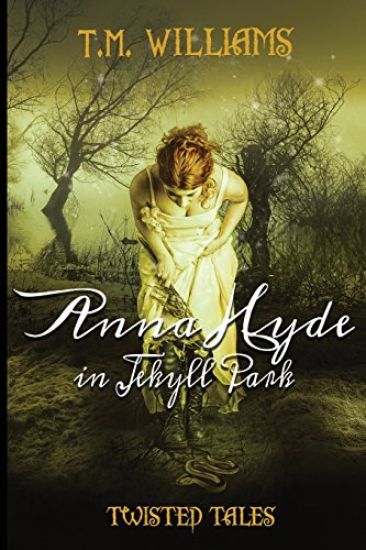
The unrealizing sociopathic heiress, Anna Hyde, finds joy and pleasure in forcing victims to commit crimes that are completely opposed to their moral compass, just to see if she can. Lucy is a timid and meek girl hell-bent on bringing Anna to justice. But will Lucy find Anna before it's too late? Don't expect an open and shut case. The second short story in the Twisted Fairy Tale series is a dark and edgy psychological thriller sure to make you wonder who was the real victim.
Centuries of human use and natural processes have shaped forest habitats and their wildlife populations in New England. Conditions are never static. Forest and nonforest habitats for a shifting mosaic of New England fauna were once continuously provided by wind, fire, blowdowns, forest regrowth, and other disturbances. This is no longer the case: development of historically open habitats, fire control, and the decline of agriculture have transformed the landscape. Wildlife associated with forests and woodlots-fisher and pileated woodpecker, for example-have become common. Species associated with old fields, brushlands, and young forests-field sparrows, eastern towhees, and New England cottontails, among many others-have declined precipitously as their habitats have been developed or have reverted to forest. Today in much of the region, forests are mature and largely unmanaged, and most are privately owned. This volume is the essential compilation of forest management practices now crucial for creating a range of forest habitat conditions to maintain or enhance forest wildlife diversity in New England. Inspired by the ground-breaking earlier works of these four distinguished biologists, foresters, and their colleagues, Forest Wildlife Habitat Management in New England presents silvicultural options for aspen-birch, northern hardwoods, swamp hardwoods, spruce-fir, hemlock, and oak-pine forests, and a wealth of information on both upland and wetland nonforested habitats. Implementing the prescribed practices will create forest conditions that will enhance wildlife diversity by providing habitats for amphibians, reptiles, birds, and mammals. In conjunction with the authors' companion books, New England Wildlife and Landowner's Guide to Wildlife Habitat, this comprehensive new professional guide will encourage and facilitate cooperative active land management by landowners and professionals united in their mission to preserve New England's precious wildlife heritage. This indispensable volume is written for professional foresters, wildlife biologists, and other natural resource managers.
"Makes persuasive case that Josâe Marâia Tornel y Mendâivil, spin-doctor for Antonio Lâopez de Santa Anna, was an important figure in his own right, both as a politician and a writer. Emphasizes the 'great man' school of history, but forces the reader toconclude that the first political generation of independent Mexico boasted a substantial crew of extraordinary personalities"--Handbook of Latin American Studies, v. 58.http://www.loc.gov/hlas/
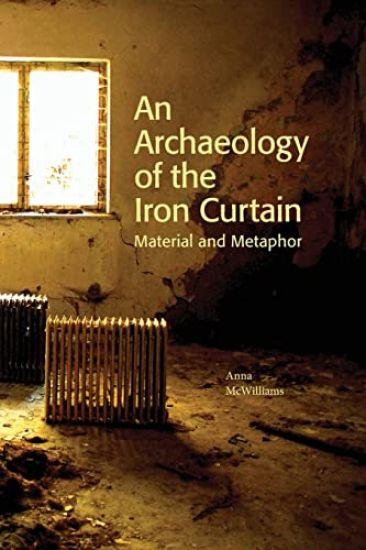
The Iron Curtain was seen as the divider between East and West in Cold War Europe. The term refers to a material reality but it is also a metaphor; a metaphor that has become so powerful that it tends to mark our historical understanding of the period.Through the archaeological study of two areas that can be considered part of the former Iron Curtain, the Czech-Austrian border and the Italian-Slovenian border, this research investigates the relationship between the material and the metaphor of the Iron Curtain. As a study of the archaeology of the contemporary past this thesis brings forward methodological issues when dealing with many different sources as well as general reflections on our historical understanding.
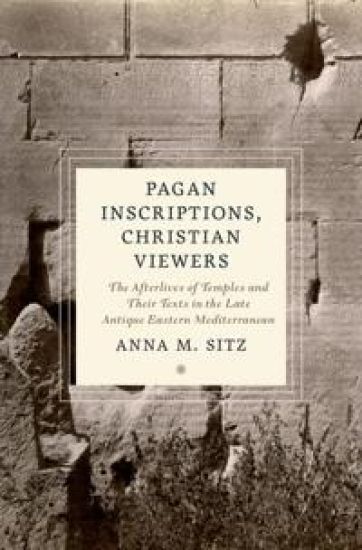
What did people in the early Christian period think about the pagan inscriptions filling their late antique cities? Like public advertisements lining our streets today, these inscriptions were everywhere and communicated specific messages to literate late Roman viewers, often providing a very different view of the classical past than that being preached from early Christian church pulpits. In Pagan Inscriptions, Christian Viewers, Anna M. Sitz provides a fresh perspective on the Christianization of the Roman empire from the fourth to the seventh century CE by analyzing a previously overlooked body of evidence: the many ancient, pagan inscriptions, written in Greek or other languages, which were reused, preserved, or even partially erased in this period. This volume brings together for the first time the literary and archaeological evidence for attitudes towards these ancient inscriptions in the eastern Mediterranean, from Greece to Asia Minor, Syria to Egypt. Pagan Inscriptions, Christian Viewers illustrates how early Christians, late pagans, and Jews in the eastern Mediterranean interpreted older inscriptions in Greek and other languages through their own worldviews in order to build the late antique present.