Kirjojen hintavertailu. Mukana 11 342 296 kirjaa ja 12 kauppaa.

Kirjahaku

Etsi kirjoja tekijän nimen, kirjan nimen tai ISBN:n perusteella.

1000 tulosta hakusanalla Anna M. Grzymala-Busse

Redeeming the Communist Past

Redeeming the Communist Past

Anna M. Grzymala-Busse

Cambridge University Press
2002
pokkari
This major study examines one of the most surprising developments in East Central European politics after the democratic transitions of 1989: the completely unexpected regeneration of the former communist parties. After the collapse of the communist regimes in 1989, these ruling communist parties seemed consigned to oblivion. However, confounding scholarly and popular expectations, all of these parties survived. Some have even returned to power. This in-depth, comparative study systematically analyzes the trajectories of four cases: the Czech Republic, Slovakia, Poland, and Hungary (with additional examination of other communist party successors). Relying on extensive, and unprecedented, primary research, this analysis employs a consistent analytical framework that combines the peculiarities of the post-socialist cases with broad theoretical concerns of institutional analysis, democratic transitions and consolidation, and party politics.
Redeeming the Communist Past

Redeeming the Communist Past

Anna M. Grzymala-Busse

Cambridge University Press
2002
sidottu
This major study examines one of the most surprising developments in East Central European politics after the democratic transitions of 1989: the completely unexpected regeneration of the former communist parties. After the collapse of the communist regimes in 1989, these ruling communist parties seemed consigned to oblivion. However, confounding scholarly and popular expectations, all of these parties survived. Some have even returned to power. This in-depth, comparative study systematically analyzes the trajectories of four cases: the Czech Republic, Slovakia, Poland, and Hungary (with additional examination of other communist party successors). Relying on extensive, and unprecedented, primary research, this analysis employs a consistent analytical framework that combines the peculiarities of the post-socialist cases with broad theoretical concerns of institutional analysis, democratic transitions and consolidation, and party politics.
Nations under God

Nations under God

Anna M. Grzymala-Busse

Princeton University Press
2015
sidottu
In some religious countries, churches have drafted constitutions, restricted abortion, and controlled education. In others, church influence on public policy is far weaker. Why? Nations under God argues that where religious and national identities have historically fused, churches gain enormous moral authority--and covert institutional access. These powerful churches then shape policy in backrooms and secret meetings instead of through open democratic channels such as political parties or the ballot box. Through an in-depth historical analysis of six Christian democracies that share similar religious profiles yet differ in their policy outcomes--Ireland and Italy, Poland and Croatia, and the United States and Canada--Anna Grzyma?a-Busse examines how churches influenced education, abortion, divorce, stem cell research, and same-sex marriage. She argues that churches gain the greatest political advantage when they appear to be above politics. Because institutional access is covert, they retain their moral authority and their reputation as defenders of the national interest and the common good. Nations under God shows how powerful church officials in Ireland, Canada, and Poland have directly written legislation, vetoed policies, and vetted high-ranking officials. It demonstrates that religiosity itself is not enough for churches to influence politics--churches in Italy and Croatia, for example, are not as influential as we might think--and that churches allied to political parties, such as in the United States, have less influence than their notoriety suggests.
Nations under God

Nations under God

Anna M. Grzymala-Busse

Princeton University Press
2015
pokkari
In some religious countries, churches have drafted constitutions, restricted abortion, and controlled education. In others, church influence on public policy is far weaker. Why? Nations under God argues that where religious and national identities have historically fused, churches gain enormous moral authority--and covert institutional access. These powerful churches then shape policy in backrooms and secret meetings instead of through open democratic channels such as political parties or the ballot box. Through an in-depth historical analysis of six Christian democracies that share similar religious profiles yet differ in their policy outcomes--Ireland and Italy, Poland and Croatia, and the United States and Canada--Anna Grzyma?a-Busse examines how churches influenced education, abortion, divorce, stem cell research, and same-sex marriage. She argues that churches gain the greatest political advantage when they appear to be above politics. Because institutional access is covert, they retain their moral authority and their reputation as defenders of the national interest and the common good. Nations under God shows how powerful church officials in Ireland, Canada, and Poland have directly written legislation, vetoed policies, and vetted high-ranking officials. It demonstrates that religiosity itself is not enough for churches to influence politics--churches in Italy and Croatia, for example, are not as influential as we might think--and that churches allied to political parties, such as in the United States, have less influence than their notoriety suggests.
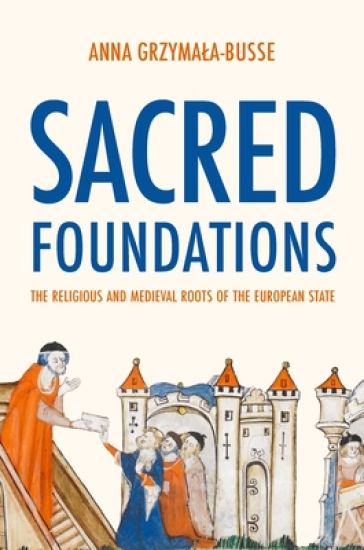
Sacred Foundations

Sacred Foundations

Anna M. Grzymala-Busse

PRINCETON UNIVERSITY PRESS
2023
sidottu
How the medieval church drove state formation in EuropeSacred Foundations argues that the medieval church was a fundamental force in European state formation. Existing accounts focus on early modern warfare or contracts between the rulers and the ruled. In contrast, this major study shows that the Catholic Church both competed with medieval monarchs and provided critical templates for governing institutions, the rule of law, and parliaments.The Catholic Church was the most powerful, wealthiest, and best-organized political actor in the Middle Ages. Starting in the eleventh century, the papacy fought for the autonomy of the church, challenging European rulers and then claiming authority over people, territory, and monarchs alike. Anna Grzymala-Busse demonstrates how the church shaped distinct aspects of the European state. Conflicts with the papacy fragmented territorial authority in Europe for centuries to come, propagating urban autonomy and ideas of sovereignty. Thanks to its organizational advantages and human capital, the church also developed the institutional precedents adopted by rulers across Europe—from chanceries and taxation to courts and councils. Church innovations made possible both the rule of law and parliamentary representation.Bringing to light a wealth of historical evidence about papal conflict, excommunications, and ecclesiastical institutions, Sacred Foundations reveals how the challenge and example of powerful religious authorities gave rise to secular state institutions and galvanized state capacity.
Sacred Foundations

Sacred Foundations

Anna M. Grzymala-Busse

PRINCETON UNIVERSITY PRESS
2023
pokkari
How the medieval church drove state formation in EuropeSacred Foundations argues that the medieval church was a fundamental force in European state formation. Existing accounts focus on early modern warfare or contracts between the rulers and the ruled. In contrast, this major study shows that the Catholic Church both competed with medieval monarchs and provided critical templates for governing institutions, the rule of law, and parliaments.The Catholic Church was the most powerful, wealthiest, and best-organized political actor in the Middle Ages. Starting in the eleventh century, the papacy fought for the autonomy of the church, challenging European rulers and then claiming authority over people, territory, and monarchs alike. Anna Grzymala-Busse demonstrates how the church shaped distinct aspects of the European state. Conflicts with the papacy fragmented territorial authority in Europe for centuries to come, propagating urban autonomy and ideas of sovereignty. Thanks to its organizational advantages and human capital, the church also developed the institutional precedents adopted by rulers across Europe—from chanceries and taxation to courts and councils. Church innovations made possible both the rule of law and parliamentary representation.Bringing to light a wealth of historical evidence about papal conflict, excommunications, and ecclesiastical institutions, Sacred Foundations reveals how the challenge and example of powerful religious authorities gave rise to secular state institutions and galvanized state capacity.
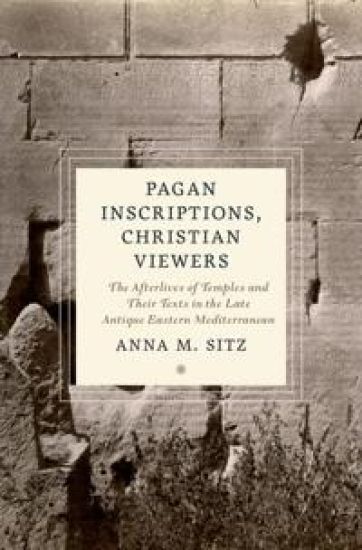
Pagan Inscriptions, Christian Viewers

Pagan Inscriptions, Christian Viewers

Anna M. Sitz

OXFORD UNIVERSITY PRESS INC
2023
sidottu
What did people in the early Christian period think about the pagan inscriptions filling their late antique cities? Like public advertisements lining our streets today, these inscriptions were everywhere and communicated specific messages to literate late Roman viewers, often providing a very different view of the classical past than that being preached from early Christian church pulpits. In Pagan Inscriptions, Christian Viewers, Anna M. Sitz provides a fresh perspective on the Christianization of the Roman empire from the fourth to the seventh century CE by analyzing a previously overlooked body of evidence: the many ancient, pagan inscriptions, written in Greek or other languages, which were reused, preserved, or even partially erased in this period. This volume brings together for the first time the literary and archaeological evidence for attitudes towards these ancient inscriptions in the eastern Mediterranean, from Greece to Asia Minor, Syria to Egypt. Pagan Inscriptions, Christian Viewers illustrates how early Christians, late pagans, and Jews in the eastern Mediterranean interpreted older inscriptions in Greek and other languages through their own worldviews in order to build the late antique present.
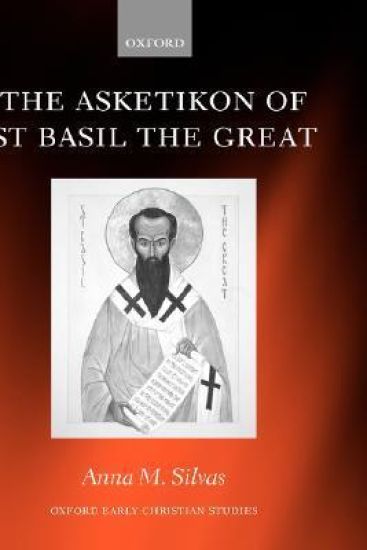
The Asketikon of St Basil the Great

The Asketikon of St Basil the Great

Anna M. Silvas

Oxford University Press
2005
sidottu
The Asketikon of St Basil the Great comprises a new English translation and studies which re-examine the emergence of monasticism in Asia Minor. The Regula Basilii, translated by Rufinus from Basil's Small Asketikon, is closely compared with the Greek text of the longer edition, as a means to tracing the development of ideas. Silvas concludes that the antecedents of the monastic community of the Great Asketikon are best sought not in some kind of sub-orthodox modus vivendi of male and female ascetics living together and increasingly curbed by an emerging neo-Nicene orthodoxy less favourable to women ('homoiousian asceticism'), but in the local domestic ascetic movement in Anatolia as typified in the developments at Annisa under the leadership of Makrina.
Muslim Environmentalisms

Muslim Environmentalisms

Anna M. Gade

Columbia University Press
2019
sidottu
How might understandings of environmentalism and the environmental humanities shift by incorporating Islamic perspectives? In this book, Anna M. Gade explores the religious and cultural foundations of Islamic environmentalisms. She blends textual and ethnographic study to offer a comprehensive and interdisciplinary account of the legal, ethical, social, and empirical principles underlying Muslim commitments to the earth.Muslim Environmentalisms shows how diverse Muslim communities and schools of thought have addressed ecological questions for the sake of this world and the world to come. Gade draws on a rich spectrum of materials-scripture, jurisprudence, science, art, and social and political engagement-as well as fieldwork in Indonesia and Southeast Asia. The book brings together case studies in disaster management, educational programs, international development, conservation projects, religious ritual and performance, and Islamic law to rethink key theories. Gade shows that the Islamic tradition leads us to see the environment as an ethical idea, moving beyond the established frameworks of both nature and crisis. Muslim Environmentalisms models novel approaches to the study of religion and environment from a humanistic perspective, reinterpreting issues at the intersection of numerous academic disciplines to propose a postcolonial and global understanding of environment in terms of consequential relations.
Muslim Environmentalisms

Muslim Environmentalisms

Anna M. Gade

Columbia University Press
2019
pokkari
How might understandings of environmentalism and the environmental humanities shift by incorporating Islamic perspectives? In this book, Anna M. Gade explores the religious and cultural foundations of Islamic environmentalisms. She blends textual and ethnographic study to offer a comprehensive and interdisciplinary account of the legal, ethical, social, and empirical principles underlying Muslim commitments to the earth.Muslim Environmentalisms shows how diverse Muslim communities and schools of thought have addressed ecological questions for the sake of this world and the world to come. Gade draws on a rich spectrum of materials-scripture, jurisprudence, science, art, and social and political engagement-as well as fieldwork in Indonesia and Southeast Asia. The book brings together case studies in disaster management, educational programs, international development, conservation projects, religious ritual and performance, and Islamic law to rethink key theories. Gade shows that the Islamic tradition leads us to see the environment as an ethical idea, moving beyond the established frameworks of both nature and crisis. Muslim Environmentalisms models novel approaches to the study of religion and environment from a humanistic perspective, reinterpreting issues at the intersection of numerous academic disciplines to propose a postcolonial and global understanding of environment in terms of consequential relations.
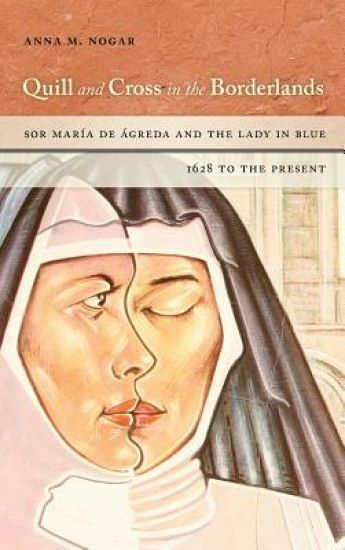
Quill and Cross in the Borderlands

Quill and Cross in the Borderlands

Anna M. Nogar

University of Notre Dame Press
2018
sidottu
Quill and Cross in the Borderlands examines nearly four hundred years of history, folklore, literature, and art surrounding the legendary Lady in Blue and her historical counterpart, Sor María de Jesús de Ágreda. This legendary figure, identified as seventeenth-century Spanish nun and writer Sor María de Jesús de Ágreda, miraculously appeared to tribes in colonial-era New Mexico and taught them the rudiments of the Catholic faith. Sor María, an author of mystical Marian texts, became renowned not only for her alleged spiritual travel from her cloister in Spain to New Mexico but also for her writing, studied and implemented by Franciscans and others around the world. Working from original historical accounts, archival research, and a wealth of literature on the legend and the historical figure alike, Anna M. Nogar meticulously examines how and why the person and the legend became intertwined in Catholic consciousness and social praxis. Nogar addresses the influence of Sor María's spiritual texts on many spheres of New Spanish and Spanish society over several centuries. Eventually, the historical Sor María and her writings virtually disappeared from view, and the Lady in Blue became a prominent folk figure in the present-day U.S. Southwest and U.S.-Mexico borderlands, appearing in folk stories, artwork, literature, theater, and public ritual that survives today. Quill and Cross in the Borderlands documents the material legacy of a legend that has survived and thrived for hundreds of years, and at the same time rediscovers the extraordinary impact of a hidden writer.