

Kirjahaku
Etsi kirjoja tekijän nimen, kirjan nimen tai ISBN:n perusteella.
1000 tulosta hakusanalla Anna M. Morrison Reed




The Earlier Poems Of Anna M. Morrison (1880)
Anna M. Morrison
KESSINGER PUBLISHING, LLC
2010
sidottu

Descendants of Lorenz and Anna M. Hoff/Hooff
Ronald Hooff; Barbara Hooff
Heritage Books
2016
pokkari


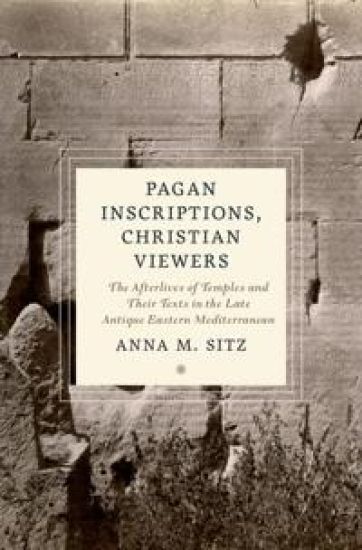
What did people in the early Christian period think about the pagan inscriptions filling their late antique cities? Like public advertisements lining our streets today, these inscriptions were everywhere and communicated specific messages to literate late Roman viewers, often providing a very different view of the classical past than that being preached from early Christian church pulpits. In Pagan Inscriptions, Christian Viewers, Anna M. Sitz provides a fresh perspective on the Christianization of the Roman empire from the fourth to the seventh century CE by analyzing a previously overlooked body of evidence: the many ancient, pagan inscriptions, written in Greek or other languages, which were reused, preserved, or even partially erased in this period. This volume brings together for the first time the literary and archaeological evidence for attitudes towards these ancient inscriptions in the eastern Mediterranean, from Greece to Asia Minor, Syria to Egypt. Pagan Inscriptions, Christian Viewers illustrates how early Christians, late pagans, and Jews in the eastern Mediterranean interpreted older inscriptions in Greek and other languages through their own worldviews in order to build the late antique present.
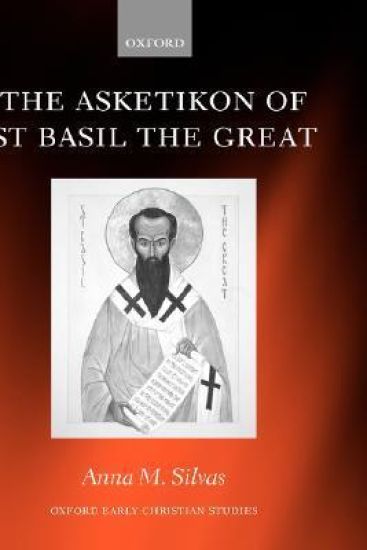
The Asketikon of St Basil the Great comprises a new English translation and studies which re-examine the emergence of monasticism in Asia Minor. The Regula Basilii, translated by Rufinus from Basil's Small Asketikon, is closely compared with the Greek text of the longer edition, as a means to tracing the development of ideas. Silvas concludes that the antecedents of the monastic community of the Great Asketikon are best sought not in some kind of sub-orthodox modus vivendi of male and female ascetics living together and increasingly curbed by an emerging neo-Nicene orthodoxy less favourable to women ('homoiousian asceticism'), but in the local domestic ascetic movement in Anatolia as typified in the developments at Annisa under the leadership of Makrina.
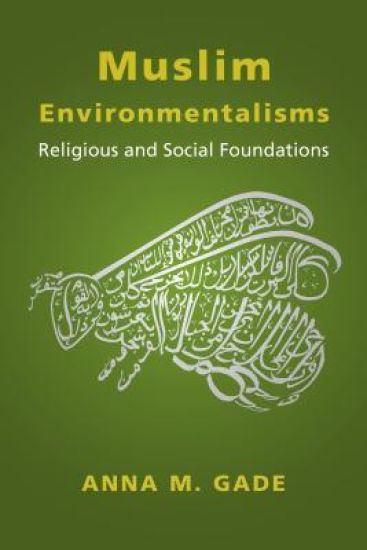
How might understandings of environmentalism and the environmental humanities shift by incorporating Islamic perspectives? In this book, Anna M. Gade explores the religious and cultural foundations of Islamic environmentalisms. She blends textual and ethnographic study to offer a comprehensive and interdisciplinary account of the legal, ethical, social, and empirical principles underlying Muslim commitments to the earth.Muslim Environmentalisms shows how diverse Muslim communities and schools of thought have addressed ecological questions for the sake of this world and the world to come. Gade draws on a rich spectrum of materials-scripture, jurisprudence, science, art, and social and political engagement-as well as fieldwork in Indonesia and Southeast Asia. The book brings together case studies in disaster management, educational programs, international development, conservation projects, religious ritual and performance, and Islamic law to rethink key theories. Gade shows that the Islamic tradition leads us to see the environment as an ethical idea, moving beyond the established frameworks of both nature and crisis. Muslim Environmentalisms models novel approaches to the study of religion and environment from a humanistic perspective, reinterpreting issues at the intersection of numerous academic disciplines to propose a postcolonial and global understanding of environment in terms of consequential relations.
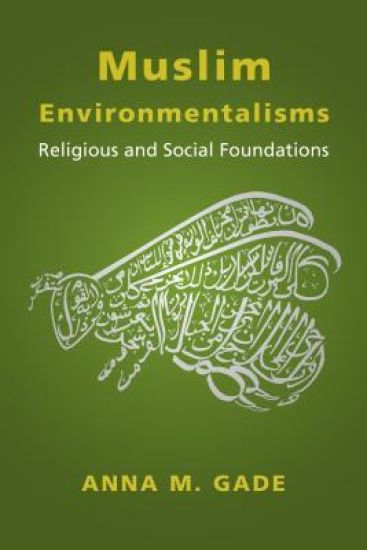
How might understandings of environmentalism and the environmental humanities shift by incorporating Islamic perspectives? In this book, Anna M. Gade explores the religious and cultural foundations of Islamic environmentalisms. She blends textual and ethnographic study to offer a comprehensive and interdisciplinary account of the legal, ethical, social, and empirical principles underlying Muslim commitments to the earth.Muslim Environmentalisms shows how diverse Muslim communities and schools of thought have addressed ecological questions for the sake of this world and the world to come. Gade draws on a rich spectrum of materials-scripture, jurisprudence, science, art, and social and political engagement-as well as fieldwork in Indonesia and Southeast Asia. The book brings together case studies in disaster management, educational programs, international development, conservation projects, religious ritual and performance, and Islamic law to rethink key theories. Gade shows that the Islamic tradition leads us to see the environment as an ethical idea, moving beyond the established frameworks of both nature and crisis. Muslim Environmentalisms models novel approaches to the study of religion and environment from a humanistic perspective, reinterpreting issues at the intersection of numerous academic disciplines to propose a postcolonial and global understanding of environment in terms of consequential relations.
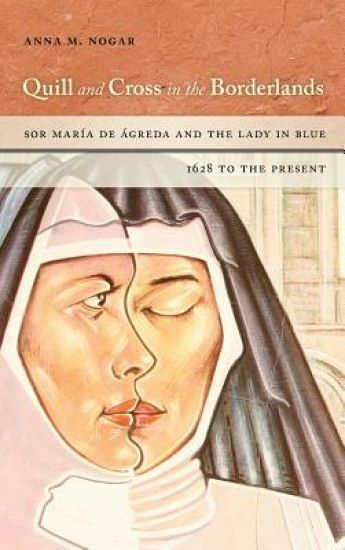
Quill and Cross in the Borderlands examines nearly four hundred years of history, folklore, literature, and art surrounding the legendary Lady in Blue and her historical counterpart, Sor María de Jesús de Ágreda. This legendary figure, identified as seventeenth-century Spanish nun and writer Sor María de Jesús de Ágreda, miraculously appeared to tribes in colonial-era New Mexico and taught them the rudiments of the Catholic faith. Sor María, an author of mystical Marian texts, became renowned not only for her alleged spiritual travel from her cloister in Spain to New Mexico but also for her writing, studied and implemented by Franciscans and others around the world. Working from original historical accounts, archival research, and a wealth of literature on the legend and the historical figure alike, Anna M. Nogar meticulously examines how and why the person and the legend became intertwined in Catholic consciousness and social praxis. Nogar addresses the influence of Sor María's spiritual texts on many spheres of New Spanish and Spanish society over several centuries. Eventually, the historical Sor María and her writings virtually disappeared from view, and the Lady in Blue became a prominent folk figure in the present-day U.S. Southwest and U.S.-Mexico borderlands, appearing in folk stories, artwork, literature, theater, and public ritual that survives today. Quill and Cross in the Borderlands documents the material legacy of a legend that has survived and thrived for hundreds of years, and at the same time rediscovers the extraordinary impact of a hidden writer.
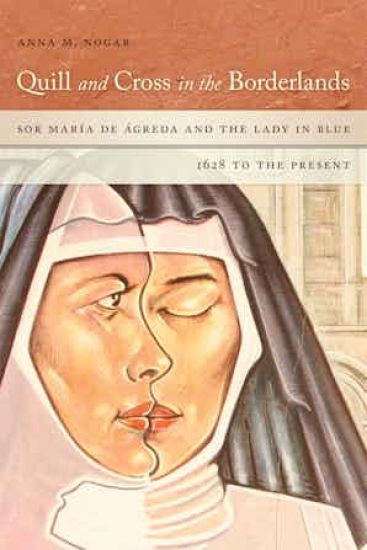
Quill and Cross in the Borderlands examines nearly four hundred years of history, folklore, literature, and art surrounding the legendary Lady in Blue and her historical counterpart, Sor María de Jesús de Ágreda. This legendary figure, identified as seventeenth-century Spanish nun and writer Sor María de Jesús de Ágreda, miraculously appeared to tribes in colonial-era New Mexico and taught them the rudiments of the Catholic faith. Sor María, an author of mystical Marian texts, became renowned not only for her alleged spiritual travel from her cloister in Spain to New Mexico but also for her writing, studied and implemented by Franciscans and others around the world. Working from original historical accounts, archival research, and a wealth of literature on the legend and the historical figure alike, Anna M. Nogar meticulously examines how and why the person and the legend became intertwined in Catholic consciousness and social praxis. Nogar addresses the influence of Sor María's spiritual texts on many spheres of New Spanish and Spanish society over several centuries. Eventually, the historical Sor María and her writings virtually disappeared from view, and the Lady in Blue became a prominent folk figure in the present-day U.S. Southwest and U.S.-Mexico borderlands, appearing in folk stories, artwork, literature, theater, and public ritual that survives today. Quill and Cross in the Borderlands documents the material legacy of a legend that has survived and thrived for hundreds of years, and at the same time rediscovers the extraordinary impact of a hidden writer.
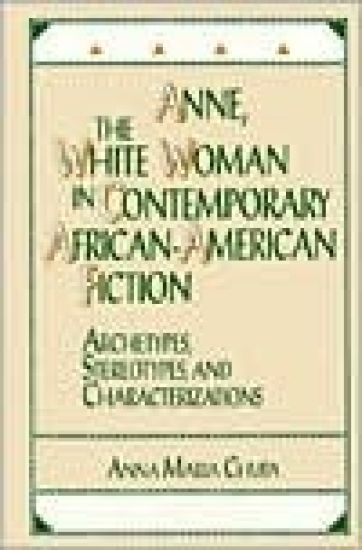
Anne, the White Woman in Contemporary African-American Fiction
Anna M. Chupa
Praeger Publishers Inc
1990
sidottu
Although many books in the last decade have dealt with the unique mythic forms of African-American literature, and others have applied Jungian theory to literary criticism in general, none have attempted to combine the two strands. This volume does just that, applying Jungian archetypal theory and certain West African religious principles to the analysis of fictional characterizations of white women. Using Calvin Hernton's Sex and Racism in America in the development of women's stereotypes, Anna Maria Chupa adds a mythic interpretation to these characters, while at the same time recognizing that the social context that informs the stereotypes creates the imagery through which archetypes are manifest. In this way, she is able to analyze both the particular stereotypes of white women and their mythical roles.The book constructs its analysis around the discussions of the different stereotypes. The destructive bitch, the confidant-sage, the benevolent witch, and other mythic and social types are treated in a context that is neither purely African nor European, but a combination of both. Works addressed include Baraka's The Dutchman, Ellison's Inivisible Man, Himes's If He Hollers Let Him Go, Wright's Native Son, and Walker's The Color Purple. The work concludes with a bibliography and a comprehensive index. This book will be useful for courses in African-American fiction, women in literature, and myth and literature, as well as an important addition to college and university libraries.
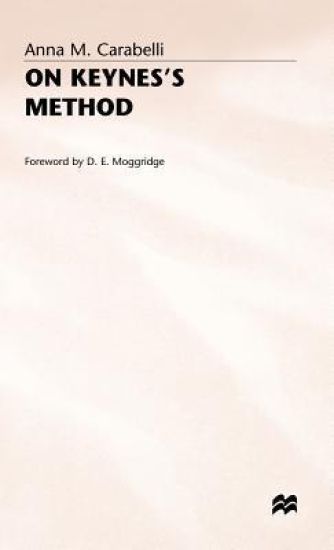
Economists have traditionally regarded "Treatise On Probability" by Keynes as an anomaly amongst his published writings. This volume attempts to fix "Probability" firmly in its early 20th century philosophical setting and to link its concerns to a lifetimes' work as an economist.

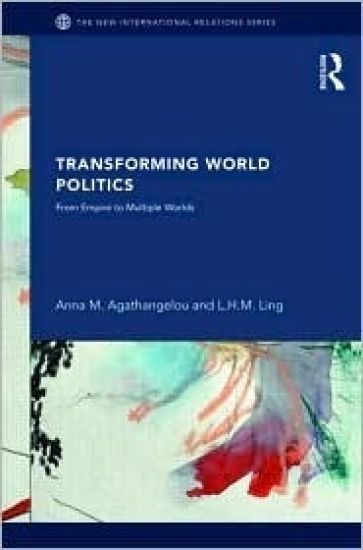
This book provides a critical understanding of contemporary world politics by arguing that the neoliberal approach to international relations seduces many of us into investing our lives in projects of power and alienation. These projects offer few options for emancipation; consequently, many feel they have little choice but to retaliate against violence with more violence. The authors of this pioneering work articulate worldism as an alternative approach to world politics. It intertwines non-Western and Western traditions by drawing on Marxist, postcolonial, feminist and critical security approaches with Greek and Chinese theories of politics, broadly defined. The authors contend that contemporary world politics cannot be understood outside the legacies of these multiple worlds, including axes of power configured by gender, race, class, and nationality, which are themselves linked to earlier histories of colonizations and their contemporary formations. With fiction and poetry as exploratory methods, the authors build on their ‘multiple worlds’ approach to consider different sites of world politics, arguing that a truly emancipatory understanding of world politics requires more than just a shift in ways of thinking; above all, it requires a shift in ways of being.Transforming World Politics will be of vital interest to students and scholars of International Relations, Political Science, Postcolonial Studies, Social Theory, Women's Studies, Asian Studies, European Union and Mediterranean Studies, and Security Studies.
This book provides a critical understanding of contemporary world politics by arguing that the neoliberal approach to international relations seduces many of us into investing our lives in projects of power and alienation. These projects offer few options for emancipation; consequently, many feel they have little choice but to retaliate against violence with more violence. The authors of this pioneering work articulate worldism as an alternative approach to world politics. It intertwines non-Western and Western traditions by drawing on Marxist, postcolonial, feminist and critical security approaches with Greek and Chinese theories of politics, broadly defined. The authors contend that contemporary world politics cannot be understood outside the legacies of these multiple worlds, including axes of power configured by gender, race, class, and nationality, which are themselves linked to earlier histories of colonizations and their contemporary formations. With fiction and poetry as exploratory methods, the authors build on their ‘multiple worlds’ approach to consider different sites of world politics, arguing that a truly emancipatory understanding of world politics requires more than just a shift in ways of thinking; above all, it requires a shift in ways of being.Transforming World Politics will be of vital interest to students and scholars of International Relations, Political Science, Postcolonial Studies, Social Theory, Women's Studies, Asian Studies, European Union and Mediterranean Studies, and Security Studies.