
Kirjahaku
Etsi kirjoja tekijän nimen, kirjan nimen tai ISBN:n perusteella.
1000 tulosta hakusanalla Anne E Whittingham

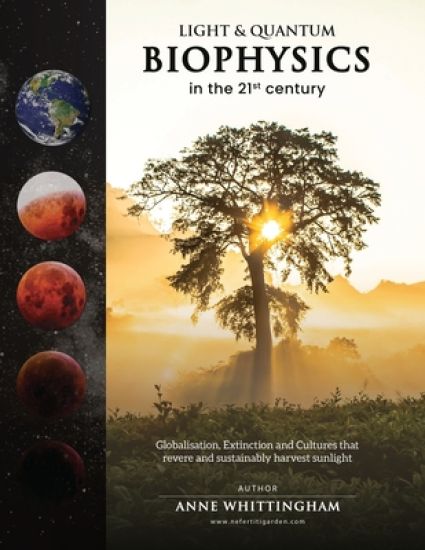
All around the planet in the 21st century, there are calls for changes to how we manage natural resources, as the ravages of deprivation, resource depletion and unemployment bite harshly on many fronts. We need to rejuvenate resources, not continue to deplete them. Fields such as human settlements, medicine, ecology, economics, natural resource management and climate change have lagged some one hundred years behind in implementing the principles of exciting scientific discoveries about the biophysical principles that underpin the growth of all living creatures.It is in this context that the planetary Light Garden model that is presented in this book brings new hope. It describes the scientific, economic and cultural basis for a new decision making process that will support and rejuvenate the living systems and climate of our planet. It is not a human centered approach, nor one that is based on abstract concepts such as economic growth. It makes living systems the focus and priority of our human activities, rather than limiting the criteria for making our major resource sharing decisions to abstract concepts such as economic growth. We can't expect abstract concepts such as economic growth to help fix problems with the growth of living organisms and the functioning of living, natural entities such as ecosystems or climate. No wonder we've been failing We need to make decisions that align with, and draw upon the Laws of Nature. One of the beauties of this approach is that it is peaceful and does not require warfare or competitive consumption of resources. As Anne Whittingham describes, the Light Garden principles provide some common ground between the individual citizen and the elite entities of the advancing global biotech, financial and digital technologies.This is because we are all threatened by disastrous climate change and the loss of healthy livelihoods, as the protective envelope of biodiversity in which we have evolved continues to disintegrate. The Light Garden decision making model provides a way for humanity to make the changes that are needed now. As illustrated with examples from cultures on every continent, these changes are feasible. They can be made at a scale and pace that gives us an opportunity to regenerate the living systems, climate, societies and lives of the millions of young people who call this planet home.

Anne vive os encantos e desafios de uma vida a dois na id lica Four Winds. Anne chegou aos 25 anos e nos mostra uma fase repleta de novidades. Ela se envolver com um grupo de pessoas interessantes, apoiar e ser ajudada por elas e continuar amando a vida como da sua natureza. Em Four Winds, uma oportunidade profissional aguarda Gilbert. Anne, agora em sua nova vida, desfruta da casa dos seus sonhos, rodeada de belezas naturais. Neste fant stico cen rio, conviver com amigos, como o capit o Jim e Leslie Moore, e tamb m com vizinhos cujas hist rias e ensinamentos ajudar o o casal daqui para a frente. Nessa rec m-chegada fase, tamb m surgir o novos desafios, momentos dif ceis, mas a alegria da menina de Green Gables ressurgir para superar qualquer dificuldade.

French artists Anne and Patrick Poirier (born in 1941 and 1942 respectively) grew up during World War II and saw the destruction wrought by bombing, invasion, and collaboration. Though they have worked in a variety of media--photography, drawing, installation and monumental public sculpture--their oeuvre has always dealt with themes surrounding memory. This collection of 30 years of work is full of archeology, ruins, memento mori (including skulls holding miniature models of ancient monuments), disintegration, loss and remembering. As they articulate it, "we believe that ignorance or the destruction of cultural memory brings in its wake every sort of oblivion, falsehood and excess...and that we must, with all the modest means at our disposal, oppose this generalized amnesia and destruction." The Poiriers have been the subjects of solo exhibitions at The Museum of Modern Art, New York and the Centre Georges Pompidou, Paris, among others.




L'Administration Municipale de Bischwiller a Partir de L'Anne E 1840.
Samuel Guillaume Luroth
British Library, Historical Print Editions
2011
pokkari

La Le Gion Franc Aise; Premie Re Anne E Du Sie GE de Montevideo. Extrait Des Souvenirs D'Un Volontaire.
Jh Lefevre
British Library, Historical Print Editions
2011
pokkari

La Suisse En 1847, En Pre Cis Des E Ve Nements Politiques Et Militaires Accomplis Dans La Confe de Ration Pendant Le Cours de Cette Anne E Et Au Commencement de 1848.
Euse Be Henri Alban Gaullieur
British Library, Historical Print Editions
2012
pokkari

This study argues that, in early medieval South India, it was in the literary arena that religious ideals and values were publicly contested. While Tamil-speaking South India is today celebrated for its preservation of Hindu tradition, non-Hindu religious communities have played a significant role in shaping the religious history of the region. Among the least understood of such non-Hindu contributions is that of the Buddhists, who are little understood because of the scarcity of remnants of Tamil-speaking Buddhist culture. However, the two exant Buddhist texts in Tamil that are complete - a sixth-century poetic narrative known as the Manimekalai and an eleventh-century treatise on grammar and postics, the Viracoliyam - reveal a wealth of information about their textual communities and their vision of Buddhist life in a diverse and competitive religious milieu. By focusing on these texts, Monius sheds light on their role of literature and literary culture in the information, articulation, and evolution of religious identity and community.

This book celebrates the guppy's unique contribution to evolutionary ecology. Ever since Caryl Haskins described guppy populations as a 'natural experiment' because of the way predation pressure varies over a small geographical area, generations of researchers have been drawn to Trinidad to investigate evolution in the wild. The species continues to provide classic examples of natural selection in action and elegantly illustrates how ecology, evolution, and behaviour are interlinked. Anne Magurran's account of the evolutionary ecology of the guppy integrates historical breakthroughs with new research in this fast-moving field. She reveals how guppies provided some of the first evidence of sperm competition and sexual selection, and how they continue to inform scientific thought on mating systems and cryptic choice. The consequences of variation in predation risk--as well as a host of other biotic and abiotic factors--are described and evaluated at all life stages from conception to death. The book discusses behavioural responses to ecological conditions alongside life history patterns. It examines the potential for ecological speciation and discusses new research into how reproductive isolating mechanisms become established in promiscuous mating systems. Conservation issues are also considered, both in terms of protecting the irreplaceable Trinidadian guppy system and in the context of invasion ecology. This timely synthesis of research into a species that has raised key questions in evolutionary ecology will be of great interest to graduate level students as well as professional researchers in the fields of behavioural ecology and evolutionary biology.

In the Khrushchev era, Soviet citizens were newly encouraged to imagine themselves exploring the medieval towers of Tallinn's Old Town, relaxing on the Romanian Black Sea coast, even climbing the Eiffel Tower. By the mid 1960s, hundreds of thousands of Soviet citizens each year crossed previously closed Soviet borders to travel abroad. All this is your World explores the revolutionary integration of the Soviet Union into global processes of cultural exchange in which a de-Stalinizing Soviet Union increasingly, if anxiously, participated in the transnational circulation of people, ideas, and items. Anne E. Gorsuch examines what it meant to be "Soviet" in a country no longer defined as Stalinist. All this is your World is situated at the intersection of a number of topics of scholarly and popular interest: the history of tourism and mobility; the cultural history of international relations, specifically the Cold War; the history of the Soviet Union after Stalin. It also offers a new perspective on our view of the European continent as a whole by probing the Soviet Union's relationship with both eastern and western Europe using archival materials from Russia, Estonia, Hungary, Great Britain, and the United States. Beginning with a domestic tour of the Soviet Union in late Stalinism, the book moves outwards in concentric circles to consider travel to the inner abroad of Estonia, to the near abroad of eastern Europe, and to the capitalist West, finally returning home again with a discussion of Soviet films about tourism.

In the Khrushchev era, Soviet citizens were newly encouraged to imagine themselves exploring the medieval towers of Tallinn's Old Town, relaxing on the Romanian Black Sea coast, even climbing the Eiffel Tower. By the mid 1960s, hundreds of thousands of Soviet citizens each year crossed previously closed Soviet borders to travel abroad. All this is your World explores the revolutionary integration of the Soviet Union into global processes of cultural exchange in which a de-Stalinizing Soviet Union increasingly, if anxiously, participated in the transnational circulation of people, ideas, and items. Anne E. Gorsuch examines what it meant to be "Soviet" in a country no longer defined as Stalinist. All this is your World offers a new perspective on our view of the European continent as a whole by probing the Soviet Union's relationship with both eastern and western Europe using archival materials from Russia, Estonia, Hungary, Great Britain, and the United States. Beginning with a domestic tour of the Soviet Union in late Stalinism, the book moves outwards in concentric circles to consider travel to the inner abroad of Estonia, to the near abroad of eastern Europe, and to the capitalist West, finally returning home again with a discussion of Soviet films about tourism.

Reading aloud to and with young children is an experience that serves a variety of purposes. In Book Smart: How to Support Successful, Motivated Readers, the experience of reading together is used as a vehicle for discussing the varied yet interconnected language and literacy skills that jumpstart the career of a successful reader. Authored by two passionate psychologists and educators, this book is a how-to guide rich with stories, lessons, activities, and ideas aimed at addressing the broad range of interpersonal, social, emotional, and motivational skills that must be fostered in young children. The early chapters in this book will help you get your child ready for school and ready to read, and the later chapters will help you foster your child's lifelong love of reading. Throughout the book, the authors also provide tips for building a special bond with your child through reading together - from giving appropriate praise to modeling persistence. Perhaps most importantly, this book serves as a guide along the path to becoming an independent reader. This journey begins with a discussion of oral language and emergent literacy skills and then moves into the child's early writing attempts, story comprehension, general knowledge development and social-emotional growth. A highly informative but light-hearted read, this book will allow you to bring the joy of reading into your home.

Bad writing is bad for science. Incomprehensible journal articles, wordy proposals, and jargon-filled theses make reading a chore for students, informed lay people, and even other scientists. As a result, years of research and hard work can be passed over or misunderstood. The problem is so significant that clear writing has become a legal requirement for federal agencies, thanks to the Plain Writing Act of 2010, which requires that writing be "accessible, consistent, written in plain language, and easy to understand." "Writing Science in Plain English" by Anne E. Greene, an experienced teacher of scientific writing, shows how to produce such clear, concise scientific prose. This is the first book to adapt the Strunk and White model for scientists and students. Designed as a short, easy-to-follow guide, it dispenses with what scientists write and focuses on how to write it well. Eleven chapters present straightforward principles based on what readers need in order to understand complex writing, including concrete subjects, active verbs, consistent terms, and well-organized paragraphs. Chapter-ending exercises and samples of real writing, both good and bad, allow readers to improve their writing immensely with little effort. This concise book is short enough that readers can gain important information in one sitting, but full of useful resources that will have them thumbing through it again and again. It can be used as the foundation for a semester-long course or a two-hour workshop. Designed to be useful to a wide range of readers, from college students to faculty, and beginning researchers to established scientists, it is the perfect resource for anyone who wants to strengthen their scientific writing.

Writing Science in Plain English, Second Edition
Anne E. Greene
THE UNIVERSITY OF CHICAGO PRESS
2025
nidottu
An updated edition of the essential guide for all scientists—from undergraduates to senior scholars—who want to produce prose that anyone can understand. Scientific writing is often dry, wordy, and difficult to understand. But, as biologist and experienced teacher of scientific writing Anne E. Greene shows in Writing Science in Plain English, writers from all scientific disciplines can learn to produce clear, concise prose by mastering just a few simple principles. This short, focused guide presents roughly a dozen such principles based on what readers need to understand complex information, including concrete subjects, strong verbs, consistent terms, organized paragraphs, and correct sentence structure. Greene illustrates each principle with real-life examples of both good and bad writing and shows how bad writing might be improved. She ends each chapter with revision exercises (and provides suggested answers in a separate key) so that readers can come away with new writing skills after just one sitting. To help readers understand the grammatical terms used in the book, an appendix offers a refresher course on basic grammar. For this second edition, Greene has incorporated the latest research on what makes writing effective and engaging and has revised or replaced exercises and exercise keys where needed. She has also added new features that make it easier to navigate the book. A new resource for instructors who use Writing Science in Plain English in their classes is a free, online teacher’s guide. Drawn from Greene’s long experience teaching students how to write science clearly, the teacher’s guide provides additional lectures, assignments, and activities that will inform and enliven any class.
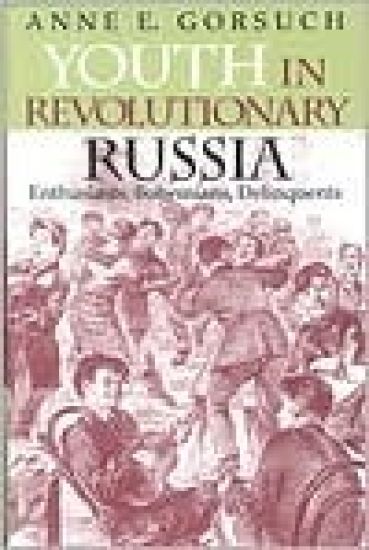
Youth in Revolutionary Russia: Enthusiasts, Bohemians, Delinquents Anne E. Gorsuch A vivid account of Bolshevik efforts to "Sovietize" young people in the 1920s. "A very impressive work—broad, learned, and very readable." —Lynn Mally "A welcome and fascinating addition to the social and cultural history of the 1920s in Russia and to the comparative study of youth politics and culture in contemporary Europe and elsewhere." —Mark von Hagen In Bolshevik Russia, the successful transformation of young people into communists was crucial for the future of the Soviet state. Soviet youth needed to be shaped into communists in every aspect of their daily lives—work, leisure, gender relations, and family life. But how could the Bolsheviks accomplish this enormous project? What did it mean to be "made communist"? What were the consequences if prerevolutionary and "bourgeois" culture and social relations could not be transformed into new socialist forms of behavior and belief? Drawing from a wide range of sources—diaries, party speeches, propagandistic writings, scientific studies, and literature—Anne E. Gorsuch reveals the rich diversity of youth cultures in Soviet Russia during the 1920s. She explores the relationship between representation and reality and between official ideology and popular culture, along with the meaning of these relationships for the making of a Soviet state and society. From the clash between ultracommunist visions of what Russian young people should be and the flamboyant style of flappers and foxtrotters so prominently imported from the capitalist West, emerges a vivid picture of the construction of Soviet youth. Thoughtful and appealing, Youth in Revoluntionary Russia is essential reading for those interested in popular culture and Soviet history. Anne E. Gorsuch is Assistant Professor of History at the University of British Columbia. Indiana-Michigan Series in Russian and East European Studies—Alexander Rabinowitch and William G. Rosenberg, editors Contents Introduction: Youth and Culture The Politics of Generation The Urban Environment Making Youth Communist Excesses of Enthusiasm Gender and Generation Flappers and Foxtrotters Life and Leisure on the Street Discourses of Delinquency Epilogue

A Search for Wisdom and Spirit: Thomas Merton's Theology of the Self
Anne E. Carr
UNIVERSITY OF NOTRE DAME PRESS
1989
nidottu
Though not a systematic theologian, Thomas Merton spent a lifetime writing in an immensely appealing way about the monastic tradition and mystical theology. One of the fundamental questions he examined was that of the self; for Merton the recovery of the true self is the "liberation of the image of God" in us. This study explores that process in the context of a few of Merton's works, showing his own development from "pious hostility" to the world to a more humbling acceptance of humanity. The first full-length appraisal of Merton as theologian, this is well written but contains a few too many abstract phrasessomething Merton in his best work eschewed.