Kirjahaku
Etsi kirjoja tekijän nimen, kirjan nimen tai ISBN:n perusteella.
1000 tulosta hakusanalla Anne K. Mellor
British women writers were enormously influential in the creation of public opinion and political ideology during the years from 1780 to 1830. Anne Mellor demonstrates the many ways in which they attempted to shape British public policy and cultural behavior in the areas of religious and governmental reform, education, philanthropy, and patterns of consumption. She argues that the theoretical paradigm of the "doctrine of the separate spheres"may no longer be valid. According to this view, British society was divided into distinctly differentiated and gendered spheres of public versus private activities in the 18th and 19th centuries, Surveying all the genres of literature—drama, poetry, fiction, non-fiction prose, and literary criticism—Mellor shows how women writers promoted a new concept of the ideal woman as rationally educated, sexually self-disciplined, and above all, virtuous. This New Woman, these writers said, was better suited to govern the nation than were its current fiscally irresponsible, lecherous, and corruptible male rulers. Beginning with Hannah More, Mellor argues that women writers too often dismissed as conservative or retrogressive instead promoted a revolution in cultural mores or manners. She discusses writers as diverse as Elizabeth Inchbald, Hannah Cowley, and Joanna Baillie; as Charlotte Smith, Anna Barbauld, and Lucy Aikin; as Mary Wollstonecraft, Charlotte Reeve, and Anna Seward; and concludes with extended analyses of Charlotte Smith's Desmond and Jane Austen's Persuasion. She thus documents women writers' full participation in that very discursive public sphere which Habermas so famously restricted to men of property. Moreover, the new career of philanthropy defined by Hannah More provided a practical means by which women of all classes could actively construct a new British civil society, and thus become the mothers not only of individual households but of the nation as a whole.
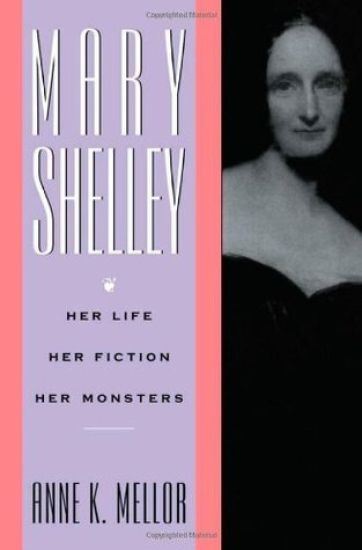
Traces the life of the English writer, describes her relationship with her poet husband, and discusses Frankenstein and her other novels
First published in 1993. Routledge is an imprint of Taylor & Francis, an informa company.
Taking twenty women writers of the Romantic period, Romanticism and Gender explores a neglected period of the female literary tradition, and for the first time gives a broad overview of Romantic literature from a feminist perspective.
An innovative, beautifully written analysis of Mary Shelley's life and works which draws on unpublished archival material as well as Frankenstein and examines her relationship with her husband and other key personalities.
The New Annotated Frankenstein
Mary Shelley; Anne K. Mellor
Liveright Publishing Corporation
2017
sidottu
"Remarkably, a nineteen-year-old, writing her first novel, penned a tale that combines tragedy, morality, social commentary, and a thoughtful examination of the very nature of knowledge", writes Leslie S. Klinger. Mary Shelley’s Frankenstein is often reductively dismissed as a monster film or a cautionary tale about experimental science gone haywire. Illuminating every hidden dimension of the "first truly modern myth", Klinger does for Shelley’s story of early nineteenth-century horror what he did for Sherlock Holmes, Dracula and H.P. Lovecraft, bringing this gothic tale to nightmarish life by reproducing the original text with the most lavishly illustrated and comprehensively annotated edition to date.
Slavery, Abolition and Emancipation Vol 1
Peter J Kitson; Debbie Lee; Anne K Mellor; James Walvin
Routledge
1999
sidottu
Most writers associated with the first generation of British Romanticism - Blake, Coleridge, Wordsworth, Southey, Thelwall, and others - wrote against the slave trade. This edition collects a corpus of work which reflects the issues and theories concerning slavery and the status of the slave.
Slavery, Abolition and Emancipation Vol 2
Peter J Kitson; Debbie Lee; Anne K Mellor; James Walvin
Routledge
1999
sidottu
Most writers associated with the first generation of British Romanticism - Blake, Coleridge, Wordsworth, Southey, Thelwall, and others - wrote against the slave trade. This edition collects a corpus of work which reflects the issues and theories concerning slavery and the status of the slave.
Slavery, Abolition and Emancipation Vol 3
Peter J Kitson; Debbie Lee; Anne K Mellor; James Walvin
Routledge
1999
sidottu
Most writers associated with the first generation of British Romanticism - Blake, Coleridge, Wordsworth, Southey, Thelwall, and others - wrote against the slave trade. This edition collects a corpus of work which reflects the issues and theories concerning slavery and the status of the slave.
Slavery, Abolition and Emancipation Vol 4
Peter J Kitson; Debbie Lee; Anne K Mellor; James Walvin
Routledge
1999
sidottu
Most writers associated with the first generation of British Romanticism - Blake, Coleridge, Wordsworth, Southey, Thelwall, and others - wrote against the slave trade. This edition collects a corpus of work which reflects the issues and theories concerning slavery and the status of the slave.
Slavery, Abolition and Emancipation Vol 5
Peter J Kitson; Debbie Lee; Anne K Mellor; James Walvin
Routledge
1999
sidottu
Most writers associated with the first generation of British Romanticism - Blake, Coleridge, Wordsworth, Southey, Thelwall, and others - wrote against the slave trade. This edition collects a corpus of work which reflects the issues and theories concerning slavery and the status of the slave.
Slavery, Abolition and Emancipation Vol 6
Peter J Kitson; Debbie Lee; Anne K Mellor; James Walvin
Routledge
1999
sidottu
Most writers associated with the first generation of British Romanticism - Blake, Coleridge, Wordsworth, Southey, Thelwall, and others - wrote against the slave trade. This edition collects a corpus of work which reflects the issues and theories concerning slavery and the status of the slave.
Slavery, Abolition and Emancipation Vol 7
Peter J Kitson; Debbie Lee; Anne K Mellor; James Walvin
Routledge
1999
sidottu
Most writers associated with the first generation of British Romanticism - Blake, Coleridge, Wordsworth, Southey, Thelwall, and others - wrote against the slave trade. This edition collects a corpus of work which reflects the issues and theories concerning slavery and the status of the slave.
Slavery, Abolition and Emancipation Vol 8
Peter J Kitson; Debbie Lee; Anne K Mellor; James Walvin
Routledge
1999
sidottu
Most writers associated with the first generation of British Romanticism - Blake, Coleridge, Wordsworth, Southey, Thelwall, and others - wrote against the slave trade. This edition collects a corpus of work which reflects the issues and theories concerning slavery and the status of the slave.
The Two Wieners Go for A W-A-L-K
Anne K. Bertucci
Createspace Independent Publishing Platform
2015
nidottu
Zanzibari Muslim Moderns: Islamic Paths to Progress in the Interwar Period
Anne K. Bang
Oxford University Press
2024
sidottu
Zanzibari Muslim Moderns is a historical study of Zanzibar during the interwar years. This was a period marked by rapid intellectual and social change in the Muslim world, when ideas of Islamic progress and development were hotly debated. How did this process play out in Zanzibar? Based on a wide range of sources--Islamic and colonial, private and public--Anne K. Bang examines how these concepts were received and promoted on the island, arguing that a new ideal emerged in its intellectual arena: the Muslim modern. Tracing the influences that shaped the outlook of this new figure, Bang draws lines to Islamic modernists in the Middle East, to local Sufi teachings, and to the recently founded state of Saudi Arabia. She presents the activities of the Muslim modern in the colonial employment system, as a contributor to international debates, as an activist in the community, and more. She also explores the formation of numerous faith-based associations during this period, as well as the views of the Muslim modern on everything from funerary practices and Mawlid celebrations to reading habits. A recurring theme throughout is the question with which many Muslim moderns were confronted: who should implement development? And for whom?
A comprehensive book for apprehensive parents Baby Basics is a reassuring guide that takes the worry out of first-time parenting and lets you spend your time enjoying your baby. Filled with sound advice and useful tips, it will help you make the best choices and most practical decisions for your child. From the "Top Six Things to Do Before Baby Arrives" to "Investing in the Future," Baby Basics explains everything you need to know. It will help you identify your options and get a handle on day-to-day matters like feeding, choosing diapers, and finding child care, as well as less obvious responsibilities like writing a will and purchasing life insurance. This indispensable, down-to-earth book will help you save time and money while giving your baby the best.
Courtesan and criminal, thief and trollop, warrior and wanderer-the picara embodies the continuing archetypal pattern of a woman's autonomy. She is the sly sharpster in Defoe's heroines such as Roxana and Moll Flanders. With an ancestress like Becky Sharp, the picara evolves into Scarlett O'Hara before finding a comfortable niche as the female hero in fantasy written by women. The Picara traces the development of this character, from an autonomous woman in a harsh patriarchal society to the female hero of the modern fantasy novel.
How I Earned My Wrinkles: Musings on Marriage, Motherhood and Menopause
Anne K. Bardsley
Winston Publishing
2014
nidottu
You might have earned your wrinkles if: - You are married to a Wrinkle Maker, like I am. - Like me, you bought the best bathing suit of your life, then saw a maternity tag on it, and it fit - You called your gynecologist by mistake to make a dental appointment, and then told her it was an emergency and you had a large cavity to fill. If so, we must be related. - Your husband asked the plastic surgeon if he charges per wrinkle. Then he asked for a payment plan. - You've reached the point where all of your children look alike. You run through the list of kid's names until one finally answers. - Your brow has furrowed so long and hard while you tried to remember why you came to the store that you gave yourself new wrinkles. (Only to realize that you were there for wrinkle cream ) Sound familiar? If so, join me and let's celebrate a life filled with laughter, joy, fury, love, memory loss, pure confusion, estrogen, and lack of estrogen, hot flashes, and I forget what else. I hope you enjoy the ride