Kirjahaku
Etsi kirjoja tekijän nimen, kirjan nimen tai ISBN:n perusteella.
1000 tulosta hakusanalla Annette M Holba
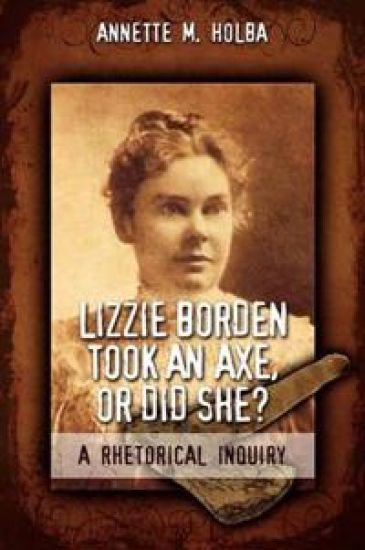
Lizzie Borden Took an Axe, or Did She? a Rhetorical Inquiry
Annette M Holba
Teneo Press
2008
pokkari

The Communicative Relationship Between Dialogue and Care
Marie Baker-Ohler; Annette M Holba
Cambria Press
2009
sidottu

Our impressions of leisure today often involve rest, relaxation, and freedom from work. These impressions are misguided if their limits remain unchallenged. This book reveals the deep essence of leisure by repositioning it as a philosophy of communication that cultivates the mind/body. Fashioned after Calvin Schrag’s The Self after Postmodernity, this work explores leisure in discourse, leisure in action, leisure in community, and leisure in transcendence. By integrating the philosophies of Gadamer, Merleau-Ponty, Arendt, Levinas, Pieper, and others, we can illuminate the transformative nature of leisure and experience a reawakening of the contemplative spirit in action.
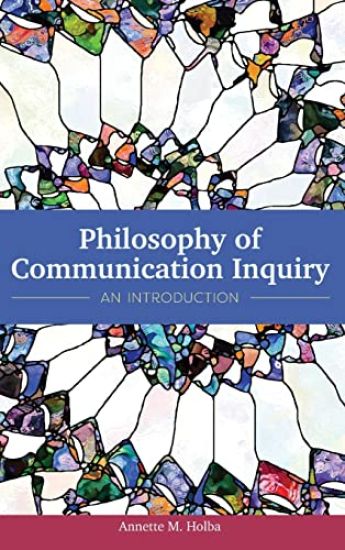
Philosophy of Communication Inquiry: An Introduction
Annette M. Holba
Cognella Academic Publishing
2021
sidottu
In Philosophy of Communication Inquiry: An Introduction, multidisciplinary scholar Annette M. Holba seamlessly connects philosophical traditions with the communicative experience and contemporary political, social, and cultural issues. The text reinforces the position that philosophy of communication is not an abstract concept, but rather rooted in real-life experiences. The text features a unique approach that maps the application of key concepts and theory to public moral argument.The book provides readers with a comprehensive survey of the history of the ideas and metaphors that guide philosophy of communication inquiry. The four parts of the text provide students with foundational explorations of the philosophical traditions, approaches, fundamental questions, and emergent metaphors that guide philosophy of communication inquiry. Each chapter and part conclude with a section titled "Connections, Currency, Meaning," which ties the content to its application in public moral argument. This provides students with ample opportunities for meaningful debate and discourse.Emphasizing its relevance in everyday life, Philosophy of Communication Inquiry is ideal for courses in philosophy of communication.
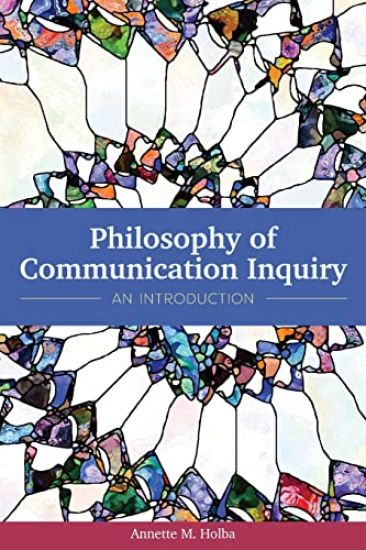
In Philosophy of Communication Inquiry: An Introduction, multidisciplinary scholar Annette M. Holba seamlessly connects philosophical traditions with the communicative experience and contemporary political, social, and cultural issues. The text reinforces the position that philosophy of communication is not an abstract concept, but rather rooted in real-life experiences. The text features a unique approach that maps the application of key concepts and theory to public moral argument.The book provides readers with a comprehensive survey of the history of the ideas and metaphors that guide philosophy of communication inquiry. The four parts of the text provide students with foundational explorations of the philosophical traditions, approaches, fundamental questions, and emergent metaphors that guide philosophy of communication inquiry. Each chapter and part conclude with a section titled "Connections, Currency, Meaning," which ties the content to its application in public moral argument. This provides students with ample opportunities for meaningful debate and discourse.Emphasizing its relevance in everyday life, Philosophy of Communication Inquiry is ideal for courses in philosophy of communication.

An Overture to Philosophy of Communication
Ronald C. Arnett; Annette M. Holba
Peter Lang Publishing Inc
2012
nidottu
Winner of the Everett Lee Hunt Award 2013. Winner of the National Communication Association (NCA) Philosophy of Communication Division’s award for Best Book. An Overture to Philosophy of Communication: The Carrier of Meaning explores a world beyond information accumulation, stressing meaningful engagement with existence. Meaning is composed between and among persons, ideas, and activities of communicative engagement. Meaning is central to the study and practice of philosophy of communication, providing story-laden guidance. The book examines philosophical differences between Boss and Zorba, following the development of their friendship in Zorba the Greek. Their story helps to exemplify the meaningful coordinates of philosophy of communication established in each chapter. The authors claim meaning as the pivotal conceptual terrain for philosophy of communication. This book offers a rationale for the pragmatic necessity of philosophy of communication in understanding the «how» and the «why» of orchestrating meaning from information and discourse throughout our communicative lives.
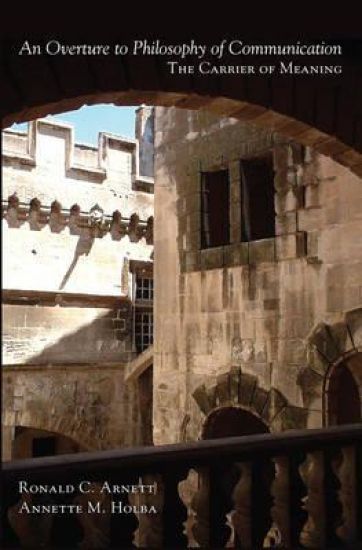
An Overture to Philosophy of Communication
Ronald C. Arnett; Annette M. Holba
Peter Lang Publishing Inc
2012
sidottu
Winner of the Everett Lee Hunt Award 2013. Winner of the National Communication Association (NCA) Philosophy of Communication Division’s award for Best Book. An Overture to Philosophy of Communication: The Carrier of Meaning explores a world beyond information accumulation, stressing meaningful engagement with existence. Meaning is composed between and among persons, ideas, and activities of communicative engagement. Meaning is central to the study and practice of philosophy of communication, providing story-laden guidance. The book examines philosophical differences between Boss and Zorba, following the development of their friendship in Zorba the Greek. Their story helps to exemplify the meaningful coordinates of philosophy of communication established in each chapter. The authors claim meaning as the pivotal conceptual terrain for philosophy of communication. This book offers a rationale for the pragmatic necessity of philosophy of communication in understanding the «how» and the «why» of orchestrating meaning from information and discourse throughout our communicative lives.

Acrossborders 2: Living in New Kingdom Sai: With Contributions by Johannes Auenmuller, Annette M. Hansen, Frits Heinrich, Veronica Hinterhuber, Ptolem
Julia Budka
Austrian Academy of Sciences Press
2020
sidottu
This volume is the second in a series of monographs presenting the results of the ERC project "AcrossBorders" on the island of Sai in Sudan. Findings from excavations and surveys in various areas of the Egyptian town are used to reconstruct life in the New Kingdom (c. 1530-1070 BC). The architecture, the material culture, but also the geology, botanical remains and animal bones are analysed. Overall, the findings presented here for the first time not only emphasize the important role of Sai in the New Kingdom, but also give new insights into the lives of its inhabitants.

One of the most significant contributors to the early years of the motion picture industry, Harold Lloyd was also a shrewd businessman and became the wealthiest man in Hollywood at the peak of his career. Perhaps more than any other major star of the silent era, his characters mirrored his times and captivated his contemporaries. His experiments with camera placement and motion were vital to the evolution of filmmaking techniques.This book includes a short biography of Lloyd and detailed information about all of his performances. The biography overviews his childhood, his adolescent stage career, his work in silent and talking pictures, his family life, and the work of his major contemporaries. A chapter on his film work includes entries for all of his shorts and features, including cameo roles and newsreels. Other chapters describe Lloyd's radio and television work, sheet music and recordings inspired by his films, and his many awards and honors. An annotated bibliography cites books, magazines, newspapers, oral histories, and interviews. Eleven photographs illustrate his work.

An Index to Short and Feature Film Reviews in the Moving Picture World
Annette M. D'Agostino
Greenwood Press
1995
sidottu
The Moving Picture World magazine was the industry standard during the silent cinema era. This is the first index compiled for all the films reviewed in the early volumes of this journal. In 1916, the magazine itself began providing an index to film reviews. Until now, researchers and scholars had to scour page-by-page through each weekly issue from 1907-1915 to find a desired review. This new index, focusing on this period, lists films alphabetically by title, identifies manufacturers/distributors with their films, and provides full dates and page locations for reviews. The index provides easy access to reviews of theatrical films, news pictorials, series and serials, and early travelogues.Many of the films included in this index are no longer extant; thus, contemporary reviews may be the only means for analysis of these pioneering cinematic efforts. The reviews contain valuable information about the standards and tastes of film in its infancy, and shed light on story content in those early days. Some of the titles in this index will shock the user; many will cause laughter; all are worthy of remembrance for their historical value. Over 27,000 films are listed; the preface chronicles the history of the journal and explains clearly how to use the book. No reviews are included—the index is designed to encourage and guide the user towards an increased familiarity with the Moving Picture World, which is currently available on microfilm through the Library of Congress

Originally published in 1907. The woman movement is one of the greatest problems of our age, and those who travel with their eyes open known that it may be studied in every book and corner of our globe. This book contains chapters on girlhood in many lands, the young wife, thoughts on motherhood, and the eventuality of widowhood.

Originally published in 1907. The woman movement is one of the greatest problems of our age, and those who travel with their eyes open known that it may be studied in every book and corner of our globe. This book contains chapters on girlhood in many lands, the young wife, thoughts on motherhood, and the eventuality of widowhood.

Computer Analysis of Sequence Data, Part I
Annette M. Griffin; Hugh G. Griffin
Humana Press Inc.
1994
nidottu
DNA sequencing has become increasingly efficient over the years, resulting in an enormous increase in the amount of data gen- ated. In recent years, the focus of sequencing has shifted, from being the endpoint of a project, to being a starting point. This is especially true for such major initiatives as the human genome project, where vast tracts of DNA of unknown function are sequenced. This sheer volume of available data makes advanced computer methods ess- tial to analysis, and a familiarity with computers and sequence ana- sis software a vital requirement for the researcher involved with DNA sequencing. Even for nonsequencers, a familiarity with sequence analysis software can be important. For instance, gene sequences already present in the databases can be extremely useful in the design of cloning and genetic manipulation experiments. This two-part work on Analysis of Data is designed to be a practical aid to the researcher who uses computers for the acquisition, storage, or analysis of nucleic acid (and/or p- tein) sequences. Each chapter is written such that a competent sci- tist with basic computer literacy can carry out the procedure successfully at the first attempt by simply following the detailed pr- tical instructions that have been described by the author. A Notes section, which is included at the end of each chapter, provides advice on overcoming the common problems and pitfalls sometimes enco- tered by users of the sequence analysis software. Software packages for both the mainframe and personal computers are described.
Computer Analysis of Sequence Data Part II
Annette M. Griffin; Hugh G. Griffin
Humana Press Inc.
1994
nidottu
DNA sequencing has become increasingly efficient over the years, resulting in an enormous increase in the amount of data gener ated. In recent years, the focus of sequencing has shifted, from being the endpoint of a project, to being a starting point. This is especially true for such major initiatives as the human genome project, where vast tracts of DNA of unknown function are sequenced. This sheer volume of available data makes advanced computer methods essen tial to analysis, and a familiarity with computers and sequence analy sis software a vital requirement for the researcher involved with DNA sequencing. Even for nonsequencers, a familiarity with sequence analysis software can be important. For instance, gene sequences already present in the databases can be extremely useful in the design of cloning and genetic manipulation experiments. This two-part work on Computer Analysis of Sequence Data is designed to be a practical aid to the researcher who uses computers for the acquisition, storage, or analysis of nucleic acid (and/or pro tein) sequences. Each chapter is written such that a competent scien tist with basic computer literacy can carry out the procedure successfully at the first attempt by simply following the detailed prac tical instructions that have been described by the author. A Notes section, which is included at the end of each chapter, provides advice on overcoming the common problems and pitfalls sometimes encoun tered by users of the sequence analysis software.