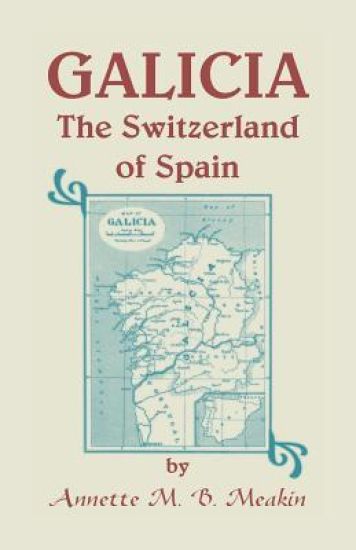
Originally published in 1907. The woman movement is one of the greatest problems of our age, and those who travel with their eyes open known that it may be studied in every book and corner of our globe. This book contains chapters on girlhood in many lands, the young wife, thoughts on motherhood, and the eventuality of widowhood.
Originally published in 1907. The woman movement is one of the greatest problems of our age, and those who travel with their eyes open known that it may be studied in every book and corner of our globe. This book contains chapters on girlhood in many lands, the young wife, thoughts on motherhood, and the eventuality of widowhood.
This book has been considered by academicians and scholars of great significance and value to literature. This forms a part of the knowledge base for future generations. So that the book is never forgotten we have represented this book in a print format as the same form as it was originally first published. Hence any marks or annotations seen are left intentionally to preserve its true nature.
This book has been considered by academicians and scholars of great significance and value to literature. This forms a part of the knowledge base for future generations. So that the book is never forgotten we have represented this book in a print format as the same form as it was originally first published. Hence any marks or annotations seen are left intentionally to preserve its true nature.
Psycholinguistics – the field of science that examines the mental processes and knowledge structures involved in the acquisition, comprehension, and production of language – had a strong monolingual orientation during the first four decades following its emergence around 1950. The awareness that a large part of mankind speaks more than one language – that this may impact both on the way each individual language is used and on the thought processes of bilinguals and multilinguals, and that, consequently, our theories on human linguistic ability and its role in non-linguistic cognition are incomplete and, perhaps, false – has led to a steep growth of studies on bilingualism and multilingualism since around 1995.This textbook introduces the reader to the field of study that examines language acquisition, comprehension and production from the perspective of the bilingual and multilingual speaker. It furthermore provides an introduction to studies that investigate the implications of being bilingual on various aspects of non-linguistic cognition. The major topics covered are the development of language in children growing up in a bilingual environment either from birth or relatively soon after, late foreign language learning, and word recognition, sentence comprehension, speech production, and translation processes in bilinguals. Furthermore, the ability of bilinguals and multilinguals to generally produce language in the "intended" language is discussed, as is the cognitive machinery that enables this. Finally, the consequences of bilingualism and multilingualism for non-linguistic cognition and findings and views regarding the biological basis of bilingualism and multilingualism are presented.The textbook’s primary readership are students and researchers in Cognitive Psychology, Linguistics, and Applied Linguistics, but teachers of language and translators and interpreters who wish to become better informed on the cognitive and biological basis of bilingualism and multilingualism will also benefit from it.
Psycholinguistics – the field of science that examines the mental processes and knowledge structures involved in the acquisition, comprehension, and production of language – had a strong monolingual orientation during the first four decades following its emergence around 1950. The awareness that a large part of mankind speaks more than one language – that this may impact both on the way each individual language is used and on the thought processes of bilinguals and multilinguals, and that, consequently, our theories on human linguistic ability and its role in non-linguistic cognition are incomplete and, perhaps, false – has led to a steep growth of studies on bilingualism and multilingualism since around 1995.This textbook introduces the reader to the field of study that examines language acquisition, comprehension and production from the perspective of the bilingual and multilingual speaker. It furthermore provides an introduction to studies that investigate the implications of being bilingual on various aspects of non-linguistic cognition. The major topics covered are the development of language in children growing up in a bilingual environment either from birth or relatively soon after, late foreign language learning, and word recognition, sentence comprehension, speech production, and translation processes in bilinguals. Furthermore, the ability of bilinguals and multilinguals to generally produce language in the "intended" language is discussed, as is the cognitive machinery that enables this. Finally, the consequences of bilingualism and multilingualism for non-linguistic cognition and findings and views regarding the biological basis of bilingualism and multilingualism are presented.The textbook’s primary readership are students and researchers in Cognitive Psychology, Linguistics, and Applied Linguistics, but teachers of language and translators and interpreters who wish to become better informed on the cognitive and biological basis of bilingualism and multilingualism will also benefit from it.
Old age is no place for sissies! exclaimed Bette Davis. This has always been true, but with the challenges of our current society, it has become even more poignant. Transitions, in and of themselves, are confounding and challenging to navigate! While transitions can be difficult for anyone, for a number of reasons they often pose great problems for older adults within North America.The NEW third edition of Older Adults: Understanding and Facilitating Transitions illustrates the complexities of these transitions faced by older adults and their family members and offers ideas for nurses, social workers, chaplains, and other health and human service professionals in working with vulnerable aging individuals.Written by educators and authors with extensive experience working with older adults in many different sites, including community agencies, hospitals, and hospice, Older Adults: Understanding and Facilitating Transitions:Addresses transitions such as coping with chronic illness, retirement, illnesses, relocations (e.g. moves to facilities), and the final transition, dying and death. Incorporates within each chapter, websites, references and a case example that illustrates the challenges of transition, as well as how health and human service professionals can assess and intervene. Discuses issues of meaning and purpose that may arise through these transitions, as well as the challenges experienced by families of older adults assisting their family members. Features a chapter that analyzes offer future directions for research and professional practice that may benefit older adults (and their family members) as they experience the challenges of later life.Integrates a mixture of the authors' personal and professional experiences.Is easy to adopt! Learning activities, PowerPoint?® presentations, and multiple choice questions are provided to adopting instructors.
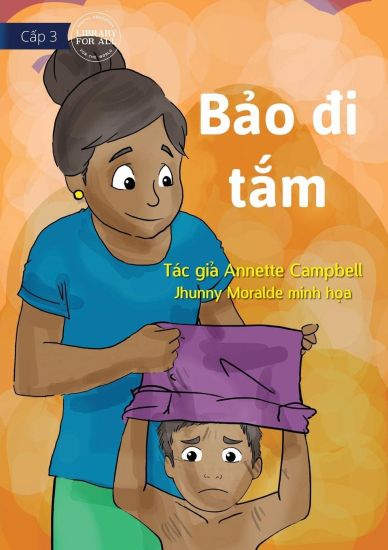
Bert doesn't want to have a bath He must hide so his mum can't find him Bảo kh ng muốn đi tắm Bạn ấy phải trốn đi để mẹ kh ng t m thấy Your purchase of this book supports Library For All in its mission to make knowledge available to all, equally.