Kirjojen hintavertailu. Mukana 11 244 527 kirjaa ja 12 kauppaa.

Kirjahaku

Etsi kirjoja tekijän nimen, kirjan nimen tai ISBN:n perusteella.

1000 tulosta hakusanalla Anthony B. Sanders

Baby Ninth Amendments

Baby Ninth Amendments

Anthony B. Sanders

THE UNIVERSITY OF MICHIGAN PRESS
2023
nidottu
Listing every right that a constitution should protect is hard. American constitution drafters often list a few famous rights such as freedom of speech, protection against unreasonable searches and seizures, and free exercise of religion, plus a handful of others. However, we do not need to enumerate every liberty because there is another way to protect them: an "etcetera clause." It states that there are other rights beyond those specifically listed: "The enumeration in the Constitution, of certain rights, shall not be construed to deny or disparage others retained by the people." Yet scholars are divided on whether the Ninth Amendment itself actually does protect unenumerated rights, and the Supreme Court has almost entirely ignored it. Regardless of what the Ninth Amendment means, two-thirds of state constitutions have equivalent provisions, or "Baby Ninth Amendments," worded similarly to the Ninth Amendment.This book is the story of how the "Baby Ninths" came to be and what they mean. Unlike the controversy surrounding the Ninth Amendment, the meaning of the Baby Ninths is straightforward: they protect individual rights that are not otherwise enumerated. They are an "etcetera, etcetera" at the end of a bill of rights. This book argues that state judges should do their duty and live up to their own constitutions to protect the rights "retained by the people" that these "etcetera clauses" are designed to guarantee. The fact that Americans have adopted these provisions so many times in so many states demonstrates that unenumerated rights are not only protected by state constitutions, but that they are popular. Unenumerated rights are not a weird exception to American constitutional law. They are at the center of it. We should start treating constitutions accordingly.

Baby Ninth Amendments

Baby Ninth Amendments

Anthony B. Sanders

THE UNIVERSITY OF MICHIGAN PRESS
2023
sidottu
Listing every right that a constitution should protect is hard. American constitution drafters often list a few famous rights such as freedom of speech, protection against unreasonable searches and seizures, and free exercise of religion, plus a handful of others. However, we do not need to enumerate every liberty because there is another way to protect them: an "etcetera clause." It states that there are other rights beyond those specifically listed: "The enumeration in the Constitution, of certain rights, shall not be construed to deny or disparage others retained by the people." Yet scholars are divided on whether the Ninth Amendment itself actually does protect unenumerated rights, and the Supreme Court has almost entirely ignored it. Regardless of what the Ninth Amendment means, two-thirds of state constitutions have equivalent provisions, or "Baby Ninth Amendments," worded similarly to the Ninth Amendment.This book is the story of how the "Baby Ninths" came to be and what they mean. Unlike the controversy surrounding the Ninth Amendment, the meaning of the Baby Ninths is straightforward: they protect individual rights that are not otherwise enumerated. They are an "etcetera, etcetera" at the end of a bill of rights. This book argues that state judges should do their duty and live up to their own constitutions to protect the rights "retained by the people" that these "etcetera clauses" are designed to guarantee. The fact that Americans have adopted these provisions so many times in so many states demonstrates that unenumerated rights are not only protected by state constitutions, but that they are popular. Unenumerated rights are not a weird exception to American constitutional law. They are at the center of it. We should start treating constitutions accordingly.
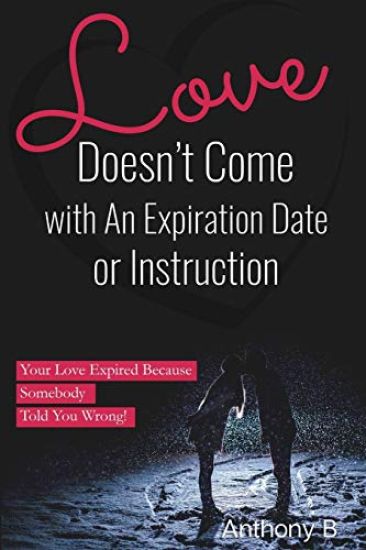
Love Doesn't Come with An Expiration Date or Instructions
When it comes to love, there are no guarantee identifiers to hidden causes of relationship failure to guide you through a step by step process to avoid getting your heart broken. It shows you why love by itself does not guarantee you'll enjoy a successful relationship. Love is not just words, its words that must be validated by corresponding actions. A person loves you according to how they treat you not by what they tell you. In every loving relationship, you must have trust, trust that comes from a consistent behavior. When a person says, I love you-you should be able to trust that they do because it was proven repeatedly. When you get a broken heart it's not because that person doesn't love you, it's because you love them. If you're able to love someone, you'll be in a vulnerable position and subject to getting hurt. If you must ask or have doubts that someone loves your chances are; they don't love you and or you haven't experienced what real love is. Although there's no guaranteed way to prevent getting your heart broken, you can ease the pain and shorten the process by loving yourself first, more and often.
The Oxford Handbook of Humanism

The Oxford Handbook of Humanism

Anthony B. Pinn

Oxford University Press Inc
2021
sidottu
While humanist sensibilities have played a formative role in the advancement of our species, critical attention to humanism as a field of study is a more recent development. As a system of thought that values human needs and experiences over supernatural concerns, humanism has gained greater attention amid the rapidly shifting demographics of religious communities, especially in Europe and North America. This outlook on the world has taken on global dimensions as well, with activists, artists, and thinkers forming a humanistic response not only to traditional religion, but to the pressing social and political issues of the 21st century. With in-depth, scholarly chapters, The Oxford Handbook of Humanism aims to cover the subject by analyzing its history, its philosophical development, its influence on culture, and its engagement with social and political issues. In order to expand the field beyond more Western-focused works, the Handook discusses humanism as a worldwide phenomenon, with regional surveys that explore how the concept has developed in particular contexts. The Handbook also approaches humanism as both an opponent to traditional religion as well as a philosophy that some religions have explicitly adopted. By both synthesizing the field, and discussing how it continues to grow and develop, the Handbook promises to be a landmark volume, relevant to both humanism and the rapidly changing religious landscape.
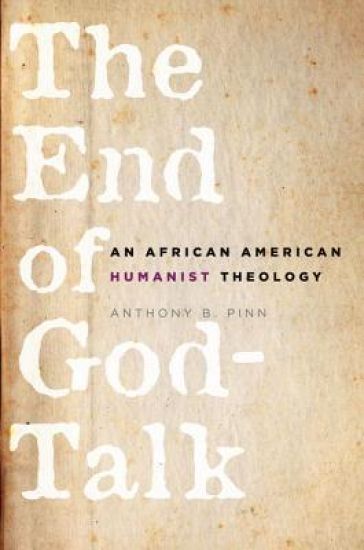
The End of God-Talk

The End of God-Talk

Anthony B. Pinn

Oxford University Press Inc
2012
sidottu
In this groundbreaking study, Anthony B. Pinn challenges the long held assumption that African American theology is solely theist, arguing that this assumption has stunted African American theological discourse and excluded a rapidly growing segment of the African American population - non-theists. Rejecting the assumption of theism as the African American orientation, Pinn poses a crucial question: What is a non-theistic theology? The End of God-Talk outlines the first systematic African American non-theistic theology. Pinn offers a new center for theological inquiry, grounded in a more scientific notion of the human than the imago Dei ideas that dominates African American theistic theologies. He proposes a turn to Henry David Thoreau, Frederick Douglass, Harriet Tubman, and Alice Walker in order to effect a sense of ethical conduct consistent with African American non-theistic humanism. The End of God-Talk ends with an exploration of the religious significance of ordinary spaces and activities as settings for humanist theological engagement. Through a turn to embodied human life as the proper arena and content of theologizing, Pinn opens up a new theological path with important implications for ongoing work in African American religious studies.
The End of God-Talk

The End of God-Talk

Anthony B. Pinn

Oxford University Press Inc
2012
nidottu
In this groundbreaking study, Anthony B. Pinn challenges the long held assumption that African American theology is solely theist, arguing that this assumption has stunted African American theological discourse and excluded a rapidly growing segment of the African American population - non-theists. Rejecting the assumption of theism as the African American orientation, Pinn poses a crucial question: What is a non-theistic theology? The End of God-Talk outlines the first systematic African American non-theistic theology. Pinn offers a new center for theological inquiry, grounded in a more scientific notion of the human than the imago Dei ideas that dominates African American theistic theologies. He proposes a turn to Henry David Thoreau, Frederick Douglass, Harriet Tubman, and Alice Walker in order to effect a sense of ethical conduct consistent with African American non-theistic humanism. The End of God-Talk ends with an exploration of the religious significance of ordinary spaces and activities as settings for humanist theological engagement. Through a turn to embodied human life as the proper arena and content of theologizing, Pinn opens up a new theological path with important implications for ongoing work in African American religious studies.
Non-Traditional Agriculture and Economic Development

Non-Traditional Agriculture and Economic Development

Anthony B. Soskin

Praeger Publishers Inc
1988
sidottu
Non-Traditional Agriculture and Economic Development identifies the implications of Brazilian economic development of government support for rapid growth of non-traditional agricultural crops such as soybeans. The volume established a framework for the study of these implications via analyses of: objectives of the Brazilian government in the period 1964-1982; agricultural policies and the policy instruments put into place to achieve these objectives; micro and macro impacts upon the relevant sectors of the economy; importance of soybean expansion upon Brazil's foreigh trade. Finally, the author links the Brazilian experience to some of the classical theories of economic development. He concludes that the considerable success in rapid expansion of the soybean crop has not been without drawbacks, in particular: growth at the expense of traditional staple crops and reliance upon imported technologies.
Biblical Outlaws

Biblical Outlaws

Anthony B. Pinn

YALE UNIVERSITY PRESS
2026
sidottu
A revelatory exploration of how the Bible’s underdogs, outlaws, and forgotten figures can teach us radical new ways of living In this unprecedented book, a secular humanist and celebrated scholar of religion tells the stories of the Bible’s most marginalized figures, challenging readers to reconsider who are the heroes of the text, and who are the villains. What happens when such figures as Lot’s Wife, Job’s Wife, Nimrod, “Doubting” Thomas, and the cursed disciple Judas take center stage? What happens if the Bible is read to privilege the margins of life, where the most socially questionable and ignored are found? In asking and answering these questions, Anthony B. Pinn finds important lessons in the hidden corners of scripture, in the dark places, and among the despised figures who have a troubled relationship with a troubling world. Freeing these figures to offer their version of events, this book encourages a reading of the Bible against the Bible. What results are surprising new ways for readers to imagine the world and their place in it. Pinn argues that there are life-affirming lessons to learn from these marginalized figures. Something important about our humanity, the fragile nature of life, is illustrated not by the Bible’s heroes but by those we tend to forget or discredit.
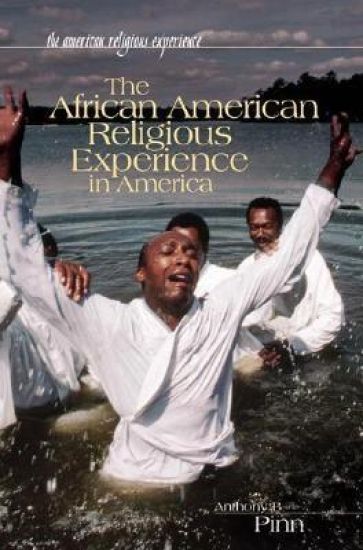
The African American Religious Experience in America
Most who think about African American religion limit themselves to black churches, or perhaps to aspects of Islamic thought and practice. But a close look at the religious landscape of African American communities presents a much more complex, thick, and layered religious reality comprising many competing faiths and practices. The African American Religious Experience in America provides readers with an introduction to the tremendous religious diversity of African American communities in the United States, with snapshots of 11 religious traditions practiced by African Americans—from Buddhism to Catholicism, from Judaism to Voodoo. Each snapshot provides readers a better understanding of how African Americans practice their faiths in the United States.The African American Religious Experience in America provides resources for students taking classes on the history of American religion, African American Studies, and on American Studies. In addition to the in-depth discussion of the varieties of African American Religion, the volume includes a historical introduction to the development of African American Religion, a glossary of terms, a timeline of important events, a series of short biographies of important figures in the history of African American religion and a bibliography of sources for further study. Finally, the book includes a series of primary source documents that will provide students with first-person accounts of how religion is practiced in the African American community both today and in the past.
Watching Shakespeare

Watching Shakespeare

Anthony B Dawson

Palgrave Macmillan
1988
nidottu
Here is a book written primarily for playgoers. Looking closely at eighteen plays, Anthony Dawson examines key decisions that actors and directors have to make, and shows how different interpretations flow from these decisions. His aim is to make audiences more aware of the multiple possibilities that a Shakespearean text provides, and hence better able to assess particular productions. Using frequent and extensive illustration from the modern theatre, he argues that contradiction and creative inconsistency are marks of Shakespeare's plays and that productions usually work best when they embrace opposition and strive for balance, rather than when they adopt one-sided readings or suppress elements that don't fit a particular concept.
Introducing African American Religion

Introducing African American Religion

Anthony B. Pinn

Routledge
2012
sidottu
This book offers a creative and unique approach to the history of African American religion. Tracing what it has meant to be African American and religious within the context of the United States, it provides a vital snapshot of some of the traditions that have shaped the religious imagination of the country. Major themes and problems encountered by African Americans involved in a variety of traditions are depicted in a clear and engaging fashion.The chapters move from the period of slavery and the early arrangement of religious thought and practice within communities of enslaved Africans to the more recent growth in the number of African American "Nones". Drawing on cultural developments such as hip hop, Anthony Pinn links the language and activities of African American religious experience to the cultural worlds in which African Americans live. Introducing African American Religion includes illustrations, summaries, discussion questions and suggestions for further reading as well as a glossary and chronology, helping students to become familiar with the main terms of the traditions discussed and to place their development in historical context. Additional resources can be found on the companion website: www.routledge.com/cw/pinn
Introducing African American Religion

Introducing African American Religion

Anthony B. Pinn

Routledge
2012
nidottu
This book offers a creative and unique approach to the history of African American religion. Tracing what it has meant to be African American and religious within the context of the United States, it provides a vital snapshot of some of the traditions that have shaped the religious imagination of the country. Major themes and problems encountered by African Americans involved in a variety of traditions are depicted in a clear and engaging fashion.The chapters move from the period of slavery and the early arrangement of religious thought and practice within communities of enslaved Africans to the more recent growth in the number of African American "Nones". Drawing on cultural developments such as hip hop, Anthony Pinn links the language and activities of African American religious experience to the cultural worlds in which African Americans live. Introducing African American Religion includes illustrations, summaries, discussion questions and suggestions for further reading as well as a glossary and chronology, helping students to become familiar with the main terms of the traditions discussed and to place their development in historical context. Additional resources can be found on the companion website: www.routledge.com/cw/pinn
Medical Imaging

Medical Imaging

Anthony B. Wolbarst; Patrizio Capasso; Andrew R. Wyant

John Wiley Sons Inc
2013
sidottu
"An excellent primer on medical imaging for all members of the medical profession . . . including non-radiological specialists. It is technically solid and filled with diagrams and clinical images illustrating important points, but it is also easily readable . . . So many outstanding chapters . . . The book uses little mathematics beyond simple algebra [and] presents complex ideas in very understandable terms." —Melvin E. Clouse, MD, Vice Chairman Emeritus, Department of Radiology, Beth Israel Deaconess Medical Center and Deaconess Professor of Radiology, Harvard Medical School A well-known medical physicist and author, an interventional radiologist, and an emergency room physician with no special training in radiology have collaborated to write, in the language familiar to physicians, an introduction to the technology and clinical applications of medical imaging. It is intentionally brief and not overly detailed, intended to help clinicians with very little free time rapidly gain enough command of the critically important imaging tools of their trade to be able to discuss them confidently with medical and technical colleagues; to explain the general ideas accurately to students, nurses, and technologists; and to describe them effectively to concerned patients and loved ones. Chapter coverage includes: Introduction: Dr. Doe's HeadachesSketches of the Standard Imaging ModalitiesImage Quality and DoseCreating Subject Contrast in the Primary X-Ray ImageTwentieth-Century (Analog) Radiography and FluoroscopyRadiation Dose and Radiogenic Cancer RiskTwenty-First-Century (Digital) ImagingDigital Planar ImagingComputed TomographyNuclear Medicine (Including SPECT and PET)Diagnostic Ultrasound (Including Doppler)MRI in One Dimension and with No RelaxationMapping T1 and T2 Proton Spin Relaxation in 3DEvolving and Experimental Modalities