Kirjojen hintavertailu. Mukana 11 244 527 kirjaa ja 12 kauppaa.

Kirjahaku

Etsi kirjoja tekijän nimen, kirjan nimen tai ISBN:n perusteella.

1000 tulosta hakusanalla Anthony H Page

Blackheath

Blackheath

Anthony H Page

The History Press Ltd
2007
nidottu
Blackheath, in the heart of the Black Country, only came into existence in the 1830s. Anthony Page draws on various photographs from a variety of sources, including family albums, to chronicle Blackheath's streets, people, industry and events.
Biggleswade

Biggleswade

Anthony H Page

The History Press Ltd
2006
nidottu
Containing 200 archive images from the collection of the Biggleswade History Society, this work documents life in this Bedfordshire market town. It takes the reader on a nostalgic journey around the town - from Shortmead Street, reputed to be the oldest road in Biggleswade, to Market Square, where the annual Horse Fair was once held.
Rowley in Old Photographs

Rowley in Old Photographs

Anthony H. Page

Sutton Publishing Ltd
2001
nidottu
Rowley Regis is one of the oldest settlements in the Black Country, although little remains of its earliest origins today. The old village was perched on the slopes of the Rowley Hills, gathered around the Parish Church of St Giles, and remained virtually unchanged until the massive redevelopment of the late 1950s. The wealth of the village derived from the rock formations of the hills, with the basaltic quartz yielding an extremely hard material known as Rowley Rag, which was used for road-making. Quarrying, together with the expansion of coal mining in the nineteenth century, meant a hard life for the residents, and many families engaged in the cottage industries of nail-making and the production of Jew's Harps in order to survive. This volume contains in excess of 200 photographs and illustrations showing the life of the village and its surrounding hamlets. Many of them are published for the first time, having been obtained from individual family collections as well as established archives.
Nationalism and National Integration

Nationalism and National Integration

Anthony H. Birch

Routledge
1989
nidottu
Nationalist theories are still controversial, while the process and frequent failures of national integration are issues of central importance in the contemporary world. Birch's argument is illustrated by detailed and topical case studies of national integration in the United Kingdom, Canada and Australia: the United Kingdom, with the Welsh, the Scots, the Irish and the coloured minorities; Canada, with its Anglo-French tensions, its cultural pluralism and its indigenous peoples claiming the right of self-government; Australia, with its increasing ethnic diversity and its failure to integrate the Aborigines.
Iraq and the War of Sanctions

Iraq and the War of Sanctions

Anthony H. Cordesman

Praeger Publishers Inc
1999
sidottu
Since the Gulf War, Iraq has attempted to win through confrontation, diplomacy, and bluster what it could not achieve on the battlefield. Defense analyst Anthony Cordesman suggests that this war of sanctions may be a struggle that Iraq has begun to win. Saddam Hussein's regime remains aggressive and ambitious, and its military capabilities cannot be judged solely by the current state of Iraq's armed forces. Most dangerous of all is Iraq's continuing effort to build an arsenal of weapons of mass destruction. Cordesman analyzes Iraqi strategic intentions and diplomatic opportunities, and assesses the options available to the international community to counter the Iraqi threat.Iraq has effectively used diplomatic means to divide the United Nations and exploit Arab sympathies, while using its oil wealth as an incentive to win support for an easing of sanctions. The military potential of Iraq, and especially its development of weapons of mass destruction, must be considered as much for its intimidation value as for any actual utility in a possible war. A realistic assessment of Iraq's future capabilities, says Cordesman, must take into account these political and strategic factors as purely military considerations.
Iran's Military Forces in Transition

Iran's Military Forces in Transition

Anthony H. Cordesman

Praeger Publishers Inc
1999
sidottu
Iran today is still struggling with the legacy of its own Islamic revolution, and is deeply divided between the moderates who enjoy broad public support and the conservatives who control the levers of power. The mixed policies that result are reflected in Iran's ambivalent military posture. In recent years, Iran has only conducted a limited build-up of its armed forces and has cut defense spending and arms imports. On the other hand, Iran has developed a carefully focused program that threatens shipping in the lower Gulf and the world's oil exports. It has strengthened its capability for unconventional warfare and continues to be a significant proliferator, setting up indigenous military industries and developing a greater ability to import weapons. In this authoritative analysis of interest to Middle Eastern specialists and military affairs experts alike, Anthony Cordesman concludes that the continuation of Iran's current defensive security posture depends as much on these economic factors as on the outcomes of domestic political rivalries. Iran may eventually limit any military expansion to a necessary defensive strength and set strategic goals for itself that are compatible with the legitimate interests of other nations, or it may choose a more aggressive course. Regardless of the ultimate outcome, argues Cordesman, it does no good to either demonize or excuse Iranian policies. Instead, the United States and other nations with interests in the Middle East and Central Asia need to deal realistically with Iran as a reemerging regional power.
A Tragedy of Arms

A Tragedy of Arms

Anthony H. Cordesman

Praeger Publishers Inc
2001
sidottu
The Maghreb--Morocco, Algeria, Libya, and Tunisia--is a region overburdened by unnecessary military expenditures. Despite persistent civil conflicts and militarized regimes in a number of countries in the region, there are actually few genuine external threats, and the armed forces are now largely used to maintain internal security.A detailed country-by-country assessment of the effectiveness of military forces, and their impact on regional economics, shows that the region remains a mosaic of conflicting national ambitions, but strategic ambitions have been supplanted by internal conflicts, tensions, and politics. Declining military budgets are leading to declining military strength and capability, but they belie the Maghreb's potential for armed conflict and human suffering. Even though the Maghreb is a supplier of oil and natural gas, which usually ensures the attention of the West, this tragedy of arms gets little attention from the outside world. This means that the prospects for the region are continued wasteful military spending, and the resultant harm to national economic and political health.
Peace and War

Peace and War

Anthony H. Cordesman

Praeger Publishers Inc
2001
sidottu
The uncertain Arab-Israeli peace process has scarcely put an end to the threat of war in the Middle East. Israel's relations with its Arab neighbors remain tense, the proliferation of weapons of mass destruction is a problem for the entire region, and the Israeli-Palestinian fighting that began in September 2000 shows that the peace process can suddenly become a war process. Renowned Middle East military expert Anthony Cordesman provides up-to-the-minute analysis in this richly detailed guide to one of the most complicated, and dangerous, regions in the world.Cordesman covers every significant aspect of military and strategic issues in the region, including conventional forces, arms transfers, force quality and morale, terrorism, weapons of mass destruction, the dynamics of specific ongoing conflicts, and the outcome of possible future conflicts. He carefully weighs the political factors against what is known about actual military capabilities to shed light on the range of strategic options likely to be considered by each of the major regional actors, including Israel, Jordan, Egypt, Syria, Lebanon, Iraq, and the Palestinian Authority. He finds no easy answers, concluding that while the balance of conventional forces has stabilized significantly in recent years, the risks from unconventional warfare have escalated considerably and that any major new peace agreement is likely to unleash a whole new set of military concerns that have the potential to disrupt diplomatic agreements. Always mindful of the complexities of the region, Peace and War is the definitive guide to strategic developments in this vital part of the world.
The Lessons and Non-Lessons of the Air and Missile Campaign in Kosovo
The conclusion of a war typically signals the beginning of a flood of memoirs and instant campaign histories, many presenting the purported, but often dubious lessons of the recent conflict. Cordesman is careful to avoid such pitfalls in this detailed and closely reasoned analysis, and helps us to begin to understand the implications of this dramatic conflict on its own terms. Based on a combination of official and unofficial (but always authoritative) sources, he builds a thorough case for the true lessons of NATO's first battle fought within Europe. After consideration of the historical, major political, and strategic factors that set the stage for the Kosovo campaign, Cordesman critically examines the actual effectiveness of the NATO air campaigns, both in Kosovo and Serbia proper. Operations in this rugged part of Europe were difficult, and compounding the challenges of terrain and weather were the conflicting national agendas within the Allied coalition that seriously hampered focused and decisive action by NATO. Although Milosevic ultimately conceded defeat, all of these factors played an important role in limiting the intensity and shaping the military outcome of the campaign, and the likely political and strategic results were far from certain. Cordesman unflinchingly concludes, that the air campaign over Kosovo exposed deep fault lines within and among the NATO countries and fundamental flaws in the way the West wages war.
Cyber-threats, Information Warfare, and Critical Infrastructure Protection
During the last two decades, the infrastructure of the U.S. economy has undergone a fundamental set of changes. It has steadily increased its reliance on its service sector and high-technology economy. The U.S. has come to depend on computers, electronic data storage and transfers, and highly integrated communications networks. The result is the rapid development of a new form of critical infrastructure--and one that is exceedingly vulnerable to a new family of threats, loosely grouped together as information warfare. This detailed volume examines these threats and the evolving U.S. policy response.After examining the dangers posed by information warfare and efforts at threat assessment, Cordesman considers the growing policy response on the part of various federal agencies, state and local governments, and the private sector. The changing nature of the threats is leading these actors to reassess the role they must play in critical infrastructure protection. Government at all levels, industry, and even friendly and neutral foreign governments are learning that an effective response requires coordination in deterrence, defense, and counterattack.
Strategic Threats and National Missile Defenses

Strategic Threats and National Missile Defenses

Anthony H. Cordesman

Praeger Publishers Inc
2001
sidottu
Proliferation poses a broad range of threats to the United States, as well as to our allies and coalition partners. Intercontinental missiles armed with weapons of mass destruction are one of these threats, and it has become obvious that rogue nations such as Iran and North Korea may be acquiring the capability to build such missiles as well as the ability to arm them with nuclear or lethal biological weapons. While such threats are now only potential ones, these shifts in technological and manufacturing capability mean that these rogue nations may be able to pose serious dangers to the American homeland, possibly as early as during the next five years. Cordesman argues that an effective defense against these threats will require linking an effective national missile defense program to an ambitious counterproliferation strategy, a strengthened homeland defense program, and a realistic approach to arms control and national security options.Cordesman argues that these threats may create a near- to mid-term need for national missile defense (NMD), widely discussed during the Clinton Administration and which seems to be emerging as a priority for the Bush Administration. This work analyzes the options available to the United States and how they relate to the delicate balance of deterrence in the post-Cold War era. As the debate on NMD escalates, this work could not be more timely.
Terrorism, Asymmetric Warfare, and Weapons of Mass Destruction

Terrorism, Asymmetric Warfare, and Weapons of Mass Destruction

Anthony H. Cordesman

Praeger Publishers Inc
2001
sidottu
There is a wide spectrum of potential threats to the U.S. homeland that do not involve overt attacks by states using long-range missiles or conventional military forces. Such threats include covert attacks by state actors, state use of proxies, independent terrorist and extremist attacks by foreign groups or individuals, and independent terrorist and extremist attacks by residents of the United States. These threats are currently limited in scope and frequency, but are emerging as potentially significant issues for future U.S. security. In this comprehensive work, Cordesman argues that new threats require new thinking, and offers a range of recommendations, from expanding the understanding of what constitutes a threat and bolstering Homeland defense measures, to bettering resource allocation and improving intelligence gathering and analysis.No pattern of actual attacks on U.S. territory has yet emerged that provides a clear basis for predicting how serious any given form of attack might be in the future, what means of attack might be used, or how lethal new forms of attack might be. As a result, there is a major ongoing debate over the seriousness of the threat and how the U.S. government should react. This work is an invaluable contribution to that debate.
The Iraq War

The Iraq War

Anthony H. Cordesman

Praeger Publishers Inc
2003
sidottu
In the spring of 2003, a stunned world watched the armed forces of the United States and Britain conduct a military campaign against Iraq. As a result, the Iraqi regime was dismantled, and much of the conventional wisdom about modern war was irrevocably altered. Yet as U.S. and British forces occupy Basra, Tikrit, and Mosul, the Iraqi nation has slipped into anarchy—and the phrase shock and awe has begun to sound more appropriate as a description of the war's aftermath, rather than its opening. Such has been the twisted trail of the Iraq War's dramatic events. But like so many other conflicts, the war ultimately seems to pose more questions than it solved. This book is the first in-depth analysis of the second war against Saddam Hussein's regime. What are the repercussions of the pre-war political fights in Washington, Paris, and the UN? Was meeting initial military goals really due to Anglo-American arms, or had Saddam's regime simply been too degraded to fight? Why didn't Baghdad become a second Stalingrad? Why weren't the occupying forces prepared to impose order? And then there is the significant question: Where are Iraq's weapons of mass destruction? Respected military analyst Anthony Cordesman incisively examines the key issues swirling around the most significant U.S. war since Vietnam. Beginning the search for answers is essential to understanding America's awesome power and its place in a new age of international terror and regional conflict.
Energy Developments in the Middle East

Energy Developments in the Middle East

Anthony H. Cordesman

Praeger Publishers Inc
2004
sidottu
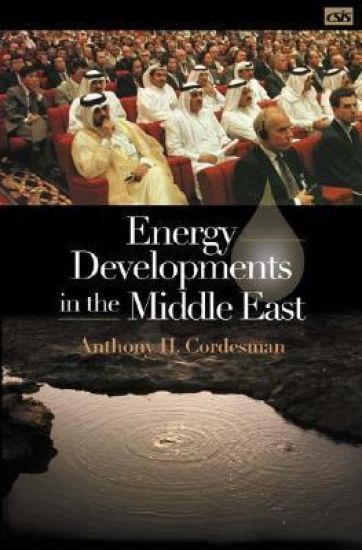
The Middle Eastern and North African region (MENA) dominates world energy exports today and will likely do so for decades to come, even if world consumers make steady progress in conservation, renewable energy sources, and increases from gas, coal, and nuclear power. The MENA region, however, has been the scene of both internal crises and external conflicts. On several occasions, these crises have affected either the flow of MENA energy exports or the development of energy production and export capacity. The politics, economics, and social dynamics that shape threats to regional stability are complex. Cordesman details the factors behind these diverse forces and outlines current supply levels and future trends, taking each of these variables into consideration.The MENA area includes at least 22 states, with a combined population of nearly 300 million, each with different political, economic, demographic, and security conditions and needs. It is divided into at least four sub-regions including the Maghreb (Mauritania, Morocco, Algeria, Libya, and Tunisia); the Levant and the Arab-Israeli confrontation states (Egypt, Israel, Jordan, Lebanon, and Syria); the Gulf (Iran, Iraq, Kuwait, Bahrain, Qatar, Saudi Arabia, the UAE, and Oman); and the Red Sea states (Yemen, the Sudan, and Somalia). This important guide outlines the forces affecting each sub-region, including supply, demand, and financing, and forecasts the likely impact that different scenarios would have on energy resources under varying world conditions.
The Military Balance in the Middle East

The Military Balance in the Middle East

Anthony H. Cordesman

Praeger Publishers Inc
2004
sidottu
Noted Middle East military expert Anthony H. Cordesman details the complex trends that come into play in determining the military balance in a region that has become so critical to world peace. This ready resource provides a wealth of information on military expenditures and major arms systems, as well as qualitative trends, by country and by zone. However, as Cordesman stresses, because the greater Middle East is more a matter of rhetoric than military reality, mere data summarizing trends in 23 different countries is no substitute for a substantive explanation. Using tables, graphs, and charts, this study explores every aspect of the regional military balance with attention to sub-regional balances, internal civil conflicts, and low level border tensions.The Middle East is certainly one of the most militarized areas in the world, and changes in technology, access to weapons of mass destruction, and political instability contribute to a situation that has long been in constant flux. Some of the regional flashpoints covered in this study include the Maghreb (North Africa); the Arab-Israeli conflict (dominated by Israel versus Syria); and the Gulf (divided into those states that view Iran as the primary threat and those who lived in fear of Iraq). Internal conflicts, such as those in Mauritania, Algeria, Libya, Egypt, Sudan, Bahrain, Saudi Arabia, Iraq, and Yemen, increasingly dominate regional tensions. In addition, border conflicts within the region and with neighboring countries could further aggravate the delicate balance.
The Israeli-Palestinian War

The Israeli-Palestinian War

Anthony H. Cordesman

Praeger Publishers Inc
2005
sidottu
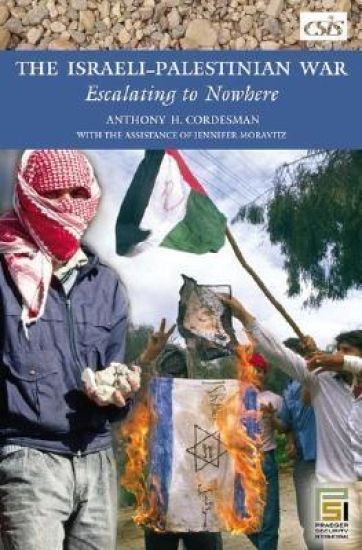
The Israeli-Palestinian conflict is more than a local or regional dispute. Its ongoing and escalating nature increases the risk that the violence will spill over its present borders and contribute to both extremism and terrorism. While the Intifada from 1987 to 1993 was largely a popular uprising and a political struggle, the recent clash is a war with a steady escalation between conventional and unconventional forces. It is in the interest of all major powers, the international community, and the United Nations to press both sides to accept a realistic peace plan.Noted Middle East expert Anthony Cordesman details this continuing struggle by explaining the issues at stake for each side; the various combatants (both directly and indirectly engaged); as well as the course of the war in its various incarnations. The situation on the ground is complex and the quest for peace is ever more uncertain. If the Intifada was a struggle for recognition that a peace had to be reached that was just for both sides, the Israeli-Palestinian War has polarized both sides away from peace, convincing them of the justice of their own cause and tactics and the fundamental injustice of the other side's tactics and goals. Each side has used human rights, international law, and civilian casualties as political weapons. The history of a near century of conflict is used to justify war rather than a search for peace.
National Security in Saudi Arabia

National Security in Saudi Arabia

Anthony H. Cordesman

Praeger Publishers Inc
2005
sidottu
With continuing instability in Iraq, the threat of a nuclear Iran, and the ever-present reality of further terrorist attacks within its own borders, Saudi Arabia has been forced to make some hard decisions. The current structure of the Saudi security apparatus is only one pathway to improved security. Economic and demographic threats may well be the hardest hurdles to overcome. What has been accomplished since 2001 and what are the real prospects and implications of further reform? To what extent should the kingdom continue to rely on the US to protect its interests? Cordesman and Obaid argue that it is time to put an end to client and tutorial relations. Saudi Arabia must emerge as a true partner. This will require the creation of effective Saudi forces for both defense and counterterrorism. Saudi Arabia has embarked on a process of political, economic, and social reforms that reflects a growing understanding by the governing members of the royal family, Saudi technocrats, and Saudi businessmen that Saudi Arabia must reform and diversify its economy and must create vast numbers of new jobs for its young and growing population. There is a similar understanding that economic reform must be combined with some level of political and social reform if Saudi Arabia is to remain stable in the face of change. With Gulf security, the war on terrorism, and the security of some sixty percent of the world's oil reserves at stake, the real question is how quickly Saudi Arabia can change and adapt its overall approach to security, and how successful it will be in the process.
Iraqi Security Forces

Iraqi Security Forces

Anthony H. Cordesman

Praeger Publishers Inc
2005
sidottu
This volume documents both the initial mistakes and the changes in U.S. policy that now offer real hope of success in Iraq. Although the United States understood neither the strategic situation in Iraq, nor the value of Iraqi military, security, and police forces in fighting the growing insurgency, the country undertook a series of policy changes in June 2004 that may well correct these mistakes and create the kind of Iraqi forces that are vital to both Iraq's future and any successful reduction in Coalition forces and eventual withdrawal from Iraq.In this book, Cordesman sets a number of U.S. policy priorities that must be attained if Iraqi forces are to be created at anything like the levels of strength and competence that are required. He is convinced that pursuing the right program consistently and with the right resources may well succeed in solving the security aspects of the nation-building problem in Iraq. The history of U.S. efforts to create Iraqi forces is a warning that Americans at every level need to think about what alliance and cooperation mean in creating allied forces for this kind of nation building and warfare. Iraq is only one example of how vital a role such forces must play in many forms of asymmetric warfare. What is equally clear is that Americans must understand that they have a moral and ethical responsibility to the forces they are creating.