Kirjojen hintavertailu. Mukana 11 699 587 kirjaa ja 12 kauppaa.

Kirjahaku

Etsi kirjoja tekijän nimen, kirjan nimen tai ISBN:n perusteella.

1000 tulosta hakusanalla Anthony Kenny

The Metaphysics of Mind

The Metaphysics of Mind

Anthony Kenny

Oxford University Press
1992
nidottu
The ideas of Ludwig Wittgenstein and Gilbert Ryle have had a major influence on the work of Anthony Kenny, who has explored many aspects of the philosophy of mind in a series of books over the past twenty-five years. Modelled on the structure of Ryle's The Concept of Mind, this book forges Kenny's ideas on philosophical psychology into a systematic whole. Written in a style that avoids jargon and academic controversy, it is both accessible to the general reader and challenging for the specialist.
Aristotle on the Perfect Life

Aristotle on the Perfect Life

Anthony Kenny

Clarendon Press
1996
nidottu
Aristotle's teaching on the subject of happiness has been a topic of intense philosophical debate in recent years. Did he hold that happiness consists of the exercise of all the virtues, moral and intellectual, or that supreme happiness is to be found only in the practice of philosophical contemplation? The question is vital to the relevance of his ethics today. Anthony Kenny helped to set the terms of the debate a quarter of a century ago. Later, in his book The Aristotelian Ethics (Clarendon Press, 1978), he argued that Aristotle's Eudemian Ethics has no less claim than the better-known Nicomachean Ethics to be taken as a late and definitive statement of Aristotle's position. In this new book he refines his view of the relationship between the two treatises and shows how to reach a consensus on the interpretation of the texts. Aristotle's admirers struggle to read a comprehensive account of the supreme happiness into the Nicomachean Ethics; Dr Kenny argues that those who are prepared to take the neglected Eudemian Ethics with equal seriousness are able to presrve their admiration intact without doing violence to any of the relevant texts.
Aquinas on Being

Aquinas on Being

Anthony Kenny

Clarendon Press
2002
sidottu
Anthony Kenny offers a critical examination of a central metaphysical doctrine of Thomas Aquinas, the greatest of the medieval philosophers. Aquinas's account of being is famous and influential: but Kenny argues that it in fact suffers from systematic confusion. Because of the centrality of the doctrine, this has implications for other parts of Aquinas's philosophical system: in particular, Kenny shows that the idea that God is pure being is a hindrance, not a help, to Aquinas's natural theology. Kenny's clear and incisive study, drawing on the scholastic as well as the analytic tradition, dispels the confusion and offers philosophers and theologians a guide through the labyrinth of Aquinas's ontology.
Aristotle on the Perfect Life

Aristotle on the Perfect Life

Anthony Kenny

Clarendon Press
1992
sidottu
Aristotle's teaching on the subject of happiness has been a topic of intense philosophical debate in recent years. Did he hold that happiness consists in the exercise of all the virtues, moral and intellectual, or that supreme happiness is to be found only in the practice of philosophical contemplation? The question is vital to the relevance of his ethics today. Anthony Kenny helped to set the terms of this debate a quarter of a century ago. Later, in The Aristotelian Ethics (Clarendon Press, 1978), he argued that Aristotle's Eudemian Ethics had no less a claim than the better-known Nicomachean Ethics to be taken as a late and definitive statement of Aristotle's position. In this new work he refines his view of the relationship between the two treatises and shows how to reach a consensus on the interpretation of the texts. Aristotle's admirers struggle to read a comprehensive account of the supreme happiness into the Nicomachean Ethics: Dr Kenny argues that those who are prepared to take the neglected Eudemian Ethics with equal seriousness are able to preserve their admiration intact without doing violence to any of the relevant texts.
Essays on the Aristotelian Tradition

Essays on the Aristotelian Tradition

Anthony Kenny

Clarendon Press
2000
sidottu
During most of the Christian millennia Aristotle has been the most influential of all philosophers. This selection of essays by the eminent philosopher and Aristotle scholar Anthony Kenny traces this influence through the ages. Particular attention is given to Aristotle's ethics and philosophy of mind, showing how they provided the framework for much fruitful development in the Middle Ages and again in the present century. Also included are some contributions to the most recent form of Aristotelian scholarship, computer-assisted stylometry. All who work on Aristotle and his intellectual legacy will find much to interest them in these Essays on the Aristotelian Tradition.
A Stylometric Study of the New Testament

A Stylometric Study of the New Testament

Anthony Kenny

Oxford University Press
1986
sidottu
In this book, computer-assisted statistical analysis of linguistic usage is used to throw light on questions of disputed authorship in the New Testament, and the author draws some conclusions about the merits and limitations of the stylometric approach to such questions.
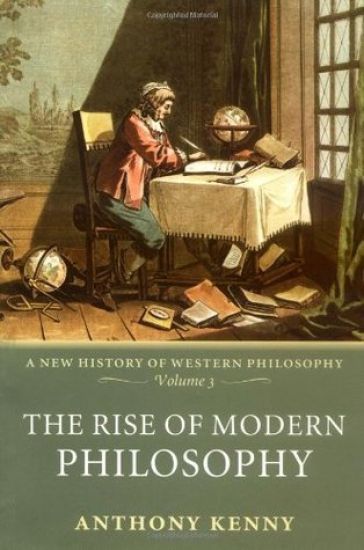
The Rise of Modern Philosophy

The Rise of Modern Philosophy

Anthony Kenny

Oxford University Press
2008
nidottu
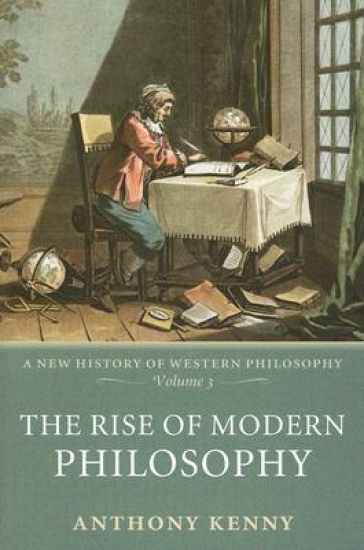
Sir Anthony Kenny's engaging new history of Western philosophy now advances into the modern era. The Rise of Modern Philosophy is the fascinating story of the emergence, from the early sixteenth to the early nineteenth century, of great ideas and intellectual systems that shaped modern thought. Kenny introduces us to some of the world's most original and influential thinkers, and shows us the way to an understanding of their famous works. The thinkers we meet include René Descartes, traditionally seen as the founder of modern philosophy; the great British philosophers Hobbes, Locke, and Hume; and the towering figure of Immanuel Kant, who perhaps more than any other made philosophy what it is today. In the first three chapters Kenny tells the story chronologically: his lively accessible narrative brings the philosophers to life and fills in the historical and intellectual background to their work. It is ideal as the first thing to read for someone new to the history of modern philosophy. In the seven chapters that follow Kenny looks closely at each of the main areas of philosophical exploration in this period: knowledge and understanding; the nature of the physical universe; metaphysics (the most fundamental questions there are about existence); mind and soul; the nature and content of morality; political philosophy; and God. A selection of intriguing and beautiful illustrations offer a vivid evocation of the human and social side of philosophy. Anyone who is interested in how our understanding of ourselves and our world developed will find this a book a pleasure to read.
The Rise of Modern Philosophy

The Rise of Modern Philosophy

Anthony Kenny

Oxford University Press
2006
sidottu
Sir Anthony Kenny's engaging new history of Western philosophy now advances into the modern era. The Rise of Modern Philosophy is the fascinating story of the emergence, from the early sixteenth to the early nineteenth century, of great ideas and intellectual systems that shaped modern thought. Kenny introduces us to some of the world's most original and influential thinkers, and shows us the way to an understanding of their famous works. The thinkers we meet include René Descartes, traditionally seen as the founder of modern philosophy; the great British philosophers Hobbes, Locke, and Hume; and the towering figure of Immanuel Kant, who perhaps more than any other made philosophy what it is today. In the first three chapters Kenny tells the story chronologically: his lively accessible narrative brings the philosophers to life and fills in the historical and intellectual background to their work. It is ideal as the first thing to read for someone new to the history of modern philosophy. In the seven chapters that follow Kenny looks closely at each of the main areas of philosophical exploration in this period: knowledge and understanding; the nature of the physical universe; metaphysics (the most fundamental questions there are about existence); mind and soul; the nature and content of morality; political philosophy; and God. A selection of intriguing and beautiful illustrations offer a vivid evocation of the human and social side of philosophy. Anyone who is interested in how our understanding of ourselves and our world developed will find this a book a pleasure to read.
The Aristotelian Ethics

The Aristotelian Ethics

Anthony Kenny

Oxford University Press
2016
sidottu
Sir Anthony Kenny presents a second edition of his landmark work The Aristotelian Ethics, which transformed Aristotle studies in 1978 by showing, on stylistic, historical, and philosophical grounds, that the Eudemian Ethics was a mature work with as strong a claim to be Aristotle's ethical masterpiece as the more widely studied Nicomachean Ethics. In this new edition Kenny offers a critical survey of developments in the field since The Aristotelian Ethics was first published. Kenny also addresses the criticisms of his first edition, both accepting those he sees as justified and addressing and refuting those which he feels are unfounded. The book remains essential reading for anyone interested in Aristotle's ethical works, arguably the most influential ever written.
The Aristotelian Ethics

The Aristotelian Ethics

Anthony Kenny

Oxford University Press
2016
nidottu
Sir Anthony Kenny presents a second edition of his landmark work The Aristotelian Ethics, which transformed Aristotle studies in 1978 by showing, on stylistic, historical, and philosophical grounds, that the Eudemian Ethics was a mature work with as strong a claim to be Aristotle's ethical masterpiece as the more widely studied Nicomachean Ethics. In this new edition Kenny offers a critical survey of developments in the field since The Aristotelian Ethics was first published. Kenny also addresses the criticisms of his first edition, both accepting those he sees as justified and addressing and refuting those which he feels are unfounded. The book remains essential reading for anyone interested in Aristotle's ethical works, arguably the most influential ever written.
Aquinas on Being

Aquinas on Being

Anthony Kenny

Clarendon Press
2005
nidottu
Anthony Kenny offers a critical examination of a central metaphysical doctrine of Thomas Aquinas, the greatest of the medieval philosophers. Aquinas's account of being is famous and influential: but Kenny argues that it in fact suffers from systematic confusion. Because of the centrality of the doctrine, this has implications for other parts of Aquinas's philosophical system: in particular, Kenny shows that the idea that God is pure being is a hindrance, not a help, to Aquinas's natural theology. Kenny's clear and incisive study, drawing on the scholastic as well as the analytic tradition, dispels the confusion and offers philosophers and theologians a guide through the labyrinth of Aquinas's ontology.
From Empedocles to Wittgenstein

From Empedocles to Wittgenstein

Anthony Kenny

Oxford University Press
2008
sidottu
From Empedocles to Wittgenstein is a collection of fifteen historical essays in philosophy, written by Sir Anthony Kenny in the early years of the 21st century. In the main they are concerned with four of the great philosophers whom he most esteems, namely Plato, Aristotle, Aquinas, and Wittgenstein. The author is not only one of the most respected historians of philosophy, and possibly the widest-ranging, but also one of the most successful at writing on the subject for a broad readership. In this volume he presents scholarly explorations of some themes which caught his interest as he worked on his acclaimed four-volume New History of Western Philosophy.
A New History of Western Philosophy

A New History of Western Philosophy

Anthony Kenny

Oxford University Press
2010
sidottu
This book is no less than a guide to the whole of Western philosophy -- the ideas that have undergirded our civilization for two-and-a-half thousand years. Anthony Kenny tells the story of philosophy from ancient Greece through the Middle Ages and the Enlightenment into the modern world. He introduces us to the great thinkers and their ideas, starting with Plato, Aristotle, and the other founders of Western thought. In the second part of the book he takes us through a thousand years of medieval philosophy, and shows us the rich intellectual legacy of Christian thinkers like Augustine, Aquinas, and Ockham. Moving into the early modern period, we explore the great works of Descartes, Hobbes, Locke, Leibniz, Spinoza, Hume, and Kant, which remain essential reading today. In the nineteenth and twentieth centuries, Hegel, Mill, Nietzsche, Freud, and Wittgenstein again transformed the way we see the world. Running though the book are certain themes which have been constant concerns of philosophy since its early beginnings: the fundamental questions of what exists and how we can know about it; the nature of humanity, the mind, truth, and meaning; the place of God in the universe; how we should live and how society should be ordered. Anthony Kenny traces the development of these themes through the centuries: we see how the questions asked and answers offered by the great philosophers of the past remain vividly alive today. Anyone interested in ideas and their history will find this a fascinating and stimulating read
A New History of Western Philosophy

A New History of Western Philosophy

Anthony Kenny

Oxford University Press
2012
nidottu
This book is no less than a guide to the whole of Western philosophy--the ideas that have undergirded our civilization for two-and-a-half thousand years. Anthony Kenny tells the story of philosophy from ancient Greece through the Middle Ages and the Enlightenment into the modern world. He introduces us to the great thinkers and their ideas, starting with Plato, Aristotle, and the other founders of Western thought. In the second part of the book he takes us through a thousand years of medieval philosophy, and shows us the rich intellectual legacy of Christian thinkers like Augustine, Aquinas, and Ockham. Moving into the early modern period, we explore the great works of Descartes, Hobbes, Locke, Leibniz, Spinoza, Hume, and Kant, which remain essential reading today. In the nineteenth and twentieth centuries, Hegel, Mill, Nietzsche, Freud, and Wittgenstein again transformed the way we see the world. Running though the book are certain themes which have been constant concerns of philosophy since its early beginnings: the fundamental questions of what exists and how we can know about it; the nature of humanity, the mind, truth, and meaning; the place of God in the universe; how we should live and how society should be ordered. Anthony Kenny traces the development of these themes through the centuries: we see how the questions asked and answers offered by the great philosophers of the past remain vividly alive today. Anyone interested in ideas and their history will find this a fascinating and stimulating read.
The Enlightenment

The Enlightenment

Anthony Kenny

SPCK Publishing
2017
pokkari
'If God did not exist, it would be necessary to invent him.' Voltaire Montesquieu, Hume, Voltaire, Diderot, Smith, Gibbon, Bentham... These are among the great thinkers who contributed to the dramatic developments in religion, science and philosophy that we now call the Enlightenment. They dominated the second half of the eighteenth century and their writings continue to shape the intellectual and political worlds we now inhabit. Written by a world authority, this brief history of the Enlightenment concludes with a perceptive assessment of the cultural, religious, ethical and political dimensions of its legacy. 'A remarkable short tour of the Enlightenment that is brisk but never hurried, covering more than seems possible. Kenny is as spirited and opinionated as the age he describes, tempered by a moderation and breadth of knowledge that comes from experience and hindsight.' Julian Baggini, founder editor of The Philosophers' Magazine
Immanuel Kant

Immanuel Kant

Anthony Kenny

SPCK Publishing
2019
pokkari
‘Two things fill the mind with ever new and increasing admiration. . . the starry heavens above me and the moral law within me.’ Immanuel Kant (1724– 1804) remains a major influence in philosophy, especially in the areas of epistemology, ethics, theology, political theory and aesthetics. This brief history helpfully explains the development of Kant’s thought, and highlights its contemporary relevance, by considering each of his major works in their order of appearance. The book has a brief chronology at the front plus a glossary of key terms and a list of further reading at the back.
Brief Encounters

Brief Encounters

Anthony Kenny

SPCK Publishing
2018
sidottu
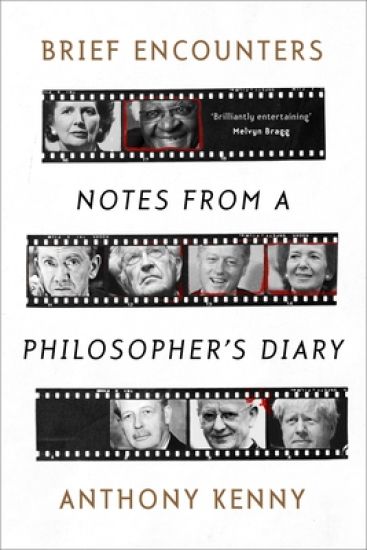
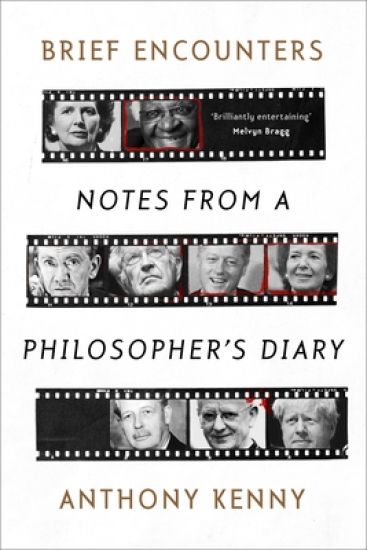
Cardinals, directors, dissidents, dons, judges, novelists, philosophers, prime ministers, scientists, world statesmen. . . Throughout his long and distinguished career, Sir Anthony Kenny has encountered some of the most notable and influential leaders of the post-war world. In these brilliantly vivid vignettes Kenny offers telling and often unexpected insights into the achievements, flaws and foibles of sixty public figures - past and present - each of whom has contributed in decisive ways to our political, spiritual and cultural heritage.
Brief Encounters

Brief Encounters

Anthony Kenny

SPCK Publishing
2019
pokkari
Cardinals, directors, dissidents, dons, judges, novelists, philosophers, prime ministers, scientists, world statesmen. . . Throughout his long and distinguished career, Sir Anthony Kenny has encountered some of the most notable and influential leaders of the post-war world. In these brilliantly vivid vignettes Kenny offers telling and often unexpected insights into the achievements, flaws and foibles of sixty public figures - past and present - each of whom has contributed in decisive ways to our political, spiritual and cultural heritage.
Action, Emotion and Will

Action, Emotion and Will

Anthony Kenny

Routledge
2003
nidottu
Action, Emotion and Will was first published in 1963, when it was one of the first books to provoke serious interest in the emotions and philosophy of human action. Almost forty years on, Anthony Kenny's account of action and emotion is still essential reading for anyone interested in these topics.The first part of the book takes an historical look at the emotions in the work of Descartes, Locke and particularly Hume. In the second part, Kenny moves on to discuss some of the experimental work on the emotions by 20th Century psychologists like William James. Separate chapters cover feelings, motives, desire and pleasure. This edition features a brand new preface by the author.