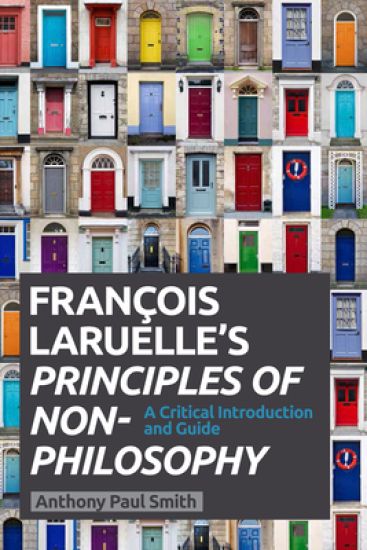
In Principles of Non-Philosophy, Laruelle develops the concepts and method of a more democratic form of thought where neither science nor philosophy is subjected to one another, but brought together in a more productive theoretical and practical relationship. While the potential importance of this project is clear, Laruelle remains famously difficult. Anthony Paul Smith provides an introduction and guide to the text that situates you amongst the figures and concepts Laruelle engaged with, provides a foothold for your own understanding and, more importantly, potential use of the project of non-philosophy.
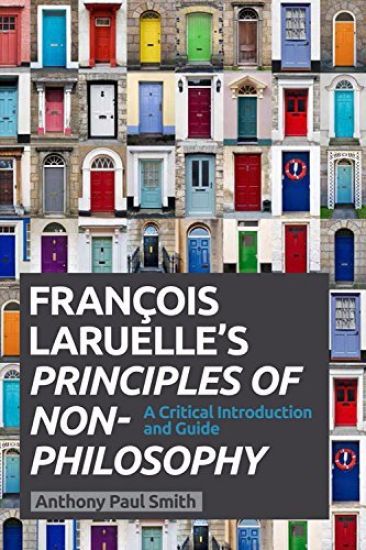
This is the insider's guide through the difficult terrain of Laruelle's most complete development of non philosophy. Francois Laruelle has been engaged in one of the most daring projects in contemporary philosophy, aiming to overturn the standard form of philosophy and renew its practice again. However, he grew dissatisfied with the purely critical form of his work as it seemed to simply subordinate philosophy to science and so simply reversed the old hierarchy. In Principles of Non Philosophy Laruelle develops the concepts and method of a more democratic form of thought where neither science nor philosophy is subjected to one another, but brought together in a more productive theoretical and practical relationship. While the potential importance of this project is clear, Laruelle remains famously difficult. Anthony Paul Smith provides an introduction and guide to the text that situates you amongst the figures and concepts Laruelle engaged with, provides a foothold for your own understanding and, more importantly, potential use of the project of non philosophy. It provides you with the essential the historical background to non philosophy, which Laruelle leaves out of his writing. It explains how non philosophy contributes to contemporary debates in European philosophy, especially in relation to the philosophy of science, theories of the subject and the role of language in philosophy. It shows how non philosophy can be a useful research paradigm for interdisciplinary or transdisciplinary work.
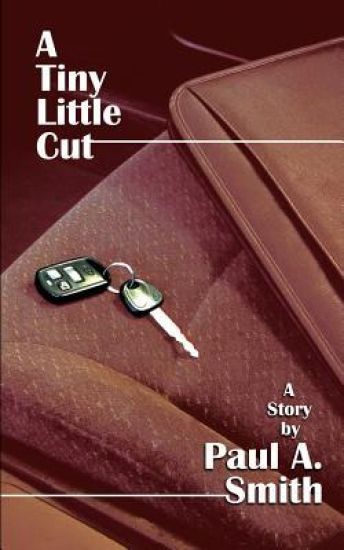
This story is about the serendipity of everyday life. How a tiny little cut on a person's finger can, without warning, turn a person's life upside down. What began as an annoying little interlude very quickly became a technicolor nightmare. To add to the fun, this person is a recovering addict and alcoholic. This puts him squarely into the type of situation that used to destroy him. Instead, he needs to rise above it. And survive.
Isabel Albiston; Bárbara Bianchi; Alex Egerton; Bailey Freeman; Victoria Gill; Anthony Ham; Trent Holden; Mark Johanson; Brendan Sainsbury; Carinya Sharples; Paul Smith; Wendy Yanagihara
Lonely Planet's local travel experts reveal all you need to know to plan the trip of a lifetime to South America.Discover popular and off the beaten track experiences from spotting giant tortoises, marine iguanas, and more on the Galapagos' Isla Isabela, to visiting the sublime Inca citadel of Machu Picchu, and exploring the charming coastal town of Cartagena with its pastel-toned balconies and buzzing street food stalls.Build a trip to remember with Lonely Planet's South America travel guide:Our classic guidebook format provides you with the most comprehensive level of information for planning multi-week tripsUpdated with an all new structure and design so you can navigate South America and connect experiences together with easeCreate your perfect trip with exciting itineraries for extended journeys combined with suggested day trips, walking tours, and activities to match your passionsGet fresh takes on must-visit sights and expert local recommendations on when to go, eating, drinking, nightlife, shopping, accommodation, adventure activities, festivals, and moreEssential information toolkit containing tips on arriving; transport; making the most of your time and money; LGBTIQ+ travel advice; useful words and phrases; accessibility; and responsible travelConnect with South American culture through stories that delve deep into local life, history, and traditions Inspiring full-colour travel photography and mapsCovers: Argentina; Bolivia; Brazil; Chile; Colombia; Ecuador; French Guiana; Guyana; Paraguay; Peru; Suriname; Uruguay; VenezuelaCreate a trip that's uniquely yours and get to the heart of this extraordinary part of the world with Lonely Planet's South America.
Regis St Louis; Isabel Albiston; Robert Balkovich; Celeste Brash; Jade Bremner; Cathy Brown; Gregor Clark; Alex Egerton; Michael Grosberg; Anthony Ham; Mark Johanson; Anna Kaminski; Brian Kluepfel; Tom Masters; Carolyn McCarthy; MaSovaida Morgan; Anja Mutic; Kevin Raub; Brendan Sainsbury; Adam Skolnick; Paul Smith; Andy Symington; Phillip Tang; Luke Waterson; Wendy Yanagihara
Lonely Planet’s South America is your passport to the most relevant, up-to-date advice on what to see and skip, and what hidden discoveries await you. Walk Patagonian glaciers, dance the night away in Rio de Janeiro and explore Incan ruins; all with your trusted travel companion. Get to the heart of South America and begin your journey now! Inside Lonely Planet’s South America Travel Guide: Up-to-date information - all businesses were rechecked before publication to ensure they are still open after 2020’s COVID-19 outbreak NEW top experiences feature - a visually inspiring collection of [destination’s] best experiences and where to have them What's NEW feature taps into cultural trends and helps you find fresh ideas and cool new areas Improved planning tools for family travelers - where to go, how to save money, plus fun stuff just for kids Color maps and images throughout Highlights and itineraries help you tailor your trip to your personal needs and interests Insider tips to save time and money and get around like a local, avoiding crowds and trouble spots Essential info at your fingertips - hours of operation, websites, transit tips, prices Honest reviews for all budgets - eating, sleeping, sightseeing, going out, shopping, hidden gems that most guidebooks miss Cultural insights give you a richer, more rewarding travel experience - history, people, music, landscapes, wildlife, cuisine, politics Over 168 maps Covers Argentina, Bolivia, Brazil, Chile, Colombia, Ecuador, French Guiana, Guyana, Paraguay, Peru, Suriname, Uruguay, Venezuela and moreThe Perfect Choice: Lonely Planet’s South America, our most comprehensive guide to South America, is perfect for both exploring top sights and taking roads less traveled. About Lonely Planet: Lonely Planet is a leading travel media company, providing both inspiring and trustworthy information for every kind of traveler since 1973. Over the past four decades, we've printed over 145 million guidebooks and phrasebooks for 120 languages, and grown a dedicated, passionate global community of travelers. You'll also find our content online, and in mobile apps, videos, 14 languages, armchair and lifestyle books, ebooks, and more, enabling you to explore every day. 'Lonely Planet guides are, quite simply, like no other.' – New York Times'Lonely Planet. It's on everyone's bookshelves; it's in every traveler's hands. It's on mobile phones. It's on the Internet. It's everywhere, and it's telling entire generations of people how to travel the world.' – Fairfax Media (Australia)
This is a boxed set of Anthony Caro: Drawing in Space, Anthony Caro: Interior and Exterior, Anthony Caro: Figurative and Narrative Sculpture, Anthony Caro: Small Sculptures and Anthony Caro: Presence. The box has been specially designed by Anthony Caro.Anthony Caro restlessly explored an unpredictable range of sculptural possibilities, testing limits and positing new ideas about the nature of eloquent three-dimensional objects. Through his expansion and transformation of the legacy of construction in metal pioneered by Julio González and Pablo Picasso, and further developed by David Smith in the USA, Caro created a new, multivalent language of three-dimensional abstraction.The Caro pendulum swung between extremes of linearity and robustness, abstractness and allusion. He countered his mastery of line and transparency with investigations of our responses to mass and perceptions of interior and exterior, even experimenting with literally enterable sculptures. He made rigorously abstract constructions that resemble nothing but themselves, intimate table-based pieces, monumental constructions like metaphorical architecture, and complex multi-part cycles of narrative works that pulse in and out of explicit illusionism. And more. The range and variety of Caro's sculpture notwithstanding, there are also common threads that run through all of his work.The five volumes in this set, each by a different critic, examine the various aspects of Caro's evolution individually, tracing the permutations of different themes – narrative, volume and mass, line and openness – throughout his work, over time. Each volume is independent and explores different territory, but cumulatively, by tracing these dominant themes, they provide new insight into the achievement of one of the undisputed giants of Modernist art.
In Against All Enemies Part One: Troublemaker, Pablo has to keep his mind more focused than ever before. Home three weeks from a state bid before he gets locked in contract with the kingpin El Diablo.So much starts to happen and takes place that Pablo doesn't know whom to trust or put to sleep as he strives to attain money for his dream to become a success.Questions of trust include some of the closest people to him. Starting with his childhood friend BB. Is his friend a snake or are things being placed to look that way? Is it his partner in crime Bianca that is rocking him to sleep like a baby in a nursery?The twists and turns of deceit arise from all areas of Pablo's life that he never dreamed. In this tale of Love, Money, Family, Loyalty, Trust, Power, Intrigue. Up and down, who will be standing when all the smoke clears?
Examining the constitutive role of language and narration in key areas of human experience, Narrative and the Self articulates a view of the self as the implied subject of narrative utterances. Anthony Paul Kerby draws on the diverse insights of recent work in philosophy, literary theory, and psychology to synthesize a coherent and provocative view of narrative identity and selfhood. Invoking the writings of Benveniste, Ricoeur, Merleau-Ponty, Lacan, Taylor, and other theorists, he argues that language and narration play a central role in key aspects of human experience such as emotion, values, recollection, and sense of history. Fundamental to Kerby's exposition is a defense of the quasi-narrative nature of our everyday experience. Kerby delineates a convincing narrative model of the self and offers a valuable overview of contemporary philosophical issues surrounding the place and role of narrative in human experience.
Anthony Johnson is not your regular educator who followed a traditional path in life. Early on, he had to endure a myriad of hardships, which caused him to drop out of school on several occasions. For Anthony Johnson, failure was the only option he had, however, it did not deter him from pursuing a life-long dream of becoming an educator. After obtaining a GED and working hard to provide for his family financially, Mr. Johnson earned a Bachelor's degree in education. This was the impetus for the innovative educator he has become today. What makes Anthony Johnson a gem is not the fact that he is an African American male, but that he cultivates and fosters a learning environment unlike any other seen in this country.
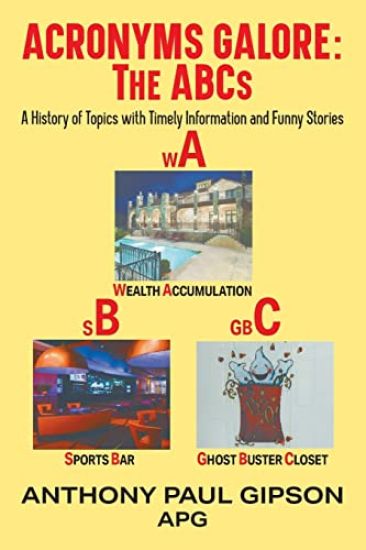
Author APG (Anthony Paul Gipson) loves acronyms. His book Acronyms Galore: The ABCs - A History of Topics with Timely Information and Funny Stories considers many aspects of life, spanning sports to TV shows, modern culture to health. The subjects are varied and timely, and project hilarious moments. Stories include: Assets, WA (Wealth Accumulation)Sports, QFB (Questionable Fan Behavior)Housing, GBC (Ghost Buster Closet ) "Throughout this book, I discuss many acronyms regarding the area of health. Some include TBB (The Big B: Blessed), LTYB (Listening To Your Body), and TWC (The Wellness Community). When reading about these acronyms, a reader will learn more about the emotional, physical, and personal challenges I experienced regarding my health." The author states he has "used acronyms a great part of my life." He continues, "The purpose of this book is to have readers think, laugh, and take control of their lives." "I want anyone who has experienced a medical setback, like me, to feel reassured that no matter what the diagnosis, treatment, and recovery, we must continue to have the hope, the strength, and the desire to continue to live and enjoy life. Do not let mental or, even more so, physical scars from a surgery and/or treatment continue to make you feel ashamed, alone, and unworthy to live your life. You must decide with whom you want to share your personal triumphs." (About the Author) Anthony Paul Gipson APG is a professional writer who grew up in Los Angeles and now resides in the Long Beach area. This is his first book. His next, TNN: The New Normal, relates the consequences of the ongoing COVID-19 health crisis.
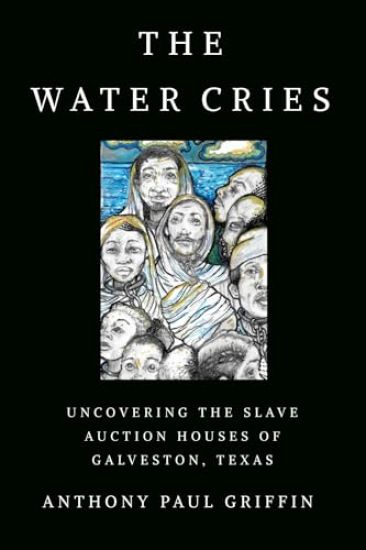
The Water Cries represents an ambitious search for the location of the slave auction houses in one of America's most storied cities. The author plumbs historical documentation, sifting historical advertisements and archiving familial connections.The book is a history told by grandmothers and grandfathers. It addresses a history previously told under a different light or never told atoll. These are the tales of an heir of the previously enslaved, tales of images seen and unseen, the voices of the mystical. The Water Cries represents contribution to the telling the long-ignored truths of Galveston's central role in the untenable trade of human souls, slavery.The book is divided into three sections: before Emancipation(1840-1865); after Emancipation (1865-1940), with the third section providing concrete suggestions for Galveston moving forward. This latter section involves giving faces and names to the voices we hear, the creation of a historical district, and the borrowing of other communities' progress.The Water Cries is a contribution to the rest of us also, particularly as we continue to grapple with what W. E. B. Du Bois described as America's unique problem, the colour line.
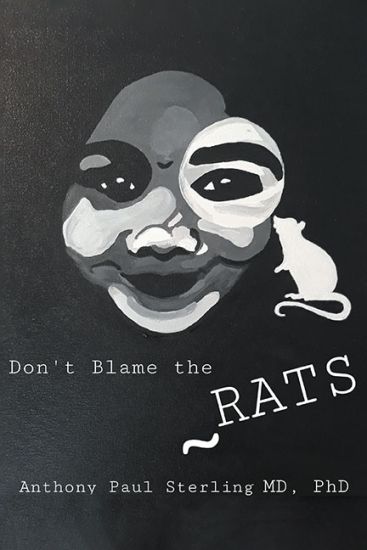
Don't Blame the Rats is based on the life of Dr. Anthony Paul Sterling. Part true and part fiction, the author's story represents a compilation of his vivid imagination, gift of language, and desire to stir the inspiration of those who read his short stories and other explorations.He says, "The characters are mine and mine alone. The child is my granddaughter. I wanted her to be recognized in my writings."His book covers his life in New York City from 1955 to the present day, as well as his experiences in Vietnam.As for the rats: "On the outside Detective Adam was smiling but on the inside, he was down: he knew some facts that were very disheartening: all female and male prostitutes in New York City were HIV positive; few people could afford treatment; many of these people left the city and traveled over many states and foreign countries. He also knew that a single female rat can deliver 15,000 babies in litters in a single year, which meant billions world-wide. Imagine AIDS being carried and spread everywhere on the globe He notified his superiors, then called the ASPCA, CDC, Board of Health and friends at Columbia University. The bottom line was: we need animals for testing and treatment." About the Author: Anthony Paul Sterling, M.D., Ph.D., says he "was born in a ghetto in New York City. I studied hard and became an orthopedic surgeon." Now retired and living in Florida, he was inspired to write this book by his granddaughter (because of the way she speaks to animals). Besides writing, he is an aficionado of competitive martial arts.
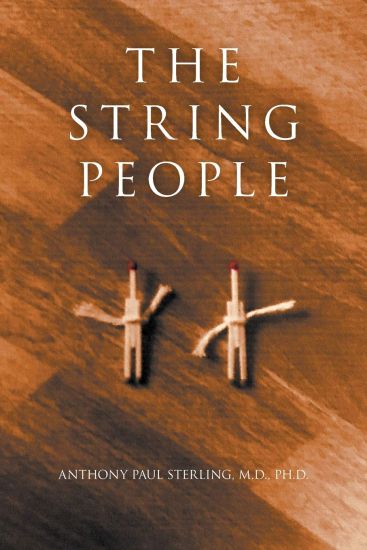
The String People is a collection of twenty-eight unforgettable short stories drawn from Dr. Anthony Paul Sterling's imagination, mixed with other tales of the author's life experiences.The title of the book and the first story "The String People" came from "when I was very young. My brother and I had only matches to make people that we played with. We were poor and couldn't afford real toys. These string people became soldiers, cowboys, etc."From the short story "My Bald Head: ""Early in life, at age 5 or 6, I told my Grandma Cheecha (Francis), who spoke only Sicilian, that I wanted to be unna Doctura, so I could listen to her heart and give her injections of insulin. She would laugh and hug me. I never forgot this woman who got off a boat from Sicily with her husband Paul and 22 children ... The next major influence came when I arrived on the children's cancer unit. What affected me was the number of bald heads seen in almost every bed; this meant that all of them had cancer and were on chemotherapy. I never got over this; I prayed, cried, and eventually shaved my head."About the Author: Anthony Paul Sterling, M.D., Ph.D., grew up in Manhattan, New York. He was the first in his family of three siblings to finish college and then went on to medical school, all on scholarship. He graduated from Downstate Medical School, New York, in 1967; did his residency in Kings County Hospital, New York, in 1968; and was drafted into the USMC in 1968. Now retired, the author was a private practitioner in Waterbury, Connecticut. His first book was Tears and Laughter of a Physician.