Kirjojen hintavertailu. Mukana 11 342 296 kirjaa ja 12 kauppaa.

Kirjahaku

Etsi kirjoja tekijän nimen, kirjan nimen tai ISBN:n perusteella.

1000 tulosta hakusanalla Anthony Uhlmann

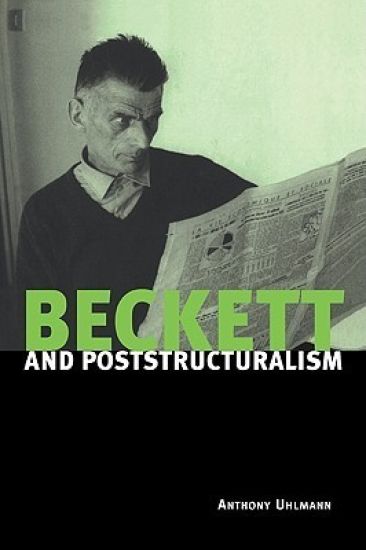
Beckett and Poststructuralism

Beckett and Poststructuralism

Anthony Uhlmann

Cambridge University Press
2008
pokkari
In Beckett and Poststructuralism, Anthony Uhlmann offers a reading of Beckett in relation to French philosophy, particularly the work of Foucault, Deleuze and Guattari, Levinas, and Derrida. Uhlmann offers a work of literary criticism that is also a piece of intellectual history, emphasizing how Beckett develops a kind of critical thinking which differs from yet is just as powerful as that of philosophers who, along with Beckett, found themselves faced with sets of ethical problems which were thrown into sharp relief in post-war France. Uhlmann explores the links between ethics and physical existence in Beckett, Foucault and Deleuze and Guattari, and between ethics and language in Beckett, Derrida and Levinas, showing how post-war French philosophy was powerfully affected by Beckett's work. Literature is not reduced to philosophy or vice versa; rather Uhlmann considers how they interrelate and overlap, informing and deforming one another, and how both encounter history.
Samuel Beckett and the Philosophical Image

Samuel Beckett and the Philosophical Image

Anthony Uhlmann

Cambridge University Press
2009
pokkari
Beckett often made use of images from the visual arts and readapted them, staging them in his plays, or using them in his fiction. Anthony Uhlmann sets out to explain how an image differs from other terms, like 'metaphor' or 'representation', and, in the process, to analyse Beckett's use of images borrowed from philosophy and aesthetics. This study, first published in 2006, carefully examines Beckett's thoughts on the image in his literary works and his extensive notes to the philosopher Arnold Geulincx. Uhlmann considers how images might allow one kind of interaction between philosophy and literature, and how Beckett makes use of images which are borrowed from, or drawn into dialogue with, philosophical images from Geulincx, Berkeley, Bergson, and the ancient Stoics. Uhlmann's reading of Beckett's aesthetic and philosophical interests provides a revolutionary reading of the importance of the image in his work.
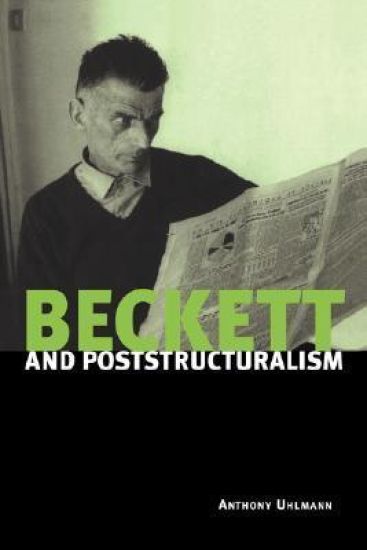
Beckett and Poststructuralism

Beckett and Poststructuralism

Anthony Uhlmann

Cambridge University Press
1999
sidottu
In Beckett and Poststructuralism, Anthony Uhlmann offers a reading of Beckett in relation to French philosophy, particularly the work of Foucault, Deleuze and Guattari, Levinas, and Derrida. Uhlmann offers a work of literary criticism that is also a piece of intellectual history, emphasizing how Beckett develops a kind of critical thinking which differs from yet is just as powerful as that of philosophers who, along with Beckett, found themselves faced with sets of ethical problems which were thrown into sharp relief in post-war France. Uhlmann explores the links between ethics and physical existence in Beckett, Foucault and Deleuze and Guattari, and between ethics and language in Beckett, Derrida and Levinas, showing how post-war French philosophy was powerfully affected by Beckett's work. Literature is not reduced to philosophy or vice versa; rather Uhlmann considers how they interrelate and overlap, informing and deforming one another, and how both encounter history.
Samuel Beckett and the Philosophical Image

Samuel Beckett and the Philosophical Image

Anthony Uhlmann

Cambridge University Press
2006
sidottu
Beckett often made use of images from the visual arts and readapted them, staging them in his plays, or using them in his fiction. Anthony Uhlmann sets out to explain how an image differs from other terms, like 'metaphor' or 'representation', and, in the process, to analyse Beckett's use of images borrowed from philosophy and aesthetics. This study, first published in 2006, carefully examines Beckett's thoughts on the image in his literary works and his extensive notes to the philosopher Arnold Geulincx. Uhlmann considers how images might allow one kind of interaction between philosophy and literature, and how Beckett makes use of images which are borrowed from, or drawn into dialogue with, philosophical images from Geulincx, Berkeley, Bergson, and the ancient Stoics. Uhlmann's reading of Beckett's aesthetic and philosophical interests provides a revolutionary reading of the importance of the image in his work.
Thinking in Literature: Joyce, Woolf, Nabokov

Thinking in Literature: Joyce, Woolf, Nabokov

Anthony Uhlmann

Continuum Publishing Corporation
2011
nidottu
Thinking in Literature sets out to examine how the Modernist novel might be understood to be a machine for thinking, and further how it might offer means of coming to terms with what it means to think. It begins with a theoretical analysis of the concept of thinking in literature using Gilles Deleuze as a point of departure and returning directly to the work of the two philosophers who were most important to Deleuze's understanding of thinking in literature: Spinoza and Leibniz. Three elements are identified as crucial to aesthetic expression: relation; sensation; and composition. Yet in order to build a fuller understanding of these processes it is necessary to move from theory to specific readings of artistic practice. Uhlmann examines the aesthetic practice of three major Modernist writers: James Joyce, Virginia Woolf, and the young Vladimir Nabokov. Each can be understood as working with relation, sensation and composition, yet each emphasize the interrelations between them in differing ways in expressing the potentials for thinking in literature.
Thinking in Literature: Joyce, Woolf, Nabokov

Thinking in Literature: Joyce, Woolf, Nabokov

Anthony Uhlmann

Continuum Publishing Corporation
2011
sidottu
Thinking in Literature sets out to examine how the Modernist novel might be understood to be a machine for thinking, and further how it might offer means of coming to terms with what it means to think. It begins with a theoretical analysis of the concept of thinking in literature using Gilles Deleuze as a point of departure and returning directly to the work of the two philosophers who were most important to Deleuze's understanding of thinking in literature: Spinoza and Leibniz. Three elements are identified as crucial to aesthetic expression: relation; sensation; and composition. Yet in order to build a fuller understanding of these processes it is necessary to move from theory to specific readings of artistic practice. Uhlmann examines the aesthetic practice of three major Modernist writers: James Joyce, Virginia Woolf, and the young Vladimir Nabokov. Each can be understood as working with relation, sensation and composition, yet each emphasize the interrelations between them in differing ways in expressing the potentials for thinking in literature.
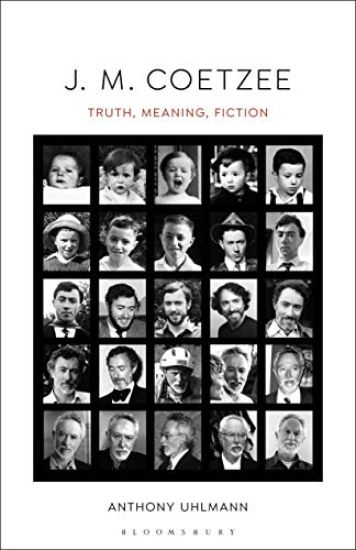
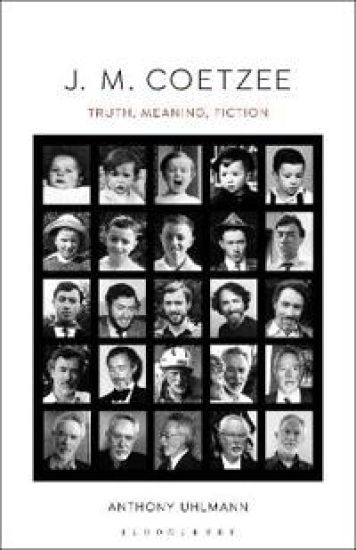
J. M. Coetzee

J. M. Coetzee

Anthony Uhlmann

Bloomsbury Academic USA
2020
nidottu
J. M. Coetzee: Truth, Meaning, Fiction illuminates the intellectual and philosophical interests that drive Coetzee’s writing. In doing so, it makes the case for Coetzee as an important and original thinker in his own right. Whilst looking at Coetzee’s writing career, from his dissertation through to The Schooldays of Jesus (2016), and interpreting running themes and scenarios, style and evolving attitudes to literary form, Anthony Uhlmann also offers revealing glimpses, informed by archival research, of Coetzee’s writing process. Among the main themes that Uhlmann sees in Coetzee’s writing, and which remains highly relevant today, is the awareness that there is truth in fiction, or that fiction can provide valuable insights into real world problems, and that there are also fictions of the truth: that we are surrounded, in our everyday lives, by stories we wish to believe are true. J. M. Coetzee: Truth, Meaning, Fiction offers a revealing new account of one of arguably our most important contemporary writers.
J. M. Coetzee

J. M. Coetzee

Anthony Uhlmann

Bloomsbury Academic USA
2020
sidottu
J. M. Coetzee: Truth, Meaning, Fiction illuminates the intellectual and philosophical interests that drive Coetzee’s writing. In doing so, it makes the case for Coetzee as an important and original thinker in his own right. Whilst looking at Coetzee’s writing career, from his dissertation through to The Schooldays of Jesus (2016), and interpreting running themes and scenarios, style and evolving attitudes to literary form, Anthony Uhlmann also offers revealing glimpses, informed by archival research, of Coetzee’s writing process. Among the main themes that Uhlmann sees in Coetzee’s writing, and which remains highly relevant today, is the awareness that there is truth in fiction, or that fiction can provide valuable insights into real world problems, and that there are also fictions of the truth: that we are surrounded, in our everyday lives, by stories we wish to believe are true. J. M. Coetzee: Truth, Meaning, Fiction offers a revealing new account of one of arguably our most important contemporary writers.
Revisioning Beckett

Revisioning Beckett

S. E. Gontarski; Anthony Uhlmann

Bloomsbury Academic USA
2018
nidottu
Revisioning Beckett reassesses Beckett’s career and literary output, particularly his engagement with what might be called decadent modernism. Gontarski approaches Beckett from multiple viewpoints: from his running afoul of the Irish Censorship of Publications Acts in the 1930s through the 1950s, his preoccupations to “find literature in the pornography, or beneath the pornography,” his battles with the Lord Chamberlain in the mid-1950s over London stagings of his first two plays, and his close professional and personal associations with publishers who celebrated the work of the demimonde. Much of that term encompasses an opening to the fullness of human experience denied in previous centuries, and much of that has been sexual or decadent. As Gontarski shows, the aesthetics that emerges from such early career encounters and associations continues to inform Beckett’s work and develops into experimental modes that upend literary models and middle-class values, an aesthetics that, furthermore, has inspired any number of visual artists to re-vision Beckett.
Revisioning Beckett

Revisioning Beckett

S. E. Gontarski; Anthony Uhlmann

Bloomsbury Academic USA
2018
sidottu
Revisioning Beckett reassesses Beckett’s career and literary output, particularly his engagement with what might be called decadent modernism. Gontarski approaches Beckett from multiple viewpoints: from his running afoul of the Irish Censorship of Publications Acts in the 1930s through the 1950s, his preoccupations to “find literature in the pornography, or beneath the pornography,” his battles with the Lord Chamberlain in the mid-1950s over London stagings of his first two plays, and his close professional and personal associations with publishers who celebrated the work of the demimonde. Much of that term encompasses an opening to the fullness of human experience denied in previous centuries, and much of that has been sexual or decadent. As Gontarski shows, the aesthetics that emerges from such early career encounters and associations continues to inform Beckett’s work and develops into experimental modes that upend literary models and middle-class values, an aesthetics that, furthermore, has inspired any number of visual artists to re-vision Beckett.
Anthony

Anthony

Joan Vassar

Dream House Press
2020
pokkari
Joan Vassar's captivating Black series picks up on the gritty streets of New York City during the height of the Civil War. Anthony, mired in pain and still reeling from the death of his best friend, travels to Manhattan on an errand for the legendary Black. Once the task is complete, he finds himself at a brothel specializing in dark women. When circumstances lead Anthony to steal a young woman from the infamous Hen House, he forever changes the course of his life and the lives of the people of Fort Independence. Fresh out of options, Anthony is forced to seek assistance to right the wrongs his actions have caused. Black comes to his aid and the men ride out to keep peril away from the fort. Anthony: Unshackled is a gripping tale of redemption, love and liberty. Join Joan Vassar, Black and the men on yet another nail biting, heart-pounding journey.
Anthony

Anthony

Phd Vicki Peterson

Createspace Independent Publishing Platform
2003
nidottu
Roman gods, legendary as they are, possessed only one specialty. Then there was Anthony, the Son of a Seer.
Anthony

Anthony

Mlh

Outskirts Press
2017
pokkari
Carnage is his bloodline. Salvation will be his legacy. In a world where humans are scorned and Hizards are hunted, Anthony, a hard-knock teenager, must overcome the hardships of being the last Hizard in Chaizo. In this journey, Anthony and his best friend seek to destroy the malicious wizard Sayno, who crushed their home. But Anthony must realize that his desire for vengeance is insignificant when faced with a catastrophic threat unleashed.
Anthony

Anthony

Sydney Landon

Createspace Independent Publishing Platform
2018
nidottu
My name is Anthony Moretti and I'm the prince of the Moretti family. Although I'm not active in the crime syndicate that my father, Draco Moretti, began, I'll always be protected by the family and feared by those outside of it. After my father was gunned down in the street, I used my inheritance from him to open my first nightclub. For years, building my empire was my only concern, until fate brought Jacey Wrenn into my life. She had absolutely no idea, but I'd known her before I'd ever met her. She'd haunted my dreams, the beautiful stranger that I longed to find, but hadn't a clue as to where to begin. Sounds like a fairy tale, right? I wish. The woman that I've been obsessed with for years is broken so badly, I'm not sure if I can save her. Hell, how does the son of the devil convince a fallen angel that redemption is possible for people like us?