Kirjojen hintavertailu. Mukana 11 342 296 kirjaa ja 12 kauppaa.

Kirjahaku

Etsi kirjoja tekijän nimen, kirjan nimen tai ISBN:n perusteella.

1000 tulosta hakusanalla Anthony Walsh

Biosociology

Biosociology

Anthony Walsh

Praeger Publishers Inc
1995
sidottu
Biosociology is an emerging paradigm seeking to understand human behavior by integrating relevant insights from the natural sciences into traditional sociological thinking. Biosociology posits no ultimate causes of human behavior, rather it seeks to understand how biological factors interact with other factors to produce observed behavior. The book presents a brief introduction to biophysical systems that are important to the understanding of human behavior - genetics, neurophysiology, and the autonomic and endocrine systems. These systems are explored in the contexts of sociological importance, such as socialization, learning, gender roles, gender differences, sexuality, the family, deviance, and criminality.
Love

Love

Anthony Walsh

Routledge
2019
nidottu
Love is a little word with a universe of meanings and has engaged people's interest throughout human history. The need to give and receive love lies deep within human nature. Philosophers, poets, theologians, sociologists, and scientists have all attempted to explain its exact origin, but is it an evolutionary adaptation, or a social construct?Walsh discusses that the nature of and need for love has biological origins. He draws upon Darwin's sexual selection theory to define the perceptions of love by infants through the process of experience-dependent brain wiring. He observes that mother love makes a child capable of loving and that father love makes a child feel worthy of love. He appraises the origin and purpose of romantic love in his discussions on sexual reproduction by looking at chemical and neurological responses to love and the influence of love on one's physical and mental health.With frequent quotes from literary masters like Shakespeare to orient one's scientific and humanistic understanding of love, Walsh goes on to explore various styles of romantic love, including monogamy, promiscuity, bartering love, and betrayed love; the effects of a skewed sex ratio on dating and mating practices; and the age-old quest for a perfect society populated by perfect people obeying the biblical command to "love one another."
Reinforcement Sensitivity Theory

Reinforcement Sensitivity Theory

Anthony Walsh

Routledge
2020
nidottu
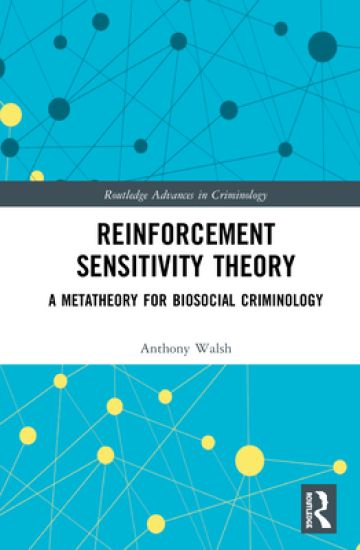
Some of the brightest minds in criminology who were nurtured on the strictly environmentalist paradigm of the 20th century have declared that biosocial criminology is the paradigm for the 21st century. This book attempts to unite this ever-growing field with the premier neurobiological theory of personality, otherwise known as reinforcement sensitivity theory (RST). Anthony Walsh places the highly variable number of biosocial approaches under a single theoretical umbrella, whilst providing a unique integrative framework.As the leading neurobiological theory of personality and behavior in psychology today, RST focuses around the age-old question of how naturally selfish social animals can achieve their wants and needs without alienating others in their social groups. RST posits that evolution has built into humans three interacting systems: the behavioral approach system; the behavioral inhibition system; and the fight/flight/freeze system. RST identifies the neurobiological and genetic functions underlying each system and has found a cascade of supporting evidence.Throwing new light on many areas of concern to criminologists, such as psychopathy, violence, ADHD, and schizophrenia, this book will be of interest to scholars and upper-level students in the field. Additional features such as Focus Boxes and diagrams delve into measurement techniques and brain areas.
Biology and Criminology

Biology and Criminology

Anthony Walsh

Routledge
2012
nidottu
Numerous criminologists have noted their dissatisfaction with the state of criminology. The need for a new paradigm for the 21st century is clear. However, many distrust biology as a factor in studies of criminal behavior, whether because of limited exposure or because the orientation of criminology in general has a propensity to see it as racist, classist, or at least illiberal. This innovative new book by noted criminologist Anthony Walsh dispels such fears, examining how information from the biological sciences strengthens criminology work and both complements and improves upon traditional theories of criminal behavior. With its reasoned case for biological science as a fundamental tool of the criminologist, Walsh's groundbreaking work will be required reading for all students and faculty within the field of criminology.
Biology and Criminology

Biology and Criminology

Anthony Walsh

Routledge
2009
sidottu
Numerous criminologists have noted their dissatisfaction with the state of criminology. The need for a new paradigm for the 21st century is clear. However, many distrust biology as a factor in studies of criminal behavior, whether because of limited exposure or because the orientation of criminology in general has a propensity to see it as racist, classist, or at least illiberal. This innovative new book by noted criminologist Anthony Walsh dispels such fears, examining how information from the biological sciences strengthens criminology work and both complements and improves upon traditional theories of criminal behavior. With its reasoned case for biological science as a fundamental tool of the criminologist, Walsh's groundbreaking work will be required reading for all students and faculty within the field of criminology.
Social Class and Crime

Social Class and Crime

Anthony Walsh

Routledge
2012
nidottu
Social class has been at the forefront of sociological theories of crime from their inception. It is explicitly central to some theories such as anomie/strain and conflict, and nips aggressively at the periphery of others such as social control theory. Yet none of these theories engage in a systematic exploration of what social class is, how individuals come to be placed in one rung of the class ladder rather than another, or the precise nature of the class-crime relationship. This book avers that the same factors that help to determine a person’s class level also help to determine that person’s risk for committing criminal acts. Social class is a modern outcome of primordial status-striving and requires explanation using the modern tools of genetics, neurobiology, and evolutionary biology, and this is what this book does. Many aspects of criminal behavior can be understood by examining the shared factors that lead to the success or failure in the workplace and to pro- or antisocial activities. A biosocial approach requires reducing sociology’s “master variable” to a lower level analysis to examine its constituent parts, which is resisted by many criminologists as highly controversial. However, this book makes plain that the more we know about the nature side of behavior the more important we find the nurture side to be. It makes clear how the class/crime relationship and criminology in general, can benefit from the biosocial perspective; a perspective that many criminological luminaries expect to be the dominant paradigm for the twenty first century.
Social Class and Crime

Social Class and Crime

Anthony Walsh

Routledge
2010
sidottu
Social class has been at the forefront of sociological theories of crime from their inception. It is explicitly central to some theories such as anomie/strain and conflict, and nips aggressively at the periphery of others such as social control theory. Yet none of these theories engage in a systematic exploration of what social class is, how individuals come to be placed in one rung of the class ladder rather than another, or the precise nature of the class-crime relationship. This book avers that the same factors that help to determine a person’s class level also help to determine that person’s risk for committing criminal acts. Social class is a modern outcome of primordial status-striving and requires explanation using the modern tools of genetics, neurobiology, and evolutionary biology, and this is what this book does. Many aspects of criminal behavior can be understood by examining the shared factors that lead to the success or failure in the workplace and to pro- or antisocial activities. A biosocial approach requires reducing sociology’s “master variable” to a lower level analysis to examine its constituent parts, which is resisted by many criminologists as highly controversial. However, this book makes plain that the more we know about the nature side of behavior the more important we find the nurture side to be. It makes clear how the class/crime relationship and criminology in general, can benefit from the biosocial perspective; a perspective that many criminological luminaries expect to be the dominant paradigm for the twenty first century.
Sexuality and Crime

Sexuality and Crime

Anthony Walsh

TAYLOR FRANCIS LTD
2023
sidottu
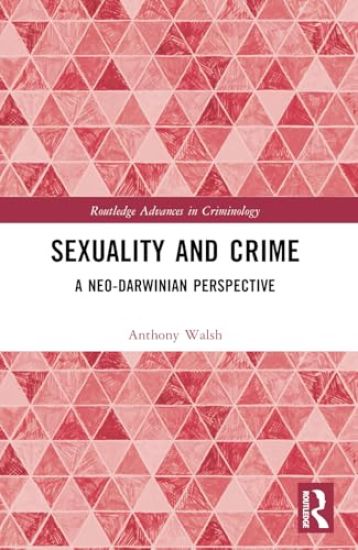
Written by one of the leading figures in biosocial criminology and evolutionary psychology, this work explores the tight relationship between criminality and indiscriminate sexuality within the framework of life history theory. The underlying thesis is that traits associated with a strong libido, indiscriminately expressed, are intertwined with traits associated with criminal behavior; that is, excessive interest in sexual adventures pursued in an irresponsible way is undergirded by the same individual short- run hedonistic traits that define criminality. While traditional criminology tends to view sexual and criminal behavior as separate domains, many biosocial criminologists, evolutionary psychologists, neuroscientists, and behavioral and molecular geneticists are not at all surprised that a link exists between criminality and sexuality. Research shows that the statistical relationship between indiscriminate sexuality and criminal behavior is stronger than for most other variables associated with crime, although most studies dealing with this relationship are from outside the dominant environmentalist paradigm of criminology. Using life history theory as the theoretical umbrella for exploring the relationship between indiscriminate sexuality and criminal behavior, the book explores how and why criminal behavior is related to hypersexuality. Life history theory, which has a long and fruitful history of use among evolutionary biologists who use it to investigate the relationship between mating strategies and the environment among various species of animals (including humans) is particularly suited to understanding how an exclusive focus on mating effort is related to criminal behavior. This book will be of interest to scholars and students in criminology, psychology, and sociology, and anyone interested in examining the interconnection between biological, psychological, and socio- environmental factors in relation to criminal behavior.
Sexuality and Crime

Sexuality and Crime

Anthony Walsh

TAYLOR FRANCIS LTD
2024
nidottu
Written by one of the leading figures in biosocial criminology and evolutionary psychology, this work explores the tight relationship between criminality and indiscriminate sexuality within the framework of life history theory. The underlying thesis is that traits associated with a strong libido, indiscriminately expressed, are intertwined with traits associated with criminal behavior; that is, excessive interest in sexual adventures pursued in an irresponsible way is undergirded by the same individual short- run hedonistic traits that define criminality. While traditional criminology tends to view sexual and criminal behavior as separate domains, many biosocial criminologists, evolutionary psychologists, neuroscientists, and behavioral and molecular geneticists are not at all surprised that a link exists between criminality and sexuality. Research shows that the statistical relationship between indiscriminate sexuality and criminal behavior is stronger than for most other variables associated with crime, although most studies dealing with this relationship are from outside the dominant environmentalist paradigm of criminology. Using life history theory as the theoretical umbrella for exploring the relationship between indiscriminate sexuality and criminal behavior, the book explores how and why criminal behavior is related to hypersexuality. Life history theory, which has a long and fruitful history of use among evolutionary biologists who use it to investigate the relationship between mating strategies and the environment among various species of animals (including humans) is particularly suited to understanding how an exclusive focus on mating effort is related to criminal behavior. This book will be of interest to scholars and students in criminology, psychology, and sociology, and anyone interested in examining the interconnection between biological, psychological, and socio- environmental factors in relation to criminal behavior.
Understanding Biosocial Criminology

Understanding Biosocial Criminology

Anthony Walsh

EDWARD ELGAR PUBLISHING LTD
2024
sidottu
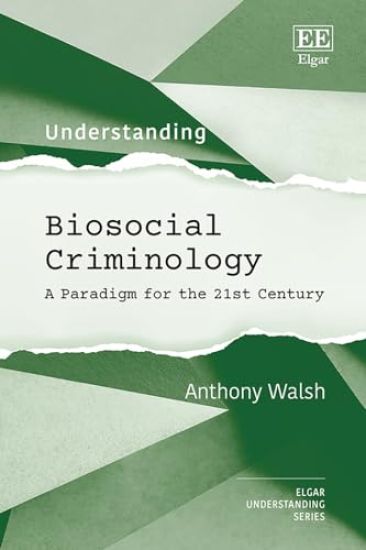
Informative and insightful, this prescient book argues that biosocial criminology is a powerful paradigm for understanding criminal behavior, crucially outlining its nature via nurture perspective, as opposed to nature versus nurture.Examining the core correlations between criminal activity and the identifying characteristics of age, sex, race, intelligence and poverty, Anthony Walsh contends that the biosocial perspective is criminology’s future as it encompasses all relevant factors that influence human behavior, from neurons to neighborhoods. Walsh draws from evolutionary biology, genetics, and neurobiology to emphasize that in order to understand the traits and behaviors of any species, it is necessary to inquire about their function, phylogeny, ontogeny, and causation. Offering a unique perspective, Understanding Biosocial Criminology concludes that the environment is deeply involved in behavior, yet also insists that humans are not simply reactors to externalities.Uniting the biological and social sciences, this book will be an interesting read for academics, students and researchers in criminology, social psychology, and sociology and sociological theory. Its insight into criminal behavior will also be of interest to professionals and practitioners working in the legal field.
Crime Prevention and Treatment Policies

Crime Prevention and Treatment Policies

Anthony Walsh

TAYLOR FRANCIS LTD
2025
nidottu
This book shows how to use biopsychosocial assessment for crime prevention and to achieve more individualized treatment for those who commit crimes. Author Anthony Walsh, a prominent figure in biosocial criminology for more than four decades, examines the treatment policy recommendations of major criminological theories and how they might be improved by integrating relevant biopsychosocial insights. Walsh contends that sound crime prevention and treatment policies must be based on empirical evidence derived from theories about the causes of crime if they are to reduce incarceration rates. The biopsychosocial perspective improves on traditional theories by examining all putative causes of crime from the micro to the macro— from neurons to neighborhoods— and should thus improve prevention and treatment efforts.The understanding of the genetic, neurobiological, and physiological components of antisocial behavior has improved exponentially over the past three decades. The relevant biological measures (e.g., genotyping, hormone assays, autonomic system arousal levels, resting heart rates) are routinely examined in university labs for research purposes. This book shows how measures of these components can be fruitfully integrated into the risk- need- responsivity model of offender treatment.Offering a fresh perspective, this book is essential for both scholars and practitioners wishing to explore treatment modalities that consider the biological aspects of criminality.
Crime Prevention and Treatment Policies

Crime Prevention and Treatment Policies

Anthony Walsh

TAYLOR FRANCIS LTD
2025
sidottu
This book shows how to use biopsychosocial assessment for crime prevention and to achieve more individualized treatment for those who commit crimes. Author Anthony Walsh, a prominent figure in biosocial criminology for more than four decades, examines the treatment policy recommendations of major criminological theories and how they might be improved by integrating relevant biopsychosocial insights. Walsh contends that sound crime prevention and treatment policies must be based on empirical evidence derived from theories about the causes of crime if they are to reduce incarceration rates. The biopsychosocial perspective improves on traditional theories by examining all putative causes of crime from the micro to the macro— from neurons to neighborhoods— and should thus improve prevention and treatment efforts.The understanding of the genetic, neurobiological, and physiological components of antisocial behavior has improved exponentially over the past three decades. The relevant biological measures (e.g., genotyping, hormone assays, autonomic system arousal levels, resting heart rates) are routinely examined in university labs for research purposes. This book shows how measures of these components can be fruitfully integrated into the risk- need- responsivity model of offender treatment.Offering a fresh perspective, this book is essential for both scholars and practitioners wishing to explore treatment modalities that consider the biological aspects of criminality.
Key Contested Issues in Criminology and Criminal Justice
Key Contested Issues in Criminology and Criminal Justice addresses the key issues within criminology and criminal justice that are strongly contested among scholars in the field.Covering 18 different themes, the book identifies the ways in which different issues are contested and demonstrates how biopsychosocial concepts and methods can inform most of them. It is divided into four broad sections. The first section examines philosophical issues such as the value of philosophy in criminology/criminal justice, the role of ideology in our disciplines, and the issues of human nature and free will versus determinism. The second section explains the biopsychosocial perspective that provides the framework used in exploring the various issues. It explores the possibility of integrating the natural sciences with criminology, behavioral and molecular genetics, evolutionary theory, and neuroscience. It also considers issues related to child maltreatment, brain development, and the role of rationality vis-à-vis emotion in decision-making. The third section examines crime causation and contains chapters on social learning versus control theories, radical/critical theories, the relationship between intelligence and criminal behavior, issues of SES, poverty, and crime, and whether religion is a barrier or bridge to antisocial behavior. The final section looks at four issues in criminal justice: the police abolition movement, the nature of punishment and its justifications by the criminal justice system, and issues in sentencing and the death penalty.Key Contested Issues in Criminology and Criminal Justice will be of value to students and scholars in criminology and criminal justice, as well as to criminal justice practitioners.
Key Contested Issues in Criminology and Criminal Justice
Key Contested Issues in Criminology and Criminal Justice addresses the key issues within criminology and criminal justice that are strongly contested among scholars in the field.Covering 18 different themes, the book identifies the ways in which different issues are contested and demonstrates how biopsychosocial concepts and methods can inform most of them. It is divided into four broad sections. The first section examines philosophical issues such as the value of philosophy in criminology/criminal justice, the role of ideology in our disciplines, and the issues of human nature and free will versus determinism. The second section explains the biopsychosocial perspective that provides the framework used in exploring the various issues. It explores the possibility of integrating the natural sciences with criminology, behavioral and molecular genetics, evolutionary theory, and neuroscience. It also considers issues related to child maltreatment, brain development, and the role of rationality vis-à-vis emotion in decision-making. The third section examines crime causation and contains chapters on social learning versus control theories, radical/critical theories, the relationship between intelligence and criminal behavior, issues of SES, poverty, and crime, and whether religion is a barrier or bridge to antisocial behavior. The final section looks at four issues in criminal justice: the police abolition movement, the nature of punishment and its justifications by the criminal justice system, and issues in sentencing and the death penalty.Key Contested Issues in Criminology and Criminal Justice will be of value to students and scholars in criminology and criminal justice, as well as to criminal justice practitioners.
Reinforcement Sensitivity Theory

Reinforcement Sensitivity Theory

Anthony Walsh

Routledge
2018
sidottu
Some of the brightest minds in criminology who were nurtured on the strictly environmentalist paradigm of the 20th century have declared that biosocial criminology is the paradigm for the 21st century. This book attempts to unite this ever-growing field with the premier neurobiological theory of personality, otherwise known as reinforcement sensitivity theory (RST). Anthony Walsh places the highly variable number of biosocial approaches under a single theoretical umbrella, whilst providing a unique integrative framework.As the leading neurobiological theory of personality and behavior in psychology today, RST focuses around the age-old question of how naturally selfish social animals can achieve their wants and needs without alienating others in their social groups. RST posits that evolution has built into humans three interacting systems: the behavioral approach system; the behavioral inhibition system; and the fight/flight/freeze system. RST identifies the neurobiological and genetic functions underlying each system and has found a cascade of supporting evidence.Throwing new light on many areas of concern to criminologists, such as psychopathy, violence, ADHD, and schizophrenia, this book will be of interest to scholars and upper-level students in the field. Additional features such as Focus Boxes and diagrams delve into measurement techniques and brain areas.
Criminological Theory

Criminological Theory

Anthony Walsh

Routledge
2019
sidottu
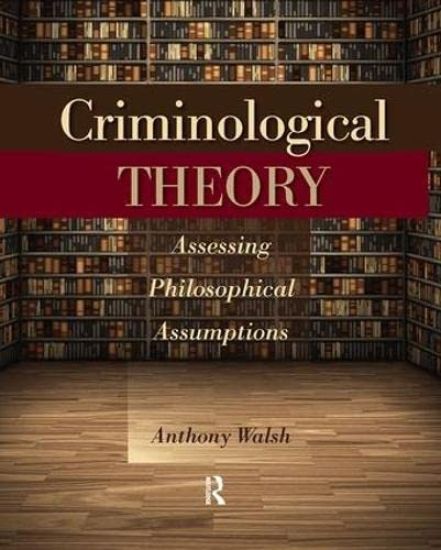
Criminologists can benefit from questioning the underlying assumptions upon which they rest their work. Philosophy has the ability to clarify our thoughts, inform us of why we think about things the way we do, solve contradictions in our thinking we never knew existed, and even dissolve some dichotomies we thought were cast in stone. One of those dichotomies is free will vs. determinism. Criminology must reckon with both free will and agency, as posited by some theories, and determinism, as posited by others—including the ever more influential fields of genetics and biosocial criminology. Criminological Theory: Assessing Philosophical Assumptions examines philosophical concepts such as these in the context of important criminological theories or issues that are foundational but not generally considered in the literature on this topic. The uniqueness of this treatment of criminological theory is that rather than reporting what this person or that has said about a particular theory, Walsh exposes the philosophical assumptions underlying the theory. Students and scholars learn to clarify their own biases and better analyze the implications of a broad range of theories of crime and justice.
Biosociology

Biosociology

Anthony Walsh

Routledge
2017
nidottu
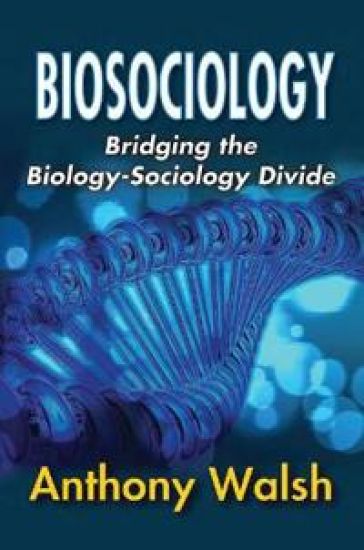
Anthony Walsh bridges the divide separating sociology from biology a divide created in the late nineteenth century when sociology emerged from the fields of social theory and philosophy. Walsh focuses on the viewpoint held by former American Sociological Association president Douglas Massey: sociologists have allowed the fact that we are social beings to obscure the biological foundations upon which our behaviour ultimately rests.Walsh argues that sociology has nothing to fear and a wealth of riches to gain if it pays attention to the theories, concepts, and methodologies of the biological sciences. Both study the same phenomena. Beginning with an examination of the reasons why we need a biosocial approach, Walsh explores sociology's traditional "taboo" concepts (reductionism, essentialism, etc.) and how those concepts are viewed in the natural sciences.Throughout the work, the author introduces relevant concepts from genetics and the neurosciences, using examples that will appeal to all sociologists. Later chapters apply his introductory arguments to traditional substantive sociological issues such as culture, crime, gender, socialization, social class, and the family. This book will be essential to all sociologists, evolutionary biologists, and scholars interested in the history of this important divide between the fields and where it currently stands.
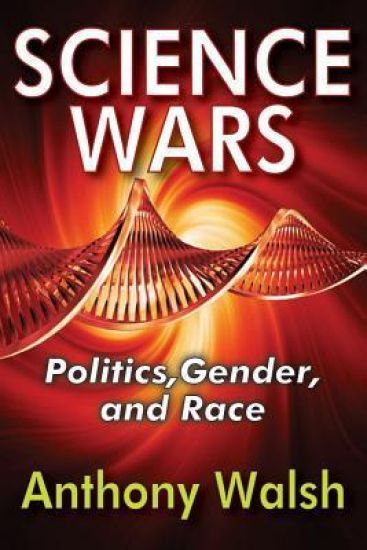
Science Wars

Science Wars

Anthony Walsh

Routledge
2017
nidottu
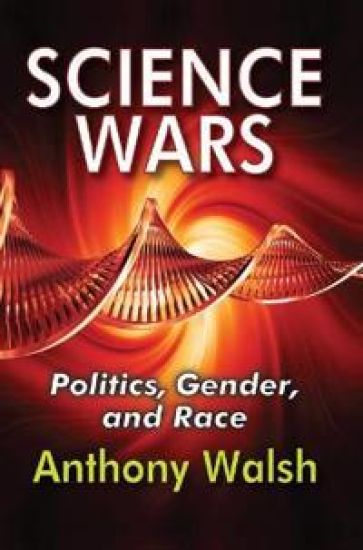
Few issues cause academics to disagree more than gender and race, especially when topics are addressed in terms of biological differences. To conduct research in these areas or comment favorably on research can subject one to scorn.When these topics are addressed, they generally take the form of philosophical debates. Anthony Walsh focuses upon such debates and supporting research. He divides parties into biologists and social constructionists, arguing that biologists remain focused on laboratory work, while constructionists are acutely aware of the impact of biologists in contested territories.Science Wars introduces the ideas motivating the parties and examines social constructionism and its issues with science. He explores arguments over conceptual tools scientists love and constructionists abhor, and he provides a solid discussion of the co-evolution of genes and culture. Walsh then focuses his attention on gender, how constructionists view it, and the neuroscience explanation of gender differences. Moving to race, Walsh looks at how some have tried to bury the concept of race, while others emphasize it. He considers definitions of race essentialist, taxonomic, population, and lineage as they have evolved from the time of the Enlightenment to the present. And finally, he attempts to bring the opposing sides together by pointing out what each can bring to a meaningful discussion.
The Ashgate Research Companion to Biosocial Theories of Crime
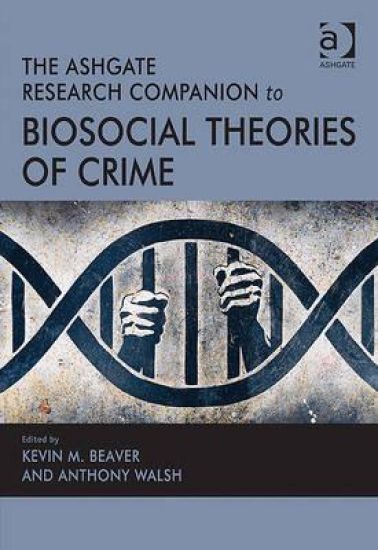
In response to exciting developments in genetics, neuroscience and evolutionary psychology, a number of criminologists have embraced the position that criminal behaviour is the product of biological, psychological, and sociological factors operating together in complex ways. They have come to realize that if they are to capture the dynamic nature of criminal behaviour then they must span multiple levels of analysis and thus multiple disciplines. The explosion of interest in this field of biosocial criminology over the past ten years means that the time is ripe for this research companion aimed at graduate students and scholars, giving them an essential overview of the current state of research in the field. The authors are experts in a variety of disciplines (sociology, psychology, biology, criminal justice, and neuroscience), but they all have in common a strong interest in criminal behaviour. This unique book is essential and accessible reading for all students and scholars in the field.
Science Wars

Science Wars

Anthony Walsh

AldineTransaction
2013
sidottu
Few issues cause academics to disagree more than gender and race, especially when topics are addressed in terms of biological differences. To conduct research in these areas or comment favorably on research can subject one to scorn.When these topics are addressed, they generally take the form of philosophical debates. Anthony Walsh focuses upon such debates and supporting research. He divides parties into biologists and social constructionists, arguing that biologists remain focused on laboratory work, while constructionists are acutely aware of the impact of biologists in contested territories.Science Wars introduces the ideas motivating the parties and examines social constructionism and its issues with science. He explores arguments over conceptual tools scientists love and constructionists abhor, and he provides a solid discussion of the co-evolution of genes and culture. Walsh then focuses his attention on gender, how constructionists view it, and the neuroscience explanation of gender differences. Moving to race, Walsh looks at how some have tried to bury the concept of race, while others emphasize it. He considers definitions of race—essentialist, taxonomic, population, and lineage—as they have evolved from the time of the Enlightenment to the present. And finally, he attempts to bring the opposing sides together by pointing out what each can bring to a meaningful discussion.