Kirjojen hintavertailu. Mukana 11 244 527 kirjaa ja 12 kauppaa.

Kirjahaku

Etsi kirjoja tekijän nimen, kirjan nimen tai ISBN:n perusteella.

1000 tulosta hakusanalla Antoine Aliverti

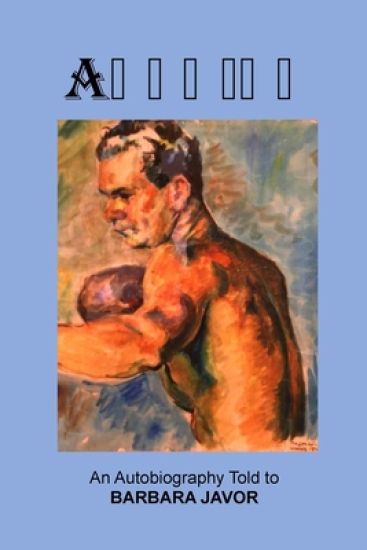
Antoine

Antoine

Barbara Javor

Createspace Independent Publishing Platform
2015
nidottu
Antoine Martin, the man with many names and secrets, escaped the devastating violence of World War II to come to America as a stowaway with a tiny suitcase, a big dream, and an even bigger heart. Born in 1922 to a poor Sephardic Jewish family in Salonika, Antoine spent his first dozen years in Greece before his family moved to France and then Spain to escape poverty. Caught up in the Spanish revolution, his parents sent him back to France in 1938 to live with relatives, but circumstances forced him to join the French Foreign Legion as a sixteen-year-old. The Germans captured Antoine's unit early in World War II and sent him to POW camps in Germany and Poland where he had to conceal his Jewish identity for four years. After multiple escape attempts, he finally succeeded and joined the Polish and later the French underground to fight. After the war Antoine traveled to America hidden in a freighter with hopes to begin a new life in New York where he knew nobody. Kind strangers helped him start his quest of the American dream. Until he gained legal residency and eventually citizenship, he lived with the fear of deportation-and a scornful woman who threatened to expose him. This book is Antoine's account of how he did whatever it took to stay alive through uncertain times. It includes his struggles as well as the endearing and spicy sides of his life. His story reflects the history of the 20th century for both Jews and Gentiles. It's a story of chasing dreams. And it's a story that's timeless, of the will and strength to survive and prosper in spite of the odds. Antoine's photographs from the French Foreign Legion, POW camps, and documents he used to hide his true identity from the Germans augment this powerful story.
Antoine de Chandieu

Antoine de Chandieu

Theodore Van Raalte

Oxford University Press Inc
2018
sidottu
Offering the first study in any language dedicated to the influential publications of the French Reformed theologian Antoine de Chandieu (1534-1591), Theodore Van Raalte begins by recalling Chandieu's reputation as it stood at the death of Theodore Beza in 1605. Poets in Geneva mourned the end of an era of star theologians, reminiscing about Geneva's Reformed triumvirate of gold, silver, and bronze: gold represented Calvin; silver Chandieu; and bronze Beza. Van Raalte's work sets Chandieu within the context of Reformed theology in Geneva, the wider history of scholastic method in the Swiss cantons, and the gripping social and political milieus. Chandieu was far from a mere ivory tower theologian: as a member of French nobility in possession of many estates and castles in France, he and his family acutely experienced the misery and triumph of the French Huguenots during the Wars of Religion. Connected to royalty from at least the beginning of his career, Chandieu later served the future Henry IV as personal military chaplain and cryptographer. His writings run the gamut from religious poetry (put to music by others in his lifetime) to carefully-crafted disputations which saw publication in his posthumous Opera Theologica in five editions between 1592 and 1620. Chandieu had developed a very elaborate form of the medieval quaestio disputata and made liberal use of hypothetical syllogisms. Van Raalte argues that Chandieu utilized scholastic method in theology for the sake of clarity of argument, rootedness in Scripture, and certainty of faith.
Antoine Busnoys

Antoine Busnoys

Clarendon Press
1999
sidottu
This volume brings together twenty original essays by distinguished scholars of late medieval music on the life, works, and cultural context of the composer Antoine Busnoys (c.1430-1492), musician to Charles the Bold, Duke of Burgundy, and one of the most celebrated composers of the fifteenth century. The essays present the results of much new research on music, ceremony, and ritual in the late Middle Ages; intertextual, contextual, and hermeneutic approaches to the music of Busnoys and his contemporaries; methods for assessing issues of authorship and anonymity; readings of theorists on compositional procedures and the performance of fifteenth-century music; and assessments of Busnoys's legacy to the musical culture of the late Middle Ages. Particularly noteworthy are the studies providing new light on the origins of L'homme armé mass tradition; unpublished documents on Busnoys's activity in churches in Poitiers and Brussels; previously unidentified liturgical sources for his plainchant cantus firmi; and studies and complete editions of several anonymous works newly attributed to Busnoys. These widely ranging essays offer a wealth of novel approaches to the study of musical culture in the late Middle Ages that is of interest not only to medievalists, but to students of all fields of music historical inquiry.
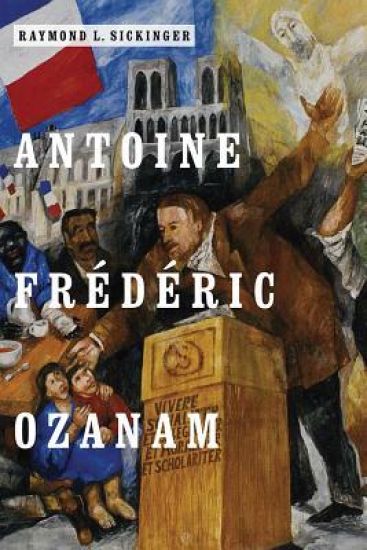
Antoine Frédéric Ozanam

Antoine Frédéric Ozanam

Raymond L. Sickinger

University of Notre Dame Press
2017
sidottu
Raymond Sickinger's biography of Antoine Frédéric Ozanam is more than a chronological account of Ozanam's relatively brief but extraordinary life. It is also a comprehensive study of a man who touched many lives as a teacher, writer, and principal founder of the Society of St. Vincent de Paul. Ozanam's life encompassed a particularly turbulent time in French history, and he was a witness to two major political upheavals—the overthrow of the Bourbon dynasty that brought Louis Philippe to power in 1830, and the end of Louis Philippe's "Bourgeois Monarchy" as a result of the 1848 Revolutions. This book examines Ozanam's life in a number of ways. First, it explores the various roles he played throughout his life—son, sibling, student, member of and an inspiration for the Society of St. Vincent de Paul, spouse and father, scholar, and spokesperson for the common people. Second, it examines the lessons he learned in his life, including the importance of friendship, the meaning of solidarity, and the role and purpose of suffering, among many others that he shares with those who study his thought and work. It concludes with an account of Ozanam's enduring legacy. Antoine Frédéric Ozanam feared that he would not have a fruitful career, but his legacy remains a powerful testimony to his greatness. This book will interest scholars wishing to know more about Ozanam and the period in which he lived, as well as a wider audience, including those who are aware of or are members of the Society of St. Vincent de Paul.
Antoine Frédéric Ozanam

Antoine Frédéric Ozanam

Raymond L. Sickinger

University of Notre Dame Press
2020
nidottu
Raymond Sickinger's biography of Antoine Frédéric Ozanam is more than a chronological account of Ozanam's relatively brief but extraordinary life. It is also a comprehensive study of a man who touched many lives as a teacher, writer, and principal founder of the Society of St. Vincent de Paul. Ozanam's life encompassed a particularly turbulent time in French history, and he was a witness to two major political upheavals—the overthrow of the Bourbon dynasty that brought Louis Philippe to power in 1830, and the end of Louis Philippe's "Bourgeois Monarchy" as a result of the 1848 Revolutions. This book examines Ozanam's life in a number of ways. First, it explores the various roles he played throughout his life—son, sibling, student, member of and an inspiration for the Society of St. Vincent de Paul, spouse and father, scholar, and spokesperson for the common people. Second, it examines the lessons he learned in his life, including the importance of friendship, the meaning of solidarity, and the role and purpose of suffering, among many others that he shares with those who study his thought and work. It concludes with an account of Ozanam's enduring legacy. Antoine Frédéric Ozanam feared that he would not have a fruitful career, but his legacy remains a powerful testimony to his greatness. This book will interest scholars wishing to know more about Ozanam and the period in which he lived, as well as a wider audience, including those who are aware of or are members of the Society of St. Vincent de Paul.
Antoine Arnauld and Pierre Nicole: Logic or the Art of Thinking

Antoine Arnauld and Pierre Nicole: Logic or the Art of Thinking

Antoine Arnauld; Pierre Nicole

Cambridge University Press
1996
sidottu
Antoine Arnauld and Pierre Nicole were philosophers and theologians associated with Port-Royal Abbey, a centre of the Catholic Jansenist movement in seventeenth-century France. Their enormously influential Logic or the Art of Thinking, which went through five editions in their lifetimes, treats topics in logic, language, theory of knowledge and metaphysics, and also articulates the response of ‘heretical’ Jansenist Catholicism to orthodox Catholic and Protestant views on grace, free will and the sacraments. In attempting to combine the categorical theory of the proposition with a Cartesian account of knowledge, their Logic represents the classical view of judgment which inspired the modern transformation in logic and semantic theory by Frege, Russell, Wittgenstein and recent philosophers. This edition presents a new translation of the text, together with a historical introduction and suggestions for further reading.
Antoine Arnauld and Pierre Nicole: Logic or the Art of Thinking

Antoine Arnauld and Pierre Nicole: Logic or the Art of Thinking

Antoine Arnauld; Pierre Nicole

Cambridge University Press
1996
pokkari
Antoine Arnauld and Pierre Nicole were philosophers and theologians associated with Port-Royal Abbey, a centre of the Catholic Jansenist movement in seventeenth-century France. Their enormously influential Logic or the Art of Thinking, which went through five editions in their lifetimes, treats topics in logic, language, theory of knowledge and metaphysics, and also articulates the response of ‘heretical’ Jansenist Catholicism to orthodox Catholic and Protestant views on grace, free will and the sacraments. In attempting to combine the categorical theory of the proposition with a Cartesian account of knowledge, their Logic represents the classical view of judgment which inspired the modern transformation in logic and semantic theory by Frege, Russell, Wittgenstein and recent philosophers. This edition presents a new translation of the text, together with a historical introduction and suggestions for further reading.
Antoine Lavoisier

Antoine Lavoisier

Arthur Donovan

Cambridge University Press
1996
pokkari
This biography represents a comprehensive, accessible account of the great eighteenth-century French chemist and administrator, Antoine Lavoisier. Historians of science know Lavoisier as a founder of modern chemistry. Students of the French Revolution know him as an important financier and administrator in the final decades of the old regime and as the most famous scientist to be guillotined during the Terror. This volume devotes equal attention to the creation of his oxygen theory of combustion and to his efforts as a public administrator before and during the Revolution. Lavoisier was an historical figure of extraordinary importance. His biography illuminates the rise of modern science and the history of the French Revolution. Antoine Lavoisier provides its reader with a vivid, informed image of the man, his achievement, and the tumultuous age in which he lived.
Antoine Lavoisier: The Next Crucial Year

Antoine Lavoisier: The Next Crucial Year

Frederic Lawrence Holmes

Princeton University Press
2014
pokkari
Through his development of quantitative experimental methods, the chemist Antoine Lavoisier (1743-1794) implemented a principle that many regard as the cornerstone of modern science: in every operation there is an equal quantity of material before and after the operation. The origin of Lavoisier's methods, however, has remained a missing piece in this remarkable episode of scientific history, perhaps because the talented young scientist himself was not prepared for the journey his discoveries would set before him. In this book, Frederic Holmes suggests that Lavoisier gradually came to understand the nature and power of his quantitative method during the year 1773, when he began to carry out a research program on the fixation and release of airs. Drawing upon Lavoisier's surviving laboratory notebooks, Holmes presents an engaging portrait of a scientist still seeking the way that would lead him to become the leader of one of the great upheavals in the history of science. Holmes follows Lavoisier day-by-day at work in his laboratory over a course of several months. The scientist's resourcefulness and imagination spring to life in this account, as does his propensity to make mistakes, which taught him as much as his successes. During the course of this odyssey, Lavoisier saw his early theory of combustion collapse under the weight of his own efforts to provide experimental evidence to support it. In compensation, he acquired a method and the hard-won experience on which he would later construct a more enduring theoretical structure. Originally published in 1997. The Princeton Legacy Library uses the latest print-on-demand technology to again make available previously out-of-print books from the distinguished backlist of Princeton University Press. These editions preserve the original texts of these important books while presenting them in durable paperback and hardcover editions. The goal of the Princeton Legacy Library is to vastly increase access to the rich scholarly heritage found in the thousands of books published by Princeton University Press since its founding in 1905.
Antoine Lavoisier: The Next Crucial Year

Antoine Lavoisier: The Next Crucial Year

Frederic Lawrence Holmes

Princeton University Press
2016
sidottu
Through his development of quantitative experimental methods, the chemist Antoine Lavoisier (1743-1794) implemented a principle that many regard as the cornerstone of modern science: in every operation there is an equal quantity of material before and after the operation. The origin of Lavoisier's methods, however, has remained a missing piece in this remarkable episode of scientific history, perhaps because the talented young scientist himself was not prepared for the journey his discoveries would set before him. In this book, Frederic Holmes suggests that Lavoisier gradually came to understand the nature and power of his quantitative method during the year 1773, when he began to carry out a research program on the fixation and release of airs. Drawing upon Lavoisier's surviving laboratory notebooks, Holmes presents an engaging portrait of a scientist still seeking the way that would lead him to become the leader of one of the great upheavals in the history of science. Holmes follows Lavoisier day-by-day at work in his laboratory over a course of several months. The scientist's resourcefulness and imagination spring to life in this account, as does his propensity to make mistakes, which taught him as much as his successes. During the course of this odyssey, Lavoisier saw his early theory of combustion collapse under the weight of his own efforts to provide experimental evidence to support it. In compensation, he acquired a method and the hard-won experience on which he would later construct a more enduring theoretical structure. Originally published in 1997. The Princeton Legacy Library uses the latest print-on-demand technology to again make available previously out-of-print books from the distinguished backlist of Princeton University Press. These editions preserve the original texts of these important books while presenting them in durable paperback and hardcover editions. The goal of the Princeton Legacy Library is to vastly increase access to the rich scholarly heritage found in the thousands of books published by Princeton University Press since its founding in 1905.
Antoine de Saint-Exupéry

Antoine de Saint-Exupéry

Maria Isabel Sanchez Vegara

Quarto Publishing Plc
2024
sidottu
In this book from the critically acclaimed, multimillion-copy bestselling Little People, BIG DREAMS series, discover the life of Antoine de Saint-Exupéry, the talented pilot and writer.Little Antoine grew up in Lyon, France. He was a curious and creative child who enjoyed reading fairy tales, setting up experiments and writing. Fascinated by planes, he always dreamt of taking to the skies. When he joined the French army during WWII, he finally got the chance. Antoine spent a short time in the air force before leaving to become a mail pilot, all the while writing about his adventures in the clouds. In 1935 he crashed in the desert during a flight from Paris to Saigon. With only a few supplies, he became very ill. Fortunately, after four days, he was found by a passer-by and nursed back to health. This experience influenced much of Antoine's future writing. Later, he moved the United States where he campaigned for France's freedom from Nazism. During this period he wrote the Little Prince, the captivating story of love and loss which became one of the best-selling children's book of all time.This powerful book features stylish and quirky illustrations and extra facts at the back, including a biographical timeline with historical photos and a detailed profile of the writer’s life.Little People, BIG DREAMS is a bestselling biography series for kids that explores the lives of outstanding people, from designers and artists to scientists and activists. All of them achieved incredible things, yet each began life as a child with a dream.This empowering series of books offers inspiring messages to children of all ages, in a range of formats. The board books are told in simple sentences, perfect for reading aloud to babies and toddlers. The hardback versions present expanded stories for beginning readers. With rewritten text for older children, the treasuries each bring together a multitude of dreamers in a single volume. You can also collect a selection of the books by theme in boxed gift sets. Activity books and a journal provide even more ways to make the lives of these role models accessible to children.Inspire the next generation of outstanding people who will change the world with Little People, BIG DREAMS!