Kirjojen hintavertailu. Mukana 11 244 527 kirjaa ja 12 kauppaa.

Kirjahaku

Etsi kirjoja tekijän nimen, kirjan nimen tai ISBN:n perusteella.

1000 tulosta hakusanalla Antoine Volodine

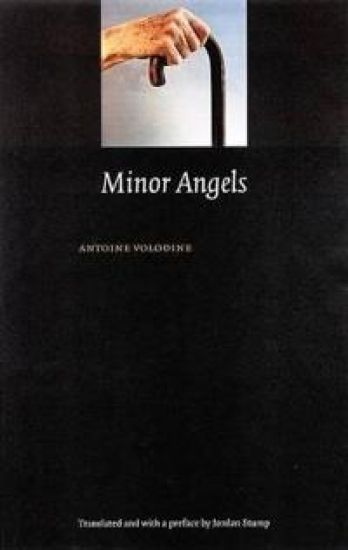
Minor Angels

Minor Angels

Antoine Volodine

University of Nebraska Press
2008
pokkari
From Antoine Volodine comes a deeply disturbing and darkly hilarious novel whose full meaning, its author asserts, will be found not in the book's pages but in the dreams people will have after reading it. In Minor Angels Volodine depicts a postcataclysmic world in which the forces of capitalism have begun to reestablish themselves. Sharply opposed to such a trend, a group of crones confined to a nursing home—all of them apparently immortal—resolves to create an avenging grandson fashioned of lint and rags. Though conjured to crush the rebirth of capitalism, the grandson is instead seduced by its charms—only to fall back into the hands of his creators, where he manages to forestall his punishment by reciting one "narract" a day. It is these narracts, or prose poems, that compose the text of Minor Angels.
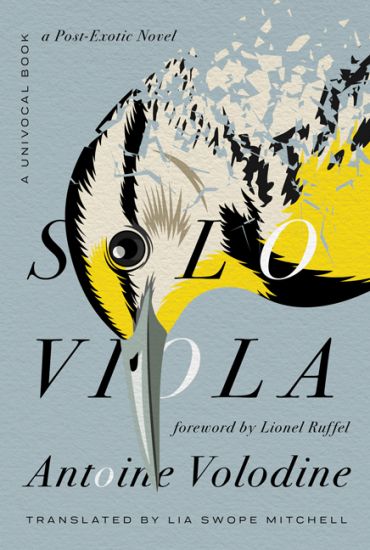
Solo Viola

Solo Viola

Antoine Volodine

University of Minnesota Press
2021
nidottu
A harrowing early novel by one of France’s most unusual contemporary writers At once humorous and horrifying, Solo Viola is one of Antoine Volodine’s first forays into post-exoticism. He takes the reader into a fictional world where a variety of characters collide: three prisoners just released from jail, a band of circus performers, a string quartet, a writer, and a bird. All are trying to survive in an absurd and hostile environment of authoritarian spectacle, at the mercy of a tyrannical buffoon, and seeking the strange counterbalance of hope in a viola player, whose stunning music just might save them all, if only for a moment.
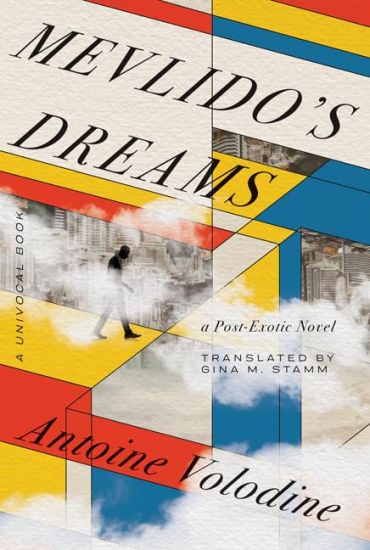
Mevlido's Dreams

Mevlido's Dreams

Antoine Volodine

UNIVERSITY OF MINNESOTA PRESS
2024
nidottu
A postapocalyptic noir that asks if love and political ideals can survive civilizational collapse A meditative, postapocalyptic noir, Mevlido’s Dreams is an urgent communiquÉ from a far-future reality of irreversible environmental damage and civilizational collapse. Mevlido is a double agent working for the police and living in the last habitable city on the planet, a sprawling abyssal ruin marked by war and ruled by criminals. Suspended in the bardo between his loyalty to the surveillance state and to the anarchists, communists, and other rebels he monitors, Mevlido clings to life and hope-barely-in the city’s vast slums, haunted by the memory of the wife he failed to save during the last war and dreaming of a mysterious mission he is told he must accomplish. At the same time, an enigmatic organization existing elsewhere-the Organs-observes Mevlido’s actions and debates its responsibility to him and to humanity as a whole. Asking what it means to love and care for others at the end of the world, this dense, brilliantly detailed postcollapse reality imagined by Antoine Volodine is one that grows ever more relevant amidst intensifying climate and political catastrophes. A key work in Volodine’s post-exotic fictional universe, Mevlido’s Dreams envisions a world changed beyond recognition and ruled under irrational authoritarianism in which dreams nest within dreams and the boundaries between life and death are fluid and uncertain.
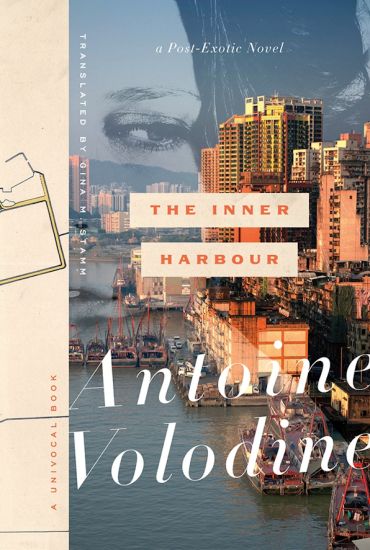
The Inner Harbour

The Inner Harbour

Antoine Volodine

UNIVERSITY OF MINNESOTA PRESS
2025
nidottu
A beguiling, perspective-shifting story of obsession and loss set in the grimy, late-colonial decadence of Macau at the end of the twentieth century In The Inner Harbour, Antoine Volodine focuses his literary investigations away from dystopian futures to a specific place at a particular historical moment: Macau on the eve of the Portuguese colony’s transfer to China. In a seedy flat in one of the city’s slums, a hired assassin named Kotter interrogates Breughel, a writer on the run from a mysterious organization code-named Paradise. Breughel has been hiding out in Macau with his lover, Gloria Vancouver, and a significant sum of the organization’s money. But Gloria is dead and the money spent-or so Breughel claims-and now he lives alone in humid squalor. With increasing severity, Kotter extracts Breughel’s confessions, but are they truth or subterfuge? Or are the confessions an elaborate work of fiction by a writer aware that they are no longer able to differentiate between memory and fantasy? Volodine brilliantly blurs the levels of narration-between what Breughel tells his interrogator, what he remembers or invents, and the stories he has written, including his accounts of Gloria’s hallucinatory visions of an apocalyptic war between military forces and the “chrysalids.” Interweaving threads of fiction and truth, lies and hallucinations, The Inner Harbour evokes many of the themes found in Volodine’s other “post-exotic” works: the slippage between dreams and reality, the nightmares of history, the exhaustion of literature and politics, and questions about what it means to be faithful to people or ideas long since vanished. But Volodine also uses the setting of Macau’s late-colonial decadence to explore new sensations of foreignness, alienation, and resignation, all of which coalesce into a nesting doll of narrative that houses an unconventional and tragic love story. Retail e-book files for this title are screen-reader friendly.
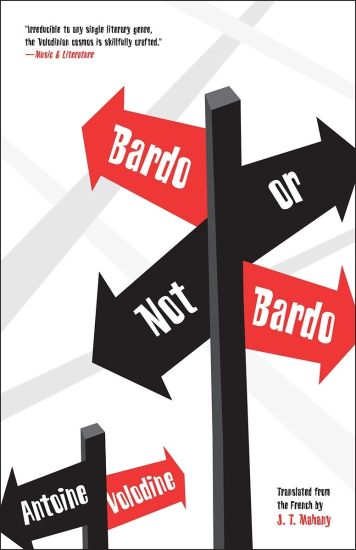
Bardo Or Not Bardo

Bardo Or Not Bardo

Antoine Volodine

Open Letter
2016
nidottu
"Irreducible to any single literary genre, the Volodinian cosmos is skillfully crafted, fusing elements of science fiction with magical realism and political commentary." Nicholas Hauck, "Music & Literature"One of Volodine's funniest books, "Bardo or Not Bardo "takes place in his universe of failed revolutions, radical shamanism, and off-kilter nomenclature.In each of these seven vignettes, someone dies and has to makehis way through the Tibetan afterlife, also known as the Bardo. In the Bardo, souls wander for forty-nine days before being reborn, helped along on their journey by the teachings of the "Book of the Dead."Unfortunately, Volodine's characters bungle their chances at enlightenment, with the recently dead choosing to waste away their afterlife sleeping, or choosing to be reborn as an insignificant spider. The still-living aren't much better off, making a mess of things in their own ways, such as erroneously reciting a Tibetan cookbook to a lost comrade instead of the holy book.Once again, Volodine has demonstrated his range and ambition, crafting a moving, hysterical work about transformations and the power of the book.Antoine Volodine is the primary pseudonym of a French writer who has published twenty books under this name, several of which are available in English translation, such as "Minor Angels," and "Writers." He also publishes under the names Lutz Bassmann and Manuela Draeger.J. T. Mahany is a graduate of the Master of Arts in Literary Translation Studies program at the University of Rochester and is currently studying for his MFA at the University of Arkansas."
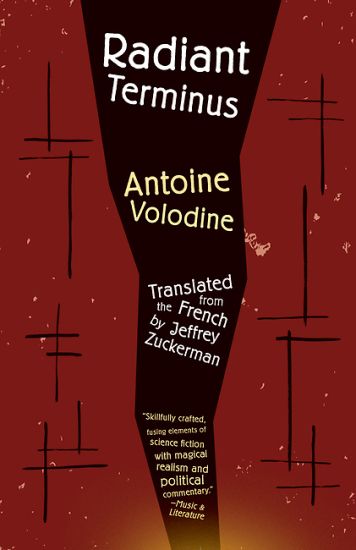
Radiant Terminus

Radiant Terminus

Antoine Volodine

Open Letter
2017
nidottu
"Irreducible to any single literary genre, the Volodinian cosmos is skillfully crafted, fusing elements of science fiction with magical realism and political commentary."-- Music & LiteratureThe most patently sci-fi work of Antoine Volodine's to be translated into English, Radiant Terminus takes place in a Tarkovskian landscape after the fall of the Second Soviet Union. Most of humanity has been destroyed thanks to a number of nuclear meltdowns, but a few communes remain, including one run by Solovyei, a psychotic father with the ability to invade people's dreams--including those of his daughters--and torment them for thousands of years.When a group of damaged individuals seek safety from this nuclear winter in Solovyei's commune, a plot develops to overthrow him, end his reign of mental abuse, and restore humanity.Fantastical, unsettling, and occasionally funny, Radiant Terminus is a key entry in Volodine's epic literary project that--with its broad landscape, ambitious vision, and interlocking characters and ideas--calls to mind the best of David Mitchell.Antoine Volodine (a.k.a. Lutz Bassmann, a.k.a. Manuela Draeger) is the primary pseudonym of a French writer who has published more than forty books, over twenty under this name. Seven of his titles are currently available in English translation, including Minor Angels, Bardo or Not Bardo, and Post-Exoticism in Ten Lessons, Lesson Eleven.Jeffrey Zuckerman is digital editor of Music & Literature. His writing and translations have appeared in Best European Fiction, 3: AM Magazine, the Rumpus, and the Los Angeles Review of Books.
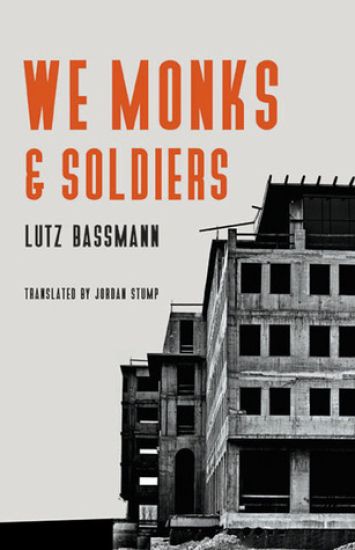
We Monks and Soldiers

We Monks and Soldiers

Lutz Bassmann; Antoine Volodine

University of Nebraska Press
2012
pokkari
From one of the most original French writers of our day comes a mysterious, prismatic, and at times profoundly sad reflection on humanity in its darker moments—one of which may very well be our own. In a collection of fictions that blur distinctions between dreaming and waking reality, Lutz Bassmann sets off a series of echoes—the "entrevoutes" that conduct us from one world to another in a journey as viscerally powerful as it is intellectually heady. While humanity seems to be fading around them, the members of a shadowy organization are doing their inadequate best to assist those experiencing their last moments. From a soldier-monk exorcising what seem to be spirits (but are they?) from an abandoned house, to a spy executing a mission whose meaning eludes him, to characters exploring cells, wandering through ruins, confronting political dissent and persecution, encountering—perhaps—the spirits once exorcised, these stories conduct us through a world at once ambiguous and sharply observed. This remarkable work, in Jordan Stump's superb translation, offers readers a thrilling entry into Bassmann's numinous world.
Minor Angels

Minor Angels

Volodine Antoine

University of Nebraska Press
2004
sidottu
From Antoine Volodine comes a deeply disturbing and darkly hilarious novel whose full meaning, its author asserts, will be found not in the book’s pages but in the dreams people will have after reading it. In Minor Angels Volodine depicts a postcataclysmic world in which the forces of capitalism have begun to reestablish themselves. Sharply opposed to such a trend, a group of crones confined to a nursing home—all of them apparently immortal—resolves to create an avenging grandson fashioned of lint and rags. Though conjured to crush the rebirth of capitalism, the grandson is instead seduced by its charms—only to fall back into the hands of his creators, where he manages to forestall his punishment by reciting one “narract” a day. It is these narracts, or prose poems, that compose the text of Minor Angels .
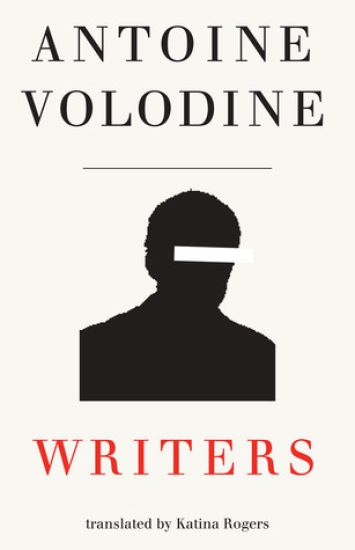
Writers

Writers

Volodine Antoine

Dalkey Archive Press
2014
nidottu
Here we have the anatomy of the contemporary writer, as imagined by the pseudonymous, "post-exotic" Antoine Volodine. His writers aren't the familiar, bitter, alcoholic kind, however; nor are they great, romantic, tortured geniuses; and least of all are they media darlings and socialites. No, in Volodine's universe, the writer is pitted in a pathetic struggle against silence and sickness--that is, when she's not about to be murdered by random lunatics or fellow inmates. Consisting of seven loosely interlocking stories, "Writers" is a window onto a chaotic reality where expressing oneself brings along with it repercussions both absurd and frighteningly familiar.
Antoine

Antoine

Barbara Javor

Createspace Independent Publishing Platform
2015
nidottu
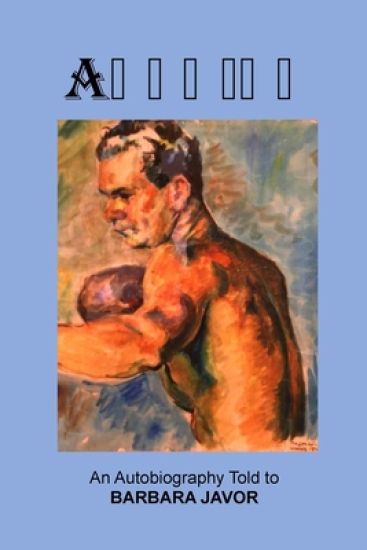
Antoine Martin, the man with many names and secrets, escaped the devastating violence of World War II to come to America as a stowaway with a tiny suitcase, a big dream, and an even bigger heart. Born in 1922 to a poor Sephardic Jewish family in Salonika, Antoine spent his first dozen years in Greece before his family moved to France and then Spain to escape poverty. Caught up in the Spanish revolution, his parents sent him back to France in 1938 to live with relatives, but circumstances forced him to join the French Foreign Legion as a sixteen-year-old. The Germans captured Antoine's unit early in World War II and sent him to POW camps in Germany and Poland where he had to conceal his Jewish identity for four years. After multiple escape attempts, he finally succeeded and joined the Polish and later the French underground to fight. After the war Antoine traveled to America hidden in a freighter with hopes to begin a new life in New York where he knew nobody. Kind strangers helped him start his quest of the American dream. Until he gained legal residency and eventually citizenship, he lived with the fear of deportation-and a scornful woman who threatened to expose him. This book is Antoine's account of how he did whatever it took to stay alive through uncertain times. It includes his struggles as well as the endearing and spicy sides of his life. His story reflects the history of the 20th century for both Jews and Gentiles. It's a story of chasing dreams. And it's a story that's timeless, of the will and strength to survive and prosper in spite of the odds. Antoine's photographs from the French Foreign Legion, POW camps, and documents he used to hide his true identity from the Germans augment this powerful story.
Antoine de Chandieu

Antoine de Chandieu

Theodore Van Raalte

Oxford University Press Inc
2018
sidottu
Offering the first study in any language dedicated to the influential publications of the French Reformed theologian Antoine de Chandieu (1534-1591), Theodore Van Raalte begins by recalling Chandieu's reputation as it stood at the death of Theodore Beza in 1605. Poets in Geneva mourned the end of an era of star theologians, reminiscing about Geneva's Reformed triumvirate of gold, silver, and bronze: gold represented Calvin; silver Chandieu; and bronze Beza. Van Raalte's work sets Chandieu within the context of Reformed theology in Geneva, the wider history of scholastic method in the Swiss cantons, and the gripping social and political milieus. Chandieu was far from a mere ivory tower theologian: as a member of French nobility in possession of many estates and castles in France, he and his family acutely experienced the misery and triumph of the French Huguenots during the Wars of Religion. Connected to royalty from at least the beginning of his career, Chandieu later served the future Henry IV as personal military chaplain and cryptographer. His writings run the gamut from religious poetry (put to music by others in his lifetime) to carefully-crafted disputations which saw publication in his posthumous Opera Theologica in five editions between 1592 and 1620. Chandieu had developed a very elaborate form of the medieval quaestio disputata and made liberal use of hypothetical syllogisms. Van Raalte argues that Chandieu utilized scholastic method in theology for the sake of clarity of argument, rootedness in Scripture, and certainty of faith.
Antoine Busnoys

Antoine Busnoys

Clarendon Press
1999
sidottu
This volume brings together twenty original essays by distinguished scholars of late medieval music on the life, works, and cultural context of the composer Antoine Busnoys (c.1430-1492), musician to Charles the Bold, Duke of Burgundy, and one of the most celebrated composers of the fifteenth century. The essays present the results of much new research on music, ceremony, and ritual in the late Middle Ages; intertextual, contextual, and hermeneutic approaches to the music of Busnoys and his contemporaries; methods for assessing issues of authorship and anonymity; readings of theorists on compositional procedures and the performance of fifteenth-century music; and assessments of Busnoys's legacy to the musical culture of the late Middle Ages. Particularly noteworthy are the studies providing new light on the origins of L'homme armé mass tradition; unpublished documents on Busnoys's activity in churches in Poitiers and Brussels; previously unidentified liturgical sources for his plainchant cantus firmi; and studies and complete editions of several anonymous works newly attributed to Busnoys. These widely ranging essays offer a wealth of novel approaches to the study of musical culture in the late Middle Ages that is of interest not only to medievalists, but to students of all fields of music historical inquiry.
Antoine Frédéric Ozanam

Antoine Frédéric Ozanam

Raymond L. Sickinger

University of Notre Dame Press
2017
sidottu
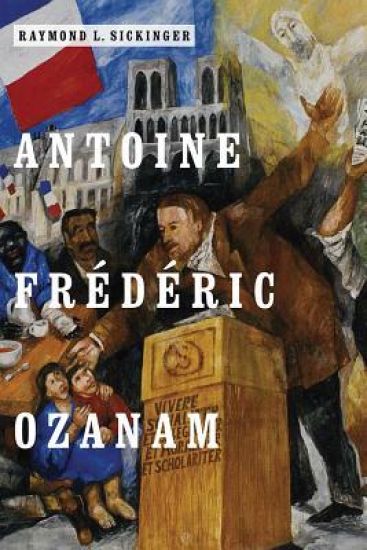
Raymond Sickinger's biography of Antoine Frédéric Ozanam is more than a chronological account of Ozanam's relatively brief but extraordinary life. It is also a comprehensive study of a man who touched many lives as a teacher, writer, and principal founder of the Society of St. Vincent de Paul. Ozanam's life encompassed a particularly turbulent time in French history, and he was a witness to two major political upheavals—the overthrow of the Bourbon dynasty that brought Louis Philippe to power in 1830, and the end of Louis Philippe's "Bourgeois Monarchy" as a result of the 1848 Revolutions. This book examines Ozanam's life in a number of ways. First, it explores the various roles he played throughout his life—son, sibling, student, member of and an inspiration for the Society of St. Vincent de Paul, spouse and father, scholar, and spokesperson for the common people. Second, it examines the lessons he learned in his life, including the importance of friendship, the meaning of solidarity, and the role and purpose of suffering, among many others that he shares with those who study his thought and work. It concludes with an account of Ozanam's enduring legacy. Antoine Frédéric Ozanam feared that he would not have a fruitful career, but his legacy remains a powerful testimony to his greatness. This book will interest scholars wishing to know more about Ozanam and the period in which he lived, as well as a wider audience, including those who are aware of or are members of the Society of St. Vincent de Paul.
Antoine Frédéric Ozanam

Antoine Frédéric Ozanam

Raymond L. Sickinger

University of Notre Dame Press
2020
nidottu
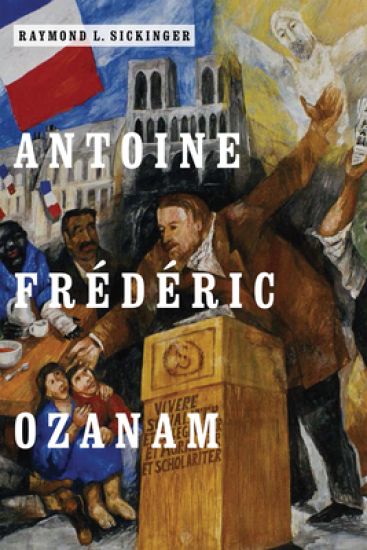
Raymond Sickinger's biography of Antoine Frédéric Ozanam is more than a chronological account of Ozanam's relatively brief but extraordinary life. It is also a comprehensive study of a man who touched many lives as a teacher, writer, and principal founder of the Society of St. Vincent de Paul. Ozanam's life encompassed a particularly turbulent time in French history, and he was a witness to two major political upheavals—the overthrow of the Bourbon dynasty that brought Louis Philippe to power in 1830, and the end of Louis Philippe's "Bourgeois Monarchy" as a result of the 1848 Revolutions. This book examines Ozanam's life in a number of ways. First, it explores the various roles he played throughout his life—son, sibling, student, member of and an inspiration for the Society of St. Vincent de Paul, spouse and father, scholar, and spokesperson for the common people. Second, it examines the lessons he learned in his life, including the importance of friendship, the meaning of solidarity, and the role and purpose of suffering, among many others that he shares with those who study his thought and work. It concludes with an account of Ozanam's enduring legacy. Antoine Frédéric Ozanam feared that he would not have a fruitful career, but his legacy remains a powerful testimony to his greatness. This book will interest scholars wishing to know more about Ozanam and the period in which he lived, as well as a wider audience, including those who are aware of or are members of the Society of St. Vincent de Paul.