Kirjojen hintavertailu. Mukana 11 238 995 kirjaa ja 12 kauppaa.

Kirjahaku

Etsi kirjoja tekijän nimen, kirjan nimen tai ISBN:n perusteella.

39 tulosta hakusanalla Apichai W. Shipper

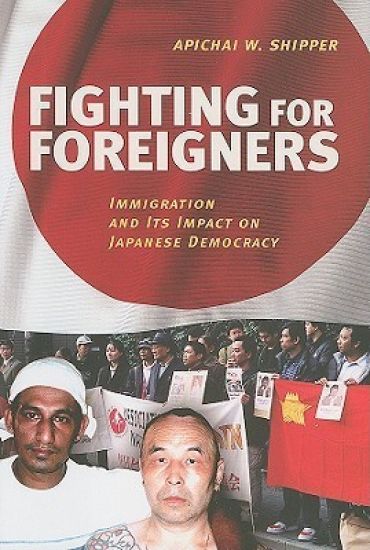
Fighting for Foreigners

Fighting for Foreigners

Apichai W. Shipper

Cornell University Press
2008
sidottu
Although stereotypically homogenized and hostile to immigrants, Japan has experienced an influx of foreigners from Asia and Latin America in recent decades. In Fighting for Foreigners, Apichai W. Shipper details how, in response, Japanese citizens have established a variety of local advocacy groups—some faith based, some secular—to help immigrants secure access to social services, economic equity, and political rights. Drawing on his years of ethnographic fieldwork and a pragmatic account of political motivation he calls associative activism, Shipper asserts that institutions that support illegal foreigners make the most dramatic contributions to democratic multiculturalism. The changing demographics of Japan have been stimulating public discussions, the political participation of marginalized groups, and calls for fair treatment of immigrants. Nongovernmental organizations established by the Japanese have been more effective than the ethnically particular associations formed by migrants themselves, Shipper finds. Activists who initially work in concert to solve specific and local problems eventually become more ambitious in terms of political representation and opinion formation. As debates about the costs and benefits of immigration rage across the developed world, Shipper's research offers a refreshing new perspective: rather than undermining democracy in industrialized society, immigrants can make a positive institutional contribution to vibrant forms of democratic multiculturalism.
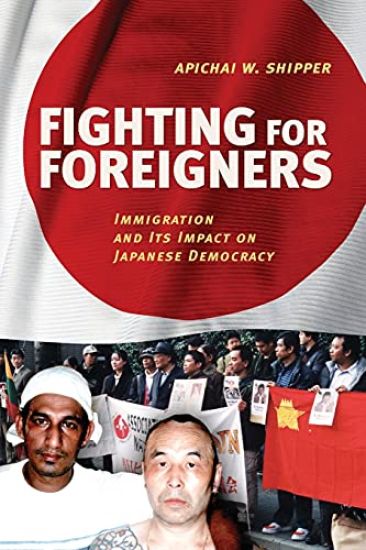
Fighting for Foreigners

Fighting for Foreigners

Apichai W. Shipper

Cornell University Press
2016
pokkari
Although stereotypically homogenized and hostile to immigrants, Japan has experienced an influx of foreigners from Asia and Latin America in recent decades. In Fighting for Foreigners, Apichai W. Shipper details how, in response, Japanese citizens have established a variety of local advocacy groups—some faith based, some secular—to help immigrants secure access to social services, economic equity, and political rights. Drawing on his years of ethnographic fieldwork and a pragmatic account of political motivation he calls associative activism, Shipper asserts that institutions that support illegal foreigners make the most dramatic contributions to democratic multiculturalism. The changing demographics of Japan have been stimulating public discussions, the political participation of marginalized groups, and calls for fair treatment of immigrants. Nongovernmental organizations established by the Japanese have been more effective than the ethnically particular associations formed by migrants themselves, Shipper finds. Activists who initially work in concert to solve specific and local problems eventually become more ambitious in terms of political representation and opinion formation. As debates about the costs and benefits of immigration rage across the developed world, Shipper's research offers a refreshing new perspective: rather than undermining democracy in industrialized society, immigrants can make a positive institutional contribution to vibrant forms of democratic multiculturalism.
Chinese Medicine for Lower Body Pain

Chinese Medicine for Lower Body Pain

Benjamin Apichai

CRC Press
2021
nidottu
Pain medication is widely used to treat patients who suffer from acute and chronic pain. However, it is not the only treatment option available for managing back and leg pain—there are alternate means of managing pain without the risk of adverse side effects that come with opioid use. Chinese Medicine for Lower Body Pain further explores other pain management options, introducing treatments such as acupuncture, herbal medicine, and Tui Na Chinese bodywork. Providing explanations in terms of anatomy, pathology, and etiology for both western and Chinese medicine, this book also provides self-care instruction that is effective and easy to follow. Key Features: Introduces acupuncture treatments including needling, cupping, moxibustion, bleeding techniques, and electro-acupuncture techniques Teaches treatments in all modalities in Chinese medicine Recommends dietary, exercise, and self-care protocols for patients Includes photos for reference and ease of understanding The treatment methods introduced in this book are the most recognized and effective pain management practices currently in use. This book would be suitable for healthcare practitioners as well as patients who want to better understand and mitigate their pain. Along with Chinese Medicine for Upper Body Pain (ISBN: 9781032066004), the author covers the use of Chinese medicine for pain management for the complete body.
Chinese Medicine for Lower Body Pain

Chinese Medicine for Lower Body Pain

Benjamin Apichai

CRC Press
2021
sidottu
Pain medication is widely used to treat patients who suffer from acute and chronic pain. However, it is not the only treatment option available for managing back and leg pain—there are alternate means of managing pain without the risk of adverse side effects that come with opioid use. Chinese Medicine for Lower Body Pain further explores other pain management options, introducing treatments such as acupuncture, herbal medicine, and Tui Na Chinese bodywork. Providing explanations in terms of anatomy, pathology, and etiology for both western and Chinese medicine, this book also provides self-care instruction that is effective and easy to follow. Key Features: Introduces acupuncture treatments including needling, cupping, moxibustion, bleeding techniques, and electro-acupuncture techniques Teaches treatments in all modalities in Chinese medicine Recommends dietary, exercise, and self-care protocols for patients Includes photos for reference and ease of understanding The treatment methods introduced in this book are the most recognized and effective pain management practices currently in use. This book would be suitable for healthcare practitioners as well as patients who want to better understand and mitigate their pain. Along with Chinese Medicine for Upper Body Pain (ISBN: 9781032066004), the author covers the use of Chinese medicine for pain management for the complete body.
Chinese Medicine for Upper Body Pain

Chinese Medicine for Upper Body Pain

Benjamin Apichai

TAYLOR FRANCIS LTD
2023
nidottu
Pain medication is widely used to treat patients who suffer from acute and chronic pain. However, it is not the only treatment option available for managing traumatic and chronic upper body pain. Chinese medicine is a popular option without the risk of adverse side effects that may come with opioid use.Chinese Medicine for Upper Body Pain further explores other pain management options, introducing treatments such as acupuncture, herbal medicine, and Tui Na (Chinese bodywork). This book provides concise explanations in terms of anatomy, pathology, and etiology for both Western and Chinese medicine, and also provides selfcare instructions that are effective and easy to follow. Key Features:Introduces treatments in Chinese medicine including acupuncture with traditional methods such as acupuncture point selection and its modifications, electroacupuncture, point bleeding, auricular medicine, cupping, and moxibustion; herbal formulas with their sources and modifications, and Tui Na therapyRecommends dietary, exercise, and self-care protocols for patientsIncludes photos for reference and ease of understandingThis book is suitable for self-care practitioners and students of Chinese medicine practices as well as patients who want to better understand and mitigate their pain.Along with Chinese Medicine for Lower Body Pain (ISBN: 9780367235857), the author covers the use of Chinese medicine for pain management for the complete body.
Chinese Medicine for Upper Body Pain

Chinese Medicine for Upper Body Pain

Benjamin Apichai

TAYLOR FRANCIS LTD
2023
sidottu
Pain medication is widely used to treat patients who suffer from acute and chronic pain. However, it is not the only treatment option available for managing traumatic and chronic upper body pain. Chinese medicine is a popular option without the risk of adverse side effects that may come with opioid use.Chinese Medicine for Upper Body Pain further explores other pain management options, introducing treatments such as acupuncture, herbal medicine, and Tui Na (Chinese bodywork). This book provides concise explanations in terms of anatomy, pathology, and etiology for both Western and Chinese medicine, and also provides selfcare instructions that are effective and easy to follow. Key Features:Introduces treatments in Chinese medicine including acupuncture with traditional methods such as acupuncture point selection and its modifications, electroacupuncture, point bleeding, auricular medicine, cupping, and moxibustion; herbal formulas with their sources and modifications, and Tui Na therapyRecommends dietary, exercise, and self-care protocols for patientsIncludes photos for reference and ease of understandingThis book is suitable for self-care practitioners and students of Chinese medicine practices as well as patients who want to better understand and mitigate their pain.Along with Chinese Medicine for Lower Body Pain (ISBN: 9780367235857), the author covers the use of Chinese medicine for pain management for the complete body.
The Poetry of Yehuda Amichai

The Poetry of Yehuda Amichai

Yehuda Amichai

Farrar, Straus and Giroux
2017
nidottu
The largest English-language collection to date from Israel's finest poet Few poets have demonstrated as persuasively as Yehuda Amichai why poetry matters. One of the major poets of the twentieth century, Amichai created remarkably accessible poems, vivid in their evocation of the Israeli landscape and historical predicament, yet universally resonant. His are some of the most moving love poems written in any language in the past two generations--some exuberant, some powerfully erotic, many suffused with sadness over separation that casts its shadow on love. In a country torn by armed conflict, these poems poignantly assert the preciousness of private experience, cherished under the repeated threats of violence and death. Amichai's poetry has attracted a variety of gifted English translators on both sides of the Atlantic from the 1960s to the present. Assembled by the award-winning Hebrew scholar and translator Robert Alter, The Poetry of Yehuda Amichai is by far the largest selection of the master poet's work to appear in English, gathering the best of the existing translations as well as offering English versions of many previously untranslated poems. With this collection, Amichai's vital poetic voice is now available to English readers as it never has been before.
The Selected Poetry Of Yehuda Amichai

The Selected Poetry Of Yehuda Amichai

Yehuda Amichai; C.K. Williams

University of California Press
2013
pokkari
Yehuda Amichai (1924-2000) was Israel's most popular poet, as well as a literary figure of international reputation. In this collection, renowned translators Chana Bloch and Stephen Mitchell have selected Amichai's most beloved poems, including forty poems from his later work. A new foreword by C.K. Williams, written especially for this edition, addresses Amichai's enduring legacy and sets his poetry in the context of the new millennium.
Yehuda Amichai Selected Poems

Yehuda Amichai Selected Poems

Yehuda Amichai

Faber Faber
2018
nidottu
Yehuda Amichai was first brought to attention in this country by his inclusion in Modern Poetry in Translation (1965). The magazine's editors, Daniel Weissbort and Ted Hughes, here provide a selection of Amichai's poetry translated by various hands, placing his achievements alongside those other Eastern European poets with whom he was first introduced - Zbigniew Herbert, Miroslav Holub, Vasko Popa, Czeslaw Milosz and Andrei Voznesensky - while demonstrating what makes his own talent so unique.In Ted Hughes's words, Amichai was 'the poet whose books I still open most often, most often take on a journey, most often return to when the whole business of writing anything natural, real and satisfying, seems impossible. And that after thirty years of feeling the same way about him. The effect his poetry has on me is to give me my own life - to open it up somehow, to make it available to me afresh, to uncover all kinds of riches in every moment of it, and to free me from my mental prisons'.
Yehuda Amichai - Poezii Alese

Yehuda Amichai - Poezii Alese

Adrian Grauenfels; Emanuel Pope

Lulu.com
2017
nidottu
Poezii alese, (extrase din 10 volume tiparite in ebraica intre 1955-1989), traduse in limba romana de Adrian Grauenfels (Israel) si Emanuel Pope (Anglia) cu grafica de Beatrice Bernath (Israel), redactor: Otilia Rossetti (Israel).
Yehuda Amichai

Yehuda Amichai

Nili Scharf Gold

Brandeis University Press
2008
sidottu
Yehuda Amichai is one of the twentieth century's (and Israel's) leading poets. In this remarkable book, Gold offers a profound reinterpretation of Amichai's early works, using two sets of untapped materials: notes and notebooks written by Amichai in Hebrew and German that are now preserved in the Beinecke archive at Yale, and a cache of ninety-eight as-yet unpublished letters written by Amichai in 1947 and 1948 to a woman identified in the book as Ruth Z., which were recently discovered by Gold. Gold found irrefutable evidence in the Yale archive and the letters to Ruth Z. that allows her to make two startling claims. First, she shows that in order to remake himself as an Israeli soldier-citizen and poet, Amichai suppressed ("camouflaged") his German past and German mother tongue both in reference to his biography and in his poetry. Yet, as her close readings of his published oeuvre as well as his unpublished German and Hebrew notes at the Beinecke show, these texts harbor the linguistic residue of his European origins. Gold, who knows both Hebrew and German, establishes that the poet's German past infused every area of his work, despite his attempts to conceal it in the process of adopting a completely Israeli identity. Gold's second claim is that Amichai somewhat disguised the story of his own development as a poet. According to Amichai's own accounts, Israel's war of independence was the impetus for his creative writing. Long accepted as fact, Gold proves that this poetic biography is far from complete. By analyzing Amichai's letters and reconstructing his relationship with Ruth Z., Gold reveals what was really happening in the poet's life and verse at the end of the 1940s. These letters demonstrate that the chronological order in which Amichai's works were published does not reflect the order in which they were written; rather, it was a product of the poet's literary and national motivations.
Yehuda Amichai – The Making of Israel`s National Poet

Yehuda Amichai – The Making of Israel`s National Poet

Nili Scharf Gold

Brandeis University Press
2019
nidottu
Yehuda Amichai is one of the twentieth century's (and Israel's) leading poets. In this remarkable book, Nili Scharf Gold offers a profound reinterpretation of Amichai's early works and reconstructs his poetic biography. Her close reading of his oeuvre, untapped notebooks, and a cache of unpublished letters to a woman identified as Ruth Z. that Gold discovered convincingly demonstrates how the poet's German past infused his work, despite his attempts to conceal it as he adopted an Israeli identity.
The Doubts and Loves of Yehuda Amichai

The Doubts and Loves of Yehuda Amichai

Ido Bassok

UNIVERSITY PRESS OF AMERICA
2024
nidottu
The Doubts and Loves of Yehuda Amichai: Israeli, European, and International Poet presents the life and works of Yehuda Amichai, born Ludwig Pfeuffer in Würzburg, Germany. The book is based on copious material from Amichai's personal archive in the Beinecke Library at Yale University, other archives and numerous interviews with family members and others who knew him well. Each phase of the biography is linked to its overarching historical context and provides a literary analysis of the key features of his writing. What emerges is a multifaceted picture of a crucial period in the 20th century in which Amichai was both a witness and an actor, without ever taking a simplistic, direct position in his poetry. Amichai, an engaged political poet, was an enlightened, humanitarian European while remaining an authentic Israeli who loved his country and was deeply involved finding solutions to its problems. Amichai was also a great admirer of women. The analysis of his tempestuous love life helps shed light on important aspects of his prose and poetry. Several chapters are also devoted to the background and influence of Amichai's works in genres other than poetry including his two novels and a collection of short stories, his radio plays, and his children's poetry.
Proportionality in International Humanitarian Law

Proportionality in International Humanitarian Law

Amichai Cohen; David Zlotogorski

Oxford University Press Inc
2021
sidottu
The principle of proportionality is one of the corner-stones of international humanitarian law. Almost all states involved in armed conflicts recognize that launching an attack which may cause incidental harm to civilians that exceeds the direct military advantage anticipated from the attack is prohibited. This prohibition is included in military manuals, taught in professional courses, and accepted as almost axiomatic. And yet, the exact meaning of the principle is vague. Almost every issue, from the most elementary question of how to compare civilian harm and military advantage, to the obligation to employ accurate but expensive weapons, is disputed. Controversy is especially rife regarding asymmetrical conflicts, in which many modern democracies are involved. How exactly should proportionality be implemented when the enemy is not an army, but a non-state-actor embedded within a civilian population? What does it mean to use precautions in attack, when almost every attack is directed at objects that are used for both military and civilian purposes? In Proportionality in International Humanitarian Law, Amichai Cohen and David Zlotogorski discuss the philosophical and political background of the principle of proportionality. Offering a fresh and comprehensive look at this key doctrine, they comprehensively discuss the different components of the proportionality “equation” - the meaning of “incidental harm” to civilians; the “military advantage” and the term “excessive”. The book proposes the debates over the principle of proportionality be reframed to focus on the precautions taken before the attack along with the course States should follow in investigations of the violations of the principle.