Kirjojen hintavertailu. Mukana 11 342 296 kirjaa ja 12 kauppaa.

Kirjahaku

Etsi kirjoja tekijän nimen, kirjan nimen tai ISBN:n perusteella.

1000 tulosta hakusanalla Archibald K. Murray

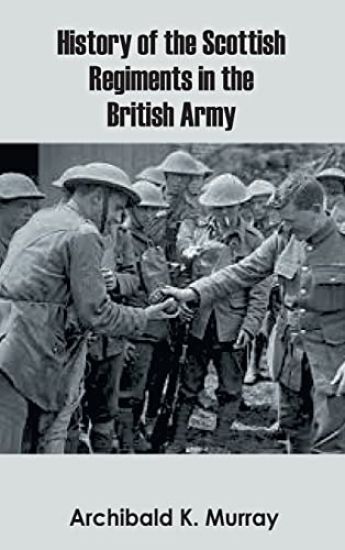
History of the Scottish Regiments in the British Army
History of the Scottish Regiments in the British Army is an unchanged, high-quality reprint of the original edition of 1863. Hansebooks is editor of the literature on different topic areas such as research and science, travel and expeditions, cooking and nutrition, medicine, and other genres. As a publisher we focus on the preservation of historical literature. Many works of historical writers and scientists are available today as antiques only. Hansebooks newly publishes these books and contributes to the preservation of literature which has become rare and historical knowledge for the future.
Sir Archibald Murray's Despatches

Sir Archibald Murray's Despatches

Archibald Murray

NAVAL MILITARY PRESS
2024
pokkari
Four despatches by the C in C of the Egyptian Expeditionary Force during his period in command from January 1916-June 1917, not published in their full original text prior to this publication. Fourth despatch contains letter from War Office, included as a condition for authority to publish the despatch.There are four despatches covering Sir Archibald Murray's period in command (Jan 1916-June 1917) and until publication of this book they had never been published in their full original text. This was especially true of the fourth despatch, dated 28th June 1917 which Murray was permitted by the War Office to publish on the condition that a letter from them was published at the same time. The first part of this despatch refers to the frequently changing directives laid down by the War Cabinet regarding tasks for the EEF - defensive one day, offensive the next coupled with a failure to meet the the request for the number of divisions needed to carry out the objectives laid down. The letter, signed by the secretary to the Army Council, was a model of damage limitation stating that the changes in policy were were based on the wider considerations than just those of the Egyptian campaign, which would not be apparent to the reader of the despatch.The first despatch deals with operations from 10th January to 31st May 1916. It was a period of a great deal of troop movement - divisions withdrawing from Gallipoli via Egypt and from France to Salonika with all the administrative backup needed for the Salonika force. The second despatch covers the period 1st June to 30th September 1916 during which the Battle of Romani was fought (4/5 August). The third despatch takes the story up to 28th February 1917 and the fourth and final one brings us to Murray's handover of command to Allenby on 28th June 1917. The principle actions described in this despatch are the First and Second Battles of Gaza, both of which were Turkish victories inflicting in all some 10,000 casualties. It was these failures that led to Murray's replacement by Allenby.
Sir Archibald Murray's Despatches

Sir Archibald Murray's Despatches

Archibald Murray

NAVAL MILITARY PRESS
2024
sidottu
Four despatches by the C in C of the Egyptian Expeditionary Force during his period in command from January 1916-June 1917, not published in their full original text prior to this publication. Fourth despatch contains letter from War Office, included as a condition for authority to publish the despatch.There are four despatches covering Sir Archibald Murray's period in command (Jan 1916-June 1917) and until publication of this book they had never been published in their full original text. This was especially true of the fourth despatch, dated 28th June 1917 which Murray was permitted by the War Office to publish on the condition that a letter from them was published at the same time. The first part of this despatch refers to the frequently changing directives laid down by the War Cabinet regarding tasks for the EEF - defensive one day, offensive the next coupled with a failure to meet the the request for the number of divisions needed to carry out the objectives laid down. The letter, signed by the secretary to the Army Council, was a model of damage limitation stating that the changes in policy were were based on the wider considerations than just those of the Egyptian campaign, which would not be apparent to the reader of the despatch.The first despatch deals with operations from 10th January to 31st May 1916. It was a period of a great deal of troop movement - divisions withdrawing from Gallipoli via Egypt and from France to Salonika with all the administrative backup needed for the Salonika force. The second despatch covers the period 1st June to 30th September 1916 during which the Battle of Romani was fought (4/5 August). The third despatch takes the story up to 28th February 1917 and the fourth and final one brings us to Murray's handover of command to Allenby on 28th June 1917. The principle actions described in this despatch are the First and Second Battles of Gaza, both of which were Turkish victories inflicting in all some 10,000 casualties. It was these failures that led to Murray's replacement by Allenby.
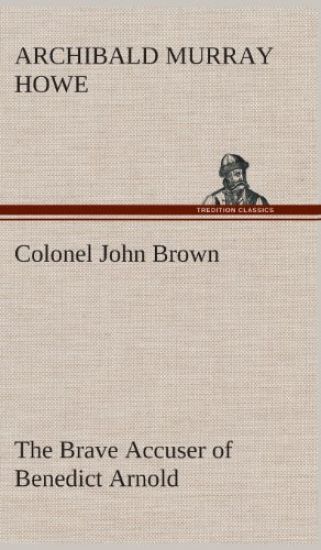
Colonel John Brown, of Pittsfield, Massachusetts

Colonel John Brown, of Pittsfield, Massachusetts

Archibald Murray Howe

Anson Street Press
2025
pokkari
"Colonel John Brown, of Pittsfield, Massachusetts, the Brave Accuser of Benedict Arnold" recounts the life and legacy of a pivotal figure in the American Revolution. Archibald Murray Howe's biography delves into the military career of Colonel John Brown, exploring his courageous service and, most notably, his early and unwavering accusation of Benedict Arnold's treason. This historical account sheds light on Brown's role in the Continental Army and his participation in key events leading up to the infamous betrayal. Readers interested in the Revolutionary Period will find a compelling study of character and conviction during a formative era in United States history. The book details the Battle of Stone Arabia, Stone Arabia, N.Y., in 1780. It offers valuable insights into military history through the lens of one man's dedication to his country and his unwavering pursuit of justice. A meticulously prepared print republication.This work has been selected by scholars as being culturally important, and is part of the knowledge base of civilization as we know it.This work is in the public domain in the United States of America, and possibly other nations. Within the United States, you may freely copy and distribute this work, as no entity (individual or corporate) has a copyright on the body of the work.Scholars believe, and we concur, that this work is important enough to be preserved, reproduced, and made generally available to the public. We appreciate your support of the preservation process, and thank you for being an important part of keeping this knowledge alive and relevant.