

Kirjahaku
Etsi kirjoja tekijän nimen, kirjan nimen tai ISBN:n perusteella.
1000 tulosta hakusanalla Archibald Watson
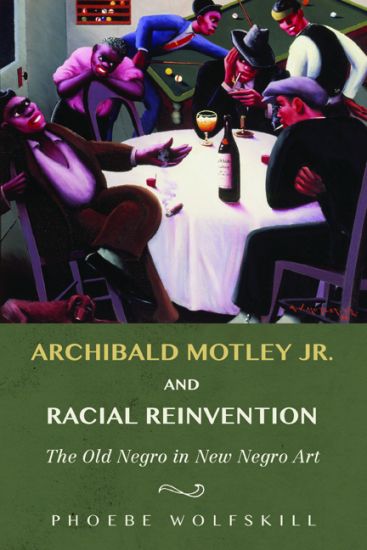
Archibald Motley Jr. and Racial Reinvention
Phoebe Wolfskill
University of Illinois Press
2017
sidottu
An essential African American artist of his era, Archibald Motley Jr. created paintings of black Chicago that aligned him with the revisionist aims of the New Negro Renaissance. Yet Motley's approach to constructing a New Negro--a dignified figure both accomplished and worthy of respect--reflected the challenges faced by African American artists working on the project of racial reinvention and uplift. Phoebe Wolfskill demonstrates how Motley's art embodied the tenuous nature of the Black Renaissance and the wide range of ideas that structured it. Focusing on key works in Motley's oeuvre, Wolfskill reveals the artist's complexity and the variety of influences that informed his work. Motley’s paintings suggest that the racist, problematic image of the Old Negro was not a relic of the past but an influence that pervaded the Black Renaissance. Exploring Motley in relation to works by notable black and non-black contemporaries, Wolfskill reinterprets Motley's oeuvre as part of a broad effort to define American cultural identity through race, class, gender, religion, and regional affiliation.
Archibald Constable And His Literary Correspondents
Thomas Constable
KESSINGER PUBLISHING CO
2007
pokkari

The Poems Of Archibald Lampman
Archibald Lampman; Duncan Campbell (EDT) Scott
Kessinger Pub
2007
pokkari


Meet Archibald, the only bald dinosaur in the world. From the #1 New York Times bestselling creators of Grumpy Monkey comes a charming new character in this laugh-out-loud story of Jurassic proportions that celebrates standing out from the crowd. Long ago, in the time of prehistoric preening, all dinosaurs have fur. All except for one. Meet Archibald. When Archibald embarks on a dangerous quest to find his lost locks, he encounters danger at every turn. Along the way, he outwits the clever Woollyciraptors, rescues two dinosaurs from getting eaten, and even encounters the dreaded Furannosaurus Rex While he may not end this story with even a strand of hair on his head, he does begin to see that his life is wonderful as it is. As he discovers, it's better to focus on what you do have, not on what you don't. Readers will laugh along as Archibald learns to embrace the things that make you different.

Meet Archibald, the only bald dinosaur in the world. From the #1 New York Times bestselling creators of Grumpy Monkey comes a charming new character in this laugh-out-loud story of Jurassic proportions that celebrates standing out from the crowd. Long ago, in the time of prehistoric preening, all dinosaurs have fur. All except for one. Meet Archibald. When Archibald embarks on a dangerous quest to find his lost locks, he encounters danger at every turn. Along the way, he outwits the clever Woollyciraptors, rescues two dinosaurs from getting eaten, and even encounters the dreaded Furannosaurus Rex While he may not end this story with even a strand of hair on his head, he does begin to see that his life is wonderful as it is. As he discovers, it's better to focus on what you do have, not on what you don't. Readers will laugh along as Archibald learns to embrace the things that make you different.
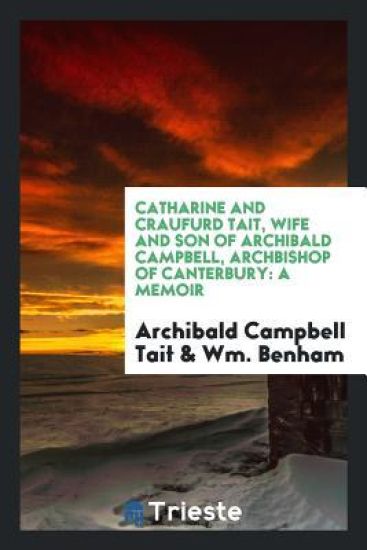
Catharine and Craufurd Tait, Wife and Son of Archibald Campbell, Archbishop of Canterbury
Archibald Campbell Tait
Trieste Publishing
2018
nidottu

By October 1973 special prosecutor Archibald Cox was tracing the Watergate cover-up to the Oval Office. President Nixon demanded that he stop. In the Saturday Night Massacre" two heads of the Justice Department quit before Nixon found a subordinate (Robert Bork) willing to fire Cox. Immediately public opinion swung against the president and turned Cox into a hero,seemingly Washington's last honest man.Cox's life was distinguished well before that Saturday night. He had been a clerk for the legendary judge Learned Hand, a distinguished professor at Harvard Law School, and the Solicitor General, arguing many Supreme Court cases. He exemplified what we want lawyers to be. At its core Archibald Cox is the story of a Yankee who went to Washington but refused to leave his principles behind.

Born in 1816, by 1840 Sturrock was involved with Brunel and Gooch in establishing the Great Western Railway's works at Paddington and new town at Swindon. He designed locomotives and carriages which established a reputation for comfort and punctuality. This biography offers an insight into Sturrock's family life as well as his professional life.
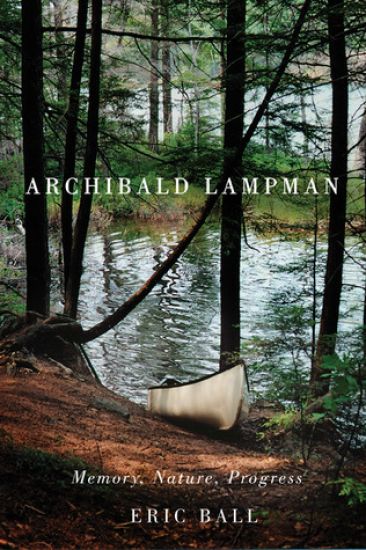
Treasuring the past, savouring the present, and wanting to do right by the future, Archibald Lampman was a poet keenly focused on the workings of time. He was also a thinker of mystical predisposition. His goal was not to transcend time, but to find redemptive meaning within it. Archibald Lampman: Memory, Nature, Progress explores the ways in which Lampman pursued this goal in relation to the three faces of time. Memory fascinated Lampman. He relished the "alchemy" by which the dross of past experience could be left behind and the gold preserved. Nature compelled his mind and emotions, and his clear-eyed observations of both countryside and wilderness settings gave rise to a self-evolved poetics of inclusiveness. In his celebrations of nature in all its manifestations, mild or bleak, he anticipated the work of iconic Canadian painter Tom Thomson and he forecasted the environmentalism of our own time. Progress for Lampman spelled societal rectification. By forwarding the cause of social betterment, one was part of a movement larger than oneself, and this expansion, too, was redemptive. Archibald Lampman: Memory, Nature, Progress is the first book on this foundational figure in Canadian literature to appear in over twenty-five years and the first thematically focused study. Combining close analysis with biographical context, it shows how Lampman's oeuvre was shaped by his responses to his physical surroundings and to his social-intellectual milieu, as filtered through his stubbornly independent outlook.
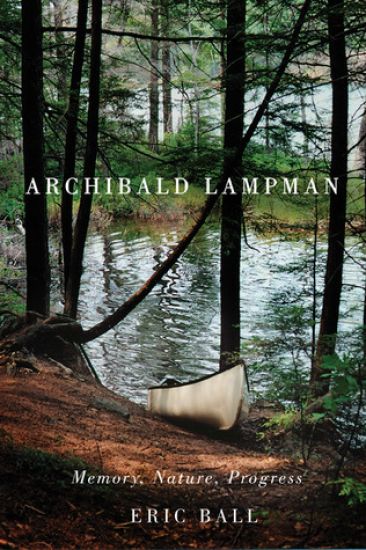
Treasuring the past, savouring the present, and wanting to do right by the future, Archibald Lampman was a poet keenly focused on the workings of time. He was also a thinker of mystical predisposition. His goal was not to transcend time, but to find redemptive meaning within it. Archibald Lampman: Memory, Nature, Progress explores the ways in which Lampman pursued this goal in relation to the three faces of time. Memory fascinated Lampman. He relished the "alchemy" by which the dross of past experience could be left behind and the gold preserved. Nature compelled his mind and emotions, and his clear-eyed observations of both countryside and wilderness settings gave rise to a self-evolved poetics of inclusiveness. In his celebrations of nature in all its manifestations, mild or bleak, he anticipated the work of iconic Canadian painter Tom Thomson and he forecasted the environmentalism of our own time. Progress for Lampman spelled societal rectification. By forwarding the cause of social betterment, one was part of a movement larger than oneself, and this expansion, too, was redemptive. Archibald Lampman: Memory, Nature, Progress is the first book on this foundational figure in Canadian literature to appear in over twenty-five years and the first thematically focused study. Combining close analysis with biographical context, it shows how Lampman's oeuvre was shaped by his responses to his physical surroundings and to his social-intellectual milieu, as filtered through his stubbornly independent outlook.
In the period between 1880 and 1900, Archibald Lampman made an impressive contribution to the development of a distinctive indentity in Canadian literature. Although he is remembered chiefly as a nature poet of regional interest, his interest for us today lines in this unexpected modernism and the intensity with which he interpreted nature and city scenes. In his later poems social criticism and a melancholic mood supersede his earlier idealism, dreams, and thematic preoccupation with nature. This volume includes The Poems of Archibald Lampman, a collection of 237 opems edited with a memoir by Duncan Campbell Scott after Lampman's death, and At the Long Sault and Other New Poems, which was hailed, when it first appeared in 1943, as 'the literary discovery of the year.' In Arthur Stringer's estimate, Lampman was the 'uncrowned poet laureate of Canada,' a comment that reflects the high esteem in which he was held. 'At the Long Sault,' according to some critics, signifies a new direction in Lampman's poetry: his concern with man's isolation and alienation from society. In this poem his breaks away from the ballad and sonnet forms which were his forte, and experiments with blank verse, the culmination of his poetic development. On the whole, his work manifests a tension arising from an uneasy balance of opposites -- fear and resignation, delight and the pain of losee, heat and cold, and life and death. Margaret Whitridge suggests that he was the first to strike an authentic note of fear in Canadian literature, in his poems about politicians and money-lenders, towering impersonal city buildings, and solitary figures prowling the city at night. This tension also reflects the difficulties he experienced in his personal life -- the failure of his marriage, the heart condition that condemned him to an early death, and the frustrations of being a socialist.
Archibald MacLeish - American Writers 99 was first published in 1971. Minnesota Archive Editions uses digital technology to make long-unavailable books once again accessible, and are published unaltered from the original University of Minnesota Press editions.
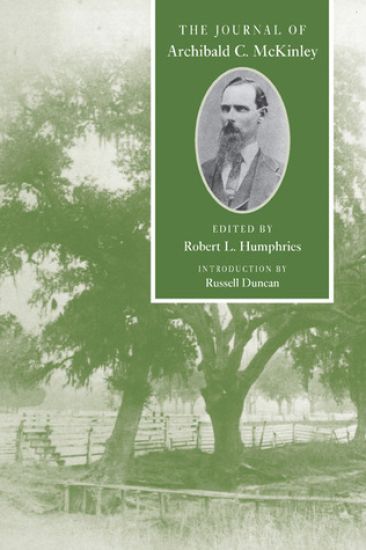
A valuable document from the Reconstruction era, The Journal of Archibald C. McKinley offers the modern reader a rare glimpse of daily life on Sapelo Island, Georgia, as seen through the eyes of an upper-class farmer.A descendant of Scottish settlers, Archibald McKinley was born in Lexington, Georgia, in 1842 and served as a Confederate officer during the Civil War. Just after the war, he began farming near Milledgeville, Georgia, and within a year had met and married Sarah Spalding, a granddaughter of Thomas Spalding, who had built his plantation empire on Sapelo Island. In 1869, the McKinleys moved to Sapelo to raise cotton, sugar cane, and other crops. The bulk of this journal is a sustained account of their sojourn on the island through 1876, before their return to Milledgeville.The brief, matter-of-fact entries that make up McKinley's journal focus mainly on the small occurrences that filled his days: farm work, hunting and fishing expeditions, sailing excursions, church services, changes in the weather, the disposition of his crops, the development of the Darien timber shipping trade. Scattered throughout, however, are intriguing references to dramatic events--shootings, trials, tensions between whites and the recently freed blacks--and to the processes of Reconstruction, as when McKinley notes that "a company of Yankee soldiers" had arrived at the penitentiary to ensure equal treatment of black and white convicts. The longest entry in the journal is a eulogy for a freedman named Scott, who, as McKinley's slave, had remained "true as steel" during McKinley's service in the Civil War.Editor Robert L. Humphries has included with the journal several of the McKinley family letters, written after Archibald and Sarah left Sapelo Island. In the introduction, historian Russell Duncan places the story in context, focusing on the larger events of Reconstruction as they pertained to Sapelo Island and to the relations between blacks and whites there.

Archibald Yell
Univ of Arkansas Pr
1988
sidottu
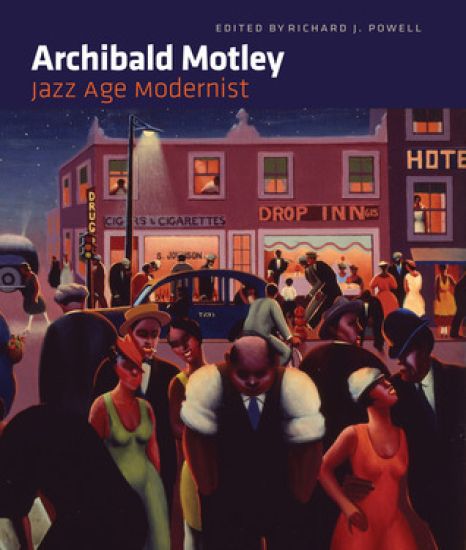
Archibald Motley
Duke University Museum of Art,U.S.
2014
pokkari
Featuring more than 200 color illustrations, the catalogue Archibald Motley: Jazz Age Modernist accompanies the first full-scale survey of the work of Archibald Motley, on view at the Nasher Museum of Art at Duke University from January 30, 2014, through May 11, 2014. Archibald John Motley, Jr., was an American painter, master colorist, and radical interpreter of urban culture. Among twentieth-century American artists, Motley is surely one of the most important and, paradoxically, also one of the most enigmatic. Born in New Orleans in 1891, Motley spent the first half of the twentieth century living and working in a predominately white neighborhood on Chicago's South Side, just blocks away from the city's burgeoning black community. During his formative years, Chicago's African American population increased dramatically, and he was both a witness to and a visual chronicler of that expansion. In 1929 he won a Guggenheim Fellowship, which funded a critical year of study in France, where he painted Blues and other memorable pictures of Paris. In the 1950s, Motley made several lengthy visits to Mexico, where his nephew, the well-known novelist Willard F. Motley, lived. While there, Motley created vivid depictions of Mexican life and landscapes. He died in Chicago in 1981. Motley's brilliant yet idiosyncratic paintings-simultaneously expressionist and social realist-have captured worldwide attention with their rainbow-hued, syncopated compositions. The exhibition includes the artist's depictions of African American life in early-twentieth-century Chicago, as well as his portraits and archetypes, portrayals of African American life in Jazz Age Paris, and renderings of 1950s Mexico. The catalogue includes an essay by Richard J. Powell, organizer and curator of Archibald Motley: Jazz Age Modernist, as well as contributions from other scholars examining the life, work, and legacy of one of twentieth-century America's most significant artists. After debuting at the Nasher Museum of Art, the exhibition will travel to other museums across the country: the Amon Carter Museum of American Art, Fort Worth, Texas; Los Angeles County Museum of Art, California; Chicago Cultural Center, Illinois; and Whitney Museum of American Art, New York. Contributors: Davarian L. Baldwin, David C. Driskell, Olivier Meslay, Amy M. Mooney, Richard J. Powell, Ishmael Reed Publication of the Nasher Museum of Art at Duke University

Archibald Cary of Ampthill: Wheelhorse of the Revolution
Robert K. (Robert Kincaid) 18 Brock
Hassell Street Press
2021
sidottu
This work has been selected by scholars as being culturally important and is part of the knowledge base of civilization as we know it.This work is in the public domain in the United States of America, and possibly other nations. Within the United States, you may freely copy and distribute this work, as no entity (individual or corporate) has a copyright on the body of the work.Scholars believe, and we concur, that this work is important enough to be preserved, reproduced, and made generally available to the public. To ensure a quality reading experience, this work has been proofread and republished using a format that seamlessly blends the original graphical elements with text in an easy-to-read typeface.We appreciate your support of the preservation process, and thank you for being an important part of keeping this knowledge alive and relevant.