

Kirjahaku
Etsi kirjoja tekijän nimen, kirjan nimen tai ISBN:n perusteella.
167 tulosta hakusanalla Ardyth Kennelly
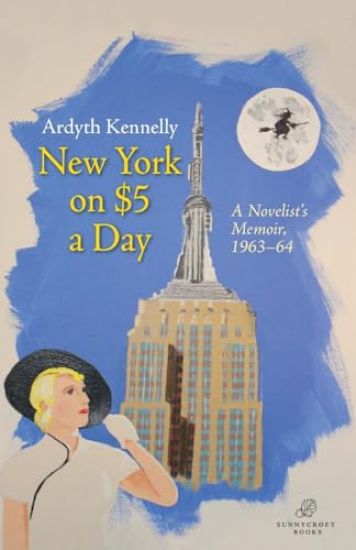
New York on $5 a Day, the last book by the novelist Ardyth Kennelly (1912-2005), is a brief but charming account of her two-year sojourn in New York City (1963-64), where she had gone to try to revive her writing career after the death of her husband a year earlier. Written in 2001, the memoir is a chatty and engaging reminiscence about the unusual people she met in New York, including the English witch and writer Sybil Leek, whom Ardyth asked to cast a spell so she could be a successful writer again (and whose CBS TV appearance Ardyth inadvertently almost spoiled); the aged writer Anzia Yezierska, blind and nearly forgotten but still lively and demanding; the minor poet Sanders Russell, with whom Ardyth explored the city and the World's Fair; the blinded Spanish Civil War veteran Robert Raven, her landlord on West 16th Street; and Raymond Duncan, brother of the famed dancer Isadora Duncan.Ardyth also writes perceptively and vividly about the city as she herself--a well-read but not terribly worldly woman from the West--experienced it. This sparkling center of literary life was a surprising and exciting place for a writer from a relatively unsophisticated town like Portland, Oregon. We learn from Ardyth's letters to her literary friend Freddy Jacobson (included in an appendix) that she reveled in the rich variety of readings, plays, movies, and sightings of famous people--and she loved that you could read the book reviews on Sunday and walk right into Brentano's on Monday and get the books, without having to wait two weeks while they were sent away for.In New York Ardyth had an apartment in Greenwich Village, a tall and handsome Austrian beau, a "Beatle haircut" editor (John Pope), and a dream of living in the famous Dakota apartments. But late in 1964, having had no further success in publishing her books--and feeling that the "alien corn" had at last grown a little too high--she ended her New York idyll and took a bus home to Portland.

Part memoir, part confession, part journal, Bodies Adjacent is the story of two lives told by each one about the other. The novelist Ardyth Kennelly and her physician husband, the Jewish Viennese migr Egon V. Ullman, began their unlikely love affair in the heart of Oregon's Willamette Valley in the 1930s and continued it for nearly three decades in Portland-contending first with the Depression, then the disruptions of the war, and finally sudden fame, as well as their own personal demons.Writing thirty years after Egon's untimely death in 1962, Ardyth looks back with a deeper understanding of their lives than she had possessed during her self-conscious younger years. She tells us something of her early life and of Egon's history; laments her ignorance of the love he must have felt for his home country; shares her impressions of the Jewish refugees and migr s he knew in Portland; remembers his loving and indulgent care for her; confesses her sorrow and regret for how she treated him in his illness and death; and spins some fanciful stories to illustrate how their life together began and ended.In the middle of her memoir, Ardyth places the journal that Egon kept-at her suggestion-during the years when she was writing her first five novels (1947-56). His fascination with her talent, intellect, and charm never wavered through all their personal troubles. Their shared love of books and the desire to write brought them together and remained a major focus of their life in marriage.Bodies Adjacent is a captivating and singular love story-painfully honest, yet utterly enchanting and sweet.


Blind Doesn't Always Mean Blind
Ardyth L. Elms
Createspace Independent Publishing Platform
2014
nidottu

Captain Bull and the Calico Avengers
Ardyth Debruyn
Createspace Independent Publishing Platform
2014
nidottu


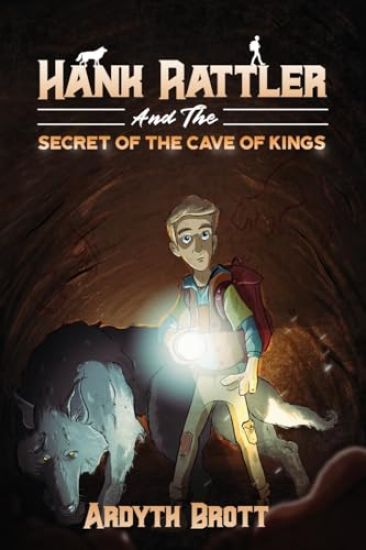
Twelve-year-old Hank Rattler lives alone in his empty house in the countryside. Mrs. Plunkett lives next door and cares for him in the absence of his parents. Hank and his classmates, Ruby Basher and Sam Benedetto, win their Grade 8 Science Fair, and the prize is summer camp in the Rocky Mountains. Meeting up at the camp with three other science fair winners, Julianna Wong, Oz Solomon, and Zebi Little Crow, they get lost during a terrible storm while chased by a grizzly bear. They stumble into a hidden cave with walls covered in multiple drawings of dinosaur teeth. Hank and his friends use their small flashlights to move more deeply into the dark underground. They make their way into another cave where they discover Mascon, a 403-year-old seer. He knew they would find him, enabling him to send them on a quest into a secret valley where the world's last dinosaurs still lived. He gives each of them specially heightened powers of taste, touch, sight, hearing, and smell, as well as intuition-all which can keep them alive if they work together.Their incredible adventure leads them into battle with beasts they thought were extinct They meet Golden Eyes, queen of the pterodactyls, whose mission is to keep them alive. But is she clever enough to help all six young explorers find the cave of kings and escape from the secret valley?

Prison City looks beneath the placid surface of Huntsville, Texas, execution capital of the world, and sheds light on controversial issues usually hidden behind penitentiary walls. The authors draw on a multitude of voices from the community surrounding the prison - from inmates and guards to neighboring residents and local politicians - to reflect on questions of crime and punishment, vengeance, and forgiveness. We see how the sophisticated communication techniques employed by inmates, information officers, and community leaders shape opinions in the small towns where prisons are a principal industry. The poignant, evocative stories that run throughout the book highlight the incarcerated population's increasing influence in the political, cultural, and economic landscape in the United States. Most of all, Prison City offers opportunities to understand why the Texas justice system has become a global metaphor for incarceration and capital punishment.

"Prison City" looks beneath the placid surface of Huntsville, Texas, execution capital of the world, and sheds light on controversial issues usually hidden behind penitentiary walls. The authors draw on a multitude of voices from the community surrounding the prison - from inmates and guards to neighboring residents and local politicians - to reflect on questions of crime and punishment, vengeance, and forgiveness. We see how the sophisticated communication techniques employed by inmates, information officers, and community leaders shape opinions in the small towns where prisons are a principal industry. The poignant, evocative stories that run throughout the book highlight the incarcerated population's increasing influence in the political, cultural, and economic landscape in the United States. Most of all, "Prison City" offers opportunities to understand why the Texas justice system has become a global metaphor for incarceration and capital punishment.