Kirjojen hintavertailu. Mukana 11 244 527 kirjaa ja 12 kauppaa.

Kirjahaku

Etsi kirjoja tekijän nimen, kirjan nimen tai ISBN:n perusteella.

1000 tulosta hakusanalla Ariela Freedman

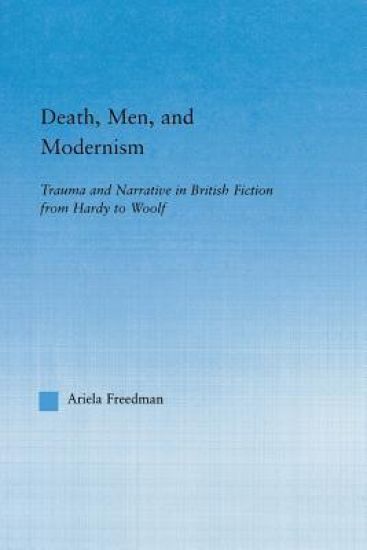
Death, Men, and Modernism

Death, Men, and Modernism

Ariela Freedman

Routledge
2013
nidottu
Death, Men and Modernism argues that the figure of the dead man becomes a locus of attention and a symptom of crisis in British writing of the early to mid-twentieth century. While Victorian writers used dying women to dramatize aesthetic, structural, and historical concerns, modernist novelists turned to the figure of the dying man to exemplify concerns about both masculinity and modernity. Along with their representations of death, these novelists developed new narrative techniques to make the trauma they depicted palpable. Contrary to modernist genealogies, the emergence of the figure of the dead man in texts as early as Thomas Hardy's Jude theObscure suggests that World War I intensified-but did not cause-these anxieties. This book elaborates a nodal point which links death, masculinity, and modernity long before the events of World War I.

Death, Men, and Modernism

Death, Men, and Modernism

Ariela Freedman

Routledge
2003
sidottu
Death, Men and Modernism argues that the figure of the dead man becomes a locus of attention and a symptom of crisis in British writing of the early to mid-twentieth century. While Victorian writers used dying women to dramatize aesthetic, structural, and historical concerns, modernist novelists turned to the figure of the dying man to exemplify concerns about both masculinity and modernity. Along with their representations of death, these novelists developed new narrative techniques to make the trauma they depicted palpable. Contrary to modernist genealogies, the emergence of the figure of the dead man in texts as early as Thomas Hardy's Jude theObscure suggests that World War I intensified-but did not cause-these anxieties. This book elaborates a nodal point which links death, masculinity, and modernity long before the events of World War I.
Lea

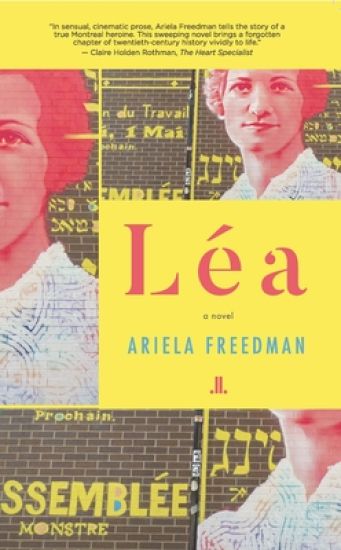
Lea

Ariela Freedman

Linda Leith Publishing
2022
nidottu
How do you change the world? Meet L a, polyglot, labour activist, farbrente feminist. Born to a large Jewish family and raised in a French Catholic town, L a moves fluidly between languages and cultures. Her search for meaning and her instinct for justice place her at the centre of the great changes of the 20th century. From street fights in Berlin to protests in Montreal, she defies the expectations and limitations of women's lives, wins historic victories for the union movement, and grapples with her own convictions. Based on the life of famed activist L a Roback, this novel brings to life a heroine emboldened by political strugglea that resonate to this day.
Hannah and Ariela

Hannah and Ariela

Johnnie Bernhard

Texas Christian University Press
2022
nidottu
When Hannah, a seventy-three-year-old widow, finds the semiconscious body of a fourteen-year-old Mexican national in a ditch along a remote central Texas road, she has no idea someone is watching. Not until the girl’s brutal attacker arrives at Hannah’s door in the middle of the night, threatening not just the girl’s but Hannah’s very survival. Ultimately the question of justice for a victim of human trafficking and the woman who helps her lies in the hands of a biracial border patrol officer and an unconventional small-town sheriff.The I-10 corridor of Texas connects saints, demons, and victims as the ultimate question of life and death is decided by two strangers fate has bound together. They must make a hard choice in order to survive: either follow the law or follow their consciences.
El Camino de Ariela: No duelen las heridas cuando tu única opción es avanzar

El Camino de Ariela: No duelen las heridas cuando tu única opción es avanzar

Hector Zendejas Alatorre

Createspace Independent Publishing Platform
2018
nidottu
Ariela, una joven en busca de su propia superaci n cae en el sentimiento del amor al lado de Abelardo, un joven ambicioso, adicto a los lujos y una vida de excesos donde no hay nada m s importante que el dinero... Ante el temor de perder todo, l y Enriqueta Olmos hacen de la vida de Ariela un verdadero tormento, arrancando de su lado lo que ella m s quer a, someti ndola a perversas humillaciones y hasta su propia libertad... despu s de tocar fondo y con toda su familia d ndole la espalda, Ariela se aferra a una peque a gota de esperanza que la impulsa a retomar fuerzas y recuperar lo que le fue injustamente arrebatado.
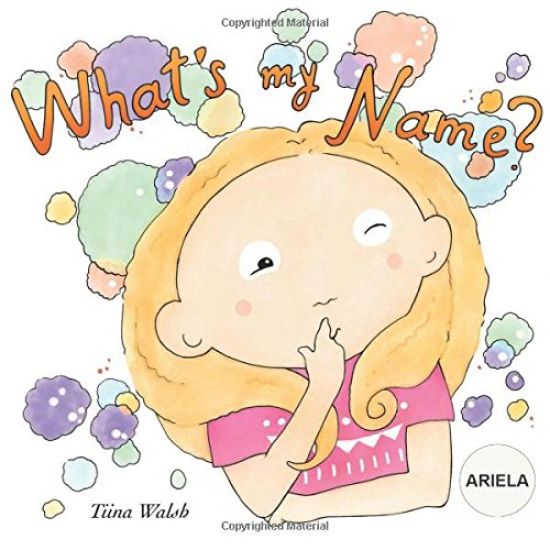
What's my name? ARIELA

What's my name? ARIELA

Tiina Walsh

Createspace Independent Publishing Platform
2018
nidottu
A personalised storybook for girls called ARIELA. The story is based on the letters of the child's own name. All books are different from one another. The girl wakes up but can't remember her name. Magic Mouse knows how to solve the problem. They go on a wonderful adventure in the Magic Bus Translated and adapted by the author from the top-selling Finnish language children's namebook series "Tytt /Poika, joka unohti nimens ". The beautiful hand-drawn pictures will delight both the young and the young-at-heart Looking for a namebook "What's my name?" but couldn't find a book for the name you are looking for? Please don't hesitate to contact me with your name request -Tiina Walsh Author fb.me/whatsmynamestorybooks for more details about the storybooks
Sorcery or Science?

Sorcery or Science?

Ariela Marcus-Sells

Pennsylvania State University Press
2022
sidottu
Sorcery or Science? examines how two Sufi Muslim theologians who rose to prominence in the western Sahara Desert in the late eighteenth century, Sidi al-Mukhtar al-Kunti (d. 1811) and his son and successor, Sidi Mu?ammad al-Kunti (d. 1826), decisively influenced the development of Sufi Muslim thought in West Africa.Known as the Kunta scholars, Mukhtar al-Kunti and Mu?ammad al-Kunti were influential teachers who developed a pedagogical network of students across the Sahara. In exploring their understanding of “the realm of the unseen”—a vast, invisible world that is both surrounded and interpenetrated by the visible world—Ariela Marcus-Sells reveals how these theologians developed a set of practices that depended on knowledge of this unseen world and that allowed practitioners to manipulate the visible and invisible realms. They called these practices “the sciences of the unseen.” While they acknowledged that some Muslims—particularly self-identified “white” Muslim elites—might consider these practices to be “sorcery,” the Kunta scholars argued that these were legitimate Islamic practices. Marcus-Sells situates their ideas and beliefs within the historical and cultural context of the Sahara Desert, surveying the cosmology and metaphysics of the realm of the unseen and the history of magical discourses within the Hellenistic and Arabo-Islamic worlds. Erudite and innovative, this volume connects the Islamic sciences of the unseen with the reception of Hellenistic discourses of magic and proposes a new methodology for reading written devotional aids in historical context. It will be welcomed by scholars of magic and specialists in Africana religious studies, Islamic occultism, and Islamic manuscript culture.
Sorcery or Science?

Sorcery or Science?

Ariela Marcus-Sells

Pennsylvania State University Press
2023
pokkari
Sorcery or Science? examines how two Sufi Muslim theologians who rose to prominence in the western Sahara Desert in the late eighteenth century, Sidi al-Mukhtar al-Kunti (d. 1811) and his son and successor, Sidi Mu?ammad al-Kunti (d. 1826), decisively influenced the development of Sufi Muslim thought in West Africa.Known as the Kunta scholars, Mukhtar al-Kunti and Mu?ammad al-Kunti were influential teachers who developed a pedagogical network of students across the Sahara. In exploring their understanding of “the realm of the unseen”—a vast, invisible world that is both surrounded and interpenetrated by the visible world—Ariela Marcus-Sells reveals how these theologians developed a set of practices that depended on knowledge of this unseen world and that allowed practitioners to manipulate the visible and invisible realms. They called these practices “the sciences of the unseen.” While they acknowledged that some Muslims—particularly self-identified “white” Muslim elites—might consider these practices to be “sorcery,” the Kunta scholars argued that these were legitimate Islamic practices. Marcus-Sells situates their ideas and beliefs within the historical and cultural context of the Sahara Desert, surveying the cosmology and metaphysics of the realm of the unseen and the history of magical discourses within the Hellenistic and Arabo-Islamic worlds. Erudite and innovative, this volume connects the Islamic sciences of the unseen with the reception of Hellenistic discourses of magic and proposes a new methodology for reading written devotional aids in historical context. It will be welcomed by scholars of magic and specialists in Africana religious studies, Islamic occultism, and Islamic manuscript culture.
The Enemy Reviewed

The Enemy Reviewed

Ariela Halkin

Praeger Publishers Inc
1995
sidottu
In past centuries British attitudes toward German culture oscillated between hostility and indifference. For a brief period of 20 years between the two World Wars, this pattern changed dramatically, with a flood of German books in translation threatening to engulf the British book market and triggering violently emotional reactions in the literary pages of the popular press. Reviewers of these books are shown here to have harbored a deep amibivalence toward an alien German culture. The reviews of these years reveal a dialectical tug of war between the established Hun stereotype of Germany and a dual complex and contradicting image of the redeeming barbarian promising rebirth.
Life with Chronic Illness

Life with Chronic Illness

Ariela Royer

Praeger Publishers Inc
1998
sidottu
Many healthcare professionals are focusing their concerns on controlling symptoms and minimizing physical distress while failing to deal with the social and psychological factors related to living with long-term chronic illness. Ariela Royer makes an important contribution to the study of health and illness behavior by showing the various strategies chronically ill people use to manage their symptoms and overcome the consequences of their particular illness, so they can live the most normal life possible and maintain their self-esteem.In spite of a popular belief linking chronic illness mainly to aging, most chronic problems extend across the life span. One of every seven men and one of every eight women between the ages of 17 and 44 are limited in their major activity, their ability to work, keep house or go to school, because of a chronic condition. At ages 65 and over, nearly three-fifths of men and two-fifths of women are handicapped. Dr. Royer shows various strategies the chronically ill may use to live with the uncertainty inherent in chronic illness. She also discusses how one might try to overcome or to minimize the salient social consequences of chronic illness, such as stigma and social isolation, in order to get on with their lives.
Freefall

Freefall

Ariela Anhalt

HOUGHTON MIFFLIN
2011
nidottu
Three guys from the Briar Academy fencing team went up to the cliff that night for a hazing ritual but only two came back alive. Now Luke s best friend, Hayden, is in jail and the pressure is on Luke to report what he saw. But what did he see? An accident or a murder? Luke has always followed Hayden s lead, but this is one decision he ll be forced to make on his own. And to do it, he must face the truth about his friendship with Hayden and his own painful past.
What Blood Won’t Tell

What Blood Won’t Tell

Ariela J. Gross

Harvard University Press
2010
nidottu
Is race something we know when we see it? In 1857, Alexina Morrison, a slave in Louisiana, ran away from her master and surrendered herself to the parish jail for protection. Blue-eyed and blond, Morrison successfully convinced white society that she was one of them. When she sued for her freedom, witnesses assured the jury that she was white, and that they would have known if she had a drop of African blood. Morrison’s court trial—and many others over the last 150 years—involved high stakes: freedom, property, and civil rights. And they all turned on the question of racial identity.Over the past two centuries, individuals and groups (among them Mexican Americans, Indians, Asian immigrants, and Melungeons) have fought to establish their whiteness in order to lay claim to full citizenship in local courtrooms, administrative and legislative hearings, and the U.S. Supreme Court. Like Morrison’s case, these trials have often turned less on legal definitions of race as percentages of blood or ancestry than on the way people presented themselves to society and demonstrated their moral and civic character.Unearthing the legal history of racial identity, Ariela Gross’s book examines the paradoxical and often circular relationship of race and the perceived capacity for citizenship in American society. This book reminds us that the imaginary connection between racial identity and fitness for citizenship remains potent today and continues to impede racial justice and equality.
Double Character

Double Character

Ariela J. Gross

Princeton University Press
2000
sidottu
In a groundbreaking study of the day-to-day law and culture of slavery, Ariela Gross investigates the local courtrooms of the Deep South where ordinary people settled their disputes over slaves. Buyers sued sellers for breach of warranty when they considered slaves to be physically or morally defective; owners sued supervisors who whipped or neglected slaves under their care. Double Character seeks to explain how communities dealt with an important dilemma raised by these trials: how could slaves who acted as moral agents be treated as commodities? Because these cases made the character of slaves a central legal question, slaves' moral agency intruded into the courtroom, often challenging the character of slaveholders who saw themselves as honorable masters. Gross looks at the stories about white and black character that witnesses and litigants put forth in court. She not only reveals the role of law in constructing "race" but also offers a portrait of the culture of slavery, one that addresses historical debates about law, honor, and commerce in the American South. Gross maintains that witnesses and litigants drew on narratives available in the culture at large to explain the nature and origins of slaves' character, such as why slaves became runaways. But the legal process also shaped their expressions of racial ideology by favoring certain explanations over others. Double Character brings to life the law as a dramatic ritual in people's daily lives, looking at trials from the perspective of litigants, lawyers, doctors, and the slaves themselves. The author's approach combines the methods of cultural anthropology, quantitative social history, and critical race theory.
Double Character

Double Character

Ariela J. Gross

University of Georgia Press
2006
pokkari
This groundbreaking study of the law and culture of slavery in the antebellum Deep South takes readers into local courtrooms where people settled their civil disputes over property. Buyers sued sellers for breach of warranty when they considered slaves to be physically or morally defective; owners sued supervisors who whipped or neglected slaves under their care.How, asks Ariela J. Gross, did communities reconcile the dilemmas such trials raised concerning the character of slaves and masters? Although slaves could not testify in court, their character was unavoidably at issue—and so their moral agency intruded into the courtroom. In addition, says Gross, "wherever the argument that black character depended on management by a white man appeared, that white man's good character depended on the demonstration that bad black character had other sources."This led, for example, to physicians testifying that pathologies, not any shortcomings of their master, drove slaves to became runaways. Gross teases out other threads of complexity woven into these trials: the ways that legal disputes were also affairs of honor between white men; how witnesses and litigants based their views of slaves' character on narratives available in the culture at large; and how law reflected and shaped racial ideology. Combining methods of cultural anthropology, quantitative social history, and critical race theory, Double Character brings to life the law as a dramatic ritual in people's daily lives, and advances critical historical debates about law, honor, and commerce in the American South.
Living off the road - Stories from a mom-and-pop motel: Stories from a mom-and-pop motel

Living off the road - Stories from a mom-and-pop motel: Stories from a mom-and-pop motel

Ariela L. Zucker

Createspace Independent Publishing Platform
2012
nidottu
The Mom-and -pop motel seems like a nicely wrapped package. Compact enough to make it manageable yet sufficiently varied to keep it exciting. Other people with no prior experience have done it, and survived, so how hard can it be?And so people often dive in without doing their homework, not realizing what it actually means, mislead by their own misconceptions and wishful thinking. It might seem simple, but small does not necessarily means effortless, and a motel is not like any other small home business.When every room is crucial, when one good season does not guarantee another, rain, or shine, or snow, in health or in sickness, the show must go on in order to keep surviving. That is the nature of this business in a nutshell. No wonder then that the burnout rate is rather fast and small motels change hands so often. The mom-and -pop motel is not for the faint of heart.