
Kirjahaku
Etsi kirjoja tekijän nimen, kirjan nimen tai ISBN:n perusteella.
1000 tulosta hakusanalla Arjuna

Bringing together the study of the Greek classics and Indology, Arjuna–Odysseus provides a comparative analysis of the shared heritage of the Mahabharata and early Greek traditions presented in the texts of Homer and Hesiod. Building on the ethnographic theories of Durkheim, Mauss, and Dumont, the volume explores the convergences and rapprochements between the Mahabharata and the Greek texts. In exploring the networks of similarities between the two epic traditions, it also reformulates the theory of Georges Dumézil regarding Indo-European cultural comparativism. It includes a detailed comparison between journeys undertaken by the two epic heroes – Odysseus and Arjuna – and more generally, it ranges across the philosophical ideas of these cultures, and the epic traditions, metaphors, and archetypes that define the cultural ideology of ancient Greece and India. This book will be useful to scholars and researchers of Indo-European comparativism, social and cultural anthropology, classical literature, Indology, cultural and post-colonial studies, philosophy and religion, as well as to those who love the Indian and Greek epics.
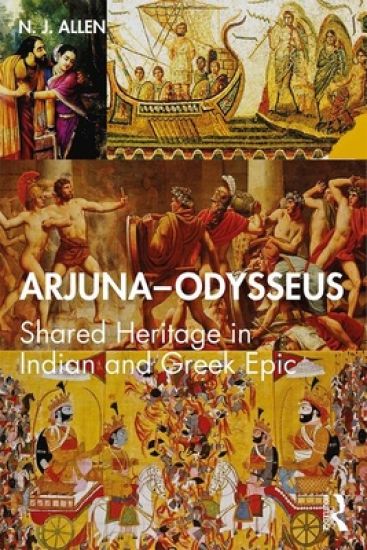
Bringing together the study of the Greek classics and Indology, Arjuna–Odysseus provides a comparative analysis of the shared heritage of the Mahabharata and early Greek traditions presented in the texts of Homer and Hesiod. Building on the ethnographic theories of Durkheim, Mauss, and Dumont, the volume explores the convergences and rapprochements between the Mahabharata and the Greek texts. In exploring the networks of similarities between the two epic traditions, it also reformulates the theory of Georges Dumézil regarding Indo-European cultural comparativism. It includes a detailed comparison between journeys undertaken by the two epic heroes – Odysseus and Arjuna – and more generally, it ranges across the philosophical ideas of these cultures, and the epic traditions, metaphors, and archetypes that define the cultural ideology of ancient Greece and India. This book will be useful to scholars and researchers of Indo-European comparativism, social and cultural anthropology, classical literature, Indology, cultural and post-colonial studies, philosophy and religion, as well as to those who love the Indian and Greek epics.
The first complete English translation of one of the great court epics of Sanskrit literature.Kiratarjuniya, or Arjuna and the Hunter, is one of the great court epics of the Sanskrit literary canon. Written by the sixth-century poet Bharavi, it is also the first and most remarkable reinterpretation of a pivotal episode in the Mahabharata, India’s ancient epic. The warrior Arjuna travels to the Himalayas to perform penance and win a boon from the god Shiva that will help his brothers, the Pandavas, overcome their enemies in righteous war. Appearing in the guise of a hunter, Shiva tests Arjuna’s courage in combat, ultimately reveals himself, and bestows upon the hero an invincible weapon.In Bharavi’s hands, the episode is turned into a masterful contemplation of heroic action, ethical conduct, ascetic discipline, and religious devotion—core values in India’s classical civilization and enduring themes in Indian literature. But the poem’s fame rests above all on its aesthetic achievement. With its elegant, epigrammatic verse, powerful imagery, dramatic speeches, and vivid descriptions, Arjuna and the Hunter, now made available for the first time in a complete English translation and accompanied by the Sanskrit original in the Devanagari script, will dazzle and move contemporary readers no less powerfully than its first courtly connoisseurs.

Arjuna Letter Tracing for Kids Trace my Name Workbook: Tracing Books for Kids ages 3 - 5 Pre-K & Kindergarten Practice Workbook
Yolie Davis
Independently Published
2019
nidottu
Arjuna; Ein Beitrag Zur Reconstruction Des Mahbhrata
Holtzmann Adolf 1810-1870
Nabu Press
2010
pokkari
Arjuna: Journey towards Heaven, Ending in Hell
Notion Press
2020
nidottu
The Mahabharata like you've never known it before In this contemporary retelling, Sarita Sharma narrates the story of India's grandest epic from an insider perspective, in this case, from the perspective of the great warrior-hero, Arjuna. In the last years of their life, Arjuna, his siblings and wife set out to attain moksha. To his shock, Arjuna finds himself in hell, for reasons he cannot fathom. Alone in a numbing darkness, he has all the time to introspect on his life, relationships, accomplishments and failures. Arjuna's narrative strings together a series of character profiles of his family members and other prominent characters from the epic. It's a no-holds-barred, psychological interpretation of their personalities, motivation and behaviour, warts and all. Interspersed with these recollections are fascinating, little-known back stories from the epic, set against the backdrop of the cities and forests of Aryavarta. Courage and honour, dharma and power, love and sacrifice, anger and pride-the Mahabharata's celebrated themes weave through Arjuna's narrative as it goes back and forth in time, its ancient wisdom enlivened with modern touches.
Der Roman spielt haupts chlich in Japan und Indonesien, wobei die Vorstellungskraft ma geblich ist. Die zwei Hauptfiguren (deutsch und japanisch), die sich lieben, ohne es auszusprechen, setzen sich von Kyoto nach Indonesien ab. Nach einer au er Kontrolle geratenen Kundgebung in Kyoto k nnen sie auf Java zuerst einmal bei einem Deutschen unterkommen, der sich in Malang mit der Biografie von Max Dauthendey auseinander setzt. In Malang regt der Berg Arjuna ihre Vorstellungskraft an, in Surabaya ist es der 'Arjuna Boulevard'.
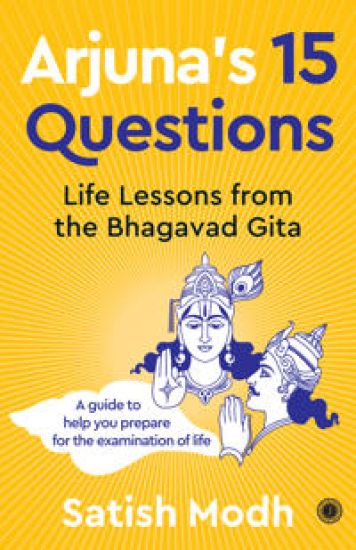
Arjuna's 15 Questions: Life Lessons from the Bhagwad Gita / A Guide to help your Prepare for the Examination of Life
Satish Modh
JAICO PUBLISHING HOUSE
2025
nidottu
Discover how the wisdom in Lord Krishna's answers to Arjuna's questions can guide you through modern life's challenges.In Arjuna's 15 Questions: Life Lessons from the Bhagavad Gita, the timeless teachings of the Gita are distilled into a contemporary discourse designed to help you face everyday struggles with clarity and calm. By drawing parallels between Arjuna's anxiety on the battlefield and the stresses we face today, this book offers practical insights to overcome confusion, fear, and doubt. Through an engaging format, the author revisits the conversations between Arjuna and Krishna, providing accessible solutions for managing anxiety, stress, and daily pressures.By breaking down the 15 essential questions Arjuna asked Krishna before the battle of Kurukshetra, this book becomes a valuable guide for those seeking meaning, purpose, and peace of mind. Whether you're a student of life or simply looking to better handle everyday challenges, this book will help you pass the ultimate test-life itself.
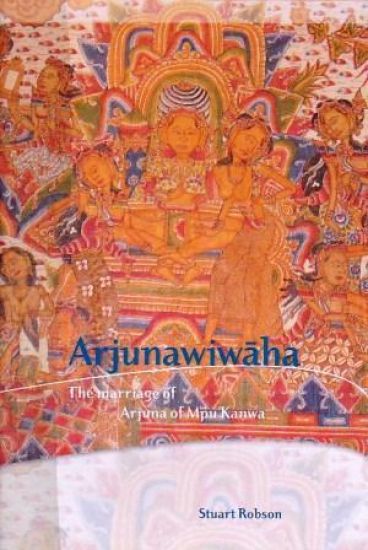
The Arjunawiwāha is one of the best known of the Old Javanese classics. This volume presents a new text, based on Balinese manuscripts, with a complete translation, building on the work done by earlier writers. An introduction provides ample background information, as well as an original interpretation of the significance of the text, within its historical and cultural setting. This poem was written by Mpu Kanwa in around A.D. 1030 under King Airlangga, who ruled in East Java. It is Mpu Kanwa's only known work, and is the second oldest example in the genre of kakawin. The poem is a narrative, but also contains passages of description, philosophical or religious teaching of great interest, as well as remarkable erotic scenes. Parts of the tale have been depicted on early temple reliefs and in paintings, and the text is still recited in Bali by literary clubs and in temple ceremonies.
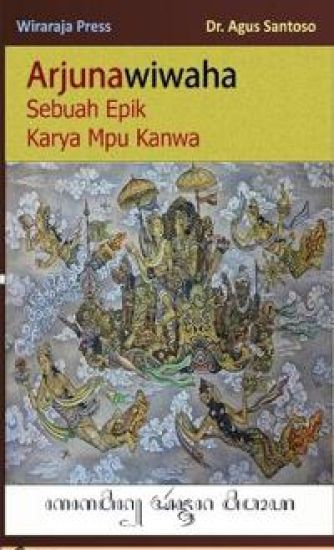
Pernikahan Arjuna atau Arjunawiwaha adalah sebuah kakawin yang digubah oleh pujangga besar yang hidup pada masa pemerintahan Erlangga.
Arjunawijaya
Kluwer Academic Publishers
1977
nidottu
Like many works of Old Javanese literature, the kakawin Arjunawijaya (Arj. ) was first introduced to the wor1d of Western scholarship in 1849 through the well-known report of Friederich, Voorloopig Verslag van het Eiland Baii. In this report Friederich (1959: 25) says: 'The Arjuna Vijaya ("the Triumph of Arjuna") is fonned after the Uttarak??l4a ...It contains the combat of Arjuna with R?vat]. a and his victory. R?vat]. a is here bound, but not yet killed, because his time has not yet arrived. Re is to be destroyed by R?ma ...' Written in 1849, when the study of Old Javanese had barely taken the first step in its slow progress on a long and arduous road, Friederich's report was a promising start. It is therefore disheartening to discover how, 120 years later, the Arj. is still little more than a closed book. To the best of my knowledge there is not one article exclusive1y devoted to any aspect of the poem, let alone a major publication. It would be an exaggeration, however, to say that the Arj. is completely unknown to students of Old Javanese. Short descriptions of the manuscripts of this kakawin, and even outlines of their contents, have been given in the Catalogues of the Old Javanese manuscripts in the possession of the Library of the University of Leiden, and in the few articles and books treating Old Javanese literature in general. Occasionally a reference to the Arj.

Arjunawijaya
Kluwer Academic Publishers
1977
nidottu
Arjunawijaya
Kluwer Academic Publishers
1977
nidottu
The present translation of the kakawin Arjunawijaya appeared earlier as the author's Pd.D. thesis for the Australian National University in 1971. The poem under study only became better known to Western scholars in 1849, when R. Friederich described it. Although many scholars in the field have been familiar with the poem ever since, no separate study has been devoted to it. It is now published together with the translation and its explanatory notes. The punctuation marks which the author introduces in the body of the text are admittedly still tentative and experimental in nature. In the introduction to the text, the author discusses its dating and origins; and includes a comparison with the Old Javanese Uttar*a*kanda poem. Separate chapters are devoted to a description of contemporary life and ideas as reflected in this poem. According to the author, Tantular's poem is partly a reflection of the real world in which he lived, and is not to be seen merely as a tale, as Pigeaud has suggested in his Java in the 14th Century: a study in Cultural History (The Hague, 1960-1963).

???????????? ?????????????? ? Terminalia arjuna (Roxb.) Wight & Arn
??????? ???
Sciencia Scripts
2020
pokkari