Kirjojen hintavertailu. Mukana 11 244 527 kirjaa ja 12 kauppaa.

Kirjahaku

Etsi kirjoja tekijän nimen, kirjan nimen tai ISBN:n perusteella.

453 tulosta hakusanalla Arkady Tsinober

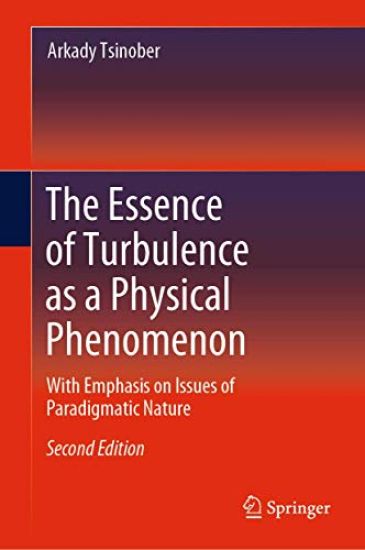
The Essence of Turbulence as a Physical Phenomenon

The Essence of Turbulence as a Physical Phenomenon

Arkady Tsinober

Springer International Publishing AG
2019
sidottu
Now in its second edition, this book clearly, concisely and comprehensively outlines the essence of turbulence. In view of the absence of a theory based on first principles and adequate tools to handle the problem, the “essence” of turbulence, i.e. what turbulence really is from a fundamental point of view, is understood empirically through observations from nature, laboratories and direct numerical simulations rather than explained by means of conventional formalistic aspects, models, etc., resulting in pertinent issues being described at a highly theoretical level in spite of the mentioned lack of theory.As such, the book highlights and critically reexamines fundamental issues, especially those of paradigmatic nature, related to conceptual and problematic aspects, key misconceptions and unresolved matters, and discusses why the problem is so difficult. As in the previous edition, the focus on fundamental issues is also a consequence of the view that without corresponding advances in fundamental aspects there is little chance of progress in any applications. More generally there is a desperate need for physical fundamentals of a great variety of processes in nature and technology in which turbulence plays a central role. Turbulence is omnipresent throughout the natural sciences and technology, but despite the vast sea of information available the book retains its brevity without oversimplifications, making it of interest to a broad audience.
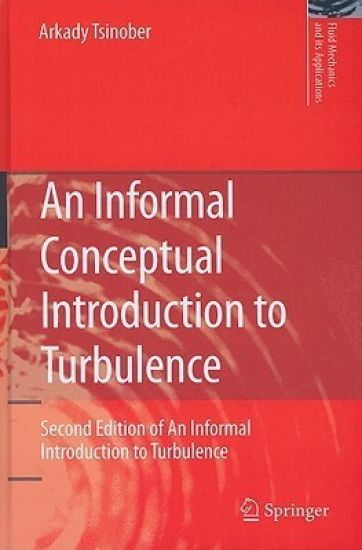
An Informal Conceptual Introduction to Turbulence
The subject of turbulence remains and probably will remain as the most exciting one for the mind of researchers in a variety of ?elds. Since publication of the ?rst edition of this book in November 2001 a number of otherbooksonturbulencehaveappeared,forexampleBernardandWallace (2002), Oberlack and Busse (2002), Foias et al. (2001), Biskamp (2003), Davidson(2004),Jovanovich(2004),SagautandCambon(2008)tomention afew. Soonehastoaskagain thequestionwhyasecondeditionofonebook from a ?eld of so many on the same subject? Does it make any di?erence? Thereareadditionalreasonsapartofthosegiveninthe?rstedition. One of thebasic premises of this bookis thatWeabsolutelymustleave roomfor doubtor thereis noprogress and nolearning. Thereis nolearning without posing a question. And a question requires doubt...Now the freedom of doubt,whichisabsolutelyessentialforthedevelopmentofscience,wasborn from astruggle with constituted authorities...R. Feynmann (1964). This is closely related to the term 'conceptual ': the book has now a di?erent title An informal conceptual introduction to turbulence. One of the main f- tures of the ?rst edition was indeed its conceptual orientation. The second edition is an attempt to make this feature dominant. Consequently items whicharesecondaryfromthispointofview werereducedandeven removed in favour of those added which are important conceptually. This required addressing in more detail most common misconceptions, which are con- quencesoftheprofounddi?cultiesofthesubjectandwhichtravel fromone publication to another. Consequently a one page Appendix D listing some of these misconceptions in the ?rst edition became chapter 9 titled Ana- gies,misconceptions and ill de?ned concepts.
An Informal Conceptual Introduction to Turbulence
The subject of turbulence remains and probably will remain as the most exciting one for the mind of researchers in a variety of ?elds. Since publication of the ?rst edition of this book in November 2001 a number of otherbooksonturbulencehaveappeared,forexampleBernardandWallace (2002), Oberlack and Busse (2002), Foias et al. (2001), Biskamp (2003), Davidson(2004),Jovanovich(2004),SagautandCambon(2008)tomention afew. Soonehastoaskagain thequestionwhyasecondeditionofonebook from a ?eld of so many on the same subject? Does it make any di?erence? Thereareadditionalreasonsapartofthosegiveninthe?rstedition. One of thebasic premises of this bookis thatWeabsolutelymustleave roomfor doubtor thereis noprogress and nolearning. Thereis nolearning without posing a question. And a question requires doubt...Now the freedom of doubt,whichisabsolutelyessentialforthedevelopmentofscience,wasborn from astruggle with constituted authorities...R. Feynmann (1964). This is closely related to the term 'conceptual ': the book has now a di?erent title An informal conceptual introduction to turbulence. One of the main f- tures of the ?rst edition was indeed its conceptual orientation. The second edition is an attempt to make this feature dominant. Consequently items whicharesecondaryfromthispointofview werereducedandeven removed in favour of those added which are important conceptually. This required addressing in more detail most common misconceptions, which are con- quencesoftheprofounddi?cultiesofthesubjectandwhichtravel fromone publication to another. Consequently a one page Appendix D listing some of these misconceptions in the ?rst edition became chapter 9 titled Ana- gies,misconceptions and ill de?ned concepts.
The Essence of Turbulence as a Physical Phenomenon
This book critically reexamines what turbulence really is, from a fundamental point of view and based on observations from nature, laboratories, and direct numerical simulations. It includes critical assessments and a comparative analysis of the key developments, their evolution and failures, along with key misconceptions and outdated paradigms. The main emphasis is on conceptual and problematic aspects, physical phenomena, observations, misconceptions and unresolved issues rather than on conventional formalistic aspects, models, etc. Apart from the obvious fundamental importance of turbulent flows, this emphasis stems from the basic premise that without corresponding progress in fundamental aspects there is little chance for progress in applications such as drag reduction, mixing, control and modeling of turbulence. More generally, there is also a desperate need to grasp the physical fundamentals of the technological processes in which turbulence plays a central role.
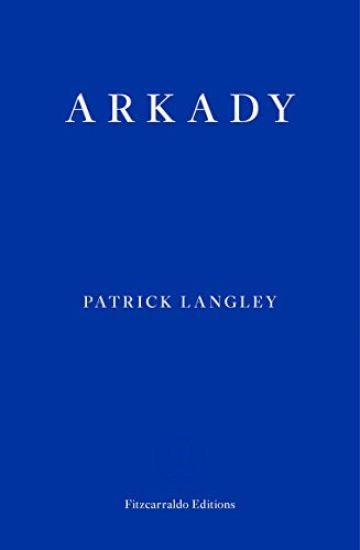
Arkady

Arkady

Patrick Langley

Fitzcarraldo Editions
2018
nidottu
Brothers Jackson and Frank live on the margins of a big urban sprawl. From abandoned tower blocks to gleaming skyscrapers, their city is brutal, beautiful and divided. As anti-government protests erupt across the teeming metropolis, the brothers sail in search of the Red Citadel and its promise of a radical new way of life. A striking portrait of the precarity of modern urban living, and of the fierce bonds that grow between brothers, Patrick Langley's debut Arkady is a brilliant coming-of-age novel, as brimming with vitality as the city itself.
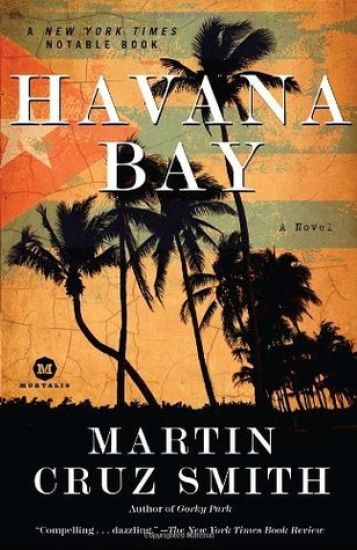
Havana Bay: An Arkady Renko Novel

Havana Bay: An Arkady Renko Novel

Martin Cruz Smith

Ballantine Books
2008
nidottu
When the corpse of a Russian is hauled from the oily waters of Havana Bay, Arkady Renko comes to Cuba to identify the body. Looking for the killer, he discovers a city of faded loneliness, unexpected danger, and bewildering contradictions. His investigation introduces him to a beautiful Cuban policewoman; to the rituals of Santeria; to an American fugitive and a group of ruthless mercenaries. In this place where all things Russian are despised, where Hemingway fished and the KGB flourished, where the hint of music is always in the air, Arkady finds a trail of deceit that reaches halfway around the world-and a reason to relish his own life again.
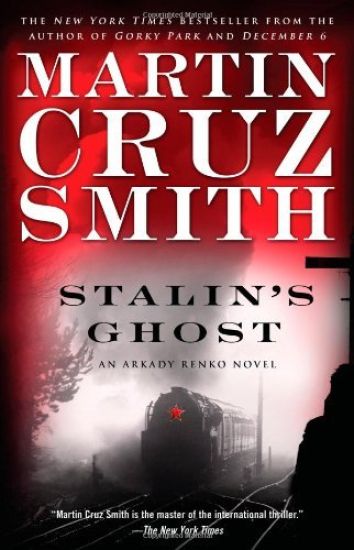
Stalin's Ghost: An Arkady Renko Novel

Stalin's Ghost: An Arkady Renko Novel

Martin Cruz Smith

Gallery Books
2008
nidottu
Detective Arkady Renko returns to Moscow in the internationally bestselling series about Russian crimes, broken hearts, and the mysteries of the soul. Investigator Arkady Renko, the pariah of the Moscow prosecutor's office, has been assigned the thankless job of investigating a new phenomenon: late-night subway riders report seeing the ghost of Joseph Stalin on the platform of the Chistye Prudy Metro station. The illusion seems part political hocus-pocus and also part wishful thinking, for among many Russians Stalin is again popular; the bloody dictator can boast a two-to-one approval rating. Decidedly better than that of Renko, whose lover, Eva, has left him for Detective Nikolai Isakov, a charismatic veteran of the civil war in Chechnya, a hero of the far right and, Renko suspects, a killer for hire. The cases entwine, and Renko's quests become a personal inquiry fueled by jealousy. The investigation leads to the fields of Tver outside of Moscow, where once a million soldiers fought. There, amidst the detritus, Renko must confront the ghost of his own father, a favorite general of Stalin's. In these barren fields, patriots and shady entrepreneurs -- the Red Diggers and Black Diggers -- collect the bones, weapons and personal effects of slain World War II soldiers, and find that even among the dead there are surprises.
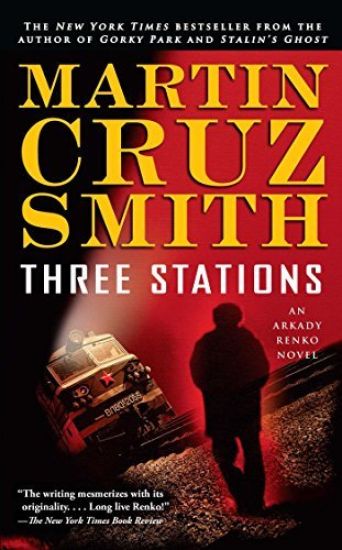
Three Stations: An Arkady Renko Novel

Three Stations: An Arkady Renko Novel

Martin Cruz Smith

Gallery Books
2011
nidottu
A passenger train hurtling through the night. An unwed teenage mother headed to Moscow to seek a new life. A cruel-hearted soldier looking furtively, forcibly, for sex. An infant disappearing without a trace. So begins Martin Cruz Smith's masterful Three Stations, a suspenseful, intricately constructed novel featuring Investigator Arkady Renko. For the last three decades, beginning with the trailblazing Gorky Park, Renko (and Smith) have captivated readers with detective tales set in Russia. Renko is the ironic, brilliantly observant cop who finds solutions to heinous crimes when other lawmen refuse to even acknowledge that crimes have occurred. He uses his biting humor and intuitive leaps to fight not only wrongdoers but the corrupt state apparatus as well. In Three Stations, Renko's skills are put to their most severe test. Though he has been technically suspended from the prosecutor's office for once again turning up unpleasant truths, he strives to solve a last case: the death of an elegant young woman whose body is found in a construction trailer on the perimeter of Moscow's main rail hub. It looks like a simple drug overdose to everyone--except to Renko, whose examination of the crime scene turns up some inexplicable clues, most notably an invitation to Russia's premier charity ball, the billionaires' Nijinksy Fair. Thus a sordid death becomes interwoven with the lifestyles of Moscow's rich and famous, many of whom are clinging to their cash in the face of Putin's crackdown on the very oligarchs who placed him in power. Renko uncovers a web of death, money, madness and a kidnapping that threatens the woman he is coming to love and the lives of children he is desperate to protect. In Three Stations, Smith produces a complex and haunting vision of an emergent Russia's secret underclass of street urchins, greedy thugs and a bureaucracy still paralyzed by power and fear.
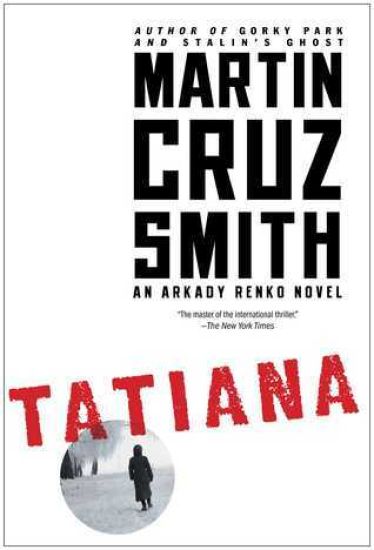
Tatiana: An Arkady Renko Novel

Tatiana: An Arkady Renko Novel

Martin Cruz Smith

SIMON SCHUSTER
2014
nidottu
Martin Cruz Smith's "masterful" (USA TODAY) and "irresistible" (People) New York Times bestseller and Washington Post notable book of the year: Arkady Renko must connect the dots among a Russian journalist's mysterious death, corrupt politicians, murderous gangsters, and brazen bureaucrats. Arkady Renko, one of the iconic investigators of contemporary fiction, has survived the cultural journey from the Soviet Union to the New Russia, only to find the nation as obsessed with secrecy and brutality as was the old Communist dictatorship. In Tatiana, the melancholy hero unravels a mystery as complex and dangerous as modern Russia itself. The reporter Tatiana Petrovna falls to her death from a sixth-floor window in Moscow the same week that a mob billionaire is shot and buried with the trappings due a lord. The trail leads to Kaliningrad, a Cold War "secret city" that is separated by hundreds of miles from the rest of Russia. The more Arkady delves into Tatiana's past, the more she leads him into a surreal world of wandering sand dunes, abandoned children, and a notebook written in the personal code of a dead translator. Finally, in a lethal race to uncover what the translator knew, Renko makes a startling discovery that draws him still deeper into Tatiana's past--and, paradoxically, into Russia's future, where bulletproof cars, poets, corruption of the Baltic Fleet, and a butcher for hire combine to give Kaliningrad the "distinction" of having the highest crime rate in Russia. More than a mystery, Tatiana is Martin Cruz Smith's most ambitious and politically daring novel since Gorky Park. It is a story rich in character, black humor, and romance, with an insight that is the hallmark of a writer The New York Times has called "endlessly entertaining and deeply serious... not merely] our best writer of suspense, but of one of our best writers, period."
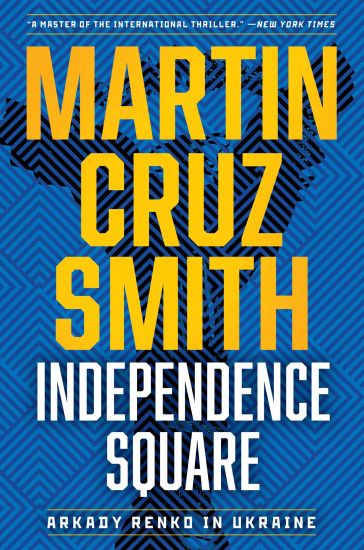
Independence Square: Arkady Renko in Ukraine

Independence Square: Arkady Renko in Ukraine

Martin Cruz Smith

Simon Schuster Audio
2023
cd
Detective Arkaday Renko--"one of the most compelling figures in modern fiction" (USA TODAY)--risks his life when he heads to Ukraine shortly before the Russian invasion to find an anti-Putin activist who has mysteriously disappeared. Martin Cruz Smith has written nine previous novels featuring Arkady Renko, one of modern detective fiction's most popular characters. These novels, beginning with 1981's international sensation Gorky Park, have collectively traced Russia's evolution over the last half-century. Now, with Independence Square, Smith focuses on the fraught and frenzied days leading up to Vladimir Putin's war against Ukraine. It's June 2021, and Arkady knows that Russia is preparing to invade and subsequently annex Ukraine as it did Crimea in 2014. He is, however, preoccupied with other grievances. His longtime lover, Tatiana Petrovna, has deserted him for her work as an investigative reporter. His corrupt boss has relegated him to a desk job. And he is having trouble with his dexterity and balance. A visit to his doctor reveals that these are symptoms for Parkinson's Disease. This is an ingenious autobiographical conceit, as Martin Cruz Smith has Parkinson's, and is able through Arkady to movingly describe his own experience with the disease. Parkinson's hasn't stopped Smith from his work, and neither does it stop Arkady. Rather than dwell on his diagnosis, he throws himself into another case. An acquaintance has asked him to find his daughter, Karina, an anti-Putin activist who has disappeared. In the course of the investigation, Arkady falls for Karina's roommate, Elena, a Tatar from Ukraine. The search leads them to Kyiv, where rumblings of an armed conflict grow louder. Later, in Crimea, Tatiana reemerges to complicate Arkady's new romance. And as he gets closer to locating Karina, Arkady discovers something that threatens his life as well as the lives of both Elena and Tatiana. Few fiction writers have better captured contemporary Russia with more insight or authenticity than Martin Cruz Smith. He does the same here for Ukraine and the events that preceded Russia's invasion. Independence Square is a timely and a uniquely personal mystery novel-meets-political thriller by a master of the form.
Independence Square: Arkady Renko in Ukraine

Independence Square: Arkady Renko in Ukraine

Martin Cruz Smith

SIMON SCHUSTER
2023
sidottu
Detective Arkaday Renko--"one of the most compelling figures in modern fiction" (USA TODAY)--risks his life when he heads to Ukraine shortly before the Russian invasion to find an anti-Putin activist who has mysteriously disappeared. Martin Cruz Smith has written nine previous novels featuring Arkady Renko, one of modern detective fiction's most popular characters. These novels, beginning with 1981's international sensation Gorky Park, have collectively traced Russia's evolution over the last half-century. Now, with Independence Square, Smith focuses on the fraught and frenzied days leading up to Vladimir Putin's war against Ukraine. It's June 2021, and Arkady knows that Russia is preparing to invade and subsequently annex Ukraine as it did Crimea in 2014. He is, however, preoccupied with other grievances. His longtime lover, Tatiana Petrovna, has deserted him for her work as an investigative reporter. His corrupt boss has relegated him to a desk job. And he is having trouble with his dexterity and balance. A visit to his doctor reveals that these are symptoms for Parkinson's Disease. This is an ingenious autobiographical conceit, as Martin Cruz Smith has Parkinson's, and is able through Arkady to movingly describe his own experience with the disease. Parkinson's hasn't stopped Smith from his work, and neither does it stop Arkady. Rather than dwell on his diagnosis, he throws himself into another case. An acquaintance has asked him to find his daughter, Karina, an anti-Putin activist who has disappeared. In the course of the investigation, Arkady falls for Karina's roommate, Elena, a Tatar from Ukraine. The search leads them to Kyiv, where rumblings of an armed conflict grow louder. Later, in Crimea, Tatiana reemerges to complicate Arkady's new romance. And as he gets closer to locating Karina, Arkady discovers something that threatens his life as well as the lives of both Elena and Tatiana. Few fiction writers have better captured contemporary Russia with more insight or authenticity than Martin Cruz Smith. He does the same here for Ukraine and the events that preceded Russia's invasion. Independence Square is a timely and a uniquely personal mystery novel-meets-political thriller by a master of the form.
Hotel Ukraine: The Final Arkady Renko Novel

Hotel Ukraine: The Final Arkady Renko Novel

Martin Cruz Smith

SIMON SCHUSTER
2025
sidottu
Detective Arkady Renko--"one of the most compelling figures in modern fiction" (USA TODAY)--returns in this tense thriller set amid the backdrop of Russia's invasion of Ukraine. In the latest installment of Martin Cruz Smith's celebrated Arkady Renko series, the legendary Moscow investigator seeks to solve the murder of a diplomat as Russia's invasion of Ukraine wears on and the effects of Renko's Parkinson's Disease worsen. Helped by his lover, journalist Tatiana Petrovna, Renko traces the murder to a Russian paramilitary group aided by a government official who also used to be a romantic partner of Renko. Before long, those responsible for the killing look to similarly dispatch Arkady and Tatiana--all of it leading to a thrilling and action-packed climax. Hotel Ukraine upholds Martin Cruz Smith's reputation as a master of modern detective fiction and Arkady Renko's standing as one of the genre's most complex protagonists.
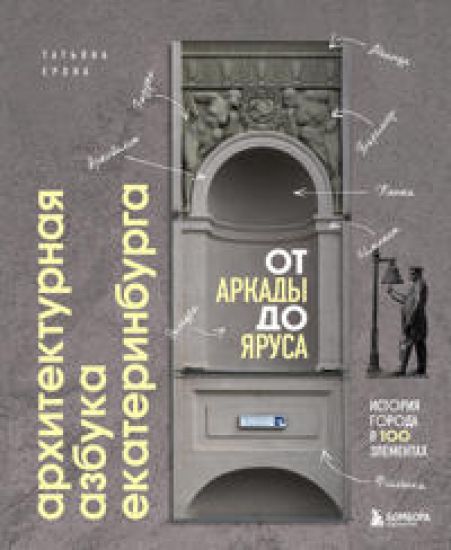
Arkhitekturnaja azbuka Ekaterinburga: ot arkady do jarusa
Ekaterinburg - odin iz krupnejshikh gorodov Rossii s nepovtorimoj arkhitekturoj, vobravshej v sebja obraztsovyj sovetskij konstruktivizm i russkij klassitsizm. Gorod, kotoryj stoit posetit khotja by radi togo, chtoby nasladitsja vsem raznoobraziem epokh i otrazhajuschikh ikh stilej. Ekaterinburg ljubjat sovetovat vsem, kto tsenit vdumchivye progulki s vnimaniem k detaljam, ved ikh v etom gorode neschetnoe kolichestvo. - Na kakie dominanty stoit obratit vnimanie gostjam Urala? - Gde v Ekaterinburge najti zhikoviny (i chto eto takoe)? - Kto izobrazhen na samom izvestnom obeliske goroda, i gde on raspolozhen? Razobratsja v etikh detaljakh, a takzhe vo vsem mnogoobrazii stilej stolitsy Urala vam pomozhet novaja kniga fotografa i blogera Tatjany Erovoj, avtora "Arkhitekturnoj azbuki Sankt-Peterburga" i "Goroda s sotnej lits". Tatjana posvjatit vas v podrobnosti togo, kak ustroen Ekaterinburg i iz kakikh melochej sostojat ego ulitsy i prospekty, a takzhe nauchit luchshe ponimat arkhitekturu goroda. Kazhdaja mini-statja objasnit vam znachenie termina i raskroet priznaki arkhitekturnykh stilej, prodemonstrirovav ikh na primere znamenitykh osobnjakov, muzeev, khramov i drugikh tochek pritjazhenija mestnykh zhitelej i turistov. Krome togo, kniga stanet otlichnym podarkom dlja vsekh vljublennykh v Ekaterinburg i blagodarja krasochnym illjustratsijam dast vozmozhnost perezhit vpechatlenija ot goroda dazhe vdaleke ot nego. Proguljajtes s etoj knigoj po stolitse konstruktivizma i otkrojte dlja sebja stolitsu Urala po-novomu!
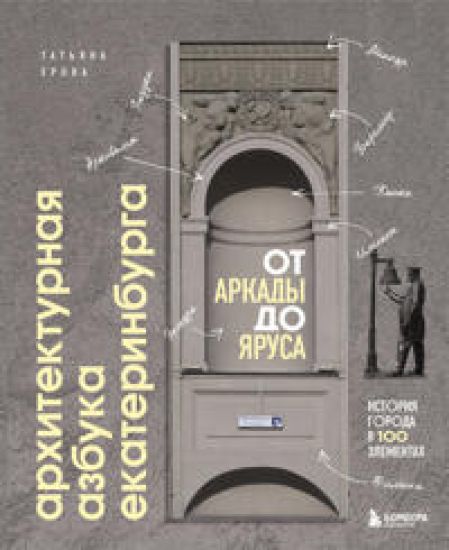
Arkhitekturnaja azbuka Ekaterinburga: ot arkady do jarusa (novoe oformlenie)
Ekaterinburg - odin iz krupnejshikh gorodov Rossii s nepovtorimoj arkhitekturoj, vobravshej v sebja obraztsovyj sovetskij konstruktivizm i russkij klassitsizm. Gorod, kotoryj stoit posetit khotja by radi togo, chtoby nasladitsja vsem raznoobraziem epokh i otrazhajuschikh ikh stilej. Ekaterinburg ljubjat sovetovat vsem, kto tsenit vdumchivye progulki s vnimaniem k detaljam, ved ikh v etom gorode neschetnoe kolichestvo. - Na kakie dominanty stoit obratit vnimanie gostjam Urala? - Gde v Ekaterinburge najti zhikoviny (i chto eto takoe)? - Kto izobrazhen na samom izvestnom obeliske goroda i gde on raspolozhen? Razobratsja v etikh detaljakh, a takzhe vo vsem mnogoobrazii stilej stolitsy Urala, vam pomozhet novaja kniga fotografa i blogera Tatjany Erovoj, avtora "Arkhitekturnoj azbuki Sankt-Peterburga" i "Goroda s sotnej lits". Tatjana posvjatit vas v podrobnosti togo, kak ustroen Ekaterinburg i iz kakikh melochej sostojat ego ulitsy i prospekty, a takzhe nauchit luchshe ponimat arkhitekturu goroda. Kazhdaja mini-statja objasnit vam znachenie termina i raskroet priznaki arkhitekturnykh stilej, prodemonstrirovav ikh na primere znamenitykh osobnjakov, muzeev, khramov i drugikh tochek pritjazhenija mestnykh zhitelej i turistov. Krome togo, kniga stanet otlichnym podarkom dlja vsekh vljublennykh v Ekaterinburg i blagodarja krasochnym illjustratsijam dast vozmozhnost perezhit vpechatlenija ot goroda dazhe vdaleke ot nego. Proguljajtes s etoj knigoj po stolitse konstruktivizma i otkrojte dlja sebja stolitsu Urala po-novomu!
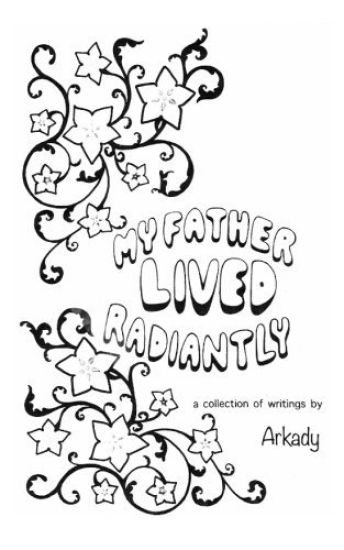
My Father Lived Radiantly: a collection of writings by Arkady

My Father Lived Radiantly: a collection of writings by Arkady

Arcadia Shanklin

Createspace Independent Publishing Platform
2018
nidottu
A girl is frustrated by small-minded elders, decides to leave the cult. A resort waiter takes his children to the beach during summer custody visitation. A gay man comes out to his straight, teenaged kids. An arthritic man sits on the floor, plays little toy cars with his grandsons. A doctor regards his patient with real kindness. An old hippie plants flowers in the yard, hangs wind chimes and bird feeders. An officer knocks on a door, informs a woman of her father's death. A son and daughter put ashes in the ground. A mother sews her children's fabric-marker art into a panel for the AIDS Quilt. A writer finds her voice.
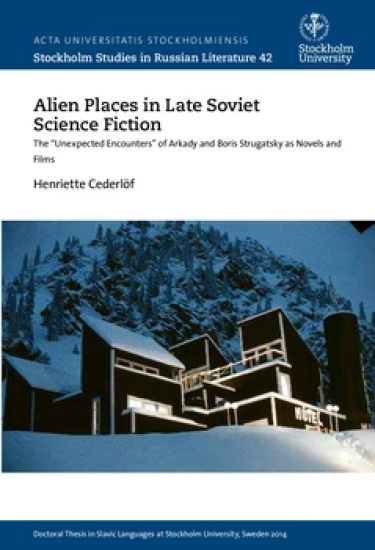
Alien places in late Soviet science fiction : the "Unexpected Encounters" of Arkady and Boris Strugatsky as novels and films
In the Soviet Union a shift in cultural paradigms occurred between the 1960s and the 1970s. Interest was displaced from a scientific-technologically oriented optimism about the future to art, religion, philosophy and metaphysics. Concomitant with this shift in interests was a shift from the future to an elsewhere or, reformulated in exclusively spatial terms, from utopia to heterotopia. The dissertation consists of an analysis of three novels by the Strugatsky brothers (Arkady, 1925-1991 and Boris 1933-2012): Inspector Glebsky’s Puzzle (Otel’ U pogibšego al’pinista, 1970), The Kid (Malyš, 1971) and Roadside Picnic (Piknik na obocine, 1972) and two films: Dead Mountaineer’s Hotel (Hukkunud alpinisti hotell/ Otel’ U pogibšego al’pinista, Kromanov, 1979) and Stalker (Tarkovsky, 1980). In the novels an earlier utopia has given way to a considerably more ambiguous heterotopia. A persistent strain of literary Gothic runs through the novels, indicating how the authors here seem to look back towards history rather than forward towards the future. Markers of the Gothic resurface in the films as well. The films reflect how tendencies only discernable in the novels have developed throughout the decade, such as the budding Soviet consumer culture and the religious sensibilities of the artistic community.
One Billion Years to the End of the World

One Billion Years to the End of the World

Arkady Strugatsky; Boris Strugatsky

Penguin Classics
2020
nidottu
'A beautiful book' Ursula K. Le GuinThis mordantly funny and provocative tale from Soviet Russia's leading science fiction writers is the story of astrophysicist Dmitri Malianov. As he reaches a major breakthrough, he finds himself plagued by interruptions, from a mysterious crate of vodka to a glamorous woman on his doorstep. Is the Universe trying to tell him something?'On putting down one of their books, you feel a cold breeze still lifting the hairs on the back of your neck' The New York Times
Epistemology and Probability

Epistemology and Probability

Arkady Plotnitsky

Springer-Verlag New York Inc.
2009
sidottu
This book offers an exploration of the relationships between epistemology and probability in the work of Niels Bohr, Werner Heisenberg, and Erwin Schro- ¨ dinger, and in quantum mechanics and in modern physics as a whole. It also considers the implications of these relationships and of quantum theory itself for our understanding of the nature of human thinking and knowledge in general, or the ‘‘epistemological lesson of quantum mechanics,’’ as Bohr liked 1 to say. These implications are radical and controversial. While they have been seen as scientifically productive and intellectually liberating to some, Bohr and Heisenberg among them, they have been troublesome to many others, such as Schro¨ dinger and, most prominently, Albert Einstein. Einstein famously refused to believe that God would resort to playing dice or rather to playing with nature in the way quantum mechanics appeared to suggest, which is indeed quite different from playing dice. According to his later (sometime around 1953) remark, a lesser known or commented upon but arguably more important one: ‘‘That the Lord should play [dice], all right; but that He should gamble according to definite rules [i. e. , according to the rules of quantum mechanics, rather than 2 by merely throwing dice], that is beyond me. ’’ Although Einstein’s invocation of God is taken literally sometimes, he was not talking about God but about the way nature works. Bohr’s reply on an earlier occasion to Einstein’s question 1 Cf.
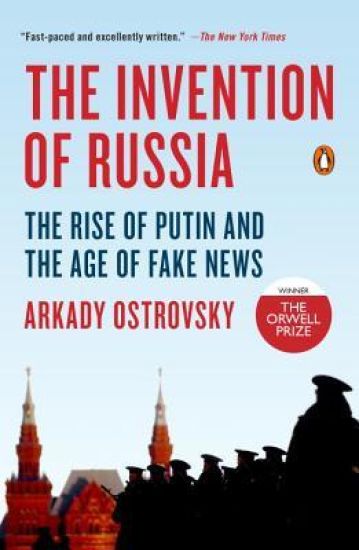
The Invention of Russia: The Rise of Putin and the Age of Fake News
WINNER OF THE ORWELL PRIZE WINNER OF THE CORNELIUS RYAN AWARD FINALIST FOR THE LIONEL GELBER PRIZE FINANCIAL TIMES BOOK OF THE YEAR "Fast-paced and excellently written." --New York Times "Filled with sparkling prose and deep analysis." -The Wall Street Journal An essential analysis to understanding Putin's playbook and understanding the real Russian threat to World order and peace How did a country that embraced freedom over twenty-five years ago end up as an autocratic police state bent once again on confrontation with the West? In this Orwell Prize-winning book, Arkady Ostrovsky reaches back to the darkest days of the Cold War to tell the story of Russia's stealthy and largely unchronicled post-Soviet transformation. A highly regarded Moscow correspondent for the Economist, Arkady Ostrovsky comes to this story both as a participant and a foreign correspondent. His knowledge of many of the key players allows him to explain the phenomenon of Valdimir Putin - his rise and astonishing longevity, his use of hybrid warfare and the alarming crescendo of his military interventions. In his new paperback preface, Ostrovsky explores how Putin influenced the US election, the Trump Putin access, and shows how Putin's methods - weaponizing the media and serving up fake news - came to enter American politics.
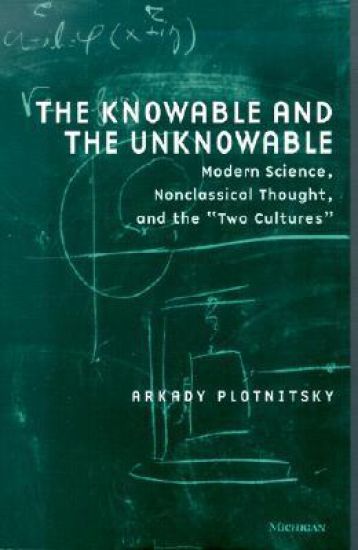
The Knowable and the Unknowable

The Knowable and the Unknowable

Arkady Plotnitsky

The University of Michigan Press
2002
nidottu
This book investigates the relationships between modern mathematics and science (in particular, quantum mechanics) and the mode of theorizing that Arkady Plotnitsky defines as "nonclassical" and identifies in the work of Bohr, Heisenberg, Lacan, and Derrida. Plotinsky argues that their scientific and philosophical works radically redefined the nature and scope of our knowledge. Building upon their ideas, the book finds a new, nonclassical character in the "dream of great interconnections" Bohr described, thereby engaging with recent debates about the "two cultures" (the humanities and the sciences).Plotnitsky highlights those points at which the known gives way to the unknown (and unknowable). These points are significant, he argues, because they push the boundaries of thought and challenge the boundaries of disciplinarity. One of the book's most interesting observations is that key figures in science, in order to push toward a framing of the unknown, actually retreated into a conservative disciplinarity. Plotnitsky's informed, interdisciplinary approach is more productive than the disparaging attacks on postmodernism or scientism that have hitherto characterized this discourse.Arkady Plotnitsky is Professor of English and Director, Theory and Cultural Studies Program, Purdue University. Trained in both mathematics and literary theory, he is author of several books, including In the Shadow of Hegel: Complementarity, History and the Unconscious and Reconfigurations: Critical Theory and General Economy.