

Kirjahaku
Etsi kirjoja tekijän nimen, kirjan nimen tai ISBN:n perusteella.
1000 tulosta hakusanalla Arlene J. Hibbler


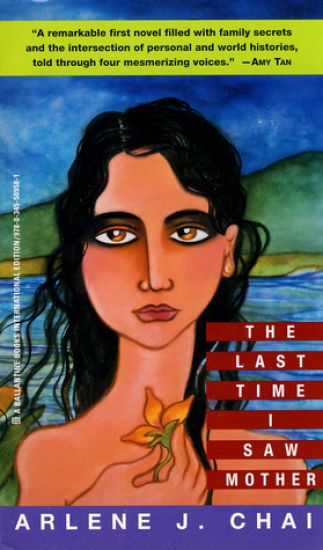
"AN OFTEN LYRICAL AND ALWAYS TOUGH-MINDED DEBUT . . . Provides rare insight into the three cultures--Spanish, Chinese, and Filipino--that coexist in the Philippines."--The New York Times Book Review Caridad's mother never writes. So when a letter arrives for her in Sydney from Manila, Caridad doesn't even recognize her mother's handwriting. There is more distance than just miles between the two women. And that is why Caridad is called home. Her mother needs to talk. And to reveal a secret that has been weighing heavily on her for years. As Caridad hears at last the unspoken stories, and the never forgotten tragedy of the war years, she will learn a startling truth that will change her life forever. For Caridad is not who she thinks she is. . . . "Beautifully written . . . Reading each chapter is like having a conversation with a close friend."--Chicago Tribune "A sensitive . . . portrait of a family of Filipina women . . . The novel illuminates much modern Philippine history."--The Boston Globe



Female Citizens, Patriarchs, and the Law in Venezu ela, 1786–1904
Arlene J. Diaz
University of Nebraska Press
2004
sidottu
"Female Citizens, Patriarchs, and the Law in Venezuela" examines the effects that liberalism had on gender relations in the process of state formation in Caracas from the late eighteenth to the nineteenth century. The 1811 Venezuelan constitution granted everyone in the abstract, including women, the right to be citizens and equals, but at the same time permitted the continued use of older Spanish civil laws that accorded women inferior status and granted greater authority to male heads of households. Invoking citizenship for their own protection and that of their loved ones, some women went to court to claim the same civil liberties and protections granted to male citizens. In the late eighteenth century, colonial courts dispensed some protection to women in their conflicts with men; a century later, however, patriarchal prerogatives were reaffirmed in court sentences. Discouraging as this setback was, the actions of the women who had fought these legal battles raised an awareness of the discrepancies between the law and women's daily lives, laying the groundwork for Venezuelan women's organizations in the twentieth century. Drawing on a wealth of primary sources, historian Arlene Diaz shows how the struggle for political power in the modern state reinforced and reproduced patriarchal authority. She also reveals how Venezuelan women from different classes, in public and private, coped strategically with their paradoxical status as equal citizens who nonetheless lacked power because of their gender. Shedding light on a fundamental, but little examined dimension of modern nation building, "Female Citizens, Patriarchs, and the Law in Venezuela" gives voice to historic Venezuelan women, while offering a detailed look at a society making the awkward transition from the colonial world to a modern one. Arlene J. Diaz is an associate professor of Latin American history at Indiana University.
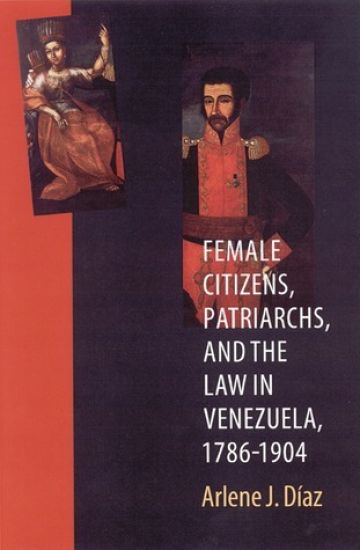
Female Citizens, Patriarchs, and the Law in Venezuela, 1786-1904
Arlene J. Diaz
University of Nebraska Press
2004
pokkari
Female Citizens, Patriarchs, and the Law in Venezuela examines the effects that liberalism had on gender relations in the process of state formation in Caracas from the late eighteenth to the nineteenth century. The 1811 Venezuelan constitution granted everyone in the abstract, including women, the right to be citizens and equals, but at the same time permitted the continued use of older Spanish civil laws that accorded women inferior status and granted greater authority to male heads of households. Invoking citizenship for their own protection and that of their loved ones, some women went to court to claim the same civil liberties and protections granted to male citizens. In the late eighteenth century, colonial courts dispensed some protection to women in their conflicts with men; a century later, however, patriarchal prerogatives were reaffirmed in court sentences. Discouraging as this setback was, the actions of the women who had fought these legal battles raised an awareness of the discrepancies between the law and women's daily lives, laying the groundwork for Venezuelan women's organizations in the twentieth century.Drawing on a wealth of primary sources, historian Arlene Díaz shows how the struggle for political power in the modern state reinforced and reproduced patriarchal authority. She also reveals how Venezuelan women from different classes, in public and private, coped strategically with their paradoxical status as equal citizens who nonetheless lacked power because of their gender. Shedding light on a fundamental but little examined dimension of modern nation building, Female Citizens, Patriarchs, and the Law in Venezuela gives voice to historic Venezuelan women while offering a detailed look at a society making the awkward transition from the colonial world to a modern one.
Secret of Lost Mountain Instructor's Manual: Ideal for Instructing Young Adults in Catholic Settings
Arlene J. Scott M. a.
Logos Institute Press
2012
nidottu


The Real Dope on Addiction and Recovery
Arlene J C Ht Sherman; C Ht Arlene J Sherman
Xlibris Corporation
2012
pokkari

After the Drink Is Made
Arlene J C Ht Sherman; C Ht Arlene J Sherman
Xlibris Corporation
2012
pokkari

I Am Your Recovery Coach
Arlene J C Ht Sherman; C Ht Arlene J Sherman
Xlibris Corporation
2013
pokkari

My intention for this book is for it to be a paradigm shift and resource on how to end school torment and how to teach children empathy-how to understand, respect, and accept the differences of others; how to encourage people to think of new possibilities; and how to think of the many sides to torment, along with the pros and cons, and have an open dialogue that will help people create new ways on how to help their children solve problems that tug and rip at their souls and dignity. May you all be empowered to end school torment
Public Lands and Resources Law in Canada
Elaine L. Hughes; Arlene J. Kwasniak; Alastair R. Lucas
Irwin Law
2016
pokkari