

Kirjahaku
Etsi kirjoja tekijän nimen, kirjan nimen tai ISBN:n perusteella.
1000 tulosta hakusanalla Arnoldo Tauler







Linden Lane Magazine Vol 34 # 1 SPRING 2015
Germán Guerra; Marlene Monleon; Arnoldo Tauler
Createspace Independent Publishing Platform
2015
nidottu
Linden Lane Magazine was founded by the Cuban poets Heberto Padilla and Belkis Cuza Mal , in Princeton, NJ, in 1982. It is devoted to Cuban art and literature produced around the world.



Arnoldo Soler, Chargé d'Affaires d'Espagne À Tunis, Et Sa Correspondance, 1808-1810
Gaston Loth
Hachette Livre - BNF
2013
pokkari
Arnoldo Soler, charge d'affaires d'Espagne a Tunis, et sa correspondance, 1808-1810: these pour le doctorat... / par Gaston Loth, ...Date de l'edition originale: 1905Ce livre est la reproduction fidele d'une oeuvre publiee avant 1920 et fait partie d'une collection de livres reimprimes a la demande editee par Hachette Livre, dans le cadre d'un partenariat avec la Bibliotheque nationale de France, offrant l'opportunite d'acceder a des ouvrages anciens et souvent rares issus des fonds patrimoniaux de la BnF.Les oeuvres faisant partie de cette collection ont ete numerisees par la BnF et sont presentes sur Gallica, sa bibliotheque numerique.En entreprenant de redonner vie a ces ouvrages au travers d'une collection de livres reimprimes a la demande, nous leur donnons la possibilite de rencontrer un public elargi et participons a la transmission de connaissances et de savoirs parfois difficilement accessibles.Nous avons cherche a concilier la reproduction fidele d'un livre ancien a partir de sa version numerisee avec le souci d'un confort de lecture optimal. Nous esperons que les ouvrages de cette nouvelle collection vous apporteront entiere satisfaction.Pour plus d'informations, rendez-vous sur www.hachettebnf.fr

Arnoldo y la Plántula
Orit Zohar
2021
sidottu
Un po tico y colorido libro ilustrado que puede cautivar el coraz n de lectores de todas las edades, ni os y adultos. Arnoldo es el t o con el que todos podemos identificarnos y simpatizar.Un d a Arnoldo decide cumplir su deseo y cultivar un gran rbol de hojas verdes en su jard n. Puso mucho esfuerzo y cuidado, pero el resultado de su cultivo fue sorprendente...Esta historia muestra el largo y fatigoso camino hacia los logros, y el secreto especial que se esconde en cada peque a pl ntula.

Arnoldo Aleman
VDM Publishing House
2010
nidottu
Observera att förlaget som ger ut denna produkt baserar innehållet i sina produkter på fria källor som Wikipedia. Boken är med stor sannolikhet endast ett utdrag ur dessa informationskällor, alltså inte en vanlig bok i den bemärkelsen.
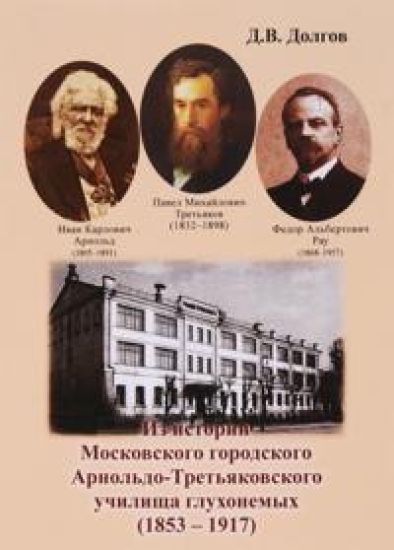
Iz istorii Moskovskogo gorodskogo Arnoldo-Tretjakovskogo uchilischa glukhonemykh (1853-1917)
Dmitrij Dolgov
Sputnik +
2016
nidottu
V nachale XIX veka v Rossijskoj Imperii uzhe suschestvovali uchebnykh zavedenij dlja glukhikh. Eto Sankt-Peterburgskoe uchilische glukhonemykh, osnovannoe v 1806 godu. V Varshave s 1817 goda suschestvoval institut dlja glukhonemykh i slepykh. V Moskve s 1831 po 1844 gody byla chastnaja shkola A.O. Korei dlja glukhikh detej. V 1832 godu byl uprazdnen Vilenskij institut glukhonemykh. V Pribaltike esche v 1839 godu v Rige bylo osnovano mestnoe uchilische glukhonemykh. A v Odesse v 1843 godu byla sozdana chastnaja shkola dlja glukhikh devochek.
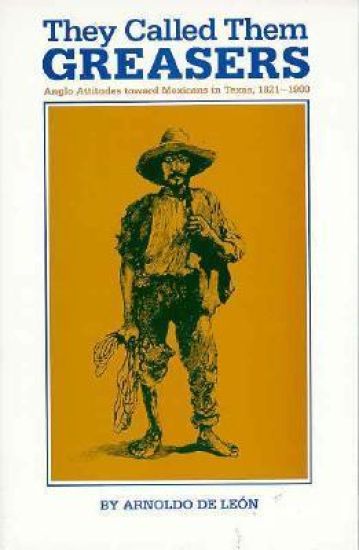
Tension between Anglos and Tejanos has existed in the Lone Star State since the earliest settlements. Such antagonism has produced friction between the two peoples, and whites have expressed their hostility toward Mexican Americans unabashedly and at times violently.This seminal work in the historical literature of race relations in Texas examines the attitudes of whites toward Mexicans in nineteenth-century Texas. For some, it will be disturbing reading. But its unpleasant revelations are based on extensive and thoughtful research into Texas' past. The result is important reading not merely for historians but for all who are concerned with the history of ethnic relations in our state.They Called Them Greasers argues forcefully that many who have written about Texas's past-including such luminaries as Walter Prescott Webb, Eugene C. Barker, and Rupert N. Richardson-have exhibited, in fact and interpretation, both deficiencies of research and detectable bias when their work has dealt with Anglo-Mexican relations. De LeÓn asserts that these historians overlooled an austere Anglo moral code which saw the morality of Tejanos as "defective" and that they described without censure a society that permitted traditional violence to continue because that violence allowed Anglos to keep ethnic minorities "in their place."De LeÓn's approach is psychohistorical. Many Anglos in nineteenth-century Texas saw Tejanos as lazy, lewd, un-American, subhuman. In De LeÓn's view, these attitudes were the product of a conviction that dark-skinned people were racially and culturally inferior, of a desire to see in others qualities that Anglos preferred not to see in themselves, and of a need to associate Mexicans with disorder so as to justify their continued subjugation.
This text covers over 2,000 years, tracing the roots of the contemporary Mexican-American. It utilizes the fields of history, political science, cultural anthropology, folklore, literature, sociolinguistics, Latin American studies and ethnic studies. Thus, it is unique for its multidisciplinary approach which probes into the past of the underclass—the exploited Native-American, Campesino and Mexican-American. It presents, therefore, an insider's view of the history, culture and politics of the Mestizo/Mestiza as an underclass. Most important, it presents a new perspective that invalidates the current Spanish/European and Western interpretation of Native-American reality.

This work probes into the socio-political and cultural setting in South Texas (1915-1992) via data found in the private archival collection of Adela Sloss-Vento; it focuses on her role as an activist, writer and civil/human rights pioneer. It is only through this archive that documentation becomes available of her participation in this unknown and unpublicized civil rights movement. It is a realistic portrayal of an exclusionist semi-colonial society that the reader discovers; a Jim Crow type of political and racial existence against all people of Mexican descent. It represents Sloss-Vento’s lifelong struggle for economic and social equality. Adela Sloss-Vento’s role as a Civil Rights pioneer antedates Dr. Anna Pauline Murray by eight years and Martin Luther King by twenty-eight years. She places her mark in history as a leader, not only for the first seminal Mexican-American Civil Rights Movement of Texas but the first woman and voice in an early, if not the earliest Civil Rights Movement in the United States.

Once neglected, racial minorities are now the focus of intense interest among historians of the American West, who have come to recognise the roles of African American, Chinese, and Mexican people in shaping the frontier. Racial Frontiers is both a highly original work, particularly in its emphasis on racial minority women, and a masterful synthesis of the literature in this young field. De Leon depicts a US West populated by settlers anticipating opportunities for upward mobility, jockeying for position as they adapted to new surroundings, and adjusting to new political and economic systems. Minority groups discarded unworkable political traditions that had followed them from their homelands and sought to participate in a democracy that they trusted would see to their well-being. Many embraced capitalism in preference to the economic systems they had left behind but refused to give up their cultural traditions. The result was a US West of many colours. Known as a skilled writer, De Leon tells countless stories of the lives of men and women to guide the readers through his narrative. Personal histories and revealing quotations illustrate the struggles and victories of the newcomers, enriching our understanding of the settlement of the trans-Mississippi West since the middle of the nineteenth century.
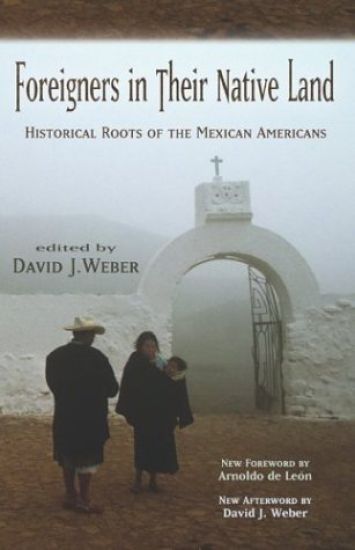
Most writing about Mexican Americans deals only with the twentieth century. This book provides the much-needed historical perspective that is essential for a full understanding of the present. Dozens of selections from firsthand accounts, introduced by David J Weber's essays, capture the essence of the Mexican-American experience in the Southwest from the time the first pioneers came north from Mexico. PRAISE FOR THE FIRST EDITION: The first edition was selected as a Choice 'Outstanding Academic Book of the Year' and received the following accolades: ""An excellent job of illuminating the early historical experience of Mexicans living in the United States..."" - Western Historical Quarterly. ""Weber...has done more than compile a first-rate anthology...he has done much to put the selected accounts into a meaningful historical framework. This coupled with excellent documentary choices and extensive notes makes it the single best volume for understanding the Mexican American experience in the nineteenth-century Southwest..."" - Choice.
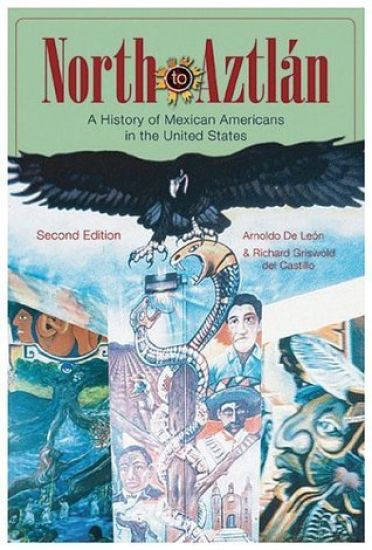
Contemporary observers often quip that the American Southwest has become “Mexicanized,” but this view ignores the history of the region as well as the social reality. Mexican people and their culture have been continuously present in the territory for the past four hundred years, and Mexican Americans were actors in United States history long before the national media began to focus on them—even long before an international border existed between the United States and Mexico. North to Aztlán, an inclusive, readable, and affordable survey history, explores the Indian roots, culture, society, lifestyles, politics, and art of Mexican Americans and the contributions of the people to and their influence on American history and the mainstream culture. Though cognizant of changing interpretations that divide scholars, Drs. De León and Griswold del Castillo provide a holistic vision of the development of Mexican American society, one that attributes great importance to immigration (before and after 1900) and the ongoing influence of new arrivals on the evolving identity of Mexican Americans. Also showcased is the role of gender in shaping the cultural and political history of La Raza, as exemplified by the stories of outstanding Mexicana and Chicana leaders as well as those of largely unsung female heros, among them ranch and business owners and managers, labor leaders, community activists, and artists and writers. In short, readers will come away from this extensively revised and completely up-to-date second edition with a new understanding of the lives of a people who currently compose the largest minority in the nation. Completely revised, re-edited, and redesigned, featuring a great many new photographs and maps, North to Aztlán is certain to take its rightful place as the best college-level survey text of Americans of Mexican descent on the market today.