

Kirjahaku
Etsi kirjoja tekijän nimen, kirjan nimen tai ISBN:n perusteella.
1000 tulosta hakusanalla Arrington McCoy
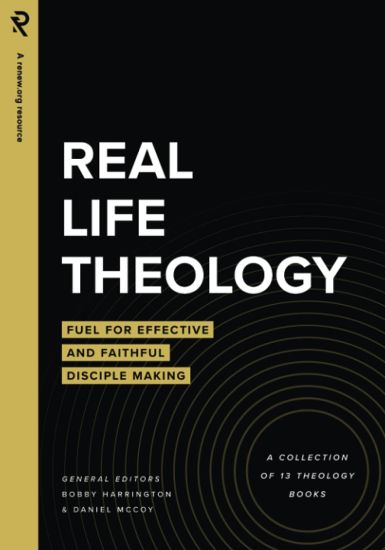
REAL-LIFE ANSWERS TO LIFE'S BIGGEST QUESTIONSReal Life Theology invites you to a fresh way of living by bridging two areas of your life: what we know about God and how we live our lives. This collection of thirteen accessible books gives real-life answers to fifty-two of life's biggest questions, such as: What is the gospel? What is saving faith? What role does baptism play in salvation? What are the essential, important, and personal elements of the faith? How should we view marriage, gender, and race?Real Life Theology was written with everyday Christians in mind. We encourage you to read it, walk with others through it, and along the way learn God's real-life answers to your biggest questions.This series will help churches in their training of pastoral staff as well as the everyday disciple maker in your church or ministry.-- Jim Putman, author of Real-Life DiscipleshipAs our churches become more diverse and our culture less biblically literate, we increasingly need Real Life Theology.-- Mark Moore, author of Core 52This book is a one of a kind for our generation. Highly recommended -- David Young, author of King Jesus and the Beauty of Obedience-Based DiscipleshipWe're excited to integrate Real Life Theology into our leadership development resources at Southeast Christian Church.-- Matt Reagan, Associate Pastor of Southeast Christian ChurchIt's imperative that we do theology wisely and well, and this book is a fantastic help -- Matt Proctor, President of Ozark Christian CollegeBOBBY HARRINGTON (DMin, Southern Baptist Theological Seminary) is CEO of Renew.org and Discipleship.org, both national disciple making networks. Bobby is the founding and Lead Pastor of Harpeth Christian Church. He is author or coauthor of more than a dozen books on disciple making.DANIEL MCCOY (PhD, North-West University) is Editorial Director of Renew.org. He has created classes on philosophy, ethics, and world religions for Ozark Christian College. Among his books are The Popular Handbook of World Religions (general editor) and The Atheist's Fatal Flaw (coauthored with Norman Geisler).
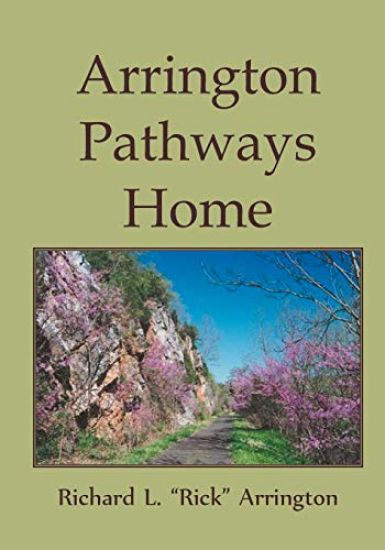
The earliest recorded use of the Arrington surname was in a document in London, England in 1273. Variations of the name include: Arrington, Arington, Earington, Arenton, Arrinton, Arrendon, and other derivations. Those bearing the Arrington surname have held positions such as magistrate, sheriff, and delegate. They have farmed, owned businesses, served proudly in the military, and married into families important in the history of the founding of this country. This book offers a comprehensive account of the Arrington family. In addition to vital statistics, the author has provided interesting stories, history and entertaining bits of family anecdotes. When indicated, slave's names and their kin (if known) are included. Chapters include: The Surname Arrington; The First in the New Land; Early Arringtons of Henrico County, VA; Neaves Arrington, Son of William of Albemarle County, VA; Adler Arrington, Son of William of Albemarle County, VA; Samuel Arrington, Son of William of Albemarle County, VA; The Arringtons of Franklin County, VA; The Marvin Lee Arrington Journal; The Arringtons of Isle of Wight County, VA; Arthur, Son of William Arrington I, of the Isle of Wight County, VA; Arthur Arrington (II) of Nash County, NC and Son of Arthur I; James Arrington, Son of Arthur I of North Carolina; Joseph Arrington, Son of Arthur I of North Carolina; Other Children of Arthur I of North Carolina (Benjamin, Elizabeth, Mary and Ann); John, Son of William Arrington I, of the Isle of Wight County, VA; Other Children of William I of Isle of Wight County, VA; The Halifax County, VA Arringtons; The Arringtons of Westmoreland County, VA; The Madison County, VA Arringtons; Arrington Bits and Pieces; and, Some Military History of the Early Arringtons. Three indices add to the value of this work: Arrington Index, Other Surname Index, and Arrington Slave Index.
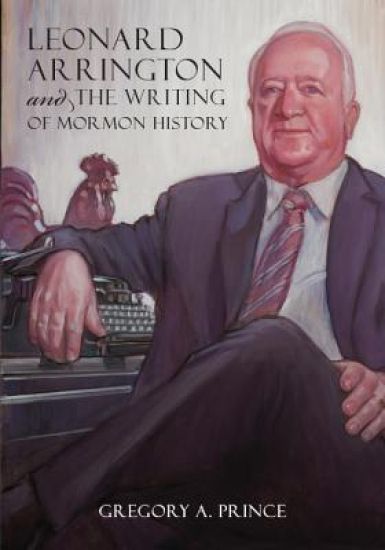
Leonard Arrington and the Writing of Mormon History
Gregory A. Prince
University of Utah Press,U.S.
2016
sidottu
Leonard Arrington is considered by many the foremost twentieth-century historian of Mormonism. But Arrington’s career was not without controversy. Gregory Prince takes an in-depth look at this respected historian and, in telling his story, gives readers insight into the workings of the LDS Church in the late twentieth century.In 1972, Arrington was asked to serve as the official church historian, thereby becoming the first—and thus far the only—professional historian to hold that title. While the output of and from that division moved Mormon studies to a new level, the shift of historiography from faith promotion to scholarly research and professional analysis was unacceptable to some powerful senior apostles. In 1980 the History Division was disassembled and moved to Brigham Young University, where Arrington's broad influence on Mormon history remained strong. This biography is the first to draw upon the remarkable Arrington diaries (over 20,000 pages) and it is supplemented by Prince’s interviews of more than 100 people who knew or worked with Arrington. The book provides background to continuing LDS struggles with member scholars, while illuminating the life of one prominent intellectual.
A systematic study of SIN throughout the Word of God.




Collected Leonard J Arrington Mormon History Lectures
Usu Special Collections Special
Utah State Special Collection
2004
sidottu
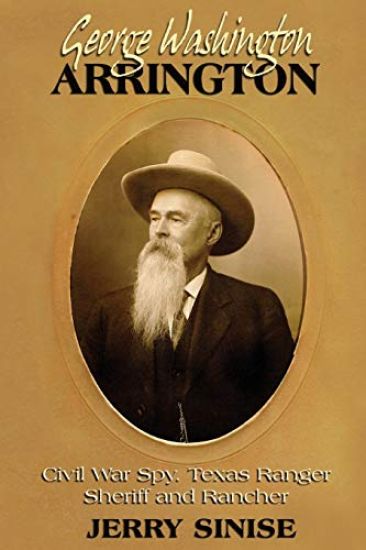
The life and exploits of George Washington Arrington were remarkable. Soldier, spy, Texas Ranger, Texas sheriff, rancher--he was all of these and his life spanned two of the most tempestuous times of this nation's history--the War between the States and the passing of the western frontier.Author Jerry Sinise recounts the life of adventure that began when Arrington joined the Confederate Army at sixteen years of age, through the dangerous Indian and outlaw years of the Texas frontier, into the settlement years of the Texas Panhandle, and into the 20th century as a Canadian, Texas, rancher.Sinise spent more than four years tracking down bits and pieces of Arrington's life. Some of his more dramatic adventures have appeared in the popular Western magazines and a book or two, but much of what he has included in this book is original material, never before published.
The Girl in the Lighthouse (Arrington saga, book 1)
Roxane Tepfer Sanford
Createspace Independent Publishing Platform
2011
nidottu

One of the foremost American historians of his generation, Leonard J. Arrington (1913-1999) revolutionized the writing of Mormon history. Through the publication of his groundbreaking "Great Basin Kingdom: An Economic History of the Latter-day Saints, " as well as numerous other publications, he established the dominant interpretation of the Mormon experience. Yet until now, there has been little analysis of his contribution to western history.Focusing on Arrington's intellectual career, Gary Topping examines the facets of Arrington's life that influenced his historical ideas: how his Idaho farm background shaped his values and interests, and how his nontraditional upbringing differed from that of other young Mormons. Topping also offers a critical evaluation and major new interpretation of Arrington's works that will likely spark controversy in the scholarly community.Topping re-examines Arrington's role in founding and promoting what is known as the New Mormon History. Arrington has been criticized for relying on the assistance of numerous staff members in the church's History Division, but Topping shows this collaborative approach to have been in keeping with the cooperative spirit of Mormonism. Yet, as Topping relates, Arrington's efforts to make archival material more accessible to the public were undermined by the more conservative wing of the church hierarchy, which released him from his position as Church Historian in 1982.Both an engaging biography and a sharp appraisal of Arrington's methods and interpretive work, Topping's book expands on Arrington's own autobiography by offering the first thorough analysis of his contributions.

Prevalence and Effect of Wolbachia Infection on the Brown Widow Spider
Arrington Brittany
LAP Lambert Academic Publishing
2014
pokkari
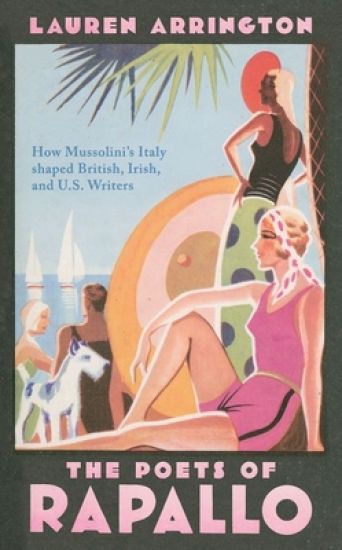
A new story about the relationships between major twentieth-century English-language poets. Why did poets from the United States, Britain, and Ireland gather in a small town in Italy during the early years of Mussolini's regime? These writers were--or became--some of the most famous poets of the twentieth century. What brought them together, and what did they hope to achieve? The Poets of Rapallo is about the conversations, collaborations, and disagreements among Ezra and Dorothy Pound, W.B. and George Yeats, Richard Aldington and Brigit Patmore, Thomas MacGreevy, Louis Zukofsky, and Basil Bunting. Drawing on their correspondence, diaries, drafts of poems, sketches, and photographs, this book shows how the backdrop of the Italian fascist regime is essential to their writing about their home countries and their ideas about modern art and poetry. It also explores their interconnectedness as poets and shows how these connections were erased as their work was polished for publication. Focusing on the years between 1928 and 1935, when Pound and Yeats hosted an array of visiting writers, this book shows how the literary culture of Rapallo forged the lifelong friendships of Richard Aldington and Thomas MacGreevy--both veterans of the First World War--and of Louis Zukofsky and Basil Bunting, who imagined a new kind of "democratic" poetry for the twentieth century. In the wake of the Second World War, these four poets all downplayed their relationship to Ezra Pound and avoided discussing how important Rapallo was to their development as poets. But how did these "democratic" poets respond to the fascist context in which they worked during their time in Rapallo? The Poets of Rapallo discusses their collaboration with Pound, their awareness of the rising tide of fascism, and even--in some cases--their complicity in the activities of the fascist regime. The Poets of Rapallo charts the new direction for modernist writing that these writers imagined, and in the process, it exposes the dark underbelly of some of the most lauded poetry in the English language.
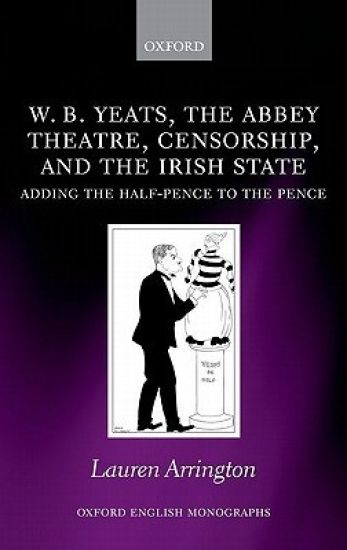
W.B. Yeats, the Abbey Theatre, Censorship, and the Irish State
Lauren Arrington
Oxford University Press
2010
sidottu
W.B. Yeats, the Abbey Theatre, Censorship, and the Irish State: Adding the Half-pence to the Pence utilizes new source material to reconstruct the current understanding of the relationship between the productions of the Abbey Theatre and the politics of the Irish state. This study begins in 1916, at the start of the Irish Revolution and in the midst of the theatre's financial crisis, and it ends with the death of the Abbey Theatre's last surviving founder, W.B. Yeats. To date, histories of the Abbey Theatre have repeated Yeats's assertion that there was no censorship of the theatre in Ireland. However, this study incorporates financial records, government correspondence, Dáil debates, and minutes from the Abbey's directors' meetings to produce surprising conclusions: censorship of the theatre did occur, but it occurred internally rather than by external means. Yeats and his fellow directors privately self-censored plays when there was potential for financial gain, such as in the Abbey's campaign for a state-sponsored reconstruction scheme - the details of which have never been explored prior to this study. Any attempts by the state to directly interfere in the theatre's programme were unsuccessful but were manipulated by the press-savvy Yeats in order to create profitable controversies. Despite Yeats's vocal campaign against censorship, his organisation of the Irish Academy of Letters, and his famous speeches from the Abbey stage decrying the censorship of the 'mob', he was willing to sacrifice the freedom of the artist when he foresaw an opportunity to ensure the longevity of his theatrical enterprise.
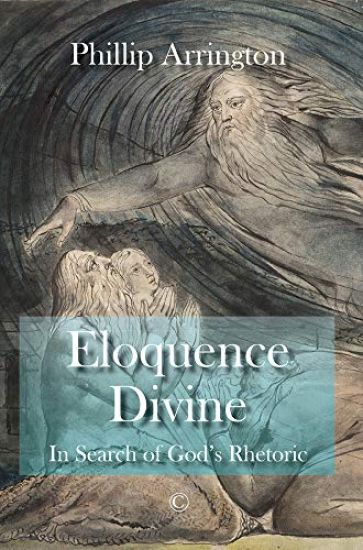
In recent years, keen interest has arisen among scholars regarding the connection between rhetoric and religion. This phenomenon could be due to the idea of universality that underlies these two topics or simply because of the crucial relevance they hold for the human condition. Biblical rhetorical criticism has been particularly active since 2009. The debate serves as a foundation for Eloquence Divine, which is grounded in a moderate and detached point of view that becomes helpful in seeing God as a 'mere' agent. In this fascinating study, God and Jesus are intended as rhetoricians who applied their own rhetoric tools in order to influence humanity's behaviour, acts and decisions. As an agnostic English teacher, Philip Arrington traces paths across different episodes of the Scriptures with the aim to explore basic issues, such as identifying the difference between God's rhetoric and human persuasion, as well as the effectiveness that divine eloquence demonstrates in the narration of the Bible.