Kirjojen hintavertailu. Mukana 11 213 693 kirjaa ja 12 kauppaa.

Kirjahaku

Etsi kirjoja tekijän nimen, kirjan nimen tai ISBN:n perusteella.

1000 tulosta hakusanalla Arthur C. Danto

The Philosophy of Arthur C. Danto

The Philosophy of Arthur C. Danto

Cricket Books, a division of Carus Publishing Co
2013
sidottu
Arthur Danto is the Johnsonian Professor Emeritus of Philosophy at Columbia University and the most influential philosopher of art in the last half century. As an art critic for The Nation for 25 years and frequent contributor to other widely read outlets such as the New York Review of Books, Danto also has become one of the most respected public intellectuals of his generation. He is the author of some two dozen important books, along with hundreds of articles and reviews which have been the center of both controversy and discussion. In this volume Danto offers his intellectual autobiography and responds to essays by 27 of the keenest critics of his thought from the worlds of philosophy and the arts. The book includes 16 pages of color art reproductions. Danto is the author dozens of books on art, philosophy, the philosophy of art, and art criticism. He is a rare philosopher who is also a public intellectual.
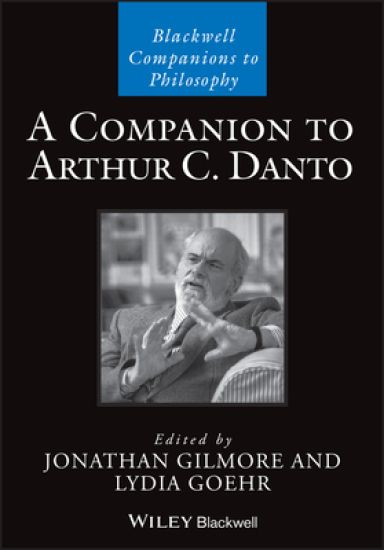
A Companion to Arthur C. Danto
A Companion to Arthur C. Danto paints a detailed portrait of one the most significant figures in twentieth-century philosophy and art criticism, offering unparalleled coverage of all aspects of Danto’s writings, artworks, and thought. Edited by two long-time colleagues of Arthur Danto, this interdisciplinary resource presents more than 40 original essays from both prominent Danto scholars and leading practitioners from various sub-fields of philosophy. The Companion illuminates Danto’s many contributions to the artworld, aesthetics, criticism, and philosophy of knowledge, action, science, history, and politics. The essays explore central concepts and intersecting themes in Danto’s writings while providing new interventions into the areas of philosophy in which Danto engaged. Topics include Danto’s mode of writing and art production, his critical engagement with artists and philosophers, conflicts in Danto’s views and in interpretations of his works, and much more. An important addition to Danto studies, A Companion to Arthur C. Danto is essential reading for practitioners, scholars, and advanced students looking for a critical, provocative, and insightful treatment of Danto’s philosophy, art, and criticism.
Nietzsche as Philosopher

Nietzsche as Philosopher

Arthur C. Danto

Columbia University Press
2005
sidottu
Few philosophers are as widely read or as widely misunderstood as Friedrich Nietzsche. When Danto's classic study was first published in 1965, many regarded Nietzsche as a brilliant but somewhat erratic thinker. Danto, however, presented a radically different picture, arguing that Nietzsche offered a systematic and coherent philosophy that anticipated many of the questions that define contemporary philosophy. Danto's clear and insightful commentaries helped canonize Nietzsche as a philosopher and continue to illuminate subtleties in Nietzsche's work as well as his immense contributions to the philosophies of science, language, and logic. This new edition, which includes five additional essays, not only further enhances our understanding of Nietzsche's philosophy; it responds to the misunderstandings that continue to muddy his intellectual reputation. Even today, Nietzsche is seen as everything from a precursor of feminism and deconstruction to a prophetic writer and spokesperson for disgruntled teenage boys. As Danto points out in his preface, Nietzsche's writings have purportedly inspired recent acts of violence and school shootings. Danto counters these misreadings by elaborating an anti-Nietzschian philosophy from within Nietzsche's own philosophy "in the hope of disarming the rabid Nietzsche and neutralizing the vivid frightening images that have inspired sociopaths for over a century." The essays also consider specific works by Nietzsche, including Human, All Too Human and The Genealogy of Morals, as well as the philosopher's artistic metaphysics and semantical nihilism.
Nietzsche as Philosopher

Nietzsche as Philosopher

Arthur C. Danto

Columbia University Press
2005
pokkari
Few philosophers are as widely read or as widely misunderstood as Friedrich Nietzsche. When Danto's classic study was first published in 1965, many regarded Nietzsche as a brilliant but somewhat erratic thinker. Danto, however, presented a radically different picture, arguing that Nietzsche offered a systematic and coherent philosophy that anticipated many of the questions that define contemporary philosophy. Danto's clear and insightful commentaries helped canonize Nietzsche as a philosopher and continue to illuminate subtleties in Nietzsche's work as well as his immense contributions to the philosophies of science, language, and logic. This new edition, which includes five additional essays, not only further enhances our understanding of Nietzsche's philosophy; it responds to the misunderstandings that continue to muddy his intellectual reputation. Even today, Nietzsche is seen as everything from a precursor of feminism and deconstruction to a prophetic writer and spokesperson for disgruntled teenage boys. As Danto points out in his preface, Nietzsche's writings have purportedly inspired recent acts of violence and school shootings. Danto counters these misreadings by elaborating an anti-Nietzschian philosophy from within Nietzsche's own philosophy "in the hope of disarming the rabid Nietzsche and neutralizing the vivid frightening images that have inspired sociopaths for over a century." The essays also consider specific works by Nietzsche, including Human, All Too Human and The Genealogy of Morals, as well as the philosopher's artistic metaphysics and semantical nihilism.
Unnatural Wonders

Unnatural Wonders

Arthur C. Danto

Columbia University Press
2007
pokkari
Arthur C. Danto's essays not only critique bodies of work but reflect upon art's conceptual evolution as well, drawing for the reader a kind of "philosophical map" indicating how art and the criteria for judging it has changed over the twentieth century. In Unnatural Wonders the renowned critic finds himself at a point when contemporary art has become wholly pluralistic, even chaotic-with one medium as good as another-and when the moment for the "next thing" has already passed. So the theorist goes in search of contemporary art's most exhilarating achievements, work that bridges the gap between art and life, which, he argues, is now the definitive art of our time. Danto considers the work of such young artists as John Currin and Renee Cox and older living masters including Gerhard Richter and Sol LeWitt. He discusses artists of the New York School, like Philip Guston and Joan Mitchell, and international talents, such as the South African William Kentridge. Danto conducts a frank analysis of Matthew Barney's The Cremaster Cycle, Damien Hirst's skeletons and anatomical models, and Barbara Kruger's tchotchke-ready slogans; finds the ghost of Henry James in the work of Barnett Newman; and muses on recent Whitney Biennials and art influenced by 9/11. He argues that aesthetic considerations no longer play a central role in the experience and critique of art. Instead art addresses us in our humanity, as men and women who seek meaning in the "unnatural wonders" of art, a meaning that philosophy and religion are unable to provide.
Andy Warhol

Andy Warhol

Arthur C. Danto

Yale University Press
2010
pokkari
An elegant, masterful portrait of Andy Warhol’s life, character, and lasting influence by an eminent art critic."Danto . . . sums up the Pop master's evolution as both artist and persona. . . . It is, in essence, everything you need to dive deeper into Brillo boxes and Empire."—Rachel Wolff, The Daily Beast(Best Art and Photography Books of 2009) In a work of great wisdom and insight, art critic and philosopher Arthur Danto delivers a compact, masterful tour of Andy Warhol’s personal, artistic, and philosophical transformations. Danto traces the evolution of the pop artist, including his early reception, relationships with artists such as Jasper Johns and Robert Rauschenberg, and the Factory phenomenon. He offers close readings of individual Warhol works, including their social context and philosophical dimensions, key differences with predecessors such as Marcel Duchamp, and parallels with successors like Jeff Koons. Danto brings to bear encyclopedic knowledge of Warhol’s time and shows us Warhol as an endlessly multidimensional figure—artist, political activist, filmmaker, writer, philosopher—who retains permanent residence in our national imagination.Danto suggests that "what makes him an American icon is that his subject matter is always something that the ordinary American understands: everything, or nearly everything he made art out of came straight out of the daily lives of very ordinary Americans. . . . The tastes and values of ordinary persons all at once were inseparable from advanced art."
What Art Is

What Art Is

Arthur C. Danto

Yale University Press
2014
pokkari
A lively meditation on the nature of art by one of America's most celebrated art critics What is it to be a work of art? Renowned author and critic Arthur C. Danto addresses this fundamental, complex question. Part philosophical monograph and part memoiristic meditation, What Art Is challenges the popular interpretation that art is an indefinable concept, instead bringing to light the properties that constitute universal meaning. Danto argues that despite varied approaches, a work of art is always defined by two essential criteria: meaning and embodiment, as well as one additional criterion contributed by the viewer: interpretation. Danto crafts his argument in an accessible manner that engages with both philosophy and art across genres and eras, beginning with Plato’s definition of art in The Republic, and continuing through the progress of art as a series of discoveries, including such innovations as perspective, chiaroscuro, and physiognomy. Danto concludes with a fascinating discussion of Andy Warhol’s famous shipping cartons, which are visually indistinguishable from the everyday objects they represent.Throughout, Danto considers the contributions of philosophers including Descartes, Kant, and Hegel, and artists from Michelangelo and Poussin to Duchamp and Warhol, in this far-reaching examination of the interconnectivity and universality of aesthetic production.
Connections to the World

Connections to the World

Arthur C. Danto

University of California Press
1997
pokkari
Arthur C. Danto's lucid introduction to the central topics of Western philosophical thought remains an unparalleled guide to problems in metaphysics and epistemology that have engaged philosophers for several millennia. Examining the work of Plato, Berkeley, Descartes, Hume, and Wittgenstein, Danto explores debates about empiricism, the mind/body problem, the nature of matter, and the status of language, consciousness, and scientific explanation. In a new preface to this edition he considers the current relationship between philosophy and the humanities.
Philosophizing Art

Philosophizing Art

Arthur C. Danto

University of California Press
2001
pokkari
Arthur Danto's work has always affirmed a deep relationship between philosophy and art. These essays explore this relationship through a number of concrete cases in which either artists are driven by philosophical agendas or their art is seen as solving philosophical problems in visual terms. The essays cover a varied terrain, with subjects including Giotto's use of olfactory data in "The Raising of Lazarus"; chairs in art and chairs as art; Mel Bochner's Wittgenstein drawings; the work of Robert Motherwell, Andy Warhol, and Robert Irwin; Louis Kahn as "Archai-Tekt"; and, visual truth in film. Also featured are a meditation on the battle of Gettysburg; and a celebration of the Japanese artist Shiko Munakata, an essay that is partly autobiographical. Arthur C. Danto is one of the most original and multitalented philosophers writing today, a thinker whose interests traverse the boundaries of traditional understandings of philosophy. Best known for his contributions to the philosophy of art and aesthetics, Danto is also esteemed for his work in the history of philosophy, the philosophy of history, philosophical psychology, and action theory. These two volumes, each with an introduction by the author, contain essays spanning more than twenty-five years that have been selected to highlight the inseparability of philosophy and art in Danto's work. Together they present the thinking of Arthur C. Danto at his very best.
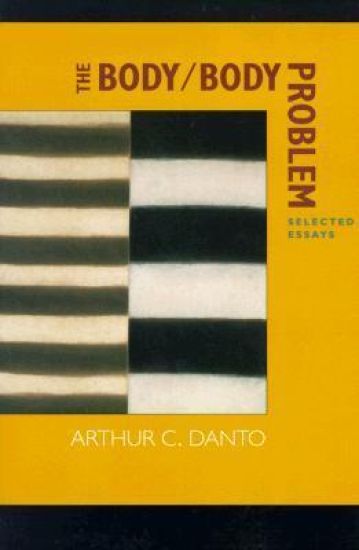
The Body/Body Problem

The Body/Body Problem

Arthur C. Danto

University of California Press
2001
pokkari
The overall subject of the essays in "The Body/Body Problem" is the traditional one of what our ultimate makeup is, as creatures with minds and bodies. The central thesis is that we are beings who represent - and misrepresent - actual and possible worlds. Addressing philosophical questions of mental representation, Danto presents his distinctive approach to some of the most enduring topics in philosophy. He is concerned with the nature of description, the status of the external world, action theory, the philosophy of history, and the philosophical status of psychoanalytic explanation. Representation is a central concept in philosophy, says Danto, with differences among philosophers arising in the ways they account for how representations connect to the world or to the individuals possessing them, and how they connect with one another to form systems of beliefs, feelings, and attitudes. In these essays Danto's own voice, with his arguments and speculations, provides rich philosophical pleasures that will endure, to borrow from Santayana, 'under whatever sky'. Arthur C. Danto is one of the most original and multitalented philosophers writing today, a thinker whose interests traverse the boundaries of traditional understandings of philosophy. Best known for his contributions to the philosophy of art and aesthetics, Danto is also esteemed for his work in the history of philosophy, the philosophy of history, philosophical psychology, and action theory. These two volumes, each with an introduction by the author, contain essays spanning more than twenty-five years that have been selected to highlight the inseparability of philosophy and art in Danto's work. Together they present the thinking of Arthur C. Danto at his very best.
Analytical Philosophy of Action

Analytical Philosophy of Action

Arthur C. Danto

Cambridge University Press
2009
pokkari
A study of the philosophical problems associated with the concept of action. Professor Danto is concerned to isolate logically the notion of a 'basic action' and to examine the way in which context and intention, for example, can convert physiological movements into significant actions. He finds many suggestive parallels between the concepts - the logical architecture - of action and cognition and in developing this theme he becomes involved in and proposes new approaches to various long-standing problems connected with causality, determinism and materialism. As in his earlier books, Analytical Philosophy of History and Analytical Philosophy of Knowledge, Professor Danto places the discussion in a broad historical and philosophical perspective and brings to it a wide reading and an unusual range of interests. He is always prepared to venture novel ideas to stimulate further debate and research and the book as a whole is presented as an original contribution to a subject which is attracting increasing attention from philosophers and from psychologists with an interest in the conceptual assumptions behind their work.
The Transfiguration of the Commonplace

The Transfiguration of the Commonplace

Arthur C. Danto

Harvard University Press
1983
nidottu
Arthur C. Danto argues that recent developments in the art world, in particular the production of works of art that cannot be told from ordinary things, make urgent the need for a new theory of art and make plain the factors such a theory can and cannot involve. In the course of constructing such a theory, he seeks to demonstrate the relationship between philosophy and art, as well as the connections that hold between art and social institutions and art history.The book distinguishes what belongs to artistic theory from what has traditionally been confused with it, namely aesthetic theory and offers as well a systematic account of metaphor, expression, and style, together with an original account of artistic representation. A wealth of examples, drawn especially from recent and contemporary art, illuminate the argument.
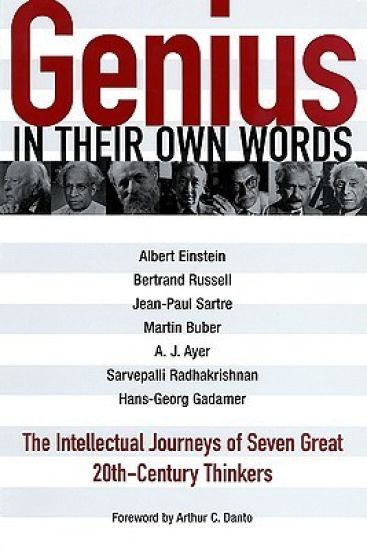
Genius in Their Own Words

Genius in Their Own Words

Arthur C. Danto

Open Court Publishing Co ,U.S.
2002
pokkari
Seven of the twentieth century's greatest thinkers describe how they arrived at the ideas for which they are known. In their own words, universally admired intellectuals such as Jean-Paul Sartre, Albert Einstein. Bertrand Russell, and Martin Buber trace the paths that led to their contributions in the field: A.J. Ayer shares what led to the logical positivist manifesto Language, Truth, and Logic and his subsequent retreat from and criticism of those early ideas, analytic philosophy founder Bertrand Russell's acerbic wit and self-deprecating manner are omnipresent in his narrative describing his intellectual development from childhood on. These carefully selected personal stories provide readers with a broad survey of the intellectual achievements of the 20th century, through the words and reflections of the thinkers themselves. Of interest to any reader curious about the nature of genius and how great minds work, this book is a window into the private world of an intellectual working toward ideas that have defined our time. The seven great thinkers are: A.J. Ayer; Martin Buber; Albert Einstein; Hans-Georg Gadamer; Sarvepalli Radhakrishnan; Bertrand Russell; Jean-Paul Sartre
The Abuse of Beauty

The Abuse of Beauty

Arthur C. Danto

Open Court Publishing Co ,U.S.
2003
pokkari
Danto simply and entertainingly traces the evolution of the concept of beauty over the past century and explores how it was removed from the definition of art. Beauty then came to be regarded as a serious aesthetic crime, whereas a hundred years ago it was almost unanimously considered the supreme purpose of art. Beauty is not, and should not be, the be-all and end-all of art, but it has an important place, and is not something to be avoided.Danto draws eruditely upon the thoughts of artists and critics such as Rimbaud, Fry, Matisse, the Dadaists, Duchamp, and Greenberg, as well as on that of philosophers like Hume, Kant, and Hegel. Danto agrees with the dethroning of beauty as the essence of art, and maintains with telling examples that most art is not, in fact, beautiful. He argues, however, for the partial rehabilitation of beauty and the removal of any critical taboo against beauty. Beauty is one among the many modes through which thoughts are presented to human sensibility in art: disgust, horror, sublimity, and sexuality being among other such modes.
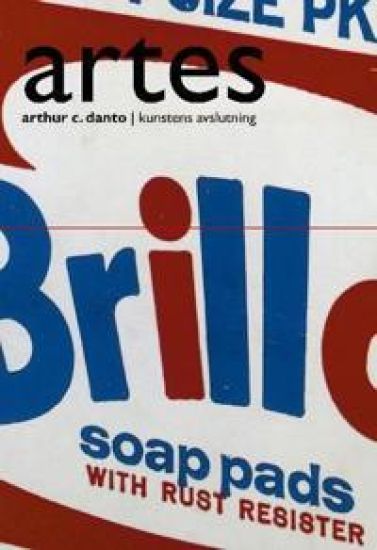
Kunstens avslutning

Kunstens avslutning

Arthur C. Danto

Pax
2007
nidottu
Hva gjør et kunstverk til kunst? Et det egenskaper ved selve verket eller sammenhengen det inngår i? Ifølge den amerikanske kunstfilosofen Arthur C. Danto (f. 1924) finnes det ikke lenger noen faste kriterier for hva som skiller kunst fra ikke-kunst. Det interessante er hva som defineres som kunst når. Dette avgjøres blant annet i det Danto kaller kunstverdenen. Sentralt i hans resonnement er en drøfting av Andy Warhols Brillo-esker, etterligninger av en alminnelig forbruksvare: en kasse med vaskemidler. Warhols valg gjorde Brillo til et ikon i popkunsten. Arthur C. Dantos tanker om forholdet mellom kunst og kontekst har vært banebrytende i moderne kunstteori. Tekstene hans er hyppig brukte referanser, og blir nå for første gang også tilgjengelige på norsk. Danto bidrar stadig med innspill til den kunstteoretiske debatten og er en innflytelsesrik kurator og kunstkritiker. Høsten 2005 gjestet han Norge som ForArt foredragsholder. I "Kunstens avslutning" inngår "Kunstverdenen", "Alminnelige tings tranfigurasjon", "Kunstens avslutning"og "Tre tiår etter kunstens avslutning".
The Philosophical Disenfranchisement of Art

The Philosophical Disenfranchisement of Art

Arthur C. Danto; Jonathan Gilmore

Columbia University Press
2004
sidottu
In this acclaimed work, first published in 1986, world-renowned scholar Arthur C. Danto explored the inextricably linked but often misunderstood relationship between art and philosophy. In light of the book's impact-especially the essay "The End of Art," which dramatically announced that art ended in the 1960s-this enhanced edition includes a foreword by Jonathan Gilmore that discusses how scholarship has changed in response to it. Complete with a new bibliography of work on and influenced by Danto's ideas, The Philosophical Disenfranchisement of Art continues to be of interest to anyone who thinks seriously about art, as well as to philosophers, aestheticians, and art historians.