Kirjojen hintavertailu. Mukana 11 244 527 kirjaa ja 12 kauppaa.

Kirjahaku

Etsi kirjoja tekijän nimen, kirjan nimen tai ISBN:n perusteella.

1000 tulosta hakusanalla Arthur Jay Harris

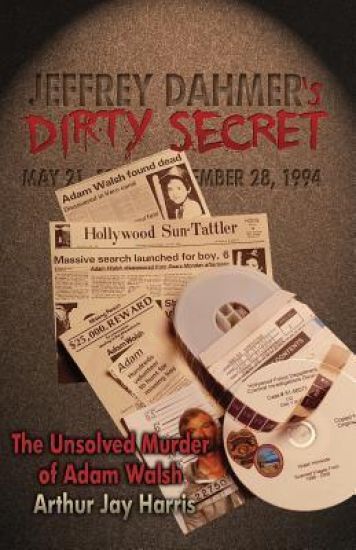
Jeffrey Dahmer's Dirty Secret

Jeffrey Dahmer's Dirty Secret

Arthur Jay Harris

Booksurge Publishing
2009
pokkari
The key to Adam Walsh's murder mystery was secretly hidden 40 years ago in an autopsy file never expected to be publicly seen. On its reveal, it showed that every police action in the case since couldn't possibly have been right. And that was the least of it.A famous old crime. No linking physical evidence. For decades, the murder of 6-year-old Adam Walsh, the iconic face of Missing Children, the boy on the milk carton, was an unsolved mystery. Suddenly police declared a solution resurrected on a theory they'd long discredited, clearly a convenient fiction to benefit the victim's family, who at a live nationally-televised police press conference were tearful and grateful.The national media bought it; the local press knew better. As Fred Grimm wrote in the South Florida Sun Sentinel on July 30, 2021, days after the 40th anniversary of Adam's disappearance: "A sensational alternate theory blamed serial killer Jeffrey Dahmer, who was living in Miami in 1981. But in 2008, despite no new evidence, Hollywood police hung the crime on long-dead Ottis Toole."The only mystery left unsolved was how any cop could have possibly believed Ottis Toole."Before 2008, Adam's father John Walsh had bitterly complained, often crying, that there was "no justice, no justice" for his family. But while Toole was still alive and could have been charged on the same information, Walsh had belittled the idea: "A lot of people still think Ottis Elwood Toole did it. But he and his partner] Henry Lee Lucas confessed to a lot of murders they didn't do. It's a great ploy for convicts: They read about a murder and they're in solitary. They call the police, desperate to clear a murder, and they say, 'Fly me there and buy me a pizza, ' and they get out of their cells for two days "-South Florida magazine, July 1992Police had statements from six separate witnesses at the mall who said they saw Dahmer when Adam disappeared, but police couldn't confirm that Dahmer had been in town then. Then reporter Art Harris, working with ABC Primetime, found a Miami police report with Dahmer's name dated 20 days before Adam was taken. Still they weren't interested. But by 2008, both Dahmer and Toole were dead, so did it matter? Although the police's conclusion was eye-rolling, it seemed harmless.Grimm was wrong only in that police's belief in Toole was the only mystery left.Probably without realizing it, by closing the case police unlatched a door locked nearly 30 years before to a guarded secret that possibly only one man, maybe two, seemed to know-not even the detectives. At that point you just needed to know to ask to open the door.Only one reporter did. Who knew what would be inside?Inside Harris discovered a much larger convenient fiction, but this one not at all harmless. In looking back it explained everything irregular in the investigation that had followed. As long as the secret was kept, the case could never be truly solved. Harris was then working with The Miami Herald, but even when they confronted them, the chief medical examiner who'd hidden it, the police-and most surprisingly, even the Walshes all turned blind eyes.What was the never-meant-to-be-seen or spoken-of truth in Adam Walsh's murder?First, despite what everyone has been led to believe, the autopsied child was only presumed to be Adam. Without a signed autopsy report, as reported in The Miami Herald, he was never actually properly identified as him.Why wasn't there an autopsy report?Because, as it turns out, the child was very likely not Adam.Which makes the unsolved murder mystery in the case, Who is i
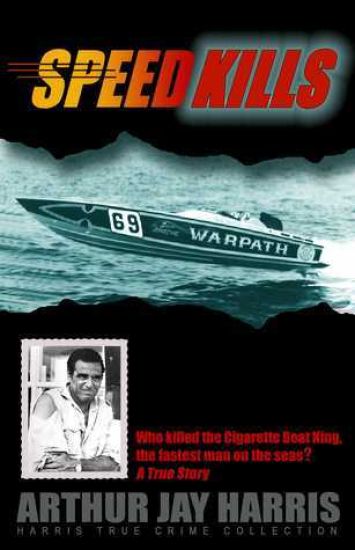
Speed Kills

Speed Kills

Arthur Jay Harris

Createspace Independent Publishing Platform
2013
pokkari
Released in theaters, now streaming: SPEED KILLS, a feature film starring John Travolta -- credited and based on the bookNow read the full story: The most famous speedboat racer, the creator of the famous Cigarette fast boats, the boat of choice for drug smugglers, is murdered in Miami in broad daylight in front of dozens of witnesses. The case takes police ten years to solve -- and leaves questions to whether they got it right. Speed Kills was originally published by Avon Books. "Ocean racing superstar Don Aronow loved it when writers called him a living legend. His life of adventure is well known. It is his death that baffles police. "He was afraid of nothing, no one. In his final hour, when a stranger spoke to him in riddles and talked about killing, Aronow laughed. He felt no fear, until he lowered the window of his white Mercedes and looked death in the face. And then it was too late."-- Edna Buchanan in The Miami Herald Bordering a canal leading to Biscayne Bay, a short dead-end stretch of Northeast 188th Street in Miami was the crossroad of the Americas in the mid-1980s for the biggest drug smugglers into the U.S.; the guys who ripped off the drug smugglers; the biggest South American drug suppliers; competing federal agencies investigating major drug trafficking and money laundering; the CIA, covertly advancing the Contra war against Central American land reform (which they called Cuban-sponsored communism); some of the highest national politicians in the country--and what attracted them all there, the most famous fast-boat companies in the world. On that splashy boulevard of (wet) dreams factories built marine magazine-ad ultra-sleek gleaming speedboats ostensibly for racers, royalty to show off on the C te d'Azur, and wealthy divorced or divorcing middle-age overweight men to pick up South Florida's sun-soaked hot chicks in string bikinis (while the rest of us unwashed wondered how they did it), but the boat builders' real business was fueling an arms race between smugglers, who purchased them for cash, and Drug War feds to catch smugglers. The storied creator of the quantum-leap faster Cigarette boat, against which all other "penis" boats were measured, as well as a two-time powerboat racing world champion and the personification of a sport in which people crazily risked their lives and bodies to win--not to mention a wicked ladies' man to boot, Don Aronow was shot and killed in broad daylight in front of his factory in 1987. Police found they didn't just have a murder mystery--they had Murder on the Orient Express.
Flowers for Mrs. Luskin

Flowers for Mrs. Luskin

Arthur Jay Harris

Createspace Independent Publishing Platform
2013
pokkari
Deep into the then biggest-dollar divorce in the history of Broward County, Florida, in which she's so far winning everything, Mrs. Luskin gets an unexpected flower delivery of cheap azaleas at the mansion she'd kicked her husband out of after he'd had an affair with his high-school girlfriend. Behind the pastel pistils comes a gleaming silver pistol. The man screams it's a robbery, he just wants her money. She tells police that he hit her in the head with the gun, but federal prosecutors later insist she was shot and grazed by a bullet, although no bullet was ever found and the room was mirrored on four sides. On that hinges the husband's conviction for attempted murder-for-hire conspiracy. He goes to prison for 15 years and marries his high-school girlfriend, but was he guilty? It turns out that the prosecutors at trial had held back evidence proving their star witness had crucially lied. But were prosecutors otherwise basically right, only that someone else who they hadn't charged -- not the husband -- was behind it all? Flowers for Mrs. Luskin was originally published by Avon Books. Story appeared as the cover story of newspaper magazines in The Miami Herald, Baltimore Sun, and Orlando Sentinel. A Millionaire Has An Affair. His Wife Throws Him Out. She Gets The Mansion, The Business, The Cash. His Parents' Business. His Parents' Cash. She Gets Shot And Doesn't Know It. The Bullet Disappears. He Goes To Prison. His Parents Flee The Country. He Weds The Other Woman Behind Bars. Has There Ever Been A Case Like This?-The Miami Herald
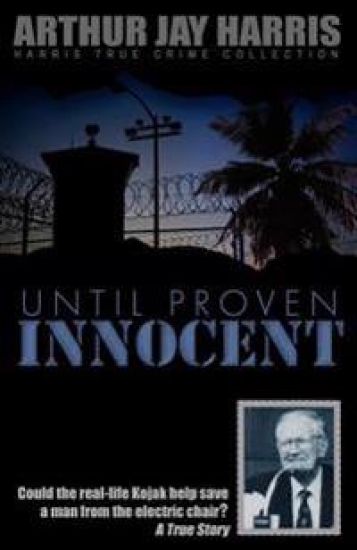
Until Proven Innocent

Until Proven Innocent

Arthur Jay Harris

Createspace Independent Publishing Platform
2013
pokkari
Three years into the investigation of a horrific homicide case, a suburban home invasion murder of a wife and mother and point-blank shootings of her infant, husband, and father-in-law, the prosecutor slowly realizes that he and the police have been totally wrong about one of his capital murder defendants and reverses course. Story seen on the series True Convictions on Investigative Discovery, in January 2018. Until Proven Innocent was originally published by Avon Books. Breathless, a woman's call to 911 interrupted a quiet night in the horse country suburbs: "I'm stabbed to death. Please "Did somebody stab you? asked the operator."Yes And my husband, my baby " Within minutes, officers arrived at her remote ranch house but didn't know whether an assailant was still present. Announcing themselves, they got no response, then entered anyway, guns drawn, and began a dangerous, tense search, room by room. Then they heard a baby's scream. Although the house wasn't yet fully cleared, they followed the wailing to the master bedroom where they found, tied and gagged, her husband and elderly father-in-law. They and their 18-month-old all had been shot point-blank in the head-but were still alive. Shocked, the officers called out to bring in paramedics, who had to crawl through the living room because the house still had not been completely cleared. Hurrying, and contrary to usual procedures, the officers spread out. One found a locked closet door; four officers gathered, and with guns ready, one of them kicked it in. Behind it they found their 911 caller-still holding the phone. "Oh, shit," said the kicker. In the history of Davie, Florida, there had never been such a savage and sociopathic crime, and police and homicide prosecutor Brian Cavanagh were determined to resolve it. For three years, they had two suspects under surveillance, then arrest. Both faced the death penalty. But as the legal case progressed, Cavanagh began to doubt that the defendants were partners. Possibly one had been a victim of the other, as well. In 1963, Cavanagh's dad, Tom, a Manhattan lieutenant of detectives, had a famous case called the "Career Girls Murder," two women in their twenties found horribly mutilated in their Upper East Side apartment. The newspapers played the story big, a random killer on the loose, meanwhile Tom and his precinct detectives had been unable to solve it. Months after the murder, Brooklyn detectives declared the case solved; they'd taken a signed confession from a man with a low IQ. Their additional proof was a photo in his wallet; it was of one of the girls he killed, he said. The man quickly recanted, although that didn't much matter to the Brooklyn detectives. As soon as he heard some of the details of the confession, Tom disbelieved it; the man didn't fit the profile. Needing to work quietly under the most difficult of circumstances, Tom sent out his own detectives to do the impossible: identify the girl in the picture. When they found her, she asked, "Where did you get that?" After all that impossibly good work, Tom and his detectives caught a break and found the real killer of the Career Girls. Until then, Tom said, he hadn't believed that police could make such mistakes. Afterward, as a result, New York State outlawed the death penalty. As well, this remarkable story inspired a TV movie and series starring a character playing Cavanagh's role. His name was Lt. Theo Kojak. As a child, Brian Cavanagh had watched his dad's anguish throughout that situation. Now, he had a case that was remarkably similar-except that he was potentially on the wrong side. Once his confidence level in the guilt of one of his defendants dropped to a level of precarious uncertainty, Brian showed the same courage as did his dad so many years earlier-proving that the son was the equal of his father.
Jeffrey Dahmer's Dirty Secret

Jeffrey Dahmer's Dirty Secret

Arthur Jay Harris

Createspace Independent Publishing Platform
2013
pokkari
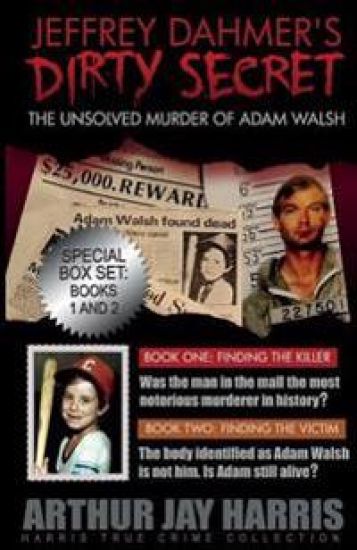
You may think you know the whole story of Adam Walsh-the 6-year-old found killed, whose father, John Walsh, became a crime-fighting TV host. We've long been told that the dead child was Adam-but astonishingly, the medical examiner file doesn't legally confirm it. It should be in an autopsy report, since an autopsy was done-but as Harris reported in the Miami Herald, there is no autopsy report. That never happens. Without legal proof of who's been killed, how can you have a murder trial?A famous old crime. No linking physical evidence. For decades, the murder of Adam Walsh, the iconic face of Missing Children, the boy on the milk carton, was an unsolved mystery. Suddenly police declared a solution resurrected on a theory of theirs they'd long discredited. At a live nationally-televised police press conference, the victim's family was tearful and grateful.The national media bought it. The local press, however, realized it was a convenient fiction.On July 30, 2021, days after the 40th anniversary of Adam's disappearance, Fred Grimm wrote in the South Florida Sun Sentinel: "A sensational alternate theory blamed serial killer Jeffrey Dahmer, who was living in Miami in 1981. But in 2008, despite no new evidence, Hollywood police hung the crime on long-dead Ottis Toole."The only mystery left unsolved was how any cop could have possibly believed Ottis Toole."While Toole was still alive and in state custody, and could have been charged with Adam's murder on the same information, John Walsh had belittled the idea: "A lot of people still think Ottis Elwood Toole did it. But he and his partner] Henry Lee Lucas confessed to a lot of murders they didn't do. It's a great ploy for convicts: They read about a murder and they're in solitary. They call the police, desperate to clear a murder, and they say, 'Fly me there and buy me a pizza, ' and they get out of their cells for two days "-South Florida magazine, July 1992Police had statements from six separate witnesses at the mall who said they saw Dahmer when Adam disappeared, but police couldn't confirm that Dahmer had been in town then. Then reporter Art Harris, working with ABC Primetime, found a Miami police report with Dahmer's name dated 20 days before Adam was taken. Still they weren't interested. But by 2008, both Dahmer and Toole were dead, so did it matter? Although the police's conclusion was eye-rolling, it seemed harmless.Grimm was wrong only in that police's belief in Toole was the only mystery left.Probably without realizing it, by closing the case police unlatched a door locked nearly 30 years before to a guarded secret.Inside Harris discovered a much larger convenient fiction, but this one not at all harmless. In looking back it explained everything irregular in the investigation that had followed. As long as the secret was kept, the case could never be truly solved. Harris was then working with The Miami Herald, but even when they confronted them, the chief medical examiner who'd hidden it, the police-and most surprisingly, even the Walshes all turned blind eyes.What was the never-meant-to-be-seen or spoken-of truth in Adam Walsh's murder?Was it that the evidence that the child was Adam was either inconclusive-or showed that it likely actually wasn't him?This Special Single Edition is a briefer version of Books 1&2
Jeffrey Dahmer's Dirty Secret

Jeffrey Dahmer's Dirty Secret

Arthur Jay Harris

Createspace Independent Publishing Platform
2013
pokkari
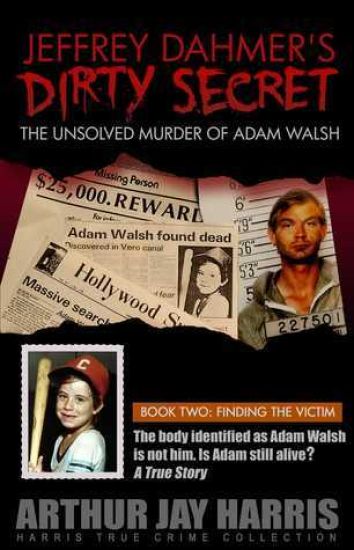
You may think you know the whole story of Adam Walsh-the 6-year-old found killed, whose father, John Walsh, became a crime-fighting TV host. We've long been told that the dead child was Adam-but astonishingly, the medical examiner file doesn't legally confirm it. It should be in an autopsy report, since an autopsy was done-but as Harris reported in the Miami Herald, there is no autopsy report. That never happens. Without legal proof of who's been killed, how can you have a murder trial?A famous old crime. No linking physical evidence. For decades, the murder of Adam Walsh, the iconic face of Missing Children, the boy on the milk carton, was an unsolved mystery. Suddenly police declared a solution resurrected on a theory of theirs they'd long discredited. At a live nationally-televised police press conference, the victim's family was tearful and grateful.The national media bought it. The local press, however, realized it was a convenient fiction.On July 30, 2021, days after the 40th anniversary of Adam's disappearance, Fred Grimm wrote in the South Florida Sun Sentinel: "A sensational alternate theory blamed serial killer Jeffrey Dahmer, who was living in Miami in 1981. But in 2008, despite no new evidence, Hollywood police hung the crime on long-dead Ottis Toole."The only mystery left unsolved was how any cop could have possibly believed Ottis Toole."While Toole was still alive and in state custody, and could have been charged with Adam's murder on the same information, John Walsh had belittled the idea: "A lot of people still think Ottis Elwood Toole did it. But he and his partner] Henry Lee Lucas confessed to a lot of murders they didn't do. It's a great ploy for convicts: They read about a murder and they're in solitary. They call the police, desperate to clear a murder, and they say, 'Fly me there and buy me a pizza, ' and they get out of their cells for two days "-South Florida magazine, July 1992Police had statements from six separate witnesses at the mall who said they saw Dahmer when Adam disappeared, but police couldn't confirm that Dahmer had been in town then. Then reporter Art Harris, working with ABC Primetime, found a Miami police report with Dahmer's name dated 20 days before Adam was taken. Still they weren't interested. But by 2008, both Dahmer and Toole were dead, so did it matter? Although the police's conclusion was eye-rolling, it seemed harmless.Grimm was wrong only in that police's belief in Toole was the only mystery left.Probably without realizing it, by closing the case police unlatched a door locked nearly 30 years before to a guarded secret.Inside Harris discovered a much larger convenient fiction, but this one not at all harmless. In looking back it explained everything irregular in the investigation that had followed. As long as the secret was kept, the case could never be truly solved. Harris was then working with The Miami Herald, but even when they confronted them, the chief medical examiner who'd hidden it, the police-and most surprisingly, even the Walshes all turned blind eyes.What was the never-meant-to-be-seen or spoken-of truth in Adam Walsh's murder?Was it that the evidence that the child was Adam was either inconclusive-or showed that it likely actually wasn't him?
The Unsolved Murder of Adam Walsh

The Unsolved Murder of Adam Walsh

Arthur Jay Harris

Createspace Independent Publishing Platform
2015
pokkari
You may think you know the whole story of Adam Walsh-the 6-year-old found killed, whose father, John Walsh, became a crime-fighting TV host. We've long been told that the dead child was Adam-but astonishingly, the medical examiner file doesn't legally confirm it. It should be in an autopsy report, since an autopsy was done-but as Harris reported in the Miami Herald, there is no autopsy report. That never happens. Without legal proof of who's been killed, how can you have a murder trial?A famous old crime. No linking physical evidence. For decades, the murder of Adam Walsh, the iconic face of Missing Children, the boy on the milk carton, was an unsolved mystery. Suddenly police declared a solution resurrected on a theory of theirs they'd long discredited. At a live nationally-televised police press conference, the victim's family was tearful and grateful.The national media bought it. The local press, however, realized it was a convenient fiction.On July 30, 2021, days after the 40th anniversary of Adam's disappearance, Fred Grimm wrote in the South Florida Sun Sentinel: "A sensational alternate theory blamed serial killer Jeffrey Dahmer, who was living in Miami in 1981. But in 2008, despite no new evidence, Hollywood police hung the crime on long-dead Ottis Toole."The only mystery left unsolved was how any cop could have possibly believed Ottis Toole."While Toole was still alive and in state custody, and could have been charged with Adam's murder on the same information, John Walsh had belittled the idea: "A lot of people still think Ottis Elwood Toole did it. But he and his partner] Henry Lee Lucas confessed to a lot of murders they didn't do. It's a great ploy for convicts: They read about a murder and they're in solitary. They call the police, desperate to clear a murder, and they say, 'Fly me there and buy me a pizza, ' and they get out of their cells for two days "-South Florida magazine, July 1992Police had statements from six separate witnesses at the mall who said they saw Dahmer when Adam disappeared, but police couldn't confirm that Dahmer had been in town then. Then reporter Art Harris, working with ABC Primetime, found a Miami police report with Dahmer's name dated 20 days before Adam was taken. Still they weren't interested. But by 2008, both Dahmer and Toole were dead, so did it matter? Although the police's conclusion was eye-rolling, it seemed harmless.Grimm was wrong only in that police's belief in Toole was the only mystery left.Probably without realizing it, by closing the case police unlatched a door locked nearly 30 years before to a guarded secret.Inside Harris discovered a much larger convenient fiction, but this one not at all harmless. In looking back it explained everything irregular in the investigation that had followed. As long as the secret was kept, the case could never be truly solved. Harris was then working with The Miami Herald, but even when they confronted them, the chief medical examiner who'd hidden it, the police-and most surprisingly, even the Walshes all turned blind eyes.What was the never-meant-to-be-seen or spoken-of truth in Adam Walsh's murder?Was it that the evidence that the child was Adam was either inconclusive-or showed that it likely actually wasn't him?
The Power of Projections

The Power of Projections

Arthur Jay Klinghoffer

Praeger Publishers Inc
2006
sidottu
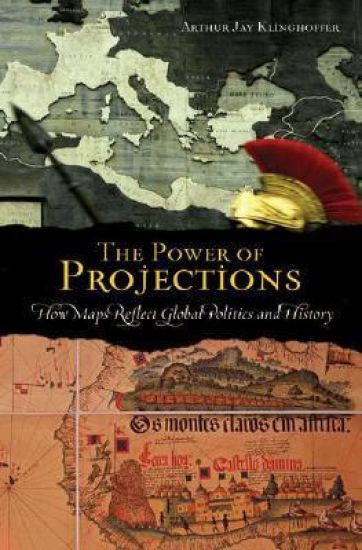
Why is Europe at the top half of maps and Africa at the bottom? Although we are accustomed to that convention, it is, in fact, a politically motivated, almost entirely subjective way of depicting a ball spinning in space. As The Power of Projections teaches us, maps do not portray reality, only interpretations of it. To begin with, they are two-dimensional projections of a three-dimensional, spherical Earth. Add to that the fact that every map is made for a purpose and its design tends to reflect that purpose. Finally, a map is often a psychological projection of the historical, political, and cultural values of the cartographer—or of the nation, person or organization for which the map was created. In this fascinating book, Klinghoffer examines the world perceptions of various civilizations and the ways in which maps have been formulated to serve the agendas of cartographers and their patrons. He analyzes the recent decline of sovereignty, the spread of globalization, the reassertion of ethnic identity, and how these trends affect contemporary mapmaking.
The International Dimension of Genocide in Rwanda

The International Dimension of Genocide in Rwanda

Arthur Jay Klinghoffer

Palgrave Macmillan
1998
sidottu
The mass killings in Rwanda in 1994 shocked the world but the international response was ineffective. The end of the Cold War had created a moral climate supportive of humanitarian intervention and enforcement of the Genocide Convention, but it had not produced adequate legal and structural mechanisms to carry out such action. The book examines the failures of the United Nations, the Organization of African Unity, regional states and major world powers either to prevent or terminate the genocide and draws lessons for intervention in future.
The Architecture of Whimsy

The Architecture of Whimsy

Arthur Jay Marcus

Schiffer Publishing Ltd
2020
sidottu
The playful, unexplored flourishes of South Florida's midcentury architecture—iconic style with a twist. This fascinating lexicon examines the quixotic architectural expressions found on select mid-20th-century modern commercial buildings in South Florida. Showcasing the work of 13 noted architects from Miami Beach to Fort Lauderdale, it highlights the playful decorative details and gestures—swooping overhangs, brise-soleil, cheese holes and arches, and screening—that expressed the era's shiny optimism and the region's carefree resort culture. With brief bios of the architects and street maps pinpointing the location of each building, this book offers tourists, architects, history buffs, and preservationists a new context and appreciation for these works of art, many of which are endangered.