Kirjojen hintavertailu. Mukana 11 241 044 kirjaa ja 12 kauppaa.

Kirjahaku

Etsi kirjoja tekijän nimen, kirjan nimen tai ISBN:n perusteella.

1000 tulosta hakusanalla Arthur M. Diamond

Openness to Creative Destruction

Openness to Creative Destruction

Arthur M. Diamond

Oxford University Press Inc
2019
sidottu
Life improves under the economic system often called "entrepreneurial capitalism" or "creative destruction," but more accurately called "innovative dynamism." Openness to Creative Destruction: Sustaining Innovative Dynamism shows how innovation occurs through the efforts of inventors and innovative entrepreneurs, how workers on balance benefit, and how good policies can encourage innovation. The inventors and innovative entrepreneurs are often cognitively diverse outsiders with the courage and perseverance to see and pursue serendipitous discoveries or slow hunches. Arthur M. Diamond, Jr. shows how economies grow where innovative dynamism through leapfrog competition flourishes, as in the United States from roughly 1830-1930. Consumers vote with their feet for innovative new goods and for process innovations that reduce prices, benefiting ordinary citizens more than the privileged elites. Diamond highlights that because breakthrough inventions are costly and difficult, patents can be fair rewards for invention and can provide funding to enable future inventions. He argues that some fears about adverse effects on labor market are unjustified, since more and better new jobs are created than are destroyed, and that other fears can be mitigated by better policies. The steady growth in regulations, often defended on the basis of the precautionary principle, increases the costs to potential entrepreneurs and thus reduces innovation. The "Great Fact" of economic history is that after at least 40,000 years of mostly "poor, nasty, brutish, and short" humans in the last 250 years have started to live substantially longer and better lives. Diamond increases understanding of why.
Openness to Creative Destruction

Openness to Creative Destruction

Arthur M. Diamond

Oxford University Press Inc
2019
nidottu
Life improves under the economic system often called "entrepreneurial capitalism" or "creative destruction," but more accurately called "innovative dynamism." Openness to Creative Destruction: Sustaining Innovative Dynamism shows how innovation occurs through the efforts of inventors and innovative entrepreneurs, how workers on balance benefit, and how good policies can encourage innovation. The inventors and innovative entrepreneurs are often cognitively diverse outsiders with the courage and perseverance to see and pursue serendipitous discoveries or slow hunches. Arthur M. Diamond, Jr. shows how economies grow where innovative dynamism through leapfrog competition flourishes, as in the United States from roughly 1830-1930. Consumers vote with their feet for innovative new goods and for process innovations that reduce prices, benefiting ordinary citizens more than the privileged elites. Diamond highlights that because breakthrough inventions are costly and difficult, patents can be fair rewards for invention and can provide funding to enable future inventions. He argues that some fears about adverse effects on labor market are unjustified, since more and better new jobs are created than are destroyed, and that other fears can be mitigated by better policies. The steady growth in regulations, often defended on the basis of the precautionary principle, increases the costs to potential entrepreneurs and thus reduces innovation. The "Great Fact" of economic history is that after at least 40,000 years of mostly "poor, nasty, brutish, and short" humans in the last 250 years have started to live substantially longer and better lives. Diamond increases understanding of why.

Arthur M. Schlesinger, Jr., and the Ideological History of American Liberalism
The author of this book examines the origin, elements, and evolving significance of the "tides" in his discourse of Arthur M. Schlesinger, Jr. Arthur M. Schlesinger, Jr., is a historian and political advocate whose ideas and activities have significantly influenced the shape and direction of American liberalism during the past fifty years. A central feature of Schlesinger's ideological perspective is his belief that American history has been marked by alternating periods of conservative and liberal dominance, which he has termed the "tides of national politics." Throughout his career, Schlesinger has used the "tides of national politics" to defend the legitimacy and superiority of active liberal government and leadership. The author of this book examines the origin, elements, and evolving significance of the "tides" in his discourse of Arthur M. Schlesinger, Jr. The study investigates how the "tides" concept has functioned in both Schlesinger's historical scholarship and his partisan political discourse. Depoe also explores the ways in which the "tides" concept has shaped and channeled Schlesinger's political thought over time, leading him toward certain definitions of situations and away from others. Finally, Depoe offers Schlesinger's life and work as a case study of the highs and lows of postwar American liberalism. By tracing Schlesinger's responses to Eisenhower-era conservatism, Kennedy's New Frontier, and the problems of Vietnam and violence during the 1960s, and the gradual delegitimation of liberalism from the 1970s to the present, this book offers a road map that can guide the reader toward a better understanding of the past, present, and future of liberalism in America.
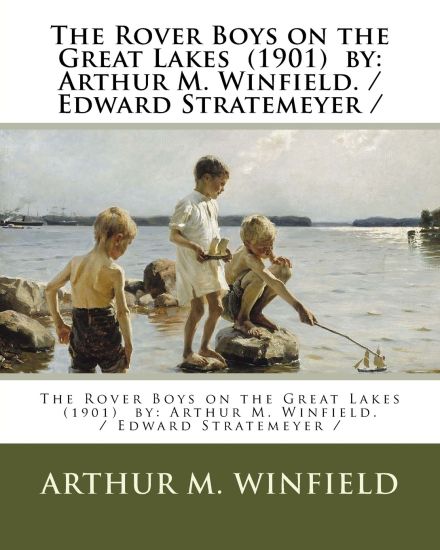
The Rover Boys on the Great Lakes (1901) by: Arthur M. Winfield. / Edward Stratemeyer /

The Rover Boys on the Great Lakes (1901) by: Arthur M. Winfield. / Edward Stratemeyer /

Arthur M. Winfield

Createspace Independent Publishing Platform
2017
nidottu
Edward L. Stratemeyer (October 4, 1862 - May 10, 1930) was an American publisher and writer of children's fiction. He was one of the most prolific writers in the world, producing in excess of 1,300 books himself, selling in excess of 500 million copies. He also created many well-known fictional book series for juveniles, including The Rover Boys, The Bobbsey Twins, Tom Swift, The Hardy Boys, and Nancy Drew series, many of which sold millions of copies and are still in publication today. On Stratemeyer's legacy, Fortune wrote: "As oil had its Rockefeller, literature had its Stratemeyer.Stratemeyer was born the youngest of six children in Elizabeth, New Jersey, to Henry Julius Stratemeyer, a tobacconist, and Anna Siegel. They were both from Hanover, Germany, immigrating to the United States in 1837. Although they were German, he and his siblings were educated in English and spoke English to each other. Growing up, Edward read the likes of Horatio Alger and William T. Adams, writers who penned beloved rags-to-riches tales of the hardworking young American. These stories greatly influenced him. 5] As a teenager, Stratemeyer operated his own printing press in the basement of his father's tobacco shop, distributing flyers and pamphlets among his friends and family. These included stories called The Newsboy's Adventure and The Tale of a Lumberman. After he graduated from high school, he went to work in his father's store. It wasn't until the age of 26 in 1888 that Stratemeyer sold his first story, Victor Horton's Idea, to the popular children's magazine Golden Days for $76-over six times the average weekly paycheck at the time.
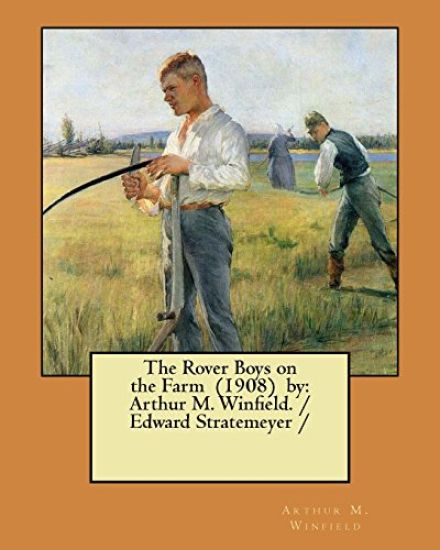
The Rover Boys on the Farm (1908) by: Arthur M. Winfield. / Edward Stratemeyer /

The Rover Boys on the Farm (1908) by: Arthur M. Winfield. / Edward Stratemeyer /

Arthur M. Winfield

Createspace Independent Publishing Platform
2017
nidottu
Edward L. Stratemeyer (October 4, 1862 - May 10, 1930) was an American publisher and writer of children's fiction. He was one of the most prolific writers in the world, producing in excess of 1,300 books himself, selling in excess of 500 million copies. He also created many well-known fictional book series for juveniles, including The Rover Boys, The Bobbsey Twins, Tom Swift, The Hardy Boys, and Nancy Drew series, many of which sold millions of copies and are still in publication today. On Stratemeyer's legacy, Fortune wrote: "As oil had its Rockefeller, literature had its Stratemeyer.Stratemeyer was born the youngest of six children in Elizabeth, New Jersey, to Henry Julius Stratemeyer, a tobacconist, and Anna Siegel. They were both from Hanover, Germany, immigrating to the United States in 1837. Although they were German, he and his siblings were educated in English and spoke English to each other. Growing up, Edward read the likes of Horatio Alger and William T. Adams, writers who penned beloved rags-to-riches tales of the hardworking young American. These stories greatly influenced him. 5] As a teenager, Stratemeyer operated his own printing press in the basement of his father's tobacco shop, distributing flyers and pamphlets among his friends and family. These included stories called The Newsboy's Adventure and The Tale of a Lumberman. After he graduated from high school, he went to work in his father's store. It wasn't until the age of 26 in 1888 that Stratemeyer sold his first story, Victor Horton's Idea, to the popular children's magazine Golden Days for $76-over six times the average weekly paycheck at the time.
Speeches Honoring Abraham Lincoln; Speeches Honoring Lincoln - Arthur M. Hyde

Speeches Honoring Abraham Lincoln; Speeches Honoring Lincoln - Arthur M. Hyde

Arthur Mastick 1877-1947 Hyde; Lincoln Financial Foundation Collection

Hassell Street Press
2021
nidottu
This work has been selected by scholars as being culturally important and is part of the knowledge base of civilization as we know it.This work is in the public domain in the United States of America, and possibly other nations. Within the United States, you may freely copy and distribute this work, as no entity (individual or corporate) has a copyright on the body of the work.Scholars believe, and we concur, that this work is important enough to be preserved, reproduced, and made generally available to the public. To ensure a quality reading experience, this work has been proofread and republished using a format that seamlessly blends the original graphical elements with text in an easy-to-read typeface.We appreciate your support of the preservation process, and thank you for being an important part of keeping this knowledge alive and relevant.
Good Company

Good Company

Arthur M. Blank

William Morrow Company
2020
sidottu
A WALL STREET JOURNAL AND USA TODAY BESTSELLERFeaturing an introduction by President Jimmy CarterThe Home Depot cofounder and owner of the NFL's Atlanta Falcons and MLS's Atlanta United shares a vision and a roadmap for values-based business. Arthur M. Blank believes that for good companies, purpose and profit can-and should-go hand in hand. And he should know. Together with cofounder Bernie Marcus, Blank built The Home Depot from an idea and a dream to a $50 billion-dollar company, the leading home improvement retailer in the world. And even while opening a new store every 42 hours, they never lost sight of their commitment to care for their people and communities. In fact, in 2001, The Home Depot was voted America's most socially responsible company. Blank left The Home Depot that same year with a burning question: Could the values and culture that made that company great be replicated? Good Company takes readers inside the story of how he did just that-turning around a struggling NFL team, rebooting a near-bankrupt retail chain, building a brand-new stadium, revitalizing a blighted neighborhood, launching a startup soccer club, and more. "When good companies put the wellbeing of their customers, their associates, and their communities first, financial success will follow," Blank writes. "The entrepreneurs and business leaders of today and tomorrow have an extraordinary opportunity: to prove that through upholding values we can create value-for the company, for the customer, and for the community."
A History of Immunology

A History of Immunology

Arthur M. Silverstein

Academic Press Inc
2009
sidottu
Written by an immunologist, A History of Immunology traces the concept of immunity from ancient times up to the present day, examining how changing concepts and technologies have affected the course of the science. It shows how the personalities of scientists and even political and social factors influenced both theory and practice in the field. With fascinating stories of scientific disputes and shifting scientific trends, each chapter examines an important facet of this discipline that has been so central to the development of modern biomedicine. With its biographical dictionary of important scientists and its lists of significant discoveries and books, this volume will provide the most complete historical reference in the field.
Renewable Motor Fuels

Renewable Motor Fuels

Arthur M. Brownstein

Butterworth-Heinemann Inc
2014
nidottu
Considering the ever-rising costs of traditional fuel paired with the increasing scarcity of its resources, it’s easy to see why exploring renewable fuels has become an increasingly critical goal for engineers, researchers, and end-users alike. However, due to the great diversity of technologies, policies, and attitudes, it can be difficult to gain a good well-rounded understanding of these types of fuels. Renewable Motor Fuels: The Past, the Present and the Uncertain Future presents an opportunity to gain an insightful understanding of all the key aspects of alternative automotive fuels in one book. Author Arthur Brownstein describes various sources of renewable motor fuels (including ethanol, algae, isobutanol, natural gas, and battery power) and their production processes, specific properties, and economic advantages/disadvantages. This comprehensive coverage of such an important topic is crucial for anyone with an interest in renewable fuels, from researchers to engineers to end-users.
Introduction to Protein Science

Introduction to Protein Science

Arthur M. Lesk

Oxford University Press
2016
nidottu
Over the last century, the centrality of proteins to life on earth has become increasingly clear - from forming enzymes acting as catalysts for specific reactions, to crucial molecules such as antibodies in the immune system, and as signalling molecules between cells. In fact, the more they are studied, the more proteins continue to reveal new and exciting functions. Indeed, by studying amino acid sequences and protein structures it is even possible to unravel some of the mysteries of evolution itself. Introduction to Protein Science, 3rd edition provides a rich and broad introduction to this fascinating field by covering not only the structure and function of proteins, but also the methods and experimental techniques used to study them. The practical applications of our knowledge to diverse fields such as biotechnology and medicine are emphasized throughout, to help students appreciate the relevance of the subject to the real world. Active learning is encouraged by the provision of frequent exercises and problems, with further 'weblems' - web-based problems - on the Online Resource Centre. Online Resource Centre The Online Resource Centre to accompany Introduction to Protein Science features: For students: ·Answers to end-of-chapter exercises, and hints to end-of-chapter problems, so students can check their understanding. ·Rotating structures from the book to help students visualize proteins in 3D. ·Web-based problems for students to complete online. For registered adopters: ·Figures from the book in electronic format, ready to download
Introduction to Genomics

Introduction to Genomics

Arthur M. Lesk

Oxford University Press
2017
nidottu
Our genome is the blueprint for our existence: it encodes all the information we need to develop from a single cell into a hugely complicated functional organism. Yet it is more than a static information store: our genome is a dynamic, tightly-regulated collection of genes, which switch on and off in many combinations to give the variety of cells from which our bodies are formed. But how do we identify the genes that make up our genome? How do we determine their function? And how do different genes form the regulatory networks that direct the processes of life? Introduction to Genomics is the most up-to-date and complete textbook for students approaching the subject for the first time. Lesk's engaging writing style brings a narrative to a disparate field of study and offers a fascinating insight into what can be revealed from the study of genomes. The book covers: the similarities and differences between organisms; how different organisms evolved; how the genome is constructed and how it operates; and what our understanding of genomics means in terms of our future health and wellbeing. The Online Resource Centre accompanying Introduction to Genomics features: For students: - Extensive and imaginative weblems (web-based problems) for each chapter designed to give you practice with the tools required for further study and research in the field - Hints and answers to end-of-chapter problems and exercises support your self-directed learning - Guided tour of websites and major archival databanks in genomics offer a wealth of resources to springboard your own research - Journal club: links to related research articles on topics covered in the book are paired with engaging questions to improve your interpretation of the primary literature - Rotating figures allow you to visualize complex structures For registered adopters: - Downloadable figures from the book.
Philosophy Between the Lines

Philosophy Between the Lines

Arthur M. Melzer

University of Chicago Press
2014
sidottu
Philosophical esotericism - the practice of communicating one's unorthodox thoughts "between the lines"-was a common practice until the end of the eighteenth century. The famous Encyclopedie of Diderot, for instance, not only discusses this practice in over twenty different articles, but admits to employing it itself. The history of Western thought contains hundreds of such statements by major philosophers testifying to the use of esoteric writing in their own work or that of others. Despite this long and well-documented history, however, esotericism is often dismissed today as a rare occurrence. But by ignoring esotericism, we risk cutting ourselves off from a full understanding of Western philosophical thought. Arthur M. Melzer serves as our deeply knowledgeable guide in this capacious and engaging history of philosophical esotericism. Walking readers through both an ancient (Plato) and a modern (Machiavelli) esoteric work, he explains what esotericism is-and is not. It relies not on secret codes, but simply on a more intensive use of familiar rhetorical techniques like metaphor, irony, and insinuation. Melzer explores the various motives that led thinkers in many different times and places to engage in this strange practice, while also exploring the motives that led more recent thinkers not only to dislike and avoid this practice but to deny its very existence. In the book's final section, "A Beginner's Guide to Esoteric Reading," Melzer turns to how we might once again cultivate the long-forgotten art of reading esoteric works. Philosophy Between the Lines is the first comprehensive, book-length study of the history and theoretical basis of philosophical esotericism, and it provides a crucial guide to how many major writings-philosophical, but also theological, political, and literary-were composed prior to the nineteenth century.
Philosophy Between the Lines

Philosophy Between the Lines

Arthur M. Melzer

University of Chicago Press
2017
nidottu
Philosophical esotericism the practice of communicating one's unorthodox thoughts "between the lines" was a common practice until the end of the eighteenth century. The famous Encyclopedie of Diderot, for instance, not only discusses this practice in over twenty different articles, but admits to employing it itself. The history of Western thought contains hundreds of such statements by major philosophers testifying to the use of esoteric writing in their own work or others'. Despite this long and well-documented history, however, esotericism is often dismissed today as a rare occurrence. But by ignoring esotericism, we risk cutting ourselves off from a full understanding of Western philosophical thought. Arthur M. Melzer serves as our deeply knowledgeable guide in this capacious and engaging history of philosophical esotericism. Walking readers through both an ancient (Plato) and a modern (Machiavelli) esoteric work, he explains what esotericism is and is not. It relies not on secret codes, but simply on a more intensive use of familiar rhetorical techniques like metaphor, irony, and insinuation. Melzer explores the various motives that led thinkers in different times and places to engage in this strange practice, while also exploring the motives that lead more recent thinkers not only to dislike and avoid this practice but to deny its very existence. In the book's final section, "A Beginner's Guide to Esoteric Reading," Melzer turns to how we might once again cultivate the long-forgotten art of reading esoteric works. Philosophy Between the Lines is the first comprehensive, book-length study of the history and theoretical basis of philosophical esotericism, and it provides a crucial guide to how many major writings philosophical, but also theological, political, and literary were composed prior to the nineteenth century.