

Kirjahaku
Etsi kirjoja tekijän nimen, kirjan nimen tai ISBN:n perusteella.
1000 tulosta hakusanalla Arun Shalin Lawence



Arun
Createspace Independent Publishing Platform
2012
nidottu
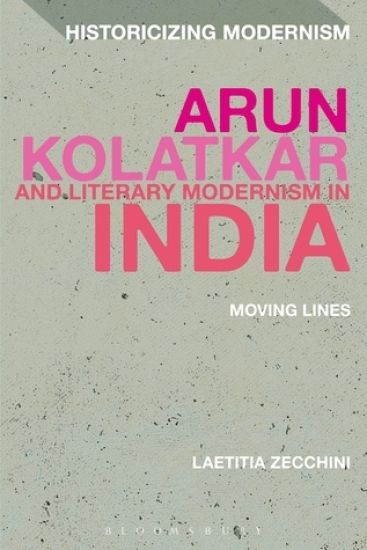
Arun Kolatkar and Literary Modernism in India
Laetitia Zecchini
Bloomsbury Academic USA
2014
sidottu
In this first scholarly work on India's great modern poet, Laetitia Zecchini outlines a story of literary modernism in India and discusses the traditions, figures and events that inspired and defined Arun Kolatkar. Based on an impressive range of archival and unpublished material, this book also aims at moving lines of accepted genealogies of modernism and ‘postcolonial literature’.Zecchini uncovers how poets of Kolatkar’s generation became modern Indian writers while tracing a lineage to medieval oral traditions. She considers how literary bilingualism allowed Kolatkar to blur the boundaries between Marathi and English, ‘Indian’ and ‘Western sources; how he used his outsider position to privilege the quotidian and minor and revived the spirit of popular devotion. Graphic artist, poet and songwriter, storyteller of Bombay and world history, poet in Marathi, in English and in ‘Americanese’, non-committal and deeply political, Kolatkar made lines wobble and treasured impermanence. Steeped in world literature, in European avant-garde poetry, American pop and folk culture, in a ‘little magazine’ Bombay bohemia and a specific Marathi ethos, Kolatkar makes for a fascinating subject to explore and explain the story of modernism in India.This book has received support from the labex TransferS: http://transfers.ens.fr/
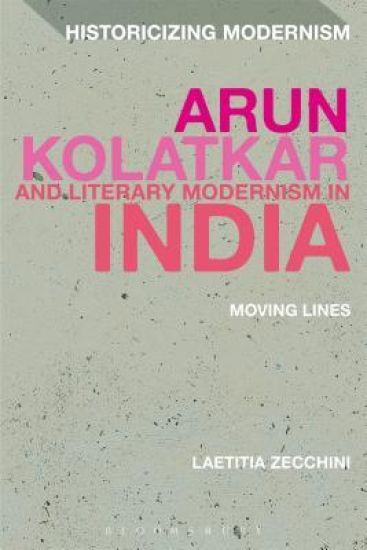
In this first scholarly work on India's great modern poet, Laetitia Zecchini outlines a story of literary modernism in India and discusses the traditions, figures and events that inspired and defined Arun Kolatkar. Based on an impressive range of archival and unpublished material, this book also aims at moving lines of accepted genealogies of modernism and ‘postcolonial literature’.Zecchini uncovers how poets of Kolatkar’s generation became modern Indian writers while tracing a lineage to medieval oral traditions. She considers how literary bilingualism allowed Kolatkar to blur the boundaries between Marathi and English, ‘Indian’ and ‘Western sources; how he used his outsider position to privilege the quotidian and minor and revived the spirit of popular devotion. Graphic artist, poet and songwriter, storyteller of Bombay and world history, poet in Marathi, in English and in ‘Americanese’, non-committal and deeply political, Kolatkar made lines wobble and treasured impermanence. Steeped in world literature, in European avant-garde poetry, American pop and folk culture, in a ‘little magazine’ Bombay bohemia and a specific Marathi ethos, Kolatkar makes for a fascinating subject to explore and explain the story of modernism in India.This book has received support from the labex TransferS: http://transfers.ens.fr/
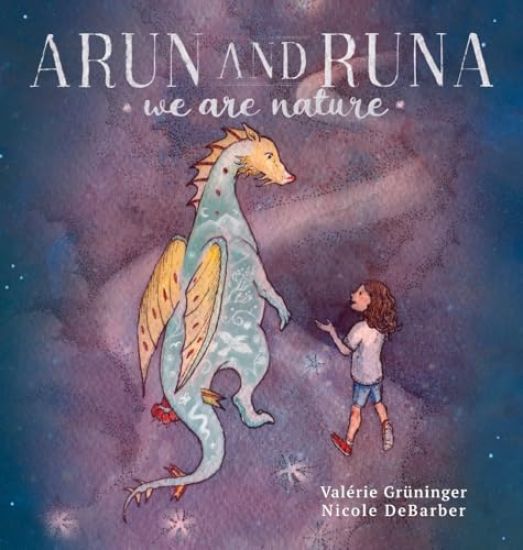
Runa has many questions about her human body. Together with her best friend Arun, the dragon, she explores nature and our wonderful planet Earth. On their journey, Runa realizes that she has a lot in common with her home, the Earth. Do you, too?
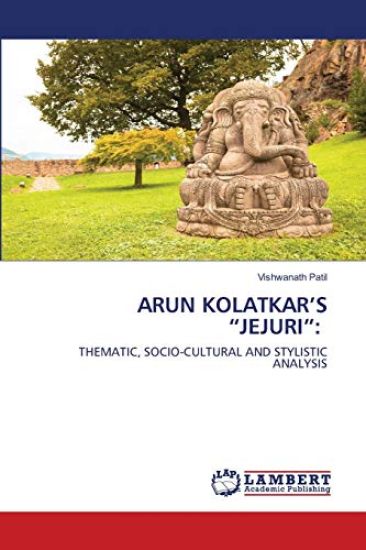
Jejuri is a poem of thirty one sections. It is the poet's quest for spiritual truth and an examination and investigation of past legends and myths. In fact, the collection is a serious attempt by Arun Kolatkar that deals with various themes like- tradition and customs, hypocrisy at various institutions, spiritual hollowness in India, zeal for information, poverty and superstitions among Indians, corruption and commercialization at religious places, cultural decadence and journey as a mode of knowledge. It also depicts the struggle between gods and demons, superstitions and science, tradition and modernity, the past and the present, belief and disbelief and the study of human being and their relationships. Jejuri, the poem starts its journey from The Bus and ends with The Railway Station.
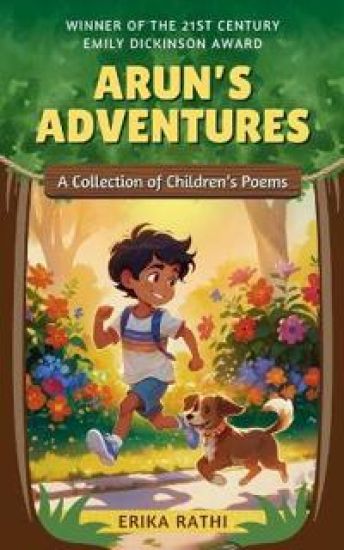
Arun's Adventures- A Collection of Children's Poems
Erika Rathi
Libresco Feeds Private Limited
2024
nidottu
Embark on a whimsical journey through the enchanting landscapes and vibrant cultures of India with Arun, a curious young explorer with an insatiable thirst for adventure. In this delightful collection of children's poems, Arun takes readers on a magical odyssey filled with wonder, self-growth and heartwarming encounters. With lyrical verses and captivating imagery, ""Arun's Adventures"" captures the essence of India's rich cultural heritage and natural beauty. Whether soaring high on the wings of imagination or embarking on thrilling escapades, Arun's playful spirit and boundless curiosity will inspire children to dream, explore and embrace the world around them. Perfect for bedtime reading or classroom discussions, this enchanting collection sparks curiosity and celebrates the joy of discovery. Join Arun as he embarks on unforgettable adventures that will ignite the imagination and leave a lasting impression on readers of all ages.
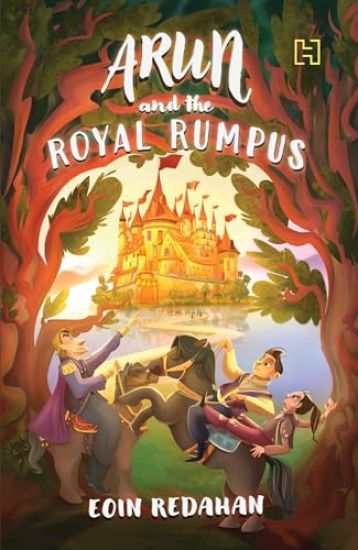
Would you rather have the body of a tiger and the head of a boy, or the body of a boy and the head of a tiger?(Arun wants to know)When Arun, a twelve-year-old mischief maker hiding in the mountains, finds out about the plot to capture the crazy King Lalu, he vows to stop the vicious Vin and his thugs – by joining them. Armed only with a pea-shooter, Arun journeys through treacherous terrain, eerie forests, rushing rivers and even the sewers of Asamana with the help of the quick-tempered Krishma and scrappy Sai. Whether it's outsmarting the brutes, stealing a grouchy giant's keys, or trotting down a narrow mountain ledge on a one-eyed pony, Arun is ready to brave it all to save the king. Brimming with humour and adventure, this is not just one boy's gritty tale of friendship, family and mayhem – it's a downright royal rumpus!
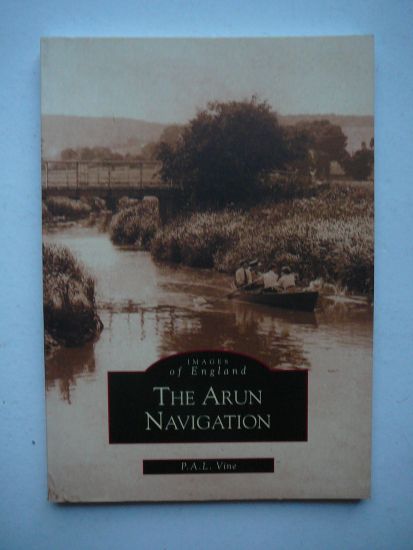
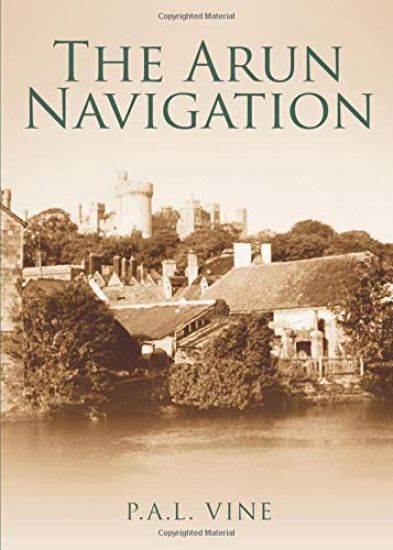
The river Arun rises near Horsham and flows 37 miles to the English Channel at Littlehampton. For many centuries the waterways assumed an important role as one of the main arteries of commerce in Sussex. In use since the time of the Norman Conquest, its navigation was improved by successive landowners during the sixteenth and seventeenth centuries. After the development of Littlehampton Harbour, an Act of Parliament in 1785 enabled the river to be improved to Pallingham, for a canal to be built up to Newbridge and for another canal to cut off the wide sweep of the river by Pulborough. In this last section is to be found the only tunnel to be built in Great Britain which links two parts of a river navigation. Eventually the opening of the Wey & Arun Junction Canal in 1816 allowed barges from the Arun to reach the Thames and the national waterways network, After this link was broken thirty-five years later, the river Arun continued to be used for local traffic until the 1920s. Nowadays tidal waters are confined to pleasure boating. This updated and revised edition covers changes to the navigation over recent years, includes a selection of new illustrations and form a sequel to 'The Wey & Arun Junction Canal'. The Arun Navigation is certain to appeal to those with an interest in waterways, the Sussex countryside and Britain's industrial heritage.

Planet Arun
Humanity's Borderland
2026
pokkari
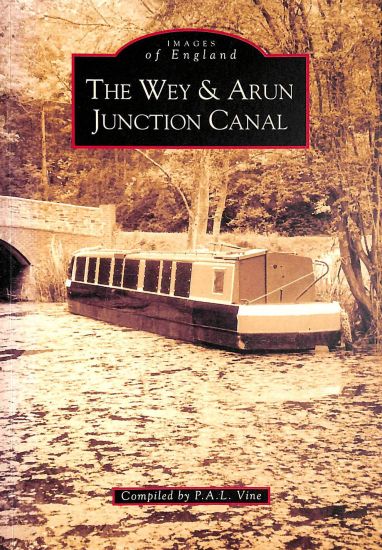
This book is part of the Images of England series, which uses old photographs and archived images to show the history of various local areas in England, through their streets, shops, pubs, and people.
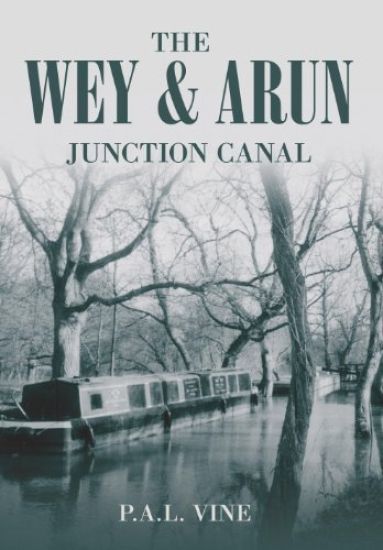
Largely as a result of substantial investment by the 3rd Earl of Egremont, a keen patron of the arts and perhaps the richest man in Britain at the time, the Wey & Arun Junction Canal opened in 1816. To contemporary commentators, it seemed set for success as part of a new navigable route from London to Portsmouth and the Sussex coast. Sadly, though the countryside remained ‘beautiful and picturesque’, the canal, after fifty-five years of modest trading, fell victim to competition from railways and problems with its own water supply. The order for closure came in 1871, and for the best part of a century the Wey & Arun lay abandoned. The derelict state of the canal as it lingered forgotten and crumbling, as well as the attempts being made since 1970 to reinstate it, are vividly evoked here by illustrations from the author’s collection and those of the Wey & Arun Canal Trust.
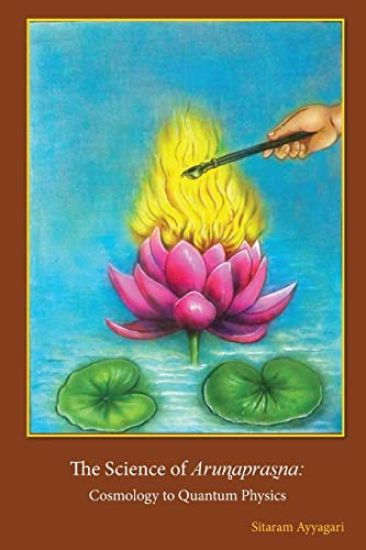
In R̰gved̾a 10.158 Su͆kt̾a, R̰s͚i Caks͚u So̾rya beseeches Su͆rya D̾evat̾a͆ for eyes to correctly see and understand our world. There is no doubt we need that kind of clarity for understanding our beautiful yet bewildering universe, especially when we as observers are interacting intimately with what we are observing. Scientists understand this complexity and are continuously attempting to internalize the external variables in their models, but there is still a vast ground to cover. Like the scientists, Mi͆ma͆˙saka͆s are firmly grounded in physical reality. They do accept the science's Prat̾yaks͚a and Anuma͆na, but when it comes to D̰̾arma, they rely only on their solid exegesis of the Ved̾a and embody it through Ved̾a's mandated ritualistic way of life. In fact, in the discussion on Apu͆rva, the Mi͆ma͆˙saka͆s say that only when Prat̾yaks͚a and Anuma͆na do not show a physical benefit of an action enjoined by the Ved̾a should one ascribe that to Apu͆rva. In this interesting succinct work of practical significance, the author outlines the science of the Ved̾a along those lines. It is essential to note the preposition "of" in the title of the book. The title is "The Science of Arun̻apras̰na: " and not "The Science in Arun̻apras̰na: ." This is not just the view of the Mi͆ma͆˙saka͆s alone. World over most ethnic-religious systems embody this perspective in their own unique way. Deist, nature worshipper, and the father of the American independence movement, Thomas Paine, in one of his most famous works, "The Age of Reason" said, "It is from the study of the true theology that all our knowledge of science is derived, and it is from that knowledge that all the arts have originated." The author's goal in this work is to foster collaboration amongst the Mi͆ma͆˙saka͆s, other Ved̾a scholars, scientists, and engineers to understand the science of Ved̾a for everyone's benefit. In fact, the subject matter is such that it demands this kind of cooperation. It is helpful in this context to quote Ra͆ja͆ R̰t̾uparn̻a, from Maha͆b̰a͆rat̾a 3.7.72.8. R̰t̾uparn̻a, before demonstrating his statistical estimation skills says to Ba͆huka his charioteer, who is none other than great Nala Maha͆ra͆ja. "Sarva: Sarvȧ Na Ja͆na͆t̾i Sarvajn͚o̺ Na͆st̾i Kas̰cana । Ne̾kat̾ra Parinis͚t̰a͆st̾i Jn͚a͆nasya Purus͚e Kacit̾ ।।" Everyone does not know everything. There is no one who knows it all, and so complete knowledge is never established in any one person. This book is an excellent resource for academicians looking for new avenues of research especially considering today's world of interdisciplinary studies. Its lucid style combined with structured presentation makes it a wonderful book for students of all ages from middle schoolers to graduate students. For the lay readers, it sheds clarity on various scientific concepts while offering a deeper understanding of the Ved̾ic rituals. In closing, we remember what A͆ca͆rya Arobind̾o said in one of his great essays, "I believe that Veda to be the foundation of the Sanatan Dharma; I believe it to be the concealed divinity within Hinduism, -but a veil has to be drawn aside, a curtain has to be lifted. I believe it to be knowable and discoverable. I believe the future of India and the world to depend on its discovery and on its application, not to the renunciation of life, but to life in the world and among men." We hope you enjoy this work and it inspires you to research the Ved̾a scientifically.