Being born into poverty and hardship in 1930s London, Matthew’s life was one of relentless struggle. One inadvertent act in defence of his mother would haunt his conscience forever. Matthew’s journey takes him from the poverty of a cold stone granary to the opulence of Mayfair and Kensington Palace Gardens, where he starts a family of his own. Despite working his way to the top of the business world, he remains an outsider to London’s elite. He then realises that that same elite has an ugly underbelly. High society was a hot bed of depravity. Will he correct society’s wrongs? Will the man who never succumbed to expectations be able to challenge his own destiny or will he simply accept the futility of it all?
As a child, Emma develops a talent for equestrian sport. She follows her passion and moves from England to Canada to compete at the highest level. Over time though, her great success pales into insignificance next to the overwhelming suffering that she comes to experience in the most brutal forms of betrayal, rape and violence until eventually, when the opportunity arises, she moves to Belgium with her husband, in the hope of a new start.For a while, normality is restored. Everything appears to be fine - until they come to the realisation that there is a problem emerging within their family. Emma is increasingly troubled and challenged by the worrying traits that her eldest son is developing. She wonders why she encounters the dark side of men repeatedly. The situation worsens until one day, she despairs and reaches for their hunting rifle.It's time for an intervention. Just as suffering can co-exist with triumph, sometimes there is hope in despair. An encounter with Death provides answers that allow Emma to better understand her existence. She comes to understand that her life is just one part of a much larger plan and that things tend to happen for a reason. She also discovers that she is right at the cusp of achieving that much-desired state of existence, equilibrium.
A one-of-a-kind collection of work by one of India's best contemporary poets. Gathering the work of a lifetime, spanning four books of poetry, and including thirty-four new poems, this is the first comprehensive collection of the work of one of India's most influential English language poets to be published in the United States and the United Kingdom. Arvind Krishna Mehrotra's poetry has long been known for its mixing of the commonplace and the strange, the autobiographical and the fabulous, in which the insignificant details of everyday life-whether contemporary or historical-bring larger patterns into focus. Mehrotra's celebrated translations from Indian languages (Prakrit, Hindi, Gujarati, Bengali) take up a third of Collected Poems. Selections from The Absent Traveller and Songs of Kabir are followed by those of Nirala, Vinod Kumar Shukla, Mangalesh Dabral, Pavankumar Jain and Shakti Chattopadhyay. Together they tell the story of Indian poetry over two millennia."
This book provides a unique perspective on Arvind Kejriwal and the Aam Aadmi party (AAP) through the keen observations and first-hand insights of an active AAP volunteer and close personal friend of Kejriwal from his undergraduate days at IIT Kharagpur. They re-connected more than a decade after IIT at UC Berkeley when Kejriwal was on a visit while still actively running his NGO, Parivartan, and have remained in contact ever since. The book captures Kejriwal `s transition from a social activist to becoming the brain behind the India Against corruption movement, to the founding of AAP, its dramatic rise to power, the sudden resignation, and its sweeping return to power in 2015, up until the recent internal power struggle within AAP. The book describes the extensive use of technology by the party with first hand details of how some of the most brilliant minds in the business contributed valuable time, energy and knowhow to the party, entirely on a voluntary basis. It addresses in detail the role of NRIs in AAP, the role of AAP's army of volunteers, and the associated challenges in managing their expectations and streamlining their efforts. The book covers several interesting anecdotes from private meetings in Berkeley, Goa, NY and Dubai that Kejriwal attended with friends, and provides rare insights and explodes popular myths about his leadership, his frequent references to God, and his personality in general. Through the book, the author draws upon his entrepreneurial and management experience to establish parallels between the AAP and happenings in startup companies. Finally, it looks at the aftermath of AAP's most recent power struggle, and the road ahead for AAP and its role in Indian politics.
Pragmatics is concerned with the analysis of what people mean by their utterances than what the words or phrases in those utterances might mean by themselves. This type of study involves the interpretation of what people mean in a particular context and how context influences what is said. The advantage of studying language via pragmatics is that one can talk about people's intended meanings, their assumptions, their purposes or goals and the kinds of actions that they are performing when they speak. Last Man in Tower has finely presented the conflicts between the what should we have and what should not we have. It is a struggle between individual and collective willpower as well as the between principle and greed. This fiction provides the locale of Mumbai and various Indian words and slangs have been used in it skilfully. Mrs. Shakuntala has applied The Speech Act Theory to Arvind Adiga's Last Man in Tower.
An essential introduction to the world's living religions by experts from each tradition -- published in conjunction with the 1993 Parliament of the World's Religions.
Ecosystem-Based Adaptation: Approaches to Sustainable Management of Aquatic Resources presents a close examination of the role of ecosystem-based adaptation in managing river basins, aquifers, flood plains and their vegetation to provide water storage and flood regulation. Furthermore, the book explores improved ecosystem-based services for managing floods, conservation of water and its resources (including watersheds), avoiding water scarcity, and ensuring long-term water security planning, all in the context of sustainable development goals. This book will help scientists pave the way for easy implementation of sustainable development goals, ensuring a secure and sustainable future.
Deliver microservices architecture, step-by-step: from defining business problems through development, deployment, and monitoring Increasingly, organizations are modernizing application development by integrating open source technologies into a holistic architecture for delivering high-quality workloads to the cloud. This is a complete, step-by-step guide to building flexible microservices architecture by leveraging Microsoft Azure cloud services, together with key open source technologies such as Java, Node.JS, .NET Core and Angular. Through a realistic case study project, expert Microsoft engineers Ovais Mehboob Ahmed Khan and Arvind Chandaka guide you through every step of technical implementation required to achieve value: establishing end-to-end infrastructure, developing cloud-native applications, automating deployments, monitoring operations, and more. Microsoft engineers Ovais Mehboob Ahmed Khan and Arvind Chandaka show how to: Define application features and business requirements, and map them onto microservices using modeling techniquesDesign microservices solution architecture that enables high-quality workloadsDevelop an application front-end, and build microservices with open source technologiesLeverage Azure Kubernetes Services for Docker container orchestrationUse various patterns to build reliable and resilient microservicesEnforce microservices app security, and use Azure AD B2C for user authentication/authorizationEstablish an API gateway that provides a unified “front door” to back-end microservicesSet up continuous integration and deployment with Azure DevOpsMonitor microservices with Azure Monitor and Azure Application Insights About This Book For everyone interested in developing microservices, including architects, engineers, and consultants Will help IT professionals build new applications, modernize existing systems, migrate workloads, improve app management, and more.
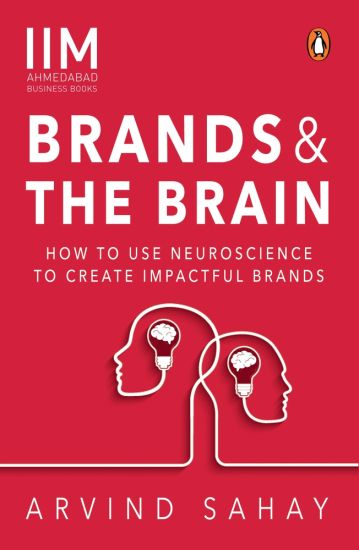
It is evident that some of the most powerful brands are deeply embedded in our unconscious emotions and memories. The purpose of this book is to develop an understanding of the link between the human brain and brand management principles as well as activities. It will educate readers about brain-operating principles and their impact on how humans perceive brands. The book also analyzes how modern brands are created by leveraging brain functioning. In a nutshell, the book explains the indispensable role that the human brain plays in creating, sustaining and rejuvenating brands.
Arguments for protection and against free trade have seen a revival in developed countries such as the United States and Great Britain as well as developing countries such as India. Given the clear benefits trade openness has brought everywhere, this is a surprising development. The benefits of free trade are especially great for emerging market economies. FreeTrade and Prosperityoffers the first full-scale defense of pro-free-trade policies with developing countries at its center. Arvind Panagariya, a professor at Columbia University and former top economic advisor to the government of India, supplies a historically informed analysis of many longstanding but flawed arguments for protection. He starts with an insightful overview of the positive case for free trade, and then closely examines the various contentions of protectionists. One protectionist argument is that "infant" industries need time to grow and become competitive, and thus should be sheltered. Other arguments are that emerging markets are especially prone to coordination failures, they are in need of diversification of their production structures, and they suffer from market imperfections. The panoply of protectionist arguments, including those for import substitution industrialization, fails when subject to close logical and empirical scrutiny. Free trade and outward-oriented policies are preconditions to both sustained rapid growth and poverty alleviation in developing countries. Panagariya provides compelling evidence demonstrating the failures of protectionism and the promise of free trade using detailed case studies of successful countries such as Singapore, Taiwan, South Korea, China and India. Low or declining barriers to free trade and high or rising shares of trade in total income have been key elements in the sustained rapid growth and poverty alleviation in these countries and many others. Free trade is like oxygen: the benefits are ubiquitous and not noticed until they are no longer there. This important book is an essential reminder of the costs of protectionism.