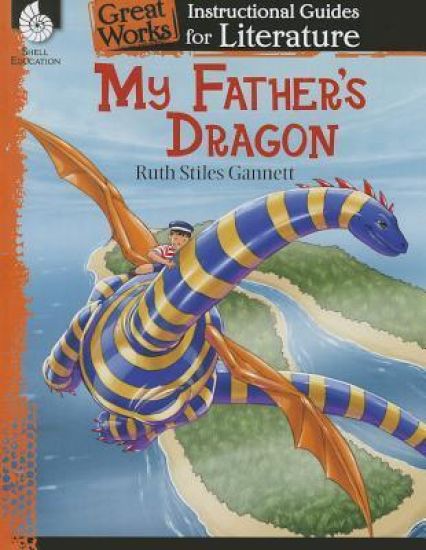
This standards-based instructional guide for literature will support second language learners as they read the novel My Father's Dragon, a captivating story about a boy's attempt to rescue a baby dragon. Using the engaging Spanish activities and lessons, students will learn how to use close reading techniques, respond to text-dependent questions, analyze the text to determine meaning, make summaries, and more. This invaluable resource with instructions in English for teachers is crucial to the support of the rich exploration of literature in today's classrooms.
Ride along on an exciting adventure with Elmer as he attempts to rescue a baby dragon held captive on a mysterious land. Young readers will learn to think on their feet as they travel with Elmer. This instructional guide for literature is the perfect tool to aid students in analyzing and comprehending this engaging story. Appealing and challenging cross-curricular lessons and activities were written to support this well-known story and incorporate research-based literacy skills to help students become thorough readers. These lessons and activities work in conjunction with the text to teach students how to analyze and comprehend story elements in multiple ways, practice close reading and text-based vocabulary, determine meaning through text-dependent questions, and much more.
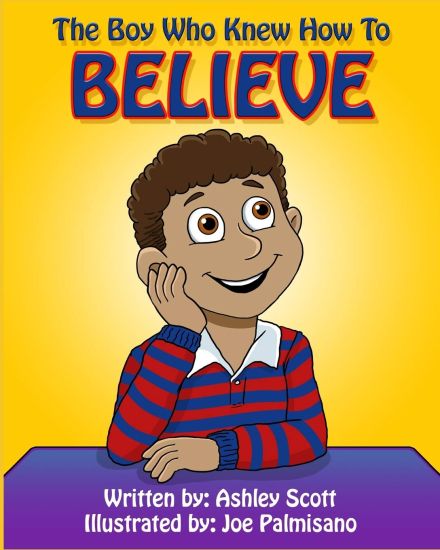
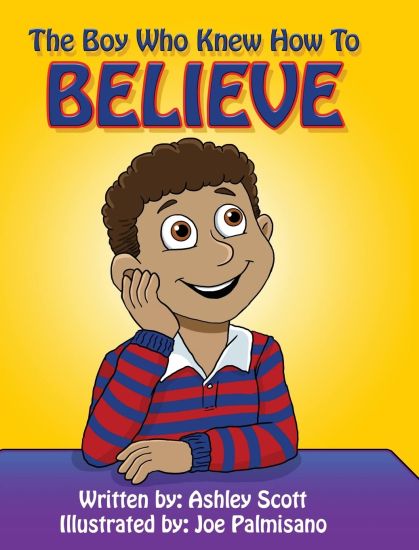
2021 Purple Dragonfly Honorable Mention AwardReaders' Favorite 5 Star Review The Boy Who Knew How to Believe is a story about a determined young boy named Nicky. Nicky has his heart set on receiving something special and strongly feels that he will obtain what he is believing for. He continually thinks about it, talks about it, and acts like he already has what it is that he wants. He becomes somewhat discouraged after a friend tries to place doubt in his mind, but he still carries hope and the belief that he will receive exactly what his heart desires.
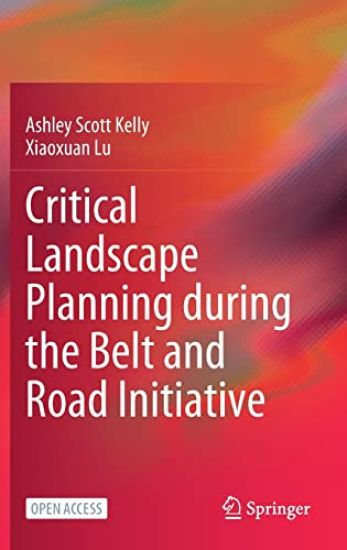
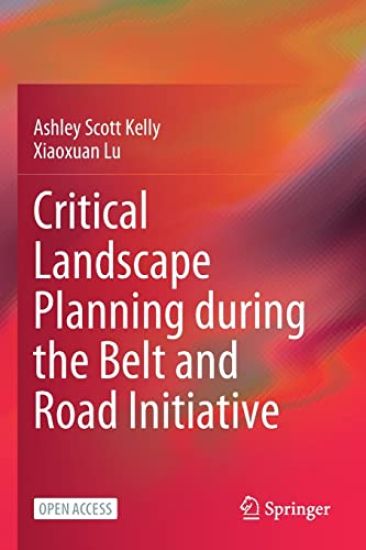
This open access book traces the development of landscapes along the 414-kilometer China–Laos Railway, one of the first infrastructure projects implemented under China’s Belt and Road Initiative (BRI) and which is due for completion at the end of 2021. Written from the perspective of landscape architecture and intended for planners and related professionals engaged in the development and conservation of these landscapes, this book provides history, planning pedagogy and interdisciplinary framing for working alongside the often-opaque planning, design and implementation processes of large-scale infrastructure. It complicates simplistic notions of development and urbanization frequently reproduced in the Laos–China frontier region. Many of the projects and sites investigated in this book are recent “firsts” in Laos: Laos’s first wildlife sanctuary for trafficked endangered species, its first botanical garden and its first planting plan for a community forest. Most often the agents and accomplices of neoliberal development, the planning and design professions, including landscape architecture, have little dialogue with either the mainstream natural sciences or critical social sciences that form the discourse of projects in Laos and comparable contexts. Covering diverse conceptions and issues of development, including cultural and scientific knowledge exchanges between Laos and China, nature tourism, connectivity and new town planning, this book also features nine planning proposals for Laos generated through this research initiative since the railway's groundbreaking in 2016. Each proposal promotes a wider "landscape approach" to development and deploys landscape architecture’s spatial and ecological acumen to synthesize critical development studies with the planner's capacity, if not naive predilection, to intervene on the ground. Ultimately, this book advocates the cautious engagement of the professionally oriented built-environment disciplines, such as regional planning, civil engineering and landscape architecture, with the landscapes of development institutions and environmental NGOs.
This open access book traces the development of landscapes along the 414-kilometer China–Laos Railway, one of the first infrastructure projects implemented under China’s Belt and Road Initiative (BRI) and which is due for completion at the end of 2021. Written from the perspective of landscape architecture and intended for planners and related professionals engaged in the development and conservation of these landscapes, this book provides history, planning pedagogy and interdisciplinary framing for working alongside the often-opaque planning, design and implementation processes of large-scale infrastructure. It complicates simplistic notions of development and urbanization frequently reproduced in the Laos–China frontier region. Many of the projects and sites investigated in this book are recent “firsts” in Laos: Laos’s first wildlife sanctuary for trafficked endangered species, its first botanical garden and its first planting plan for a community forest. Most often the agents and accomplices of neoliberal development, the planning and design professions, including landscape architecture, have little dialogue with either the mainstream natural sciences or critical social sciences that form the discourse of projects in Laos and comparable contexts. Covering diverse conceptions and issues of development, including cultural and scientific knowledge exchanges between Laos and China, nature tourism, connectivity and new town planning, this book also features nine planning proposals for Laos generated through this research initiative since the railway's groundbreaking in 2016. Each proposal promotes a wider "landscape approach" to development and deploys landscape architecture’s spatial and ecological acumen to synthesize critical development studies with the planner's capacity, if not naive predilection, to intervene on the ground. Ultimately, this book advocates the cautious engagement of the professionally oriented built-environment disciplines, such as regional planning, civil engineering and landscape architecture, with the landscapes of development institutions and environmental NGOs.
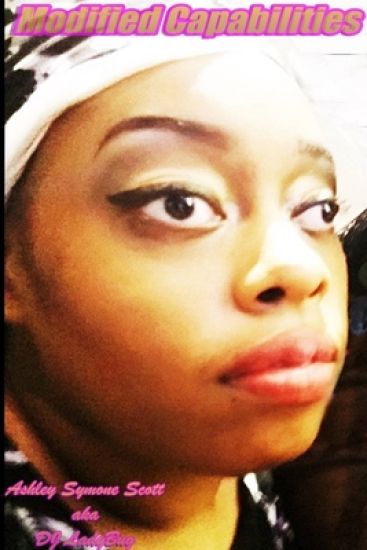
Modified Capabilities is a book that Ashley Scott has written to express her soul, to realize her dreams and goals, and to heal herself. Ashley coined the phrase " MODIFIED CAPABILITIES" to describe herself and others with physical and developmental challenges . Not wishing to be called disabled, Ashley says, "It's all about finding another way."
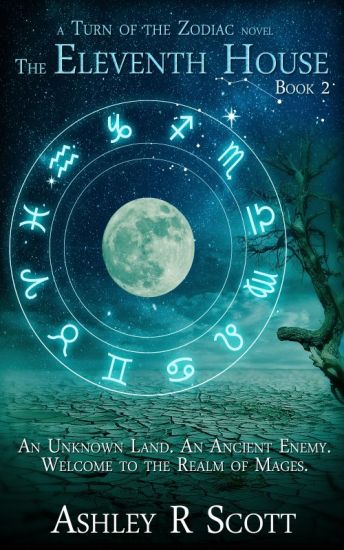
When the mages return to the Earth realm to set a magical tether and begin their rise to power, Ciara finds herself on a quest to a new world. A place she never knew existed.Ciara is still learning to adjust to her new life as a Guardian of the Capricorn birthstone. She's also trying to figure out how to control her magic. But all that will have to wait, because the Zodiacs are sending her to the realm of mages on a mission to break their evil web of magic.The wheel of the Zodiac has shifted into the house of Aquarius. With the help of his Guardian and a small group of friends, they have to break the tether and get back to Earth without being captured. But she discovers that it's much worse than she ever imagined.Can Ciara make it back alive or will she risk the fate of the world falling into the hands of those that would seek to control it?The Eleventh House is the second book in the urban fantasy series, Turn of the Zodiac. If you like thrilling adventure, a mystery that you can't put down and diving into a unique world full of magic and Zodiacs, then this series is for you.
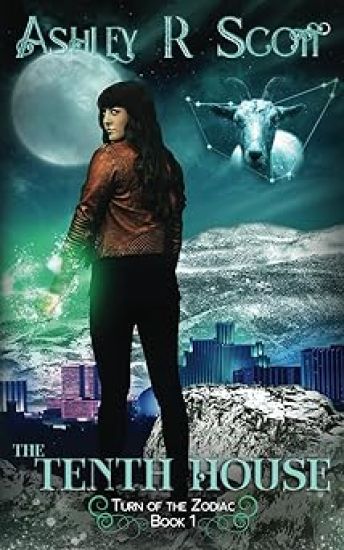
I was perfectly content with running away from a life I no longer loved. A city that haunts me. Until a Zodiac murdered one of my friends in front of me. Taurus has arrived on Earth, and he's come to end the Guardian line. As winter crashes down on Reno, it brings with it an ancient feud, elemental magic and the turn of the Zodiac wheel. That gives me four days to find Taurus's true birthstone and send him back to Polaris before he can succeed in taking over humanity. If I can keep myself and everyone I love alive.
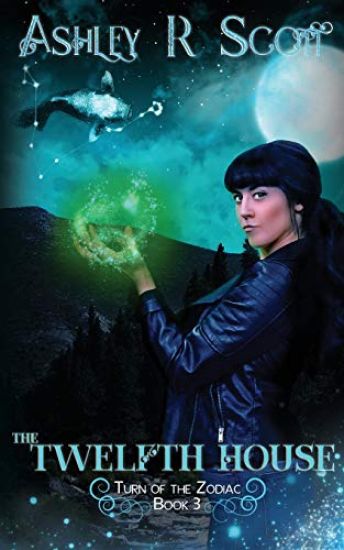
As the mages continue their quest for the birthstones, Ciara must do everything she can to keep that from happening. To make matters worse, a Zodiac is missing. Pisces is hidden by the magic of the mages and he's closer than she knows. Will Ciara find him before the mages disappear with him for good?
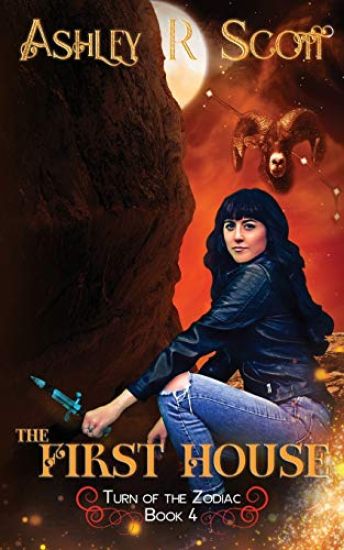
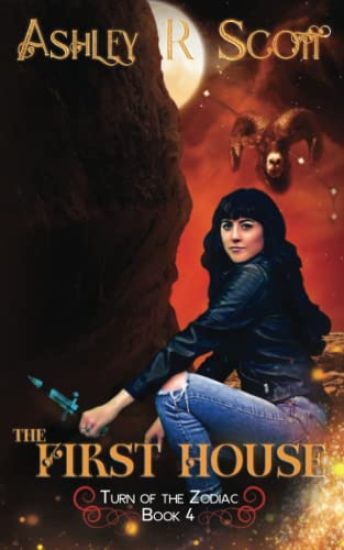
What would you do if the fate of a Zodiac was in your hands? Ciara receives an impossible task: go to the home of the Zodiacs and find the fire that can heal Aries before the mage's magic consumes him. And she has just three days to do it. That's if being on Polaris doesn't kill her first. As the wheel of the Zodiac shifts into Aries, the quest for the fire heats up against the magical creatures willing to kill to keep it out of her hands. And that's not her only problem. The mages have left their mark on Polaris and Ciara finds out just how far they've gone. Can Ciara survive the Zodiac realm and make it back in time to save Aries? The First House is the fourth book in the urban fantasy series, Turn of the Zodiac. If you like mystery, thrilling action that you can't put down and stepping into a unique world with zodiacs and magic, then this series is for you.
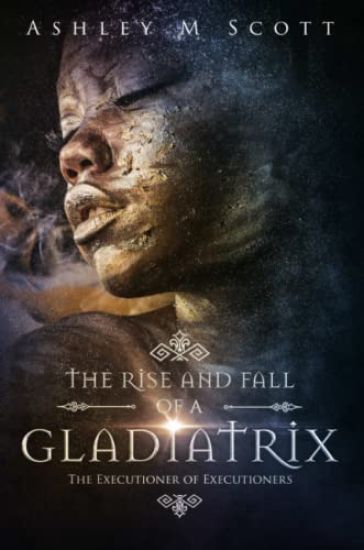
Within the ancient Roman city of Ostia, a bastard trader auctions Nehset, a dangerously spirited prisoner from the heathen Kingdom of Kush. There is no question she is a rare find. Despite being implicated for murder and slated for execution, the woman is quickly purchased by Marcus Vatis, a man with a vendetta and a desire to train her to become a gladiator. Nehset, who is less than thrilled to be enslaved once again, soon learns that she and Vatis have the same enemy: the man who saw to the tragedy that brought her to the port city. As her fate unfolds, Nehset will have to wield the sword in a fight that will either give her the freedom she has always desired or rob her of it forever. The Rise and Fall of a Gladiatrix is an empowering story of hidden strength and perseverance as a slave battles for liberty in ancient Rome.
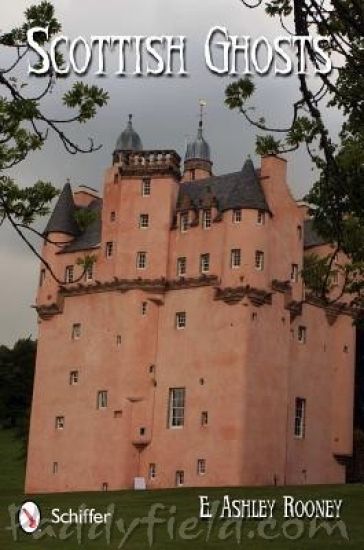
Scotland is one of the most haunted countries in the world. With centuries of battles, seers, curses, and illicit romances, it is no surprise that Scotland has more than its share of ghost stories and legends. Learn about the many haunted castles with their creepy dungeons, secret tunnels, and winding passageways; and see a Green, White, or even an occasional Grey Lady. Follow the ambitious clans, the family feuds, and the constant troubles with the English. Reflect on the rich blend of Celtic myths and legends, and the fairy world. Scotland abounds with stories of kelpies, selkies, and mermaids, and tales of shape-shifting witches, ghosts, and family curses – not to mention its famous lake monster. Spend some time in historic, haunted Scotland – if you dare!
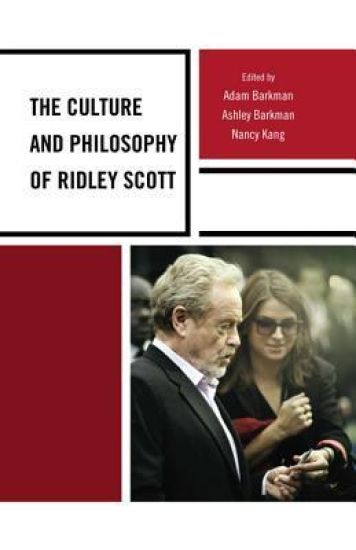
The Culture and Philosophy of Ridley Scott, edited by Adam Barkman, Ashley Barkman, and Nancy Kang, brings together eighteen critical essays that illuminate a nearly comprehensive selection of the director’s feature films from cutting-edge multidisciplinary and comparative perspectives. Chapters examine such signature works as Alien (1979), Blade Runner (1982), Thelma and Louise (1991), Gladiator (2000), Hannibal (2001), Black Hawk Down (2001), and American Gangster (2007). This volume divides the chapters into three major thematic groups: responsibility, remembering, and revision; real, alienated, and ideal lives; and gender, identity, and selfhood. Each section features six discrete essays, each of which forwards an original thesis about the film or films chosen for analysis. Each chapter features close readings of scenes as well as broader discussions that will interest academics, non-specialists, as well as educated readers with an interest in films as visual texts. While recognizing Scott’s undeniable contributions to contemporary popular cinema, the volume does not shy away from honest and well-evidenced critique. Each chapter’s approach correlates with philosophical, literary, or cultural studies perspectives. Using both combined and single-film discussions, the contributors examine such topics as gender roles and feminist theory; philosophical abstractions like ethics, honor, and personal responsibility; historical memory and the challenges of accurately rendering historical events on screen; literary archetypes and generic conventions; race relations and the effect of class difference on character construction; how religion shapes personal and collective values; the role of a constantly changing technological universe; and the schism between individual and group-based power structures. The Culture and Philosophy of Ridley Scott assembles the critical essays of scholars working in the fields of philosophy, literary studies, and cultural studies. An international group, they are based in the United States, Canada, Argentina, Italy, Greece, Korea, the United Kingdom, and New Zealand. The guiding assumption on the part of all the writers is that the filmmaker is the leading determiner of a motion picture’s ethos, artistic vision, and potential for audience engagement. While not discounting the production team (including screenwriters, actors, and cinematographers, among others), auteur theory recognizes the seminal role of the director as the nucleus of the meaning-making process. With Scott an active and prolific presence in the entertainment industry today, the timeliness of this volume is optimal.
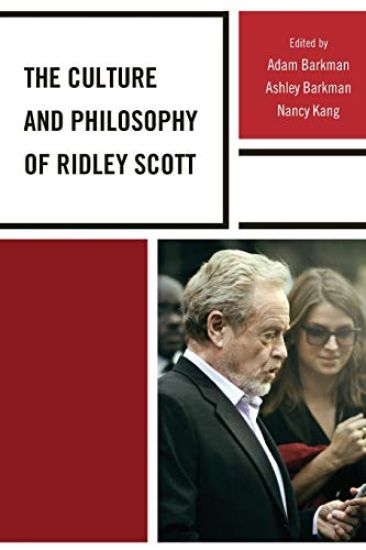
The Culture and Philosophy of Ridley Scott, edited by Adam Barkman, Ashley Barkman, and Nancy Kang, brings together eighteen critical essays that illuminate a nearly comprehensive selection of the director’s feature films from cutting-edge multidisciplinary and comparative perspectives. Chapters examine such signature works as Alien (1979), Blade Runner (1982), Thelma and Louise (1991), Gladiator (2000), Hannibal (2001), Black Hawk Down (2001), and American Gangster (2007). This volume divides the chapters into three major thematic groups: responsibility, remembering, and revision; real, alienated, and ideal lives; and gender, identity, and selfhood. Each section features six discrete essays, each of which forwards an original thesis about the film or films chosen for analysis. Each chapter features close readings of scenes as well as broader discussions that will interest academics, non-specialists, as well as educated readers with an interest in films as visual texts. While recognizing Scott’s undeniable contributions to contemporary popular cinema, the volume does not shy away from honest and well-evidenced critique. Each chapter’s approach correlates with philosophical, literary, or cultural studies perspectives. Using both combined and single-film discussions, the contributors examine such topics as gender roles and feminist theory; philosophical abstractions like ethics, honor, and personal responsibility; historical memory and the challenges of accurately rendering historical events on screen; literary archetypes and generic conventions; race relations and the effect of class difference on character construction; how religion shapes personal and collective values; the role of a constantly changing technological universe; and the schism between individual and group-based power structures. The Culture and Philosophy of Ridley Scott assembles the critical essays of scholars working in the fields of philosophy, literary studies, and cultural studies. An international group, they are based in the United States, Canada, Argentina, Italy, Greece, Korea, the United Kingdom, and New Zealand. The guiding assumption on the part of all the writers is that the filmmaker is the leading determiner of a motion picture’s ethos, artistic vision, and potential for audience engagement. While not discounting the production team (including screenwriters, actors, and cinematographers, among others), auteur theory recognizes the seminal role of the director as the nucleus of the meaning-making process. With Scott an active and prolific presence in the entertainment industry today, the timeliness of this volume is optimal.
1 magical fire. 3 on a deadly quest. 1 Zodiac's life in the balance.What would you do if the fate of a Zodiac was in your hands? Ciara receives an impossible task: go to the home of the Zodiacs and find the fire that can heal Aries before the mage's magic consumes him. And she has just three days to do it. That's if being on Polaris doesn't kill her first. As the wheel of the Zodiac shifts into Aries, the quest for the fire heats up against the magical creatures willing to kill to keep it out of her hands. And that's not her only problem. The mages have left their mark on Polaris and Ciara finds out just how far they've gone. Can Ciara survive the Zodiac realm and make it back in time to save Aries? The First House is the fourth book in the urban fantasy series, Turn of the Zodiac. If you like mystery, thrilling action that you can't put down and stepping into a unique world with zodiacs and magic, then this series is for you.