

Kirjahaku
Etsi kirjoja tekijän nimen, kirjan nimen tai ISBN:n perusteella.
404 tulosta hakusanalla Ashvin Desai


A History of the Present is the first book-length overview of Indian South Africans in the quarter century following the end of apartheid. Based on oral interviews and archival research it threads a narrative of the lives of Indian South Africans that ranges from the working class men and women to the heady heights of the newly minted billionaires; the changes wrought in the fields of religion and gender; opportunities offered on the sporting fields; the search for roots producing local histories that tell of nostalgia, longing and identity; and the links with India and a myriad of transnational organisations. Indians in South Africa appear to be always caught in an infernal contradiction; too traditional, too insular, never fitting in, while also too modern, too mobile. Can we speak of an Indian 'diaspora' in relation to a people divided by migratory experiences, region, religion, language, ethnicity, caste, and economic status? While focusing on Indian South Africans, this study makes critical interventions into several charged political discussions in post-apartheid South Africa, especially the debate over race and identity, while also engaging in discussions of wider intellectual interest, including diaspora, nation, citizenship and race.
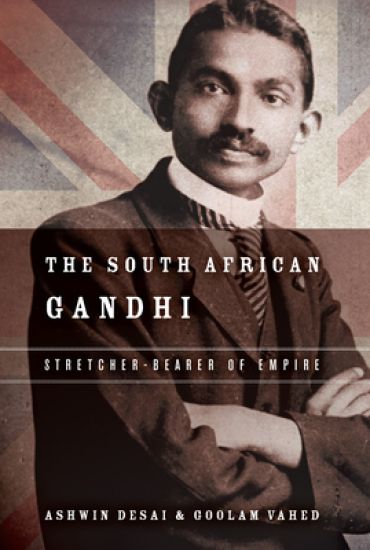
In the pantheon of freedom fighters, Mohandas Karamchand Gandhi has pride of place. His fame and influence extend far beyond India and are nowhere more significant than in South Africa. "India gave us a Mohandas, we gave them a Mahatma," goes a popular South African refrain. Contemporary South African leaders, including Mandela, have consistently lauded him as being part of the epic battle to defeat the racist white regime. The South African Gandhi focuses on Gandhi's first leadership experiences and the complicated man they reveal—a man who actually supported the British Empire. Ashwin Desai and Goolam Vahed unveil a man who, throughout his stay on African soil, stayed true to Empire while showing a disdain for Africans. For Gandhi, whites and Indians were bonded by an Aryan bloodline that had no place for the African. Gandhi's racism was matched by his class prejudice towards the Indian indentured. He persistently claimed that they were ignorant and needed his leadership, and he wrote their resistances and compromises in surviving a brutal labor regime out of history. The South African Gandhi writes the indentured and working class back into history. The authors show that Gandhi never missed an opportunity to show his loyalty to Empire, with a particular penchant for war as a means to do so. He served as an Empire stretcher-bearer in the Boer War while the British occupied South Africa, he demanded guns in the aftermath of the Bhambatha Rebellion, and he toured the villages of India during the First World War as recruiter for the Imperial army. This meticulously researched book punctures the dominant narrative of Gandhi and uncovers an ambiguous figure whose time on African soil was marked by a desire to seek the integration of Indians, minus many basic rights, into the white body politic while simultaneously excluding Africans from his moral compass and political ideals.

In the pantheon of freedom fighters, Mohandas Karamchand Gandhi has pride of place. His fame and influence extend far beyond India and are nowhere more significant than in South Africa. "India gave us a Mohandas, we gave them a Mahatma," goes a popular South African refrain. Contemporary South African leaders, including Mandela, have consistently lauded him as being part of the epic battle to defeat the racist white regime. The South African Gandhi focuses on Gandhi's first leadership experiences and the complicated man they reveal—a man who actually supported the British Empire. Ashwin Desai and Goolam Vahed unveil a man who, throughout his stay on African soil, stayed true to Empire while showing a disdain for Africans. For Gandhi, whites and Indians were bonded by an Aryan bloodline that had no place for the African. Gandhi's racism was matched by his class prejudice towards the Indian indentured. He persistently claimed that they were ignorant and needed his leadership, and he wrote their resistances and compromises in surviving a brutal labor regime out of history. The South African Gandhi writes the indentured and working class back into history. The authors show that Gandhi never missed an opportunity to show his loyalty to Empire, with a particular penchant for war as a means to do so. He served as an Empire stretcher-bearer in the Boer War while the British occupied South Africa, he demanded guns in the aftermath of the Bhambatha Rebellion, and he toured the villages of India during the First World War as recruiter for the Imperial army. This meticulously researched book punctures the dominant narrative of Gandhi and uncovers an ambiguous figure whose time on African soil was marked by a desire to seek the integration of Indians, minus many basic rights, into the white body politic while simultaneously excluding Africans from his moral compass and political ideals.
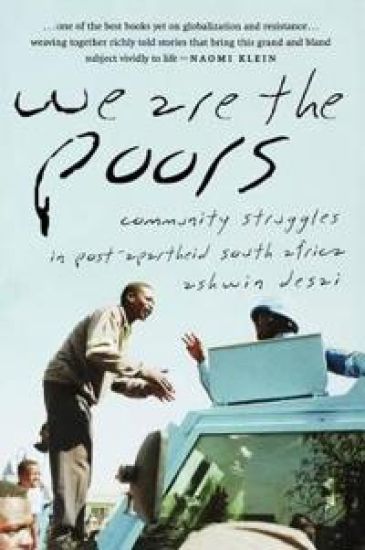
When Nelson Mandela was elected president of South Africa in 1994, freedom-loving people around the world hailed a victory over racial domination. The end of apartheid did not change the basic conditions of the oppressed majority, however. Material inequality has deepened and new forms of solidarity and resistance have emerged in communities that have forged new and dynamic political identities. We Are the Poors follows the growth of the most unexpected of these community movements, beginning in one township of Durban, linking up with community and labor struggles in other parts of the country, and coming together in massive anti-government protests at the time of the UN World Conference Against Racism in 2001. We Are the Poors follows the growth of the most unexpected of these community movements, beginning in one township of Durban, linking up with community and labor struggles in other parts of the country, and coming together in massive anti-government protests at the time of the UN World Conference Against Racism in 2001. It describes from the inside how the downtrodden regain their dignity and create hope for a better future in the face of a neoliberal onslaught, and shows the human faces of the struggle against the corporate model of globalization in a Third World country.

Colour, Class and Community - the Natal Indian Congress, 1971-1994
Ashwin Desai; Goolam Vahed
Wits University Press
2021
pokkari
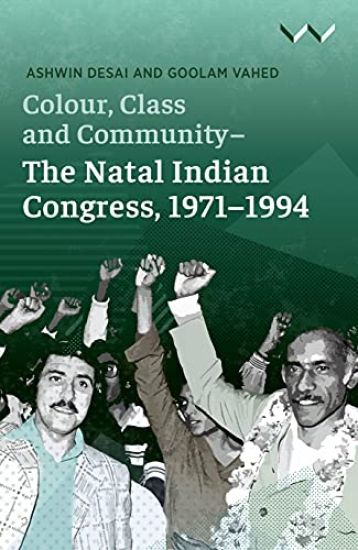
Positions the history and inner workings of the Natal Indian Congress (NIC) against the canvas of the major political developments in South Africa during the 1970s and 1980s up to the first democratic elections in 1994 Following a hiatus in the 1960s, the Natal Indian Congress (NIC) in South Africa was revived in 1971. In fascinating detail, Ashwin Desai and Goolam Vahed bring the inner workings of the NIC to life against the canvas of major political developments in South Africa during the 1970s and 1980s, and up to the first democratic elections in 1994. The NIC was relaunched during the rise of the Black Consciousness Movement, which attracted a following among Indian university students, and whose invocation of Indians as Black led to a major debate about ethnic organisations such as the NIC. This debate persisted in the 1980s with the rise of the United Democratic Front and its commitment to non-racialism. The NIC was central to other major debates of the period, most significantly the lines drawn between boycotting and participating in government-created structures such as the Tri-Cameral Parliament. Despite threats of banning and incarceration, the NIC kept attracting recruits who encouraged the development of community organisations, such as students radicalised by the 1980s education boycotts and civic protests. Colour, Class and Community, The Natal Indian Congress, 1971—1994 details how some members of the NIC played dual roles, as members of a legal organisation and as allies of the African National Congress' underground armed struggle. Drawing on varied sources, including oral interviews, newspaper reports, and minutes of organisational meetings, this in-depth study tells a largely untold history, challenging existing narratives around Indian 'cabalism', and bringing the African and Indian political story into present debates about race, class and nation.
Colour, Class and Community - the Natal Indian Congress, 1971-1994
Ashwin Desai; Goolam Vahed
WITS UNIVERSITY PRESS
2021
sidottu
Positions the history and inner workings of the Natal Indian Congress (NIC) against the canvas of the major political developments in South Africa during the 1970s and 1980s up to the first democratic elections in 1994 Following a hiatus in the 1960s, the Natal Indian Congress (NIC) in South Africa was revived in 1971. In fascinating detail, Ashwin Desai and Goolam Vahed bring the inner workings of the NIC to life against the canvas of major political developments in South Africa during the 1970s and 1980s, and up to the first democratic elections in 1994. The NIC was relaunched during the rise of the Black Consciousness Movement, which attracted a following among Indian university students, and whose invocation of Indians as Black led to a major debate about ethnic organisations such as the NIC. This debate persisted in the 1980s with the rise of the United Democratic Front and its commitment to non-racialism. The NIC was central to other major debates of the period, most significantly the lines drawn between boycotting and participating in government-created structures such as the Tri-Cameral Parliament. Despite threats of banning and incarceration, the NIC kept attracting recruits who encouraged the development of community organisations, such as students radicalised by the 1980s education boycotts and civic protests. Colour, Class and Community, The Natal Indian Congress, 1971—1994 details how some members of the NIC played dual roles, as members of a legal organisation and as allies of the African National Congress' underground armed struggle. Drawing on varied sources, including oral interviews, newspaper reports, and minutes of organisational meetings, this in-depth study tells a largely untold history, challenging existing narratives around Indian 'cabalism', and bringing the African and Indian political story into present debates about race, class and nation.

The prison authorities on Robben Island displayed a remarkable obsession with censoring the news that prisoners could receive of the outside world. Yet, as the pages of this book reveal, political prisoners managed to escape these constraints through literature, travelling to the sites of contemporary revolutionary struggles and to the frontlines of the French and Bolshevik revolutions. Tolstoy jostled with Trotsky, while Shakespeare `winged’ his way over the walls of the single and communal cells. As the prisoners brought their experiences to bear on the text, the works of Shakespeare were mined for their anti-colonial and anti-apartheid inspirations as much as for the power and beauty of their words. The texts also left their mark on the consciousness and memories of liberation fighters, with many prisoners reciting lines from Shakespeare’s plays and sonnets some three decades after their release. Through the memories and biographical accounts written by former political inmates, the book evocatively brings to life the voices of prisoners who furtively copied books at night before they were snatched back by the warders. This book is about those books, about how words can inspire the human spirit, light up the intellect and free the reader to travel the world. But this is not a book simply about the past. By opening the all too quickly forgotten pages of history, the book seeks to ignite once more a reading revolution, to stir up the imagination, in a South Africa whose democratic transition seeks to consolidate power from above while being increasingly contested by insurgent protest from below.

Blacks in Whites
Ashwin Desai; Vishnu Padayachee; Krish Reddy
University of KwaZulu-Natal Press
2003
nidottu
The South African past is rich with stories of courage, initiative and endeavour which have never become history because they are the stories of those excluded from power. This title seeks to transform some of these stories into history: in this case into the history of cricket in Natal, hitherto dominated by the official and privileged. In so doing the title also makes an important intervention in the ever-present crisis of South African cricket, not only as the spirit of the game is undermined by the ethos of global marketing, but as cricket continues to stumble under the burden of its racist past. This burden will only be lifted by those able to see this past for what it.

In the early 1960s, the city of Durban consolidated racially circumscribed group areas with brutal intensity. In the tiny enclave of Wentworth, designated a Coloured area, newly relocated residents made their homes and sought work in the numerous heavy industries that proliferated on its edges. As people built places of worship and newborn friendships reached across fences and staircases, soccer became the game of choice. Rudimentary pitches were marked out, cool drinks staked and the game unfolded with a mixture of delicate touches and bruising tackles. By the early 1970s, Wentworth’s ability to spawn soccer talent, headlined by the glamorous Leeds United, grew into the stuff of legend. Ashwin Desai digs deep into this history, bringing to life those who inspired and played the game when Wentworth was nothing more than a jumble of shacks and whitewashed blocks of flats, watched over by plumes of smoke from local factories that blackened the sky and slowly poisoned the body. The book’s power comes from its ability to keep its focus on soccer while situating the game in the broader social relations, as geography and history, spatial and temporal meld into a beguiling narrative. Page after page reveals writing of haunting power and sensitivity as memories are cajoled from ageing soccer legends and the interior lives of families are illuminated. It is an evocative exemplar of how community history should be brought to life.

In this searing and revealing account of cricket in post-apartheid South Africa, Ashwin Desai deftly tells a story of promise and despair, the story of a new pitch; a quick start full of hope, followed by a steady erosion of the commitments needed to fulfil the promise of a level-playing field. Economic and political compromises contributed to holding back the pulling aside of the covers of race and class privilege. Alongside this, the hurried hollowing out of the ‘politics of cricket’, aided by black administrators assuming the accoutrements of office, saw very little internal challenge to the lack of transformation. In a book where the love of cricket shines through, Ashwin Desai makes a significant contribution to our understanding of the farce that was post-apartheid cricket administration and the characters that played such a role in the charade.
Marxisms in the 21st Century
Bond Patrick; Burawoy Michael; Cock Jacklyn; Desai Ashwin; Glaser Daryl; Mazibuko Jara; Luxton Meg; Trevor Ngwane; Pillay Devan; Satgar Vishwas; Saul John; Ahmed Veriava; Williams Michelle
Wits University Press
2013
nidottu
This is the first publication in the Democratic Marxism Series, which seeks to elaborate the social theorising and politics of Democratic Marxism. Marx’s writings on and ideas about social transformation have figured prominently in the global Left imagination for more than 150 years. At the end of the twentieth century a number of factors seemed to converge to mark the end of Marxism’s influence on the world and, as a result, by the late twentieth century the relevance of Marxism was under question by both the Left (including Marxists) and Right. The decline was relatively short-lived, however, as the 2008 economic crisis brought into sharp relief the catastrophic effects of financialised capitalism and the need to (re)find alternatives. In the second decade of the twenty-first century, the revival of Marxism is finding new sources of inspiration that revolve around four primary factors: the importance of democracy for an emancipatory project; the ecological limits of capitalism; the crisis of global capitalism; and learning lessons from the failures of Marxist-inspired experiments. This is not simply a return to nineteenth and twentieth century understandings of Marxism. Rather, the twenty-first century has seen enormous creativity from movements that seek to overcome the weaknesses of the past by forging fundamentally new approaches to politics that draw inspiration from Marxism along with many other anti-capitalist traditions such as feminism, ecology, anarchism and indigenous traditions. The Marxism of many of these movements is not dogmatic or prescriptive, but rather open, searching, dialectical, humanist, utopian and inspirational. This edited volume introduces some contemporary approaches to Marxism and explores some of the ways in which Marxism has been used in Africa.

The Aspirational Investor: Taming the Markets to Achieve Your Life's Goals
Ashvin B. Chhabra
HARPER BUSINESS
2015
sidottu
The Chief Investment Officer of Merrill Lynch Wealth Management explains why goals, not markets, should be the primary focus of your investment strategy--and offers a practical, innovative framework for making smarter choices about aligning your goals to your investment strategy.Today all of us bear the burden of investing wisely, but too many of us are preoccupied with the wrong priorities--increasing returns at all costs, finding the next star fund manager, or beating "the market." Unfortunately conventional portfolio theory and the grand debates in finance have offered investors only incomplete solutions. What is needed, argues Ashvin B. Chhabra, is a framework that shifts the focus of investment strategy from portfolios and markets to individuals and the objectives that really matter: things like protecting against unexpected financial crises, paying for education or retirement, and financing philanthropy and entrepreneurship.The Aspirational Investor is a practical, innovative approach to managing wealth based on key goals and the careful allocation of risks rather than responding to the whims of the financial markets. Chhabra introduces his "Wealth Allocation Framework," which accommodates the three seemingly incompatible objectives that must underpin every sound wealth management plan: the need for financial security in the face of known and unknowable risks; the need to maintain current living standards over time despite inflation; and the need to pursue aspirational goals for wealth creation.Chhabra reveals some surprising facts about wealth creation, reinterprets the success formulas of investing greats like Warren Buffett, and closes the gap between theory and practice by simplifying our understanding of key asset classes and laying out a concise roadmap for identifying, prioritizing, and quantifying financial goals. Raising the bar for what we should expect from our investment portfolios--and our financial advisors--The Aspirational Investor sets us on a path to more confident and fulfilling financial lives.
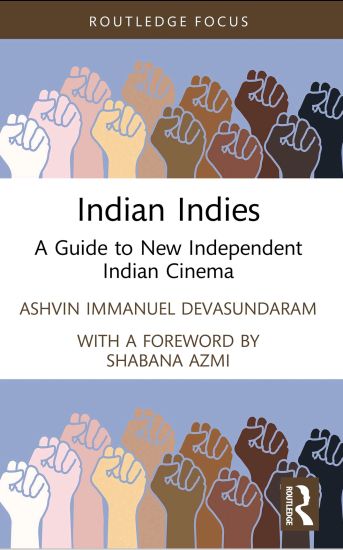
This book offers a concise and cutting-edge repository of essential information on new independent Indian films, which have orchestrated a recent renaissance in the Bollywood-dominated Indian cinema sphere.Spotlighting a specific timeline, from the Indies’ consolidated emergence in 2010 across a decade of their development, the book takes note of recent transformations in the Indian political, economic, cultural and social matrix and the concurrent release of unflinchingly interrogative and radically evocative films that traverse LGBTQ+ issues, female empowerment, caste discrimination, populist politics and religious violence.A combination of essential Indie-specific information and concise case studies makes this a must-have quick guide to the future torchbearers of Indian cinema for scholars, students, early career researchers and a global audience interested in intersecting aspects of cinema, culture, politics and society in contemporary India.
This book offers a concise and cutting-edge repository of essential information on new independent Indian films, which have orchestrated a recent renaissance in the Bollywood-dominated Indian cinema sphere.Spotlighting a specific timeline, from the Indies’ consolidated emergence in 2010 across a decade of their development, the book takes note of recent transformations in the Indian political, economic, cultural and social matrix and the concurrent release of unflinchingly interrogative and radically evocative films that traverse LGBTQ+ issues, female empowerment, caste discrimination, populist politics and religious violence.A combination of essential Indie-specific information and concise case studies makes this a must-have quick guide to the future torchbearers of Indian cinema for scholars, students, early career researchers and a global audience interested in intersecting aspects of cinema, culture, politics and society in contemporary India.
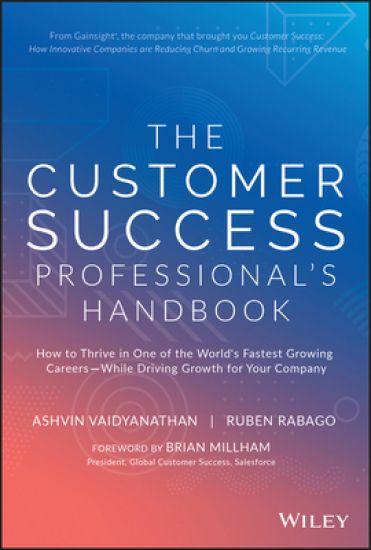
The Customer Success Professional's Handbook
Ashvin Vaidyanathan; Ruben Rabago
John Wiley Sons Inc
2020
sidottu
The definitive “Customer Success Manager How-To-Guide” for the CSM profession from Gainsight, who brought you the market-leading Customer Success The Customer Success Manager has become a critical asset to organizations across the business landscape. As the subscription model has spread from the cloud and SaaS to more sectors of the economy, that pivotal role will only grow in importance. That’s because if you want to compete and thrive in this new environment, you need to put the customer at the center of your strategy. You need to recognize you’re no longer selling just a product. You’re selling an outcome. Customer Success Managers (CSM) are committed to capturing and delivering those outcomes by listening to their customers, understanding their needs, and adapting products and services to drive success. Although several existing resources address the customer success imperative, there is no authoritative instruction manual for the CSM profession—until now. The Customer Success Professional’s Handbook is the definitive reference book for CSMs and similar roles in the field. This practical, first-of-its-kind manual fills a significant gap in professional customer success literature, providing the knowledge every CSM needs to succeed—from the practitioner level all the way to senior leadership. The authors—acknowledged experts in building, training, and managing Customer Success teams—offer real-world guidance and practical advice for aspiring and experienced CSMs alike. The handbook is written by practioners for practioners. An indispensable resource for front-line Customer Success Managers, this much-needed book: Demonstrates how to build, implement, and manage a Customer Success teamHelps new CSMs develop their skills and proficiency to be more employable and grow in their careersProvides clear guidance for managers on how to hire a stellar CSMPresents practical tactics needed to drive revenue growth during renewal, expansion, and customer advocacy opportunitiesExplains proven methods and strategies for mentoring CSMs throughout their careersOffers valuable insights from Gainsight, the Customer Success Company, and the broader customer success community with more than a dozen of the industry’s most respected leaders contributing their perspectives Currently, with over 70,000 open positions, Customer Success Manager in one of the fastest-growing jobs in the world. The Customer Success Professional’s Handbook: How to Thrive in One of the World's Fastest Growing Careers—While Driving Growth For Your Company will prove to be your go-to manual throughout every stage of your CSM career.
This is the first-ever book on the rise of the new wave of independent Indian films that is revolutionising Indian cinema. Contemporary scholarship on Indian cinema so far has focused asymmetrically on Bollywood—India’s dominant cultural export. Reversing this trend, this book provides an in-depth examination of the burgeoning independent Indian film sector. It locates the new 'Indies' as a glocal hybrid film form—global in aesthetic and local in content. They critically engage with a diverse socio-political spectrum of ‘state of the nation’ stories; from farmer suicides, disenfranchised urban youth and migrant workers to monks turned anti-corporation animal rights agitators. This book provides comprehensive analyses of definitive Indie new wave films including Peepli Live (2010), Dhobi Ghat (2010), The Lunchbox (2013) and Ship of Theseus (2013). It explores how subversive Indies, such as polemical postmodern rap-musical Gandu (2010) transgress conventional notions of ‘traditional Indian values’, and collide with state censorship regulations. This timely and pioneering analysis shows how the new Indies have emerged from a middle space between India’s globalising present and traditional past. This book draws on in-depth interviews with directors, actors, academics and members of the Indian censor board, and is essential reading for anyone seeking an insight into a current Indian film phenomenon that could chart the future of Indian cinema.
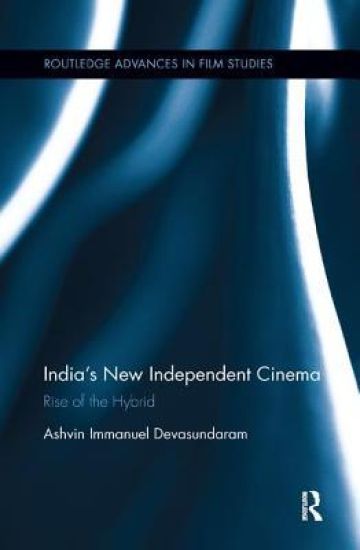
This is the first-ever book on the rise of the new wave of independent Indian films that is revolutionising Indian cinema. Contemporary scholarship on Indian cinema so far has focused asymmetrically on Bollywood—India’s dominant cultural export. Reversing this trend, this book provides an in-depth examination of the burgeoning independent Indian film sector. It locates the new 'Indies' as a glocal hybrid film form—global in aesthetic and local in content. They critically engage with a diverse socio-political spectrum of ‘state of the nation’ stories; from farmer suicides, disenfranchised urban youth and migrant workers to monks turned anti-corporation animal rights agitators. This book provides comprehensive analyses of definitive Indie new wave films including Peepli Live (2010), Dhobi Ghat (2010), The Lunchbox (2013) and Ship of Theseus (2013). It explores how subversive Indies, such as polemical postmodern rap-musical Gandu (2010) transgress conventional notions of ‘traditional Indian values’, and collide with state censorship regulations. This timely and pioneering analysis shows how the new Indies have emerged from a middle space between India’s globalising present and traditional past. This book draws on in-depth interviews with directors, actors, academics and members of the Indian censor board, and is essential reading for anyone seeking an insight into a current Indian film phenomenon that could chart the future of Indian cinema.

The first of its kind on this topic, Mastering Iris Repair: A Video Textbook of Iris Repair and Pupilloplasty Techniques combines practical explanations with dynamic surgical videos and animations, perfect for specialists as well as general ophthalmologists.Together with top surgical experts, Drs. Ashvin Agarwal, Amar Agarwal, and Priya Narang have created an accessible text filled with high-yield information that provides essential coverage of the most recent innovations in iris repair. With appeal for subspecialty areas such as cornea, glaucoma, cataract, and retina, this book identifies abnormalities that are regular challenges for the ocular surgeon. Nearly 200 figures are accompanied by more than 4 hours of new, original instructional video and animation with narration hosted on a companion website.Mastering Iris Repair is divided into 3 sections to provide quick access in a comprehensive resource:Iris repair techniques: Single-pass four-throw pupilloplasty, McCannel and Siepser suturing techniques, different types of sutures, and repair managementSpecial topics: Pinhole pupilloplasty, pupilloplasty in special indications, iris prosthesis, and complications of iris repair and pupilloplastyExtended implications of iris and pupil repair: Iris cosmetics devices, how devices manipulate iris tissue, and intraocular lenses affected by iris repair techniquesAbundantly referenced and supplemented by evidence-based cases, Mastering Iris Repair: A Video Textbook of Iris Repair and Pupilloplasty Techniques enhances surgical potential for all ophthalmologists.