

Kirjahaku
Etsi kirjoja tekijän nimen, kirjan nimen tai ISBN:n perusteella.
1000 tulosta hakusanalla Ashwini Kumar Arya

In dieser Arbeit wurde zun chst die PIFA-Antenne f r den Triple-Band-Betrieb untersucht und im Detail studiert. Des Weiteren wurde das modifizierte PIFA-Antennendesign f r BLE-Kommutationen eines tragbaren Ger ts untersucht. Die vorgeschlagene Antenne wurde auch mit einer m anderf rmigen Dipolantenne als Referenzantenne verglichen, die aufgrund ihrer kompakten Gr e h ufig f r die BLE-Kommunikation verwendet wird. W hrend die Referenzantenne eine geringere Gr e hat, leidet sie unter einer Verschiebung des Frequenzgangs, wenn sie auf dem Gewebe platziert wird. Bei der vorgeschlagenen Antenne hingegen gibt es kaum einen Unterschied, ob sie auf einem Gewebe oder in der Luft platziert wird, da sich unter dem Hauptstrahlungsfeld eine vollst ndige Grundplatte befindet. Die in das tragbare Ger t eingebettete Antenne erm glicht eine zuverl ssige Verbindung f r verschiedene Szenarien von Ausrichtungen und K rperhaltungen des Benutzers.

Antenas PIFA para comunicaciones inalámbricas
Ashwini Kumar Arya
Ediciones Nuestro Conocimiento
2024
nidottu

Antennes PIFA pour les communications sans fil
Ashwini Kumar Arya
Editions Notre Savoir
2024
pokkari
Dans ce travail, l'antenne PIFA pour le fonctionnement trois bandes a d'abord t examin e et tudi e en d tail. En outre, la conception modifi e de l'antenne PIFA a t tudi e pour les commutations BLE d'un dispositif portable. L'antenne propos e a galement t compar e l'antenne dip le m andres comme antenne de r f rence, qui est largement utilis e pour la communication BLE en raison de sa taille compacte. Bien que l'antenne de r f rence soit plus petite, elle souffre d'un d calage de la r ponse en fr quence lorsqu'elle est plac e sur le tissu. En revanche, l'antenne propos e pr sente peu de diff rences, qu'elle soit plac e sur un tissu ou dans l'air, en raison de l'inclusion d'un plan de masse complet sous le patch de rayonnement principal. L'antenne int gr e dans le dispositif portable permet une connexion fiable pour divers sc narios d'orientations et de postures de l'utilisateur.

In questo lavoro, in un primo momento stata studiata e approfondita l'antenna PIFA per il funzionamento a tripla banda. Inoltre, il progetto dell'antenna PIFA modificata stato studiato per le commutazioni BLE di un dispositivo indossabile. L'antenna proposta stata anche confrontata con l'antenna a dipolo a meandro come antenna di riferimento, ampiamente utilizzata per la comunicazione BLE grazie alle sue dimensioni compatte. Sebbene l'antenna di riferimento abbia dimensioni pi ridotte, subisce uno spostamento della risposta in frequenza quando viene posizionata sul tessuto. D'altra parte, l'antenna proposta mostra poche differenze sia che venga posizionata su un tessuto che in aria, grazie all'inclusione di un piano di massa completo sotto il patch di radiazione principale. L'antenna incorporata nel dispositivo indossabile consente una connessione affidabile in vari scenari di orientamento e postura dell'utente.

Neste trabalho, come ou por se investigar e estudar em pormenor a antena PIFA para o funcionamento em banda tripla. Al m disso, foi estudada a conce o de uma antena PIFA modificada para as comuta es BLE de um dispositivo de vestir. A antena proposta foi tamb m comparada com a antena de dipolo mediano como antena de refer ncia, que amplamente utilizada para a comunica o BLE devido ao seu tamanho compacto. Embora a antena de refer ncia tenha um tamanho mais pequeno, sofre uma altera o na resposta em frequ ncia quando colocada no tecido. Por outro lado, a antena proposta apresenta pouca diferen a entre ser colocada num tecido ou no ar, devido inclus o de um plano de terra completo por baixo do patch de radia o principal. A antena incorporada no dispositivo vest vel permite uma liga o fi vel em v rios cen rios de orienta es e posturas do utilizador.

Dilo Me Kae Alfaz Dabe Hote Ek Koshish Un Alfazo Ko Aawaz Dene Ki

The Perspectives Of Corporate Criminal Liability
Ashwini Kumar
LAP Lambert Academic Publishing
2013
pokkari

Library Management is an important task. With the advent of technology, the complex procedure of cataloguing and maintenance of cumbersome files has been replaced by a small box-computer and a few clicks. Similarly, the Internet has brought about a complete change in the field. This work aims to provide an insight into this discipline.



The Katha is mesmerizing to the core. It consists of imagery that has no parallel. It depicts the dialogue between the unlikeliest of protagonists - Yama and Nachiketa. Yama means Death. It also means Emperor. or Time. or very Old Man. or Grandpa. or darkness stillness silence. Simply put Yama means restraint. But what kind of restraint? The restraint that cannot be tempted. The restraint that dares and flattens all temptations is Yama. And it also means time or timeless. Aged or ageless. What of Nachiketa? A young lad. A child of 8 or 9 years. One who has not even experienced teen. Yet one whose mind is crystal clear. Whose mind has not a ripple. Who can think through opacity. Who can navigate through dense fog. Who has a determination that cannot be deflected even an inch.What happens in the dialog? A conversation that probes deep into the human psyche. Is there any end to mental agony? Can the fear, guilt, weakness and deprivation one feels be gotten over? Is there such a thing as Death? What is beyond Death?Kaṭha Upanishad is from the final eight sections of Krishna Yajurveda, from its Kaṭha recension, named after Kaṭha Rishi.-> by Sandhi -> Kathopanishad. It consists of six sections in all, popularly visualized as two flowers each containing three petals that unfold as the aspirant imbibes and progresses.A treasure house for the earnest aspirant. Contains each verse in original Sanskrit, with a Latin transliteration, and expert commentary.And for the Sanskrit enthusiast, Padacheeda of each verse and Anvaya and Vibhakti cases of many verses are given. Uses clear well-spaced Devanagari font.

Upanishads are verses from the Vedas that have been compiled as independent and complete sets. Traditionally the verses in each Veda have been classified as Mantra portion or Brahmana portion. Within the Brahmana portion, a further sub-classification of verses has been done, namely Brahmana-Aranyaka-Upanishad. Upanishad means essential thought or guiding principle. The Mandukya Upanishad is attributed to the Atharva Veda. It gives a mathematical picture of the sacred syllable OM and its relevance to the Awaking, Udreaming and Mmmsleeping states. The Turiya or Transcendental state is described as the amatra or the fourth state, i.e. always available yet rarely discernible. This book explains the crux of the verses in easy to grasp contemporary language. Contains original verse in Sanskrit with a Latin transliteration and an English commentary. For the Sanskrit enthusiast each verse has Padachheda and Anvaya with Vibhakti cases.
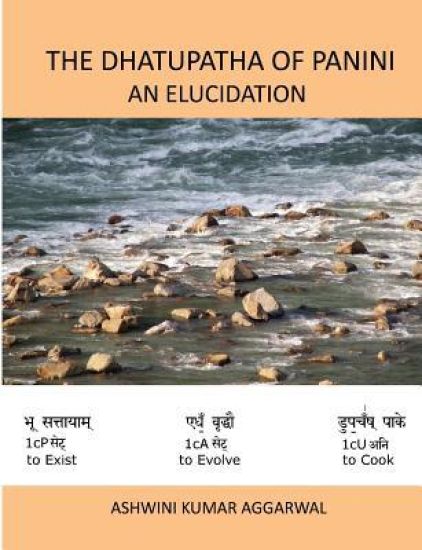
Sanskrit is a language that flows from time immemorial; it originates in natural sounds and finds its way in many spoken languages Today.This book presents the traditional Dhatupatha of Panini in Devanagari script, with a measure of Elucidation. It serves as a handy reference in understanding the Roots of the Language from where Verbs, Nouns and all words are derived.Serious students and Academicians shall find learning Sanskrit enjoyable.The book can very well find its way to Schools and Colleges where Sanskrit is being taught.Its Chanting Section caters to primary learners. The English Meaning Section has a universal appeal and shall benefit any Library. The Short Dhatu Identity shows any Dhatu's characteristics at a glance. The Main Dhatupatha containing Accents and iii/1 Verb Rupas, in the traditional order of Panini, is what the committed scholar really needs.Finally, an Alphabetical Dhatu Index, that is well formatted, enhances the book immensely.

The sweetest nectar is the Bhagavad Gita, Words of enduring wisdom spoken by the Lord himself. "Leave it all to me, O Devout Seeker. Anything and Everything shall be granted, this is my solemn promise." "Be SMILING. Go on with Confidence. May your Heart be Happy. May your cup be full to the brim." The heart of the Gita. Quintessential Wisdom. Lucidly written to give clarity in the workings of the MIND, the SENSES, the MEMORY. A synthesis of KARMA JNANA BHAKTI from this ancient text, that graces the home of every Indian, and is read all over the globe.

Srimad Bhagavad Gita is a Song. It is a song Divine.It is sung by the Lord Himself and His dearest Devotee.Most of us in Bharata love to chant shlokas from the Gita. The mellifluous singing makes the atmosphere come alive. This book gives each of the 700 Bhagavad Gita verses in 4 padas. The pauses are correctly placed, using Sanskrit Grammar rules of sandhi and conjuncts.The Introduction is in English to help one understand the mechanics of Chanting and Grammar. The verses are in beautiful and clear set Devanagari font.This enables one to know where to pause during reading, and to help perfect a serious chanter in his Enunciation. It thus bridges the learning curve and makes proper recital of the Bhagavad Gita an easy task.Chanting correctly helps in many ways, including improvement in memory, confidence and concentration. It also realigns one to be more committed to wisdom.A first of kind book that will deepen the interest in the Gita and appeal to readers of all backgrounds.

We all love to Meditate. We have experienced its fruits, namely, calmness, detachment and serenity. We all love to exercise Self Control. We follow some code of conduct, adhere to some discipline and stick to a value system. Why do we do it? What is the purpose? We observe the discipline because it steers our life on the track of success. Our experience shows there is a meaning to it and we can sense our victories and achievements are the result of such practices. Why not hear what the Lord has to say about it? Why not see how the Divine wisdom fits in with our lifestyle and how we can inculcate just a little bit if we wish to. Using the Bhagavad Gita as a guiding light, and it's 6th Chapter as the basis, this book portrays the wisdom in simple language for the ardent aspirant. The verses are in Devanagari and the commentary is in English. Also a free flowing Hindi translation is provided.
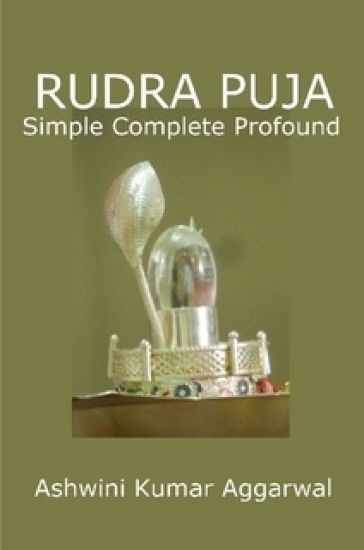
Rudra Puja has been practised in India since the beginning of time. Shiva means Auspicious. Rudra is a synonym for Shiva that means 'Destroyer of Evil'. Puja means that which is born of fullness. The Vedic scriptures hail the Rudram chants as a method to remove sufferings, attain desires and bestow all round prosperity in one's village. This book presents the complete Rudra Puja Abhisheka procedure in Sanskrit using clear Devanagari font. Headings are given in English for the performer to follow the text correctly. The Rudram Verses for NORTH INDIAN Shukla Yajur Veda as well as for SOUTH INDIAN Krishna Yajur Veda are both given in separate sections with correct Vedic Accents. Additionally, the Devanagari Latin Transliteration is given for the South Indian version. A copious Appendix gives the Devanagari Alphabet, Pronunciation Key, and some famous Shiva Shlokas.

Sanskrit is the mother lode of Scriptures. It is the storehouse of all that is benign and worthwhile. Most of us are however not in a position to unlock the power and efficacy of our ancient heritage, being out of touch with this Divine Language. The Srimad Bhagavad Gita is a scripture of enduring and all-encompassing munificence. Anyone in this entire planet has and can benefit from just a few verses from the Bhagavad Gita. This book is an attempt to unlock the Sanskrit in the Gita, using lucid commentary in English and grammatical analysis of verses in Devanagari. The 6th chapter is unique. It is the Yoga of Self-Control. It portrays the Yoga of Meditation i.e. Dhyana. A free-flowing Hindi and English essential meaning of verses makes the book useful for all. Well formatted Dhatu, Word and Pada Indexes make this edition a useful work for scholars and academicians worldwide.

We all love to Meditate. We have experienced its fruits, namely, calmness, detachment and serenity. We all love to exercise Self Control. We follow some code of conduct, adhere to some discipline and stick to a value system. Why do we do it? What is the purpose? We observe the discipline because it steers our life on the track of success. Our experience shows there is a meaning to it and we can sense our victories and achievements are the result of such practices. Why not hear what the Lord has to say about it? Why not see how the Divine wisdom fits in with our lifestyle and how we can inculcate just a little bit if we wish to. Using the Bhagavad Gita as a guiding light, and it's 6th Chapter as the basis, this book portrays the wisdom in simple language for the ardent aspirant. The verses are in Devanagari and the commentary is in English. Additionally a free flowing Hindi and English translation is provided. Proper font choice and spacing make the book a delight to read.