Exiles have long been transformative actors in their homelands: they foment revolution, sustain dissent, and work to create renewed political institutions and identities back home. Ongoing waves of migration ensure that they will continue to play these vital roles. Rather than focus on what exiles mean for the countries they enter--a perspective that often treats them as passive victims--The Ethics of Exile recognises their political and moral agency, and explores their rich and vital relationship to the communities they have left. It offers a rare view of the other side of the migration story. Engaging with a series of case studies, this book identifies the responsibilities and rights exiles have and the important roles they play in homeland politics. It argues that exile politics performs two functions: it can correct defective political institutions back home, and it can counter asymmetries of voice and power abroad. In short, exiles can act both as a linchpin and a buffer between political communities in crisis and the international actors who seek to, variously, aid and exploit them. When we think about the duties we owe to those forced to leave their homes, we should consider how to enable rather than thwart these roles.
Is the caste system disappearing? Are traditional hierarchies being replaced by competing equalities? Do globalization and liberalization automatically result in diminishing disparities? Are modern labour markets intrinsically meritocratic and efficient? Challenging the dominant discourse and demolishing various myths, this book provides answers to these and other critical questions on caste in its contemporary avatar. Linking the economics of caste with its politics, sociology, and history, this innovative book provides a stimulating assessment of continuities and changes in caste disparities over the last two decades. Deshpande uses rich empirical data to uncover how contemporary, formal, urban sector labour markets reflect a deep awareness of caste, religious, gender, and class cleavages. She convincingly argues that discrimination is neither a relic of the past nor is it confined to rural areas, but is very much a modern, formal sector phenomenon. This insightful book, with a new introduction to the paperback edition, is an important step towards a multidisciplinary dialogue for understanding (and mitigating) inequalities based on birth and descent.
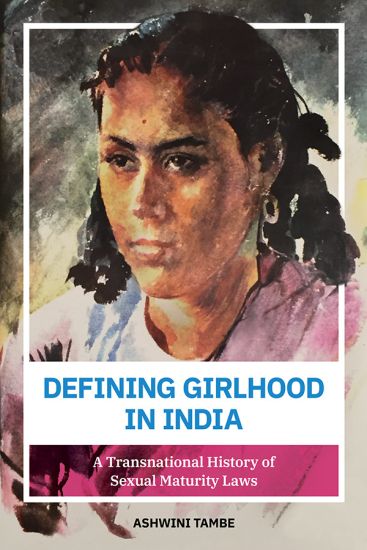
At what age do girls gain the maturity to make sexual choices? This question provokes especially vexed debates in India, where early marriage is a widespread practice. India has served as a focal problem site in NGO campaigns and intergovernmental conferences setting age standards for sexual maturity. Over the last century, the country shifted the legal age of marriage from twelve, among the lowest in the world, to eighteen, at the high end of the global spectrum. Ashwini Tambe illuminates the ideas that shaped such shifts: how the concept of adolescence as a sheltered phase led to delaying both marriage and legal adulthood; how the imperative of population control influenced laws on marriage age; and how imperial moral hierarchies between nations provoked defensive postures within India. Tambe's transnational feminist approach to legal history shows how intergovernmental debates influenced Indian laws and how expert discourses in India changed UN terminology about girls. Ultimately, the well-meaning focus on child marriage became tethered less to the well-being of girls themselves and more to parents' interests, population control targets, and the preservation of national reputation.
At what age do girls gain the maturity to make sexual choices? This question provokes especially vexed debates in India, where early marriage is a widespread practice. India has served as a focal problem site in NGO campaigns and intergovernmental conferences setting age standards for sexual maturity. Over the last century, the country shifted the legal age of marriage from twelve, among the lowest in the world, to eighteen, at the high end of the global spectrum. Ashwini Tambe illuminates the ideas that shaped such shifts: how the concept of adolescence as a sheltered phase led to delaying both marriage and legal adulthood; how the imperative of population control influenced laws on marriage age; and how imperial moral hierarchies between nations provoked defensive postures within India. Tambe's transnational feminist approach to legal history shows how intergovernmental debates influenced Indian laws and how expert discourses in India changed UN terminology about girls. Ultimately, the well-meaning focus on child marriage became tethered less to the well-being of girls themselves and more to parents' interests, population control targets, and the preservation of national reputation.
This issue provides a glimpse into how pain can be assessed and managed by several medical disciplines and approaches. It covers classical and conventional techniques as well as innovative techniques.
Across the nineteenth and twentieth centuries, legislators in Bombay passed a series of repetitive laws seeking to control prostitution. During the same time, Bombay’s sex industry grew vast in scale. Ashwini Tambe explores why these remarkably similar laws failed to achieve their goal and questions the actual purpose of such lawmaking. Against the backdrop of the industrial growth of Bombay, Codes of Misconduct examines the relationship between lawmaking, law enforcement, and sexual commerce. Ashwini Tambe challenges linear readings of how laws create effects and demonstrates that the regulation and criminalization of prostitution were not contrasting approaches to prostitution but different modes of state coercion. By analyzing legal prohibitions as productive forces, she also probes the pornographic imagination of the colonial state, showing how regulations made sexual commerce more visible but rendered the prostitute silent.Codes of Misconduct engages with debates on state control of sex work and traces how a colonial legacy influences contemporary efforts to contain the spread of HIV and decriminalize sex workers in India today. In doing so, Tambe’s work not only adds to our understanding of empire, sexuality, and the law, it also sheds new light on the long history of Bombay’s transnational links and the social worlds of its underclasses.
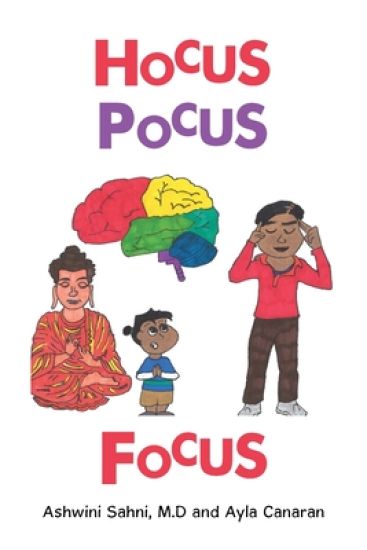
The authors created this book to inspire young readers and to remind them that excellence in life is achieved when we wake up the sleeping giant within each of us by overcoming our own weaknesses and lower tendencies. Mastery over one s own shortcoming s is the real victory that leads to success in the world
The advent of modern technology and electronic gadgets has greatly enhanced our experience of life, while making us slaves of instant gratification. The authors in the book attempt to remind young readers that success in any field requires love for the subject no doubt; but no significant achievement can be accomplished in this world without the ability to focus, persist and persevere.
This comprehensive resource skillfully consolidates crystal engineering, the design of organic solids, and supramolecular synthons (i.e., structural hydrogen bond units) to achieve desired pharmaceutical properties, including solubility, dissolution, bioavailability, permeability, particle size, tableting, hydration, and mechanical strength. Covering 30 years of crystal engineering developments and pharmaceutical applications, this book will be a single and complete resource for supramolecular and structural chemists, the crystal engineering community, pharmaceutical scientists, and industrial researchers.Key FeaturesCovers the fundamentals of crystal engineering and supramolecular synthons.Details the challenges of low solubility and low permeability facing oral drug formulations.Explains how heterosynthons provide a rational approach to address and implement solutions.Provides case studies from academic and industrial labs to walk the reader through the actual steps.Explores developments in the scale up and manufacture of crystal forms in pharmaceutical industry.
This book provides a practical platform to the readers for facile preparation of various forms of carbon in its nano-format, investigates their structure–property relationship, and finally, realizes them for a variety of applications taking the route of application engineering. It covers the preparation and evaluation of nanocarbons, variety of carbon nanotubes, graphene, graphite, additively manufactured 3D carbon fibres, their properties, and various factors associated with them. A summary and outlook of the nanocarbon field is included in the appendices. Features: Presents comprehensive information on nanocarbon synthesis and properties and some specific applications Covers the growth of carbon nanoparticles, nanotubes, ribbons, graphene, graphene derivatives, porous/spongy phases, graphite, and 3D carbon fabrics Documents a large variety of characterizations and evaluations on the nature of growth causing effect on structure properties Contains dedicated chapters on miniaturized, flat, and 2D devices Discusses a variety of applications from military to public domains, including prevalent topics related to carbon.This book is aimed at researchers and graduate students in materials science and materials engineering, and physics.