Kirjojen hintavertailu. Mukana 11 244 527 kirjaa ja 12 kauppaa.

Kirjahaku

Etsi kirjoja tekijän nimen, kirjan nimen tai ISBN:n perusteella.

817 tulosta hakusanalla Athanasius Kircher

Athanasius Kircher
First published in 2004.Athanasius Kircher (1602-1680) -- German Jesuit, occultist, polymath - was one of most curious figures in the history of science. He dabbled in all the mysteries of his time: the heavenly bodies, sound amplification, museology, botany, Asian languages, the pyramids of Egypt -- almost anything incompletely understood. Kircher coined the term electromagnetism, printed Sanskrit for the first time in a Western book, and built a famous museum collection. His wild, beautifully illustrated books are sometimes visionary, frequently wrong, and yet compelling documents in the history of ideas. They are being rediscovered in our own time. This volume contains new essays on Kircher and his world by leading historians and historians of science, including Stephen Jay Gould, Ingrid Rowland, Anthony Grafton, Daniel Stoltzenberg, Paula Findlen, and Barbara Stafford.-
Athanasius Kircher
First published in 2004.Athanasius Kircher (1602-1680) -- German Jesuit, occultist, polymath - was one of most curious figures in the history of science. He dabbled in all the mysteries of his time: the heavenly bodies, sound amplification, museology, botany, Asian languages, the pyramids of Egypt -- almost anything incompletely understood. Kircher coined the term electromagnetism, printed Sanskrit for the first time in a Western book, and built a famous museum collection. His wild, beautifully illustrated books are sometimes visionary, frequently wrong, and yet compelling documents in the history of ideas. They are being rediscovered in our own time. This volume contains new essays on Kircher and his world by leading historians and historians of science, including Stephen Jay Gould, Ingrid Rowland, Anthony Grafton, Daniel Stoltzenberg, Paula Findlen, and Barbara Stafford.-
Athanasius Kircher's Theatre of the World

Athanasius Kircher's Theatre of the World

Joscelyn Godwin

Thames Hudson Ltd
2015
nidottu
Athanasius Kircher (1602–80) was acknowledged to be the most learned man of his age. By profession a Jesuit priest, he made himself an authority on every subject under (and above) the sun and published the results of his researches in over thirty lavishly illustrated volumes in Latin. His museum in Rome was famous and visited by everybody in the world of learning. Inevitably, his work has been superseded in most areas of study, but he remains a key figure in the history of ideas and in recent years there has been a revival of interest, in which Joscelyn Godwin has played a leading role. But while every other aspect of his thought has been studied, the fascinating engravings with which he illustrated his ideas have been largely ignored. This book fills that gap. It is divided into 15 chapters grouped by the engravings’ subject; these illustrations reveal his singular mind and the way he was drawn to mysticism and magic.
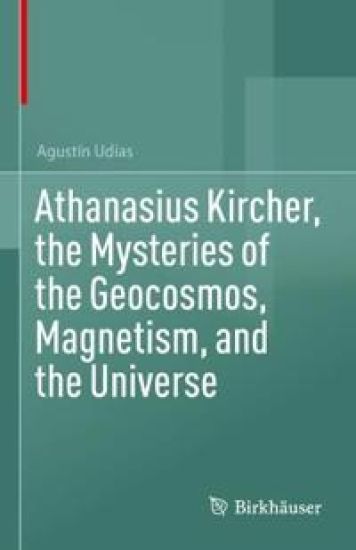
Athanasius Kircher, the Mysteries of the Geocosmos, Magnetism, and the Universe
Athanasius Kircher, the eminent 17th-century German Jesuit professor of mathematics at the Roman College emerges as a captivating figure within the pages of this monograph by Agustín Udías. Aptly deemed 'the man who knew everything,' Kircher's thirty-two comprehensive works, spanning an array of subjects, provide a unique lens into his visionary perspectives. This book delves into three selected works where Kircher unveils his conceptualization of the Earth, termed the 'Geocosmos,' treated magnetism as a cosmic and spiritual force, and embarks on a cosmic exploration from Earth to the stars. From his groundbreaking speculations on the Earth's interior, attributing earthquakes and volcanoes to intricate channels of air, water, and fire, to his cosmic journey accompanied by the ethereal spirit Cosmiel, Kircher's enduring allure persists. Despite variance from contemporary knowledge, situated at the beginning of modern science, Kircher's proposals of the structure of the Earth’s interior, cosmic magnetic theories, and space journey to the stars offer a compelling glimpse into the intellectual landscape of a bygone era, making this book an essential exploration for scholars seeking a nuanced understanding of Kircher's profound influence.
Athanasius Kircher, the Mysteries of the Geocosmos, Magnetism, and the Universe
Athanasius Kircher, the eminent 17th-century German Jesuit professor of mathematics at the Roman College emerges as a captivating figure within the pages of this monograph by Agustín Udías. Aptly deemed 'the man who knew everything,' Kircher's thirty-two comprehensive works, spanning an array of subjects, provide a unique lens into his visionary perspectives. This book delves into three selected works where Kircher unveils his conceptualization of the Earth, termed the 'Geocosmos,' treated magnetism as a cosmic and spiritual force, and embarks on a cosmic exploration from Earth to the stars. From his groundbreaking speculations on the Earth's interior, attributing earthquakes and volcanoes to intricate channels of air, water, and fire, to his cosmic journey accompanied by the ethereal spirit Cosmiel, Kircher's enduring allure persists. Despite variance from contemporary knowledge, situated at the beginning of modern science, Kircher's proposals of the structure of the Earth’s interior, cosmic magnetic theories, and space journey to the stars offer a compelling glimpse into the intellectual landscape of a bygone era, making this book an essential exploration for scholars seeking a nuanced understanding of Kircher's profound influence.
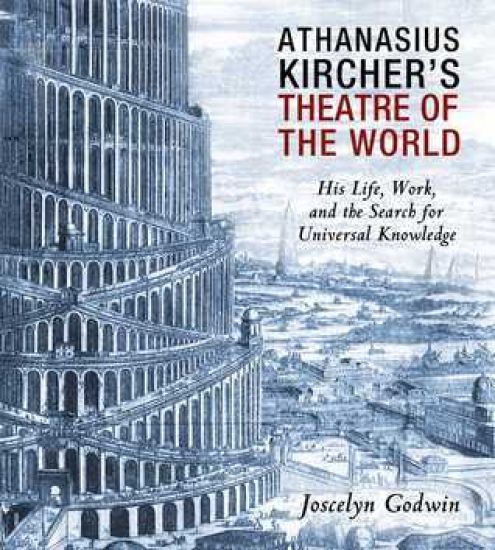
Athanasius Kircher's Theatre of the World: His Life, Work, and the Search for Universal Knowledge
A major study of both the written and pictorial work of a neglected genius whose breadth of interest made him the last Renaissance man - Fully examines every area of Kircher's wide field of study and accomplishments - Magnificently illustrated with stunning engravings from Kircher's work Jesuit, linguist, archaeologist, and exceptional scholar, Athanasius Kircher (1602-1680) was the last true Renaissance man. To Kircher the entire world was a glorious manifestation of God. His exploration was both a scientific quest and a religious experience. Credited with being the first Egyptologist, his works on Egyptology, music, optics, magnetism, geology, and comparative religion were the definitive texts of their time--and yet they represent only a part of his vast range of knowledge. A Christian Hermeticist in the style of Marsilio Ficino and Pico della Mirandola, his work also examined alchemy, the Kabbalah, and the Egyptian mystery tradition exemplified by Hermes Trismegistus. The Hermetic cast of Kircher's thought, which was foreign to the concerns of those propelling the Age of Reason, coupled with the breadth of his interests, caused many of his contributions to be widely overlooked--an oversight now masterfully rectified by Joscelyn Godwin. It has been said that Kircher could think only in images. The stunning engravings that are a distinguishing feature of his work are included here so we may fully appreciate and see for ourselves the life work, philosophy, and achievements of "the last man who knew everything."
L'Autobiographie d'Athanasius Kircher

L'Autobiographie d'Athanasius Kircher

Giunia Totaro

Verlag Peter Lang
2009
nidottu
Athanasius Kircher (1601/2-1680) fut l'un des derniers polygraphes du monde occidental. En depit des avancements des dernieres decennies, les etudes sur ce savant souffrent encore d'un retard accumule il y a plus qu'un siecle; une lacune majeure concerne son autobiographie (Vita, Augsbourg 1684). Ce travail se propose d'etudier cet ouvrage en adoptant une approche philologique, afin de parvenir a une analyse contextualisee de ses contenus. Pour la premiere fois, le texte original latin de la Vita est integralement publie, amende et traduit en francais et en italien. Une confrontation directe est instituee entre les elements essentiels de la biographie historique de Kircher (prealablement reconstruits grace aux sources manuscrites et a la litterature secondaire) et le recit autobiographique. Les donnees tirees de l'exegese du texte sont ensuite employees pour aborder d'un nouveau point de vue certains lieux de la biographie de Kircher qui ont toujours fait l'objet de descriptions divergentes de la part des critiques. De meme, les decalages entre le texte de la Vita et les faits historiques averes sont employes comme point de depart pour un questionnement des materiels qui permet de mettre en evidence un remaniement volontaire et conscient des donnees de la part de Kircher.
The Stars of Galileo Galilei and the Universal Knowledge of Athanasius Kircher

The Stars of Galileo Galilei and the Universal Knowledge of Athanasius Kircher

Roberto Buonanno

Springer International Publishing AG
2014
sidottu
In this fascinating book, the author traces the careers, ideas, discoveries, and inventions of two renowned scientists, Athanasius Kircher and Galileo Galilei, one a Jesuit, the other a sincere man of faith whose relations with the Jesuits deteriorated badly. The Author documents Kircher’s often intuitive work in many areas, including translating the hieroglyphs, developing sundials, and inventing the magic lantern, and explains how Kircher was a forerunner of Darwin in suggesting that animal species evolve. Galileo’s work on scales, telescopes, and sun spots is mapped and discussed, and care is taken to place his discoveries within their cultural environment. While Galileo is without doubt the “winner” in the comparison with Kircher, the latter achieved extraordinary insights by unconventional means. For all Galileo’s fine work, the author believes that scientists do need to regain the power of dreaming, vindicating Kirchner’s view.
The Stars of Galileo Galilei and the Universal Knowledge of Athanasius Kircher

The Stars of Galileo Galilei and the Universal Knowledge of Athanasius Kircher

Roberto Buonanno

Springer International Publishing AG
2016
nidottu
In this fascinating book, the author traces the careers, ideas, discoveries, and inventions of two renowned scientists, Athanasius Kircher and Galileo Galilei, one a Jesuit, the other a sincere man of faith whose relations with the Jesuits deteriorated badly. The Author documents Kircher’s often intuitive work in many areas, including translating the hieroglyphs, developing sundials, and inventing the magic lantern, and explains how Kircher was a forerunner of Darwin in suggesting that animal species evolve. Galileo’s work on scales, telescopes, and sun spots is mapped and discussed, and care is taken to place his discoveries within their cultural environment. While Galileo is without doubt the “winner” in the comparison with Kircher, the latter achieved extraordinary insights by unconventional means. For all Galileo’s fine work, the author believes that scientists do need to regain the power of dreaming, vindicating Kirchner’s view.