No Text This standard text has stood the test of time, and is still in demand, 15 years after its first publication. It shows what works to help people identify what is wrong in their lives and how they can bring about change. Social and community workers, teachers, youth workers, community nurses, and workers in faith-related settings helped develop the approach and will be keenly interested in the ideas contained here. ... a most important book which should become required reading for intended and experienced groupworkers alike. ... it describes an approach to groupwork developed and refined in practice and challenges much traditional thinking ... this practice paradigm is firmly rooted in an analysis of oppression, power and change and in clearly articulated values which inform a commitment to empowerment, anti-oppressive methods of work and social change. Issues in Social Work Education
From three leading authorities in the field, this re-visit to a classic text demonstrates how groupwork can be used as a flexible tool for service user empowerment and participation across a range of contexts. Walking the reader through each stage in group formation and evolution, it is an essential text for health and social care professionals.
This book explodes the myths concerning domestic violence and explores how the responses of social workers and probation officers to the people involved need to be far better coordinated and more effective.
`The research methodology and the problems encountered when studying a subject such as domestic violence, coupled with the ethical problems of researching with children, are discussed at length in the book. This gives a good insight into the intricacies of conducting such a research study. The research looked not only at children who were known to have direct contact with domestic violence, but also what children in general thought and felt about domestic violence. The presentation of the findings, both in tabular and narrative form, was well presented' - Accident and Emergency Nursing Journal `This book offers accessible and interesting reading. It is well written as one would expect from these authors.... There are a lot of pointers for the way forward in terms of both policy and practice. This is likely to become a seminal text' - Research Policy and Planning 'This is a useful and challenging read for all of us who seek to work effectively and ethically in this complex area of practice' - Professional Social Work `Just looking at the authors of this book tells the reader that they are about to embark on a pioneering piece of academic research... a comprehensive and authoritative piece of work' - Domestic Abuse Quarterly `A vital tool for all those working with children' - ChildRight 'Written in a lucid style and is easy to read… it is essential reading for all students in social work undergraduate courses and also in post-qualifying courses on child welfare and protection. In addition professionals who are directly working in the area of child protection, schools and criminal justice settings would find this book informative and useful in understanding what children and young people want, and need, in relation to living in domestic violence situations' - Child and Family Social Work 'This book is powerfully written and is essential reading for professional working with and supporting abused women and their children. Its groundbreaking focus on children's experiences adds much to our understanding of the complexities of domestic violence' - Journal of Family Studies 'A treasure-chest of rich, diverse and powerful extracts from children and young people… in particular the material presented on different coping strategies used by children who have experienced domestic violence is an important contribution to an area about which very little is known' - Adoption and Fostering Journal How do children who live with domestic violence cope? How do they make sense of their experiences? Do they receive the right sort of help from formal and informal sources? Drawing on the newest research designed to hear the voices of children and young people, this important book examines children's experiences and perspectives on living with domestic violence. The authors explore: - the effect of domestic violence on children - what children say would help them most in coping with domestic violence - the advice children would offer other children who find themselves in similar circumstances, their mothers and the helping professions. This accessible book written for students, their teachers, researchers and all those working with children - across social work, health, child psychology and psychiatry, the law and education - will provide a vital insight into children's own perspectives on domestic violence.
`The research methodology and the problems encountered when studying a subject such as domestic violence, coupled with the ethical problems of researching with children, are discussed at length in the book. This gives a good insight into the intricacies of conducting such a research study. The research looked not only at children who were known to have direct contact with domestic violence, but also what children in general thought and felt about domestic violence. The presentation of the findings, both in tabular and narrative form, was well presented' - Accident and Emergency Nursing Journal `This book offers accessible and interesting reading. It is well written as one would expect from these authors.... There are a lot of pointers for the way forward in terms of both policy and practice. This is likely to become a seminal text' - Research Policy and Planning 'This is a useful and challenging read for all of us who seek to work effectively and ethically in this complex area of practice' - Professional Social Work `Just looking at the authors of this book tells the reader that they are about to embark on a pioneering piece of academic research... a comprehensive and authoritative piece of work' - Domestic Abuse Quarterly `A vital tool for all those working with children' - ChildRight 'Written in a lucid style and is easy to read… it is essential reading for all students in social work undergraduate courses and also in post-qualifying courses on child welfare and protection. In addition professionals who are directly working in the area of child protection, schools and criminal justice settings would find this book informative and useful in understanding what children and young people want, and need, in relation to living in domestic violence situations' - Child and Family Social Work 'This book is powerfully written and is essential reading for professional working with and supporting abused women and their children. Its groundbreaking focus on children's experiences adds much to our understanding of the complexities of domestic violence' - Journal of Family Studies 'A treasure-chest of rich, diverse and powerful extracts from children and young people… in particular the material presented on different coping strategies used by children who have experienced domestic violence is an important contribution to an area about which very little is known' - Adoption and Fostering Journal How do children who live with domestic violence cope? How do they make sense of their experiences? Do they receive the right sort of help from formal and informal sources? Drawing on the newest research designed to hear the voices of children and young people, this important book examines children's experiences and perspectives on living with domestic violence. The authors explore: - the effect of domestic violence on children - what children say would help them most in coping with domestic violence - the advice children would offer other children who find themselves in similar circumstances, their mothers and the helping professions. This accessible book written for students, their teachers, researchers and all those working with children - across social work, health, child psychology and psychiatry, the law and education - will provide a vital insight into children's own perspectives on domestic violence.
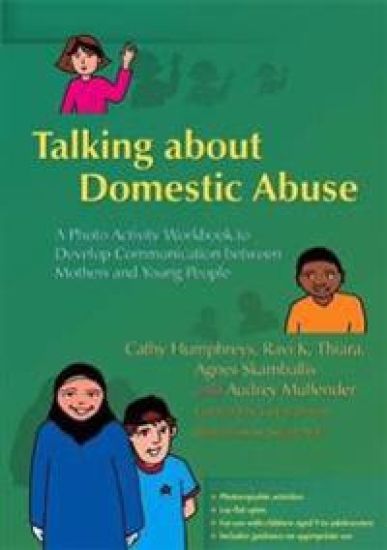
Talking about Domestic Abuse is an activity pack for children of nine years and above and adolescents where families have experienced domestic abuse, to help and encourage them to open up to their mothers about their distressing experiences.Based on the authors' work with families who have experienced domestic abuse, the activities are designed around four important themes: building self-esteem; naming feelings; facilitating communication between mothers and children; and talking about personal experiences, including domestic violence, and are accompanied by photographs which act as prompts for discussion. The authors explain the need of young people to communicate with their parents about painful memories. They also establish practical 'ground rules' on how mothers can enter into that communication successfully and how to make the most of the activities provided. Further information is also given on support services that are available to families coping with domestic abuse.This will be an essential tool for families including young people who have lived through domestic abuse, as well as social workers and other professionals working with them.
The third edition of this textbook has been thoroughly revised to meet the needs of today's social work students, professionals and service managers. It illustrates current legislation, policy, procedure and concerns, with additional material included to develop readers' confidence and skills in the context of learning organisations.This book is essential reading for students and practitioners alike, particularly those who need to understand organisation and management theory for study purposes and those who aspire to move into social work management or have been recent promoted.
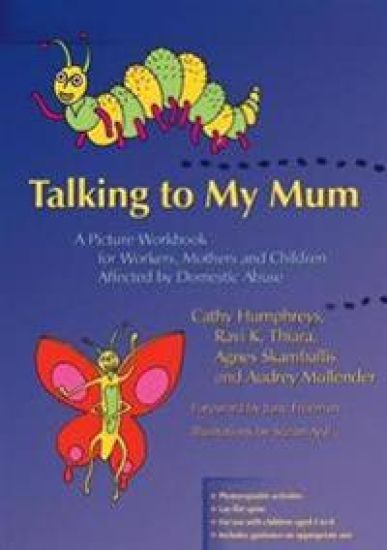
Talking to My Mum is an activity pack for five-eight-year-olds whose families have experienced domestic abuse to help and encourage them to open up to their mothers about their distressing experiences.Based on the authors' work with families who have experienced domestic abuse, the book is full of illustrated worksheets featuring animal characters who encourage the young reader to explore a range of memories, such as changes in the family's living arrangements or happy memories with siblings or favourite toys that each prompt a particular emotion. These activities are accompanied by guidance on how to use them appropriately. Talking to My Mum is designed for children and their mothers to complete together, and will assist both child and mother with improving communication about the past, present and future.This activity pack will be an essential tool for families with children who have lived through domestic abuse, as well as social workers and other professionals working with them.
Domestic violence is encountered by disabled women more frequently than non-disabled women, yet disabled women are less likely to receive appropriate services, and there has been little research on their experiences and how this problem can be addressed.This book, drawing on the first UK national study of disabled women who have suffered domestic violence, highlights the experiences of these women, the nature of the violence perpetrated against them, and the seriousness and range of its impacts. The book draws attention to the gaps in services for disabled women and discusses how professional responses should be developed and improved, pointing to current examples of good practice. It includes first-hand accounts from disabled women and includes contributions from leading disabled women activists.This book will be important reading for students, practitioners, policymakers and academics in the fields of disability and domestic violence.
Domestic violence is in the public eye as never before, but how often are abused women consulted or involved in the new services and policies? This book investigates, and reveals that the voices of survivors of domestic violence are often simply not heard; silenced, the women themselves become invisible. Is Anyone Listening? draws on the experiences of other service user movements to provide a strong conceptual framework for thinking about abused women's participation in policy and service development. It discusses empowerment issues and the women's movement against gender violence, exploring how far refuge organisations and other women's movement services have influenced statutory services and vice versa. It includes many practical ideas for involving women in the improvement of both policy and practice and gives examples of inspiring and innovatory projects.Based on a study carried out as part of the Economic and Social Research Council's Violence Research Programme, Is Anyone Listening? offers a unique analysis of the sensitive and complex issues involved in developing service user participation within the domestic violence field. The insights it provides will enable policy-makers, activists, students, practitioners and women who have experienced domestic violence to move forward together.
Domestic violence is in the public eye as never before, but how often are abused women consulted or involved in the new services and policies? This book investigates, and reveals that the voices of survivors of domestic violence are often simply not heard; silenced, the women themselves become invisible. Is Anyone Listening? draws on the experiences of other service user movements to provide a strong conceptual framework for thinking about abused women's participation in policy and service development. It discusses empowerment issues and the women's movement against gender violence, exploring how far refuge organisations and other women's movement services have influenced statutory services and vice versa. It includes many practical ideas for involving women in the improvement of both policy and practice and gives examples of inspiring and innovatory projects.Based on a study carried out as part of the Economic and Social Research Council's Violence Research Programme, Is Anyone Listening? offers a unique analysis of the sensitive and complex issues involved in developing service user participation within the domestic violence field. The insights it provides will enable policy-makers, activists, students, practitioners and women who have experienced domestic violence to move forward together.
There is widespread recognition among policy makers, professionals and activists in Britain that Canadian work on violence against women has been in the vanguard. However, as Canadian research can be difficult to access from the UK, many in this country are vague about the details. This report brings together 'state-of-the-art' accounts of Canadian approaches to violence against women and discusses them in the context of current UK policy. In particular, it looks at: refuges and women's services and campaigns; government responses and inter-agency approaches to challenging violence against women; law enforcement and legal reform; work with children and young people; the connection between research, activism and practice. Challenging violence against women is required reading for policy makers in government, statutory and voluntary sector agencies, for activists in the women's movement against rape, sexual assault and domestic violence, and for academics in Canadian studies, women's studies, criminology and the social sciences.
Addressing the alienation of practitioners from positivist and quantitative research, this book shows how research can be compatible with how practitioners collect and understand data. Drawing on research approaches that take account of subjectivity and employ participative methods, the authors develop an approach to practice for the research- minded practitioner. Whilst useful for practitioners wanting to do research, the primary intention of this book is to explore ways in which practitioners may be research-minded in their work.
A biography that features interviews with the late Audrey Hepburn, and her family, friends and colleagues. Hepburn as actress, mother, wife and goodwill ambassador for UNICEF are presented together with details of her life as a young girl in occupied Holland and her work for the Dutch resistance. The films in which she starred, among them "Roman Holiday", "Breakfast at Tiffany's", and "Funny Girl", have become classics. Audrey's life, however, could not have been more different than that of the characters she played on screen. Her only perfect relationship seems to have been with the public - she suffered two failed marriages and five miscarriages. Battling with illness - anorexia and, later, cancer - for most of her life she still found the energy and goodwill to work for others.
Wise Words for a Life of Meaning is a collection of sayings born from the philosophical conclusions shared by Audrey O'Donohue in her captivating autobiography A Life of Enlightenment.Audrey has lived by the principal that "you create and co-create your own reality. Nothing can happen to you without your presence. Your presence is always your choice." Whether you read it all at once, or grab a cuppa on a Sunday afternoon for some "me time" and open the book to read the page you find, these sayings will provide you with perspectives to reflect on that will enrich your approach to life and help navigate its challenges.