

Kirjahaku
Etsi kirjoja tekijän nimen, kirjan nimen tai ISBN:n perusteella.
1000 tulosta hakusanalla Augustus Wood Clason

Between 1966 and 2015, the city of Atlanta was transformed. Black politicians ascended to the top of the power structure for the first time thanks to newly enfranchised Black working-class voters. The demographics of the city shifted in the late '60s and early '70s, and the combination of Black empowerment and white flight produced a growing Black working-class majority that increasingly demanded Black Power policies that often clashed with the policies supported by affluent residents. But by the 2010s, Atlanta's city core had been thoroughly gentrified, and the ability of Black working-class Atlantans to organize and build power had diminished significantly.Tracing the history of post–civil rights Black Atlanta through rigorous class analysis, Augustus Wood argues that Black and white elites responded to an energized and politicized Black working class by forging a public-private partnership power bloc in Atlanta, positioning the relatively small but rising Black middle class as participants in the colonizing of working-class Black bodies and spaces—expanding the racial class contradictions in Black Atlanta. This bloc worked to shift state funding away from public services and toward gentrification projects that demolished subsidized housing and ramped up police surveillance to deter working-class resistance. Paying close attention to political economy and class while drawing on unexamined archival sources and oral histories of Black working-class Atlantans, especially Black women, Wood reframes our understanding of contemporary Black urban life by highlighting the centrality of intraracial class conflict in the dynamics of urban space.
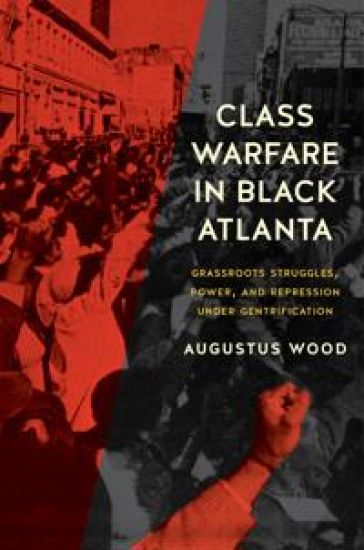
Between 1966 and 2015, the city of Atlanta was transformed. Black politicians ascended to the top of the power structure for the first time thanks to newly enfranchised Black working-class voters. The demographics of the city shifted in the late '60s and early '70s, and the combination of Black empowerment and white flight produced a growing Black working-class majority that increasingly demanded Black Power policies that often clashed with the policies supported by affluent residents. But by the 2010s, Atlanta's city core had been thoroughly gentrified, and the ability of Black working-class Atlantans to organize and build power had diminished significantly.Tracing the history of post–civil rights Black Atlanta through rigorous class analysis, Augustus Wood argues that Black and white elites responded to an energized and politicized Black working class by forging a public-private partnership power bloc in Atlanta, positioning the relatively small but rising Black middle class as participants in the colonizing of working-class Black bodies and spaces—expanding the racial class contradictions in Black Atlanta. This bloc worked to shift state funding away from public services and toward gentrification projects that demolished subsidized housing and ramped up police surveillance to deter working-class resistance. Paying close attention to political economy and class while drawing on unexamined archival sources and oral histories of Black working-class Atlantans, especially Black women, Wood reframes our understanding of contemporary Black urban life by highlighting the centrality of intraracial class conflict in the dynamics of urban space.


Cupid on Crutches; Or, One Summer at Narragansett Pier
Augustus B Wood
Trieste Publishing
2018
nidottu


Babes in the Wood: The 1888 Drury Lane Pantomime: Complete Libretto
Augustus Harris; E. L. Blanchard; Harry Nicholls
Createspace Independent Publishing Platform
2015
nidottu

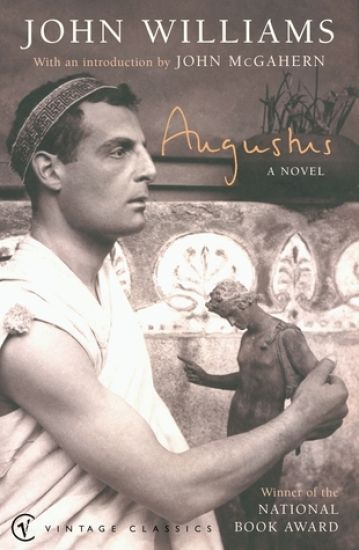
This title tells the story of Octavian, a shy and scholarly youth of 19 who, on the death of his great uncle Julius Caesar, suddenly finds himself heir to the vast power of the Roman Empire. The author builds the narrative on historical research, using fictional letters, memoranda and dispatches.

'Masterful ... a breathtaking panorama of Roman politics at a crucial turning point in history' Simon J. V. Malloch, Literary ReviewHe was named son and heir by a murdered dictator. He came to Rome with nothing, surrounded by ruthless enemies. Yet Augustus would become the first Roman Emperor, transforming the Republic into the greatest empire the world had seen. This is the definitive biography of the man who changed Western history.'An unequalled biography' Harry Mount, Spectator'Jochen Bleicken's biography of Rome's first emperor is excellent on the young Octavian and his wheeling and dealing' Natalie Haynes, Independent'A superb account ... It should become standard reading for everyone interested in the foundations of the Roman empire' Peter Jones, BBC History Magazine
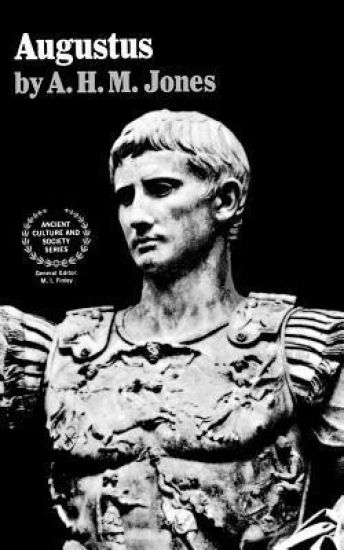
Professor Jones discusses the career of Augustus in the context of the turbulent times of the breakdown of the Roman Republic into civil war. He shows how dependent Augustus' rise to power was upon his adoption by Julius Caesar, and traces the ruthless and unscrupulous way in which Augustus exploited his unique position as "Caesar's heir." But he demonstrates that Augustus's continuing success was all his own: the adopted son succeeded in solving the political crisis which, because he had failed to do so, had cost the father his life. For Augustus was a consummate politician, and it was his great achievement to establish a form of government which proved more or less stable for over two centuries.

The first Emperor of Rome holds a perennial fascination for anyone with an interest in the Romans and their Empire. Augustus was a truly remarkable man who brought peace after many years of civil wars and laid the foundations of an Empire that lasted for nearly five centuries. Even today the Roman world still underpins modern society. This revised edition of Augustus incorporates new thinking on many aspects of his rule, and how he achieved such power. The image that he projected of himself and his achievements was benign, hopeful, and heroic, but behind this carefully orchestrated self-promotion he was subtle, clever, scheming and ruthless. He has been labelled as a saviour and as a mafia boss. This account of his life shows how he successfully combined the two extremes.
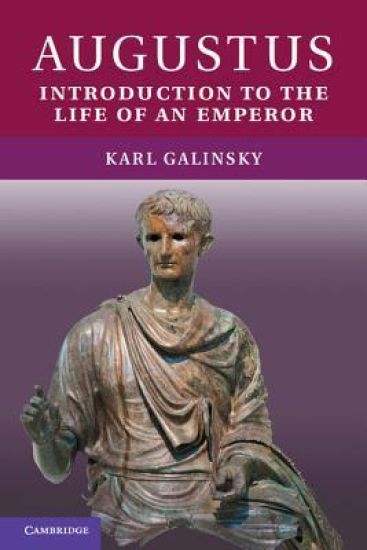
Augustus, Rome's first emperor, is one of the great figures of world history and one of the most fascinating. In this lively and concise biography Karl Galinsky examines Augustus' life from childhood to deification. He chronicles the mosaic of vicissitudes, challenges, setbacks and successes that shaped Augustus' life, both public and private. How did he use his power? How did he manage to keep re-inventing himself? What kind of man was he? A transformative leader, Augustus engineered profound change in Rome and throughout the Mediterranean world. No one would have expected such vast achievements from the frail and little-known eighteen-year-old who became Caesar's heir amid turmoil and crisis. A mere thirteen years later, after defeating Antony and Cleopatra, he had, in his words, 'power over all things'.

Augustus, Rome's first emperor, is one of the great figures of world history and one of the most fascinating. In this lively and concise biography Karl Galinsky examines Augustus' life from childhood to deification. He chronicles the mosaic of vicissitudes, challenges, setbacks and successes that shaped Augustus' life, both public and private. How did he use his power? How did he manage to keep re-inventing himself? What kind of man was he? A transformative leader, Augustus engineered profound change in Rome and throughout the Mediterranean world. No one would have expected such vast achievements from the frail and little-known eighteen-year-old who became Caesar's heir amid turmoil and crisis. A mere thirteen years later, after defeating Antony and Cleopatra, he had, in his words, 'power over all things'.
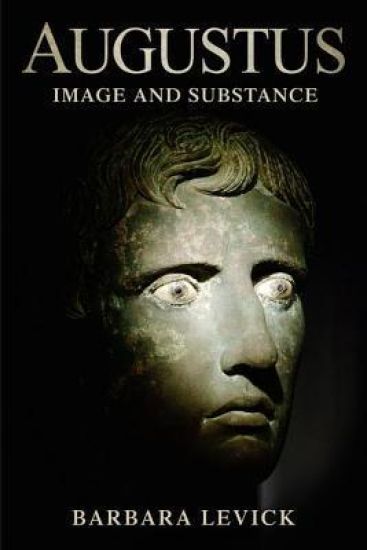
Throughout a long and spectacularly successful political life, the Emperor Augustus (63BC-AD14) was a master of spin. Barbara Levick exposes the techniques which he used to disguise the ruthlessness of his rise to power and to enhance his successes once power was achieved. There was, she argues, less difference than might appear between the ambitious youth who overthrew Anthony and Cleopatra and the admired Emperor of later years. However seemingly benevolent his autocracy and substantial his achievements, Augustus’ overriding purpose was always to keep himself and his dynasty in power. Similar techniques were practised against surviving and fresh opponents, but with increasing skill and duplicity, and in the end the exhausted members of the political classes were content to accept their new ruler. This book charts the stages of Augustus’ rise, the evolution of his power and his methods of sustaining it, and finally the ways in which he used artists and literary men to glorify his image for his own time and times to come. This fascinating story of the realities of power in ancient Rome has inescapable contemporary resonance and will appeal equally to students of the Ancient World and to the general reader.
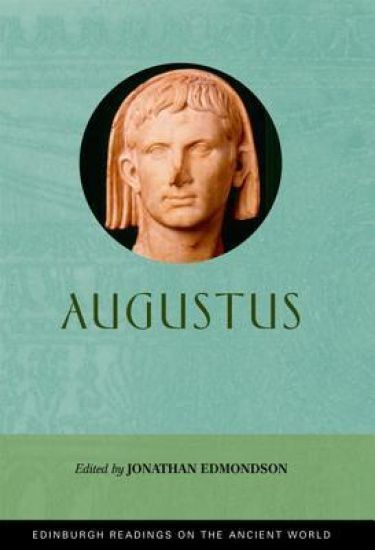
Augustus
Edinburgh University Press
2009
sidottu
Augustus (63 BC -- AD 14), the first Roman emperor, brought peace and stability to Rome after decades of strife and uncertainty. He put in place a new institutional framework for the Roman Empire and inspired the ideology that sustained it for the next three hundred years. This book presents a selection of the most important scholarship on Augustus and the contribution he made to the development of the Roman state in the early imperial period. The subjects of the selected papers include Augustus' dramatic rise to prominence following the death of Julius Caesar in 44 BC and the nature of his powers first as triumvir, then as Princeps; his policy regarding overseas wars and expansion, his administrative and military reforms of the Roman state; the role of his own family, his wife Livia, his son-in-law Agrippa and his adopted sons Gaius and Lucius Caesar and then Tiberius, in public life; his concern to reinforce Roman religion and family life; the development of an ideology that helped bolster his authority as ruler of an expanded Empire, including the importance of visual imagery, monuments and literature in the far-flung propagation of his image as leader; and the impact that his regime made on the communities of the Roman provinces. Jonathan Edmondson sets these papers into the general context of major trends in the study of Augustus in Britain, Europe and North America since the nineteenth century. Five are published here in English for the first time and many include illustrations of the most important visual evidence for the principate of Augustus. The book is equipped with a chronology, a glossary and a guide to further reading; all passages in Latin and Greek are translated into English.

Augustus
Edinburgh University Press
2014
nidottu
Augustus (63 BC -- AD 14), the first Roman emperor, brought peace and stability to Rome after decades of strife and uncertainty. He put in place a new institutional framework for the Roman Empire and inspired the ideology that sustained it for the next three hundred years. This book presents a selection of the most important scholarship on Augustus and the contribution he made to the development of the Roman state in the early imperial period. The subjects of the selected papers include Augustus' dramatic rise to prominence following the death of Julius Caesar in 44 BC and the nature of his powers first as triumvir, then as Princeps; his policy regarding overseas wars and expansion, his administrative and military reforms of the Roman state; the role of his own family, his wife Livia, his son-in-law Agrippa and his adopted sons Gaius and Lucius Caesar and then Tiberius, in public life; his concern to reinforce Roman religion and family life; the development of an ideology that helped bolster his authority as ruler of an expanded Empire, including the importance of visual imagery, monuments and literature in the far-flung propagation of his image as leader; and the impact that his regime made on the communities of the Roman provinces. Jonathan Edmondson sets these papers into the general context of major trends in the study of Augustus in Britain, Europe and North America since the nineteenth century. Five are published here in English for the first time and many include illustrations of the most important visual evidence for the principate of Augustus. The book is equipped with a chronology, a glossary and a guide to further reading; all passages in Latin and Greek are translated into English.

The dramatic story of the provincial outsider who came to found Europe.