Kirjojen hintavertailu. Mukana 11 244 527 kirjaa ja 12 kauppaa.

Kirjahaku

Etsi kirjoja tekijän nimen, kirjan nimen tai ISBN:n perusteella.

1000 tulosta hakusanalla Auster Paul

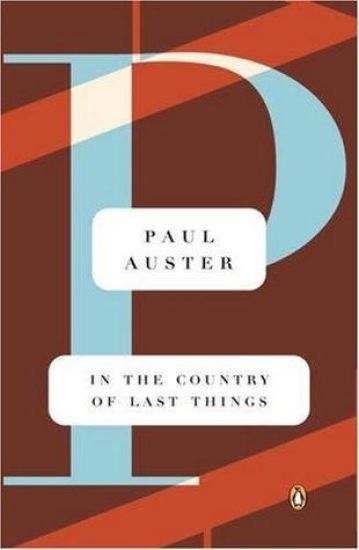
In the Country of Last Things

In the Country of Last Things

Auster Paul

Penguin Putnam Inc
1988
pokkari
From the author of the forthcoming 4 3 2 1: A Novel - a spare, powerful, intensely visionary novel about the bare-bones conditions of survival In a distant and unsettling future, Anna Blume is on a mission in an unnamed city of chaos and disaster. Its destitute inhabitants scavenge garbage for food and shelter, no industry exists, and an elusive government provides nothing but corruption. Anna wades through the filth to find her long-lost brother, a one-time journalist who may or may not be alive.New York Times-bestselling author Paul Auster (The New York Trilogy) shows us a disturbing Hobbesian society in this dystopian, post-apocalyptic novel.
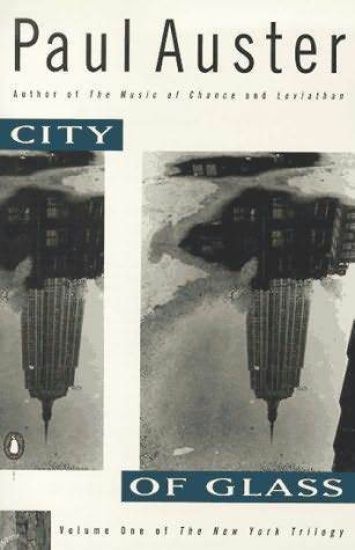
City of Glass

City of Glass

Auster Paul

Penguin Putnam Inc
1987
pokkari
From Paul Auster, author of the forthcoming 4 3 2 1: A novel - his debut work of fiction, the first volume in his acclaimed "New York Trilogy" series of novels Nominated for an Edgar Award for Best Mystery of the Year, City of Glass inaugurates the intriguing New York Trilogy of novels that the Washington Post Book World has classified as post-existentialist private eye...It's as if Kafka has gotten hooked on the gumshoe game and penned his own ever-spiraling version. As a result of a strange phone call in the middle of the night, Quinn, a writer of detective fiction and crime books, becomes enmeshed in a case more puzzling than any he might have written. New York Times-bestselling author Paul Auster combines dark humor with Hitchcock-like suspense to City of Glass.
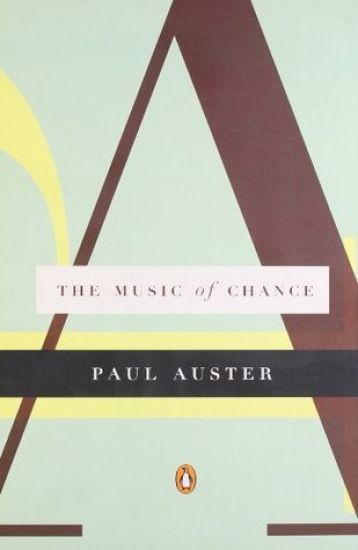
The Music of Chance

The Music of Chance

Auster Paul

Penguin Putnam Inc
1991
pokkari
An "exceptional" (Los Angeles Times) tale of fate, loyalty, responsibility, and the real meaning of freedom, from the author of the forthcoming 4 3 2 1: A Novel A finalist for the PEN/Faulkner Award This "rich and dazzling" (Wall Street Journal) novel follows Jim Nashe who, after squandering an unexpected inheritance, picks up a young gambler named Jack Pozzi hoping to con two millionaires. But when their plans backfire, Jim and Jack are indentured by their elusive marks and are forced to build a meaningless wall with bricks gathered from ruins of an Irish castle. Time passes, their debts mount, and anger builds as the two struggle to dig themselves out of their Kafkaesque serfdom. New York Times-bestselling author Paul Auster (The New York Trilogy) brings us back into his strange, shape-shifting world of fiendish bargains and punitive whims, where chance is a powerful yet unpredictable force.
Paul Auster's Postmodernity

Paul Auster's Postmodernity

Brendan Martin

Routledge
2010
nidottu
This book focuses upon the literary and autobiographical writings of American novelist Paul Auster, investigating his literary postmodernity in relation to a full range of his writings. Martin addresses Auster’s evocation of a range of postmodern notions, such as the duplicitous art of self-invention, the role of chance and contingency, authorial authenticity and accountability, urban dislocation, and the predominance of duality.
Paul Auster's Postmodernity

Paul Auster's Postmodernity

Brendan Martin

Routledge
2007
sidottu
This book focuses upon the literary and autobiographical writings of American novelist Paul Auster, investigating his literary postmodernity in relation to a full range of his writings. Martin addresses Auster’s evocation of a range of postmodern notions, such as the duplicitous art of self-invention, the role of chance and contingency, authorial authenticity and accountability, urban dislocation, and the predominance of duality.
Paul Auster's the New York Trilogy: City of Glass, Ghosts, the Locked Room
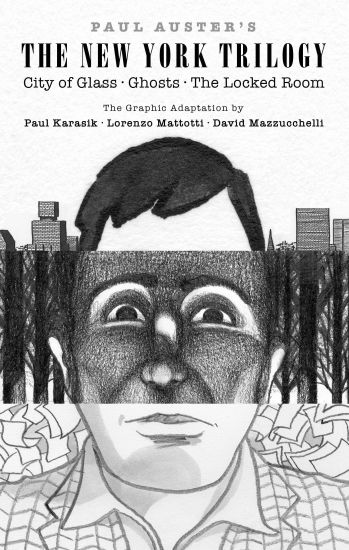
From award-winning novelist Paul Auster comes the graphic adaptation of his deeply beloved series, The New York Trilogy, a postmodern take on detective and noir fiction. In 1994, Paul Auster's City of Glass was adapted into a graphic novel and became an immediate cult classic, published in over 30 editions worldwide, excerpted in The Norton Anthology of Postmodern Fiction. But City of Glass was only the first novel in a series of books, Auster's acclaimed New York Trilogy, and graphic novel readers have been waiting for years for the other two tales to be translated into comics. Now the wait is over. The New York Trilogy is post-modern literature disguised as Noir fiction where language is the prime suspect. An interpretation of detective and mystery fiction, each book explores various philosophical themes. In City of Glass, an author of detective fiction investigates a murder and descends into madness. Ghosts features a private eye named Blue, trailing a man named Black, for a client called White. This too ends with the protagonist's downfall. And in The Locked Room, another author is experiencing writer's block, and hopes to brake it by solving the disappearance of his childhood friend. The second two parts of this trilogy will be appearing in this volume for the very first time as a graphic novel. Paul Karasik, the mastermind behind the three adaptations, art directed all three books. City of Glass is illustrated by the award-winning cartoonist David Mazzucchielli, the second volume, Ghosts, is illustrated by New Yorker cover artist, Lorenzo Mattotti, and The Locked Room is adapted and drawn by Karasik himself. These adaptations take Auster's sophisticated wordplay and translate it into comicsplay: both highbrow and lowbrow and immensely fun reading.
Paul Auster's The New York Trilogy

Paul Auster's The New York Trilogy

Paul Auster

Faber Faber
2025
sidottu
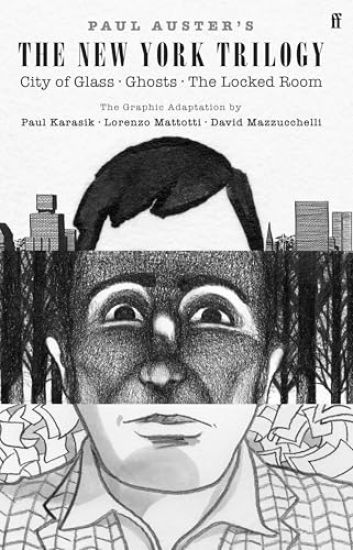
Now, for the first time, all three books have been adapted for this landmark graphic novel, each by a different artist, and all overseen by Paul Auster before his death. In David Mazzuchelli's take on City of Glass, a writer of detective fiction is drawn into a real-life case far stranger than anything he has ever written;
Paul Auster

Paul Auster

Mark Brown

Manchester University Press
2007
nidottu
Paul Auster provides the first extended analysis of Auster’s essays, poetry, fiction, films and collaborative projects. It explores his key themes of identity; language and writing; metropolitan living and community; and storytelling and illusion. By tracing how Auster's representations of New York and city life have matured from a position of urban nihilism to qualified optimism, the book shows how the variety of forms he works in influences the treatment of his central concerns. The chapters are organised around gradually extending spaces to reflect the way in which Auster’s work broadens its focus, beginning with the poet’s room and finishing with the global metropolis of New York: his home city and often his muse. The book uses Auster’s published and unpublished literary essays to explain the shifts from the dense and introspective poems of the 70s, through the metropolitan fictions of the 80s and early 90s, to the relatively optimistic and critically acclaimed films, and his return to fiction in recentyears.
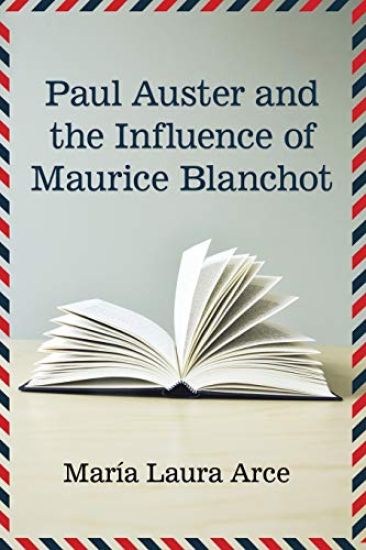
Paul Auster and the Influence of Maurice Blanchot

Paul Auster and the Influence of Maurice Blanchot

María Laura Arce

McFarland Co Inc
2016
pokkari
Poet, writer and filmmaker Paul Auster is one of the great contributors to American postmodern literature. Influenced by authors like Poe and the hardboiled detective stories of the 1950s, Auster's novels represented a new genre of "anti-detective fiction," in which the case itself loses direction and is overshadowed by existential questions. Analyzing three of his novels--Ghosts (1986), The Music of Chance (1990) and Mr. Vertigo (1994)--this critical study explores the intertextual relationship between Auster's work and the oeuvre of French writer and critic Maurice Blanchot. The author explores Auster's work as a fictionalization of Blanchot's concept of inspiration and the construction of imaginary space.
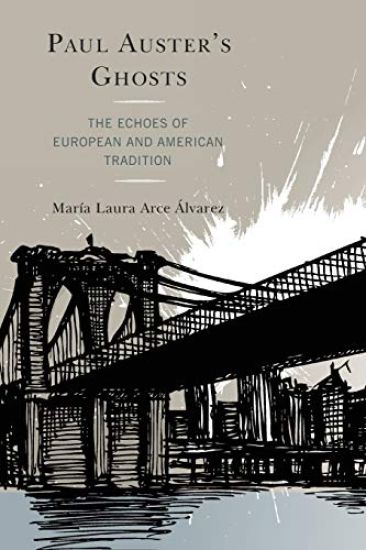
Paul Auster's Ghosts

Paul Auster's Ghosts

María Laura Arce Álvarez

Lexington Books
2018
sidottu
The following book explores the intertextual relationship between Paul Auster’s first and most remarkable work, The New York Trilogy (1987), and the works of certain American and European writers who shaped this novel and Auster’s future works. Auster’s The New York Trilogy is a novel formed by an intertextual dialogue which in some cases it is explicit, mentioning authors and books intentionally, and in others implicit, provoked by Auster’s admiration for authors such as Samuel Beckett or product of his role as a translator, as it occurs with Maurice Blanchot. These two different ways of intertextuality essentially show Auster’s influence of the American Renaissance, Samuel Beckett’s fiction and the work of the writer and critic Maurice Blanchot. In these terms, this book proposes an exhaustive analysis of City of Glass and Herman Melville’s “Bartleby, the Scrivener,” Ghosts and Edgar Allan Poe’s “William Wilson” and The Locked Room and Nathaniel Hawthorne’s Fanshawe. The two last chapters also offer a thorough analysis of the whole trilogy in comparison to Samuel Beckett’s trilogy Molloy, Malone Dies and The Unnamable and finally introduces a study of the trilogy as a fictionalization of Maurice Blanchot’s literary theory.
Paul Auster's Ghosts

Paul Auster's Ghosts

María Laura Arce Álvarez

Lexington Books
2020
nidottu
The following book explores the intertextual relationship between Paul Auster’s first and most remarkable work, The New York Trilogy (1987), and the works of certain American and European writers who shaped this novel and Auster’s future works. Auster’s The New York Trilogy is a novel formed by an intertextual dialogue which in some cases it is explicit, mentioning authors and books intentionally, and in others implicit, provoked by Auster’s admiration for authors such as Samuel Beckett or product of his role as a translator, as it occurs with Maurice Blanchot. These two different ways of intertextuality essentially show Auster’s influence of the American Renaissance, Samuel Beckett’s fiction and the work of the writer and critic Maurice Blanchot. In these terms, this book proposes an exhaustive analysis of City of Glass and Herman Melville’s “Bartleby, the Scrivener,” Ghosts and Edgar Allan Poe’s “William Wilson” and The Locked Room and Nathaniel Hawthorne’s Fanshawe. The two last chapters also offer a thorough analysis of the whole trilogy in comparison to Samuel Beckett’s trilogy Molloy, Malone Dies and The Unnamable and finally introduces a study of the trilogy as a fictionalization of Maurice Blanchot’s literary theory.
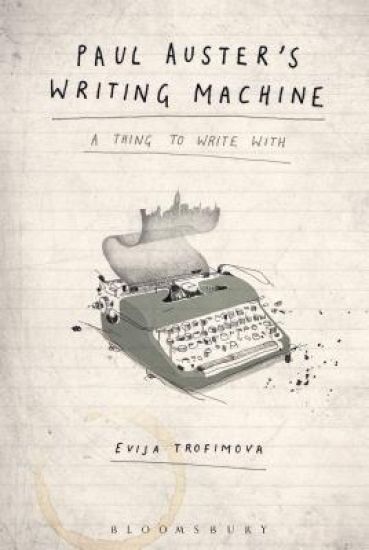
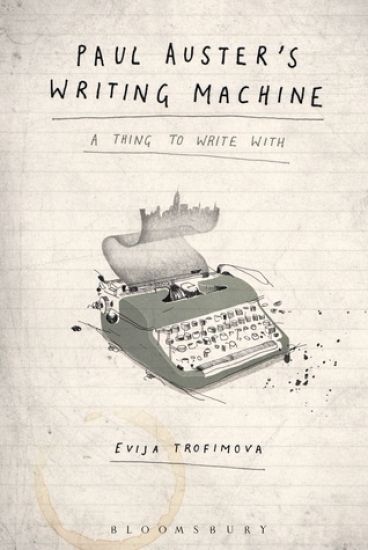
Paul Auster's Writing Machine

Paul Auster's Writing Machine

Evija Trofimova

Bloomsbury Academic USA
2016
nidottu
Paul Auster is one of the most acclaimed figures in American literature. Known primarily as a novelist, Auster’s films and various collaborations are now gaining more recognition. Evija Trofimova offers a radically different approach to the author’s wider body of work, unpacking the fascinating web of relationships between his texts and presenting Auster’s canon as a rhizomatic facto-fictional network produced by a set of writing tools. Exploring Auster’s literal and figurative use of these tools – the typewriter, the cigarette, the doppelgänger figure, the city – Evija Trofimova discovers Auster’s “writing machine”, a device that works both as a means to write and as a construct that manifests the emblematic writer-figure. This is a book about assembling texts and textual networks, the writing machines that produce them, and the ways such machines invest them with meaning. Embarking on a scholarly quest that takes her from between the lines of Auster’s work to between the streets of his beloved New York and finally to the man himself, Paul Auster’s Writing Machine becomes not just a critical investigation but a critical collaboration, raising important questions about the ultimate meaning of Auster's work, and about the relationship between texts, their authors, their readers and their critics.
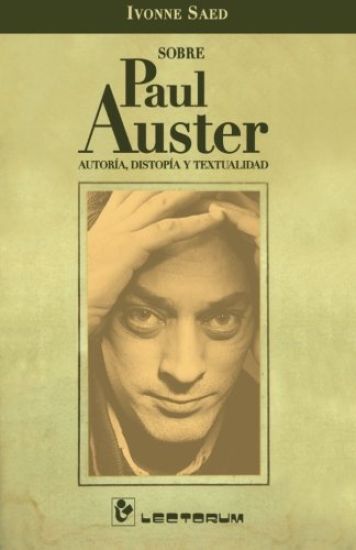
Sobre Paul Auster

Sobre Paul Auster

Ivonne Saed

Createspace Independent Publishing Platform
2014
pokkari
Paul Auster (1947-2024) fue un reconocido escritor, guionista y director de cine estadounidense, c lebre por sus novelas que combinan el realismo urbano, el azar, la identidad, y las coincidencias inexplicables, en tramas muchas veces enigm ticas y metaf sicas. Su estilo mezcla la narrativa detectivesca, la filosof a existencial, y una fuerte influencia de la literatura posmoderna.Sobre Paul Auster, la trascendencia de la textualidad y la memoria como partes definitorias de la condici n humana. Todo ello siempre visto desde el interior de un laberinto urbano en donde el personaje y la cuidad se funden e intercambian.
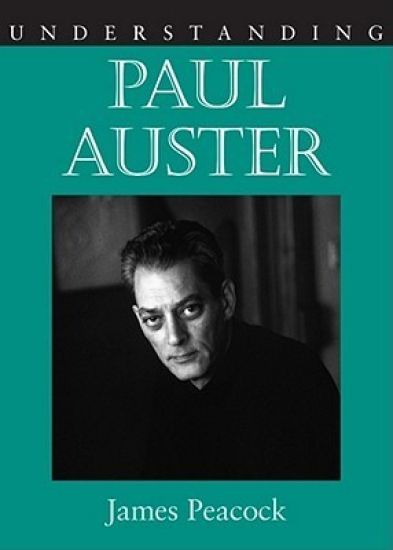
Understanding Paul Auster

Understanding Paul Auster

James Peacock

University of South Carolina Press
2017
nidottu
Understanding Paul Auster is a comprehensive companion to the work of a writer who effectively balances a particular combination of Jewish American identity and European sensibility across an impressive breadth of novels, screenplays, essays, and poetry. James Peacock views Auster as chiefly concerned with the individual's problematic relationship with language, a theme present from the enigmatic poetry of Auster's early career to the more inclusive and optimistic imaginings of the films Smoke and Blue in the Face and the novels Timbuktu, The Brooklyn Follies, and Man in the Dark.Peacock's study maps the evolution of Auster's fiction and its forms, goals, and influences. Peacock argues that the key event for any Auster character is the realization that language should not be restricted to documenting reality but should instead be embraced for its metaphorical qualities and constantly shifting nature. Peacock finds in Auster a view of language as inherently ethical and communal because, to use language creatively, one must be immersed in the plurality of experience and listen to the voices of others. In celebrated works such as The Invention of Solitude and The New York Trilogy, these voices include Auster's literary antecedents. Increasingly in his recent work, however, they include those of ordinary people. Peacock suggests that in the aftermath of 9/11, much of Auster's fiction places even greater importance on sympathetic relations with ordinary individuals and advocates through artistic endeavors the merits of connecting with others.
Paul Auster's Writing Machine

Paul Auster's Writing Machine

Evija Trofimova

Bloomsbury Academic USA
2014
sidottu
Paul Auster is one of the most acclaimed figures in American literature. Known primarily as a novelist, Auster’s films and various collaborations are now gaining more recognition. Evija Trofimova offers a radically different approach to the author’s wider body of work, unpacking the fascinating web of relationships between his texts and presenting Auster’s canon as a rhizomatic facto-fictional network produced by a set of writing tools. Exploring Auster’s literal and figurative use of these tools – the typewriter, the cigarette, the doppelgänger figure, the city – Evija Trofimova discovers Auster’s “writing machine”, a device that works both as a means to write and as a construct that manifests the emblematic writer-figure. This is a book about assembling texts and textual networks, the writing machines that produce them, and the ways such machines invest them with meaning. Embarking on a scholarly quest that takes her from between the lines of Auster’s work to between the streets of his beloved New York and finally to the man himself, Paul Auster’s Writing Machine becomes not just a critical investigation but a critical collaboration, raising important questions about the ultimate meaning of Auster's work, and about the relationship between texts, their authors, their readers and their critics.
Paul Auster's (Post)modern Chronotopes:

Paul Auster's (Post)modern Chronotopes:

Julia Seltnerajch

PETER LANG AG
2024
sidottu
The study focuses on spatio-temporal relations and their dependence on literary genres in Paul Auster’s fiction. The author examines how selected novels reflect and redefine both the representation of space and formulaic patterns of genres they can be categorised as. Semiotic spaces created by Auster share some common features, such as dislocation, diversity or incongruity. Read as the postmodern ones, they are remodellings of novelistic chronotopes defined by, for instance, the tradition of detective fiction or the road novel. As such, Auster’s dialogue with tradition in terms of genre-specified features and models of space has led to the emergence of generic variants exhibiting tenets slightly or extensively altered in comparison to their predecessors.