In 1986 in the Sinai Peninsula in Egypt, a young Egyptian, army recruit opens the fire of his AK-47 on a group of Israeli tourists, as they basked in the warmth of in a sun-drenched beach, killing and wounding a number of men, women, and children. Overnight, Egyptian mass media turned the killer soldier into a folk hero, as he sat in an Egyptian military prison awaiting trial. The Mubarak administration condemned the grizzly attack and proceeded to prepare for the soldier's court-martial. The opposition parties, on the other hand, went in the opposite direction canonizing the killer-soldier, and calling for his immediate release. All of Egypt ignited in turmoil. But less than a month after the incident, the soldier turned up dead in his cell, having hanged himself from the iron bars of his cell. The Egyptian government called the dead soldier a paranoid psychopath, who got what he deserved, while the opposition parties proclaimed him a martyr, sacrificed by the authorities to placate the Israelis. Bill Thomas, an American reporter, stationed in Egypt at the time, becomes obsessed with the story. He goes on a crusade to find out the truth about the dead killer-soldier. What he finds out at the end of his quest leaves him flabbergasted.
Chosen for the 59th Venice Biennale, to represent contemporary creation at the Lebanese pavilion Ayman Baalbaki is a Lebanese artist born in Beirut in 1975. He first trained at the Institute of Fine Arts of the university Lebanese school in Beirut, then at the National School of Decorative Arts in Paris. Five years after his arrival in France, he received the silver medal in painting at the Francophone Games and then participated in several exhibitions worldwide. Lebanon, France, Great Britain, Argentina, Egypt and Niger are all countries that welcome the works of the artist. His productions of the last 10 years have been compiled through this unpublished work, published in French, English and Arabic. The authors endeavour to decipher his paintings and installations, crossed by societal issues specific to Lebanon: war, abortive revolt, political and financial bankruptcy, the tragedy of the port of Beirut or even pandemic. The artist paints anonymous portraits of his contemporaries, which have today become symbols of the Middle East. It represents the city, its buildings, erected, but also in ruins. His art is vibrant, dynamic and textured. Text in English, French and Arabic.
A Ramadan story from the suburbs of Australia about a boy who is on a special mission. Ten year old Ayman is all set to treat his family to a fabulous spread of traditional Algerian dishes for Iftar. He has rolled up his sleeves and donned his chef's hat. Will everything go as smoothly as he predicts? Only time will tell.
Observera att förlaget som ger ut denna produkt baserar innehållet i sina produkter på fria källor som Wikipedia. Boken är med stor sannolikhet endast ett utdrag ur dessa informationskällor, alltså inte en vanlig bok i den bemärkelsen.
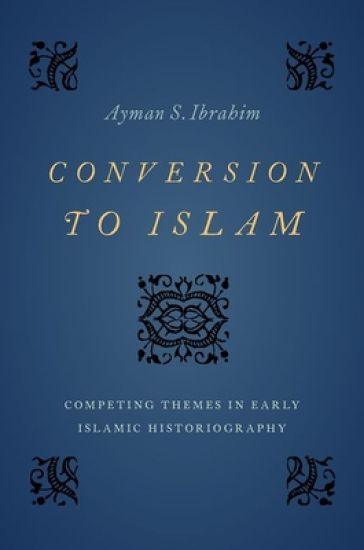
Why did non-Muslims convert to Islam during Muhammad's life and under his immediate successors? How did Muslim historians portray these conversions? Why did their portrayals differ significantly? To what extent were their portrayals influenced by their time of writing, religious inclinations, and political affiliations? These are the fundamental questions that drive this study. Relying on numerous works, including primary sources from over a hundred classical Muslim historians, Conversion to Islam is the first scholarly study to detect, trace, and analyze conversion themes in early Muslim historiography, emphasizing how classical Muslims remembered conversion, and how they valued and evaluated aspects of it. Ayman S. Ibrahim examines numerous early Muslim sources and wrestles with critical observations regarding the sources' reliability and unearths the hidden link between historical narratives and historians' religious sympathies and political agendas. This study leads readers through a complex body of literature, provides insights regarding historical context, and creates a vivid picture of conversion to Islam as early Muslim historians sought to depict it.
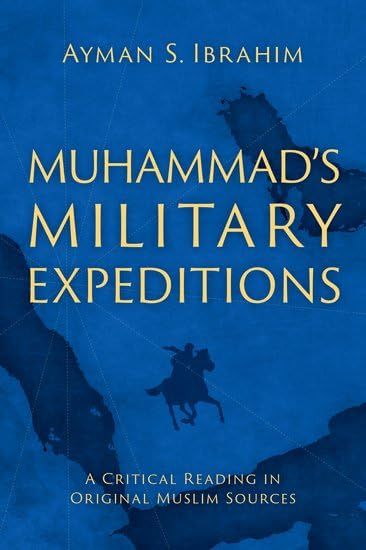
The last ten years of Muhammad's life are vitally important not only to the study of Islam's prophet, but to the development of the religion itself. Prior to that last decade, Muhammad and his followers were tribally weak, and were persecuted by the Arabian elites of Mecca. Yet, according to Muslim accounts, by the end of his life Muhammad had become the sole leader of Western Arabia. This last decade was colored by strategic military expeditions and tactical treaties, in which Muhammad overcame all his tribal enemies. Yet English speakers have long had limited access to thorough studies of these expeditions based on the original Arabic primary sources. In this book, Ayman S. Ibrahim seeks to fill this scholarly gap, presenting an exhaustive account of Muhammad's final decade, with specific emphasis on his military raids against various non-Muslim groups. What can the Muslim tradition reveal about Muhammad's military career? Did he really launch over seventy military campaigns? Why? Can we be certain that the military incursions described in Islamic sources actually took place? These are fundamental questions in any study of the life and activities of Muhammad, and Ibrahim looks for answers in this thoroughly-researched book. Considering the views of Muslims and non-Muslims, the motivations behind raids, and the development of Islam itself, Muhammad's Military Expeditions leaves no stone unturned.
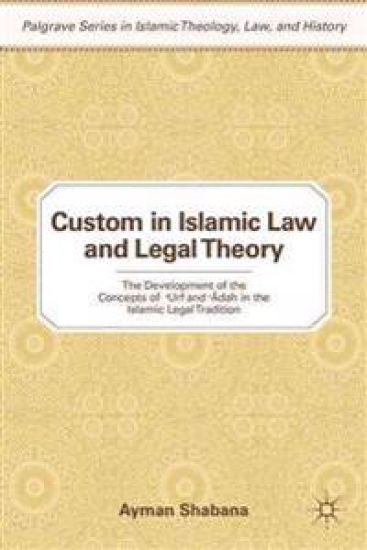
This book explores the relationship between custom and Islamic law and seeks to uncover the role of custom in the construction of legal rulings. On a deeper level, however, it deals with the perennial problem of change and continuity in the Islamic legal tradition (or any tradition for that matter).
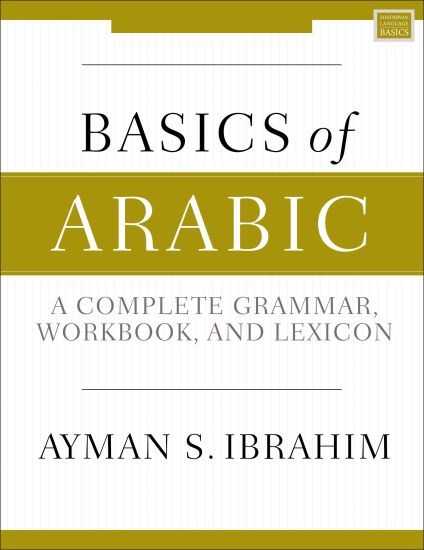
An ideal introduction to Arabic for beginning students and independent learnersBasics of Arabic by Ayman Ibrahim is an introductory grammar, workbook, and lexicon for learning Modern Standard Arabic. Designed for students approaching Arabic for the first time the book provides them with all the tools necessary to develop skills in reading and writing Arabic. Students will learn Arabic grammar and vocabulary and be able to translate key Arabic passages from biblical and qur'anic texts.Each lesson includes:A thorough and understandable introduction to a particular grammatical feature in ArabicList of vocabulary to be memorizedExercises for practice and reinforcement of key conceptsBasics of Arabic will help readers:Recite the Arabic alphabetRead and pronounce Arabic wordsLearn the Arabic noun and verbal systemUnderstand syntax for writing and reading sentencesAdditional translation exercises and a complete lexicon are included at the back of the book. Ideal for students, missionaries, independent learners, and homeschoolers this accessible guide give readers a clear and understandable introduction to this important language.
Adaptive Techniques for Mixed Signal Sytem on Chip discusses the concept of adaptation in the context of analog and mixed signal design along with different adaptive architectures used to control any system parameter. The first part of the book gives an overview of the different elements that are normally used in adaptive designs including tunable elements as well as voltage, current, and time references with an emphasis on the circuit design of specific blocks such as voltage-controlled transconductors, offset comparators, and a novel technique for accurate implementation of on chip resistors. While the first part of the book addresses adaptive techniques at the circuit and block levels, the second part discusses adaptive equalization architectures employed to minimize the impact of ISI (Intersymbol Interference) on the quality of received data in high-speed wire line transceivers. It presents the implementation of a 125Mbps transceiver operating over a variable length of Category 5 (CAT-5) Ethernet cable as an example of adaptive equalizers.
Stochastic Modeling for Medical Image Analysis provides a brief introduction to medical imaging, stochastic modeling, and model-guided image analysis.Today, image-guided computer-assisted diagnostics (CAD) faces two basic challenging problems. The first is the computationally feasible and accurate modeling of images from different modalities to obtain clinically useful information. The second is the accurate and fast inferring of meaningful and clinically valid CAD decisions and/or predictions on the basis of model-guided image analysis.To help address this, this book details original stochastic appearance and shape models with computationally feasible and efficient learning techniques for improving the performance of object detection, segmentation, alignment, and analysis in a number of important CAD applications.The book demonstrates accurate descriptions of visual appearances and shapes of the goal objects and their background to help solve a number of important and challenging CAD problems. The models focus on the first-order marginals of pixel/voxel-wise signals and second- or higher-order Markov-Gibbs random fields of these signals and/or labels of regions supporting the goal objects in the lattice. This valuable resource presents the latest state of the art in stochastic modeling for medical image analysis while incorporating fully tested experimental results throughout.
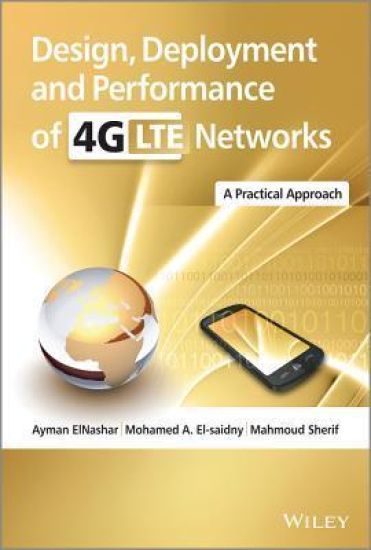
This book provides an insight into the key practical aspects and best practice of 4G-LTE network design, performance, and deployment Design, Deployment and Performance of 4G-LTE Networks addresses the key practical aspects and best practice of 4G networks design, performance, and deployment. In addition, the book focuses on the end-to-end aspects of the LTE network architecture and different deployment scenarios of commercial LTE networks. It describes the air interface of LTE focusing on the access stratum protocol layers: PDCP, RLC, MAC, and Physical Layer. The air interface described in this book covers the concepts of LTE frame structure, downlink and uplink scheduling, and detailed illustrations of the data flow across the protocol layers. It describes the details of the optimization process including performance measurements and troubleshooting mechanisms in addition to demonstrating common issues and case studies based on actual field results. The book provides detailed performance analysis of key features/enhancements such as C-DRX for Smartphones battery saving, CSFB solution to support voice calls with LTE, and MIMO techniques. The book presents analysis of LTE coverage and link budgets alongside a detailed comparative analysis with HSPA+. Practical link budget examples are provided for data and VoLTE scenarios. Furthermore, the reader is provided with a detailed explanation of capacity dimensioning of the LTE systems. The LTE capacity analysis in this book is presented in a comparative manner with reference to the HSPA+ network to benchmark the LTE network capacity. The book describes the voice options for LTE including VoIP protocol stack, IMS Single Radio Voice Call Continuity (SRVCC). In addition, key VoLTE features are presented: Semi-persistent scheduling (SPS), TTI bundling, Quality of Service (QoS), VoIP with C-DRX, Robust Header Compression (RoHC), and VoLTE Vocoders and De-Jitter buffer. The book describes several LTE and LTE-A advanced features in the evolution from Release 8 to 10 including SON, eICIC, CA, CoMP, HetNet, Enhanced MIMO, Relays, and LBS. This book can be used as a reference for best practices in LTE networks design and deployment, performance analysis, and evolution strategy. Conveys the theoretical background of 4G-LTE networksPresents key aspects and best practice of 4G-LTE networks design and deploymentIncludes a realistic roadmap for evolution of deployed 3G/4G networksAddresses the practical aspects for designing and deploying commercial LTE networks.Analyzes LTE coverage and link budgets, including a detailed comparative analysis with HSPA+.References the best practices in LTE networks design and deployment, performance analysis, and evolution strategyCovers infrastructure-sharing scenarios for CAPEX and OPEX saving.Provides key practical aspects for supporting voice services over LTE, Written for all 4G engineers/designers working in networks design for operators, network deployment engineers, R&D engineers, telecom consulting firms, measurement/performance tools firms, deployment subcontractors, senior undergraduate students and graduate students interested in understanding the practical aspects of 4G-LTE networks as part of their classes, research, or projects.