Kirjojen hintavertailu. Mukana 11 244 527 kirjaa ja 12 kauppaa.

Kirjahaku

Etsi kirjoja tekijän nimen, kirjan nimen tai ISBN:n perusteella.

149 tulosta hakusanalla Azra Akilah Kohen

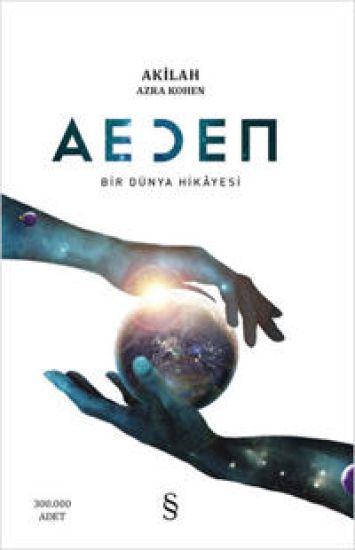
Aeden: En världshistoria (Turkiska)

Aeden: En världshistoria (Turkiska)

Azra Akilah Kohen

Everest Yayinlari
2018
nidottu
Aeden: En världshistoria är en turkisk roman av Azra Akilah Kohen. Den berättar historien om en ung kvinna som ger sig ut på en resa för att upptäcka universums mysterier och hitta sin plats i världen. På vägen möter hon olika karaktärer som formar hennes förståelse för livet och dess mening.
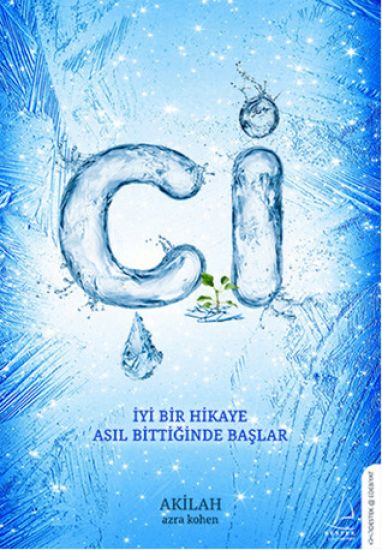
Fi

Fi

Azra Akilah Kohen

Everest Yayinlari
2021
nidottu
"Fi" av Azra Kohen är en tankeväckande roman som fördjupar sig i människans psykologi och utforskar de komplexa känslorna av kärlek, begär och besatthet. Med gripande berättande utmanar den samhällets normer och väcker frågor om relationers och identitets natur.
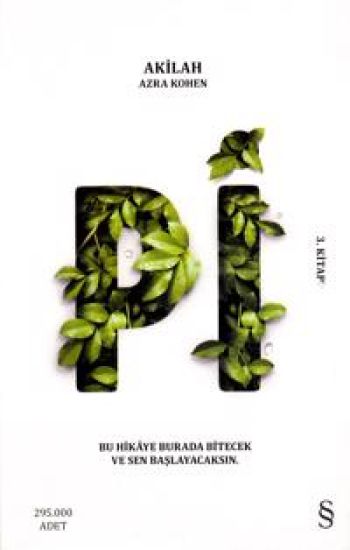
Pi

Pi

Azra Akilah Kohen

Everest Yayinlari
2021
nidottu
"Pi: Den här historien kommer att sluta här och du kommer att börja din" av Azra Kohen är en gripande roman som utforskar de mörka vrårna av människans sinne. Kohens intensiva berättande och komplexa karaktärer fångar läsarna och avtäcker mysterierna bakom besatthet, begär och den sköra naturen hos verkligheten. Förbered dig på att bli fängslad av denna psykologiska thriller.
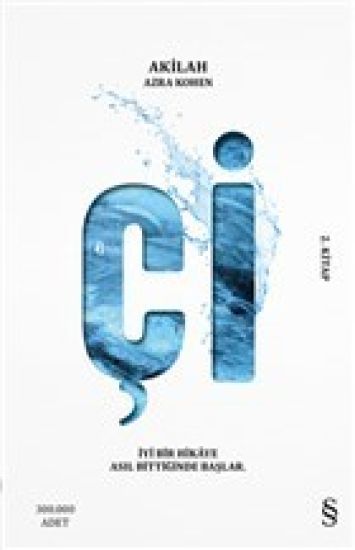
Çi

Çi

Azra Akilah Kohen

Everest Yayinlari
2020
nidottu
"Çi" av Azra Kohen är en tankeväckande roman som utforskar den inre världen hos en ung kvinna, Çi, när hon navigerar genom livets utmaningar och söker sin sanna identitet. Med levande berättande utforskar den teman som kärlek, identitet och strävan efter lycka på ett fängslande sätt.
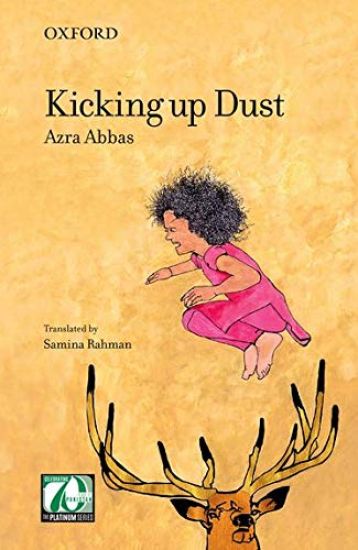
Kicking up Dust

Kicking up Dust

Azra Abbas

OUP Pakistan
2018
sidottu
This book is a biography of the author and very skilfully presents a picture of her childhood, juxtaposing childish playfulness with the realities of the urban middle class she lived in. This prose is engrossing because it presents a child's frank and forthright perspective of the society she lives in. The curiosity of a rebellious child forced to survive in the adult world is an insight for the readers into the mind of child forced to grow up before her time. A number of the author's poems, also translated by Samina Rahman, are included in the volume as well.
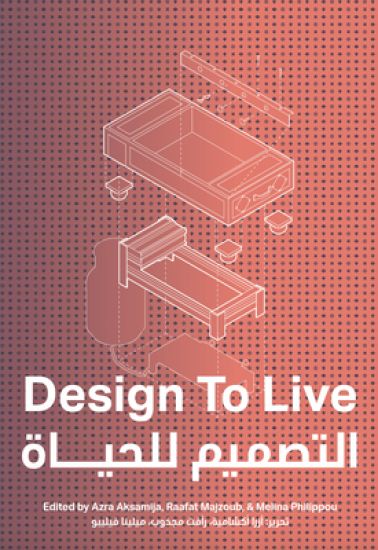
Design To Live

Design To Live

Azra Aksamija; Raafat Majzoub

MIT Press
2021
nidottu
The power of design to create a life worth living even in a refugee camp: designs, inventions, and artworks from the Azraq Refugee Camp in Jordan. This book shows how, even in the most difficult conditions--forced displacement, trauma, and struggle--design can help create a life worth living. Design to Live documents designs, inventions, and artworks created by Syrian refugees living in the Azraq Refugee Camp in Jordan. Through these ingenious and creative innovations--including the vertical garden, an arrangement necessitated by regulations that forbid planting in the ground; a front hall, fashioned to protect privacy; a baby swing made from recycled desks; and a chess set carved from a broomstick--refugees defy the material scarcity, unforgiving desert climate, and cultural isolation of the camp. Written in close collaboration with the residents of the camp, with text in both English and Arabic, Design to Live, reflects two perspectives on the camp: people living and working in Azraq and designers reflecting on humanitarian architecture within the broader field of socially engaged art and design. Architectural drawings, illustrations, photographs, narratives, and stories offer vivid testimony to the imaginative and artful ways that residents alter and reconstruct the standardized humanitarian design of the camp--and provide models that can be replicated elsewhere. The book is the product of a three-year project undertaken by MIT Future Heritage Lab, researchers and students with Syrian refugees at the Azraq Refugee Camp, CARE, Jordan, and the German-Jordanian University.
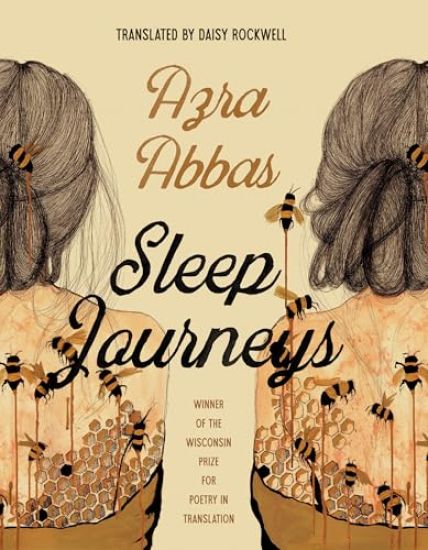
Sleep Journeys

Sleep Journeys

Azra Abbas

UNIVERSITY OF WISCONSIN PRESS
2026
nidottu
When Sleep Journeys first appeared in 1981, it took the Urdu poetry world by storm. Now considered one of the finest contemporary Urdu poets, Azra Abbas was among the first to embrace experimental, free verse poetry, a form that took time to gain traction in a field dominated by traditional forms. A single book-length poem, divided into three cantos, Sleep Journeys remains one of Abbas's most complex works, a dreamlike rumination that explores faith, female desire, and the subconscious mind. Her language is simple and austere, the complexity of the work emerging through repetition, interweaving, and juxtaposition. The result is a gossamer thread that leads the reader through a labyrinth of metaphor, imagery, and awe. Award-winning translator Daisy Rockwell has crafted a poetic translation that captures the rhythm and flow of the original. Though comprising a vast web of interwoven prose, each page is self-contained, with the original Urdu facing the English. At the end of the book, a transliteration into Roman script allows readers of Hindi the opportunity to access the original. All told, the book ushers us into the state that lies between sleeping and waking, exploring hidden thoughts and desires; this edition brings one of the most celebrated Urdu poems from the late twentieth century to a broader, worldwide readership.
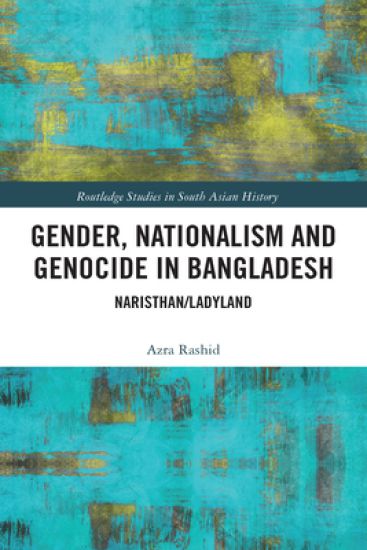
Gender, Nationalism, and Genocide in Bangladesh
The 1971 genocide in Bangladesh took place as a result of the region’s long history of colonization, the 1947 partition of the Indian subcontinent into largely Muslim Pakistan and Hindu India, and the continuation of ethnic and religious politics in Pakistan, specifically the political suppression of the Bengali people of East Pakistan. The violence endured by women during the 1971 genocide is repeated in the writing of national history. The secondary position that women occupy within nationalism is mirrored in the nationalist narratives of history.This book engages with the existing feminist scholarship on gender, nationalism and genocide to investigate the dominant representations of gender in the 1971 genocide in Bangladesh and juxtaposes the testimonies of survivors and national memory of that war to create a shift of perspective that demands a breaking of silence. The author explores and challenges how gender has operated in service of Bangladeshi nationalist ideology, in particular as it is represented at the Liberation War Museum. The archive of this museum in Bangladesh is viewed as a site of institutionalized dialogue between the 1971 genocide and the national memory of that event. An examination of the archive serves as an opening point into the ideologies that have sanctioned a particular authoring of history, which is written from a patriarchal perspective and insists on restricting women’s trauma to the time of war. To question the archive is to question the authority and power that is inscribed in the archive itself and that is the function performed by testimonies in this book. Testimonies are offered from five unique vantage points – rape survivor, war baby, freedom fighter, religious and ethnic minorities – to question the appropriation and omission of women’s stories. Furthermore, the emphasis on the multiplicity of women’s experiences in war seeks to highlight the counter-narrative that is created by acknowledging the differences in women’s experiences in war instead of transcending those differences.An innovative and nuanced approach to the subject of treatment and objectification of women in conflict and post conflict and how the continuing effects entrench ideas of gender roles and identity, this book will be of interest to academics in the fields of South Asian History and Politics, Gender and genocide, Women and War, Nationalism and Diaspora and Transnational Studies.
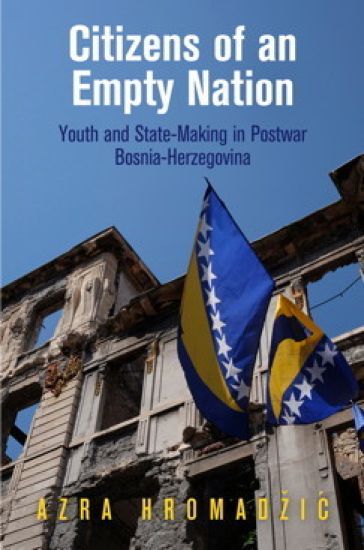
Citizens of an Empty Nation

Citizens of an Empty Nation

Azra Hromadžic

University of Pennsylvania Press
2015
sidottu
In the wake of devastating conflict in Bosnia-Herzegovina, the polarizing effects of everyday ethnic divisions, combined with hardened allegiances to ethnic nationalism and the rigid arrangements imposed in international peace-building agreements, have produced what Azra Hromadžic calls an "empty nation." Hromadžic explores the void created by unresolved tensions between mandated reunification initiatives and the segregation institutionalized by power-sharing democracy, and how these conditions are experienced by youths who have come of age in postconflict Bosnia-Herzegovina. Building on long-term ethnographic research at the first integrated school of Bosnia-Herzegovina, Citizens of an Empty Nation offers a ground-level view of how the processes of reunification play out at the Mostar Gymnasium. Hromadžic details the local effects of the tensions and contradictions inherent in the processes of postwar state-making, shedding light on the larger projects of humanitarian intervention, social cohesion, cross-ethnic negotiations, and citizenship. In this careful ethnography, the Mostar Gymnasium becomes a powerful symbol for the state's simultaneous segregation and integration as the school's shared halls, bathrooms, and computer labs foster dynamic spaces for a rich cross-ethnic citizenship-or else remain empty.
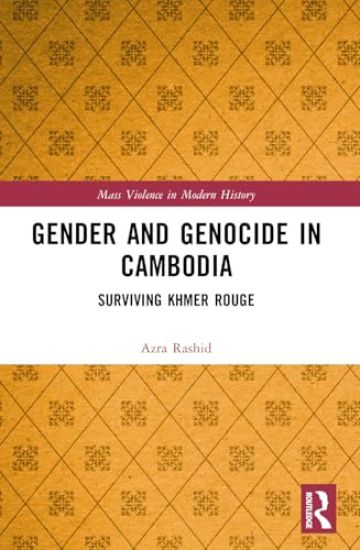
Gender and Genocide in Cambodia

Gender and Genocide in Cambodia

Azra Rashid

TAYLOR FRANCIS LTD
2023
sidottu
This book explores the multiplicity of women’s experiences in the Cambodian genocide during the four-year rule of the Khmer Rouge.The dominant discourses of genocide often speak from a patriarchal and national perspective, rendering women speechless, and yet in this volume, the female survivors of the Cambodian genocide testify not only to the specific atrocities committed during the war but also to the pre-war conditions that laid the groundwork for a gender-specific victimization of women and its continuation post-war. With the help of testimonies from Khmer women who joined the Khmer Rouge, women who experienced sexual violence during the Khmer Rouge era, women who fled the country, and the Cham women who faced expulsion from home, this book explores the diversity of women’s experiences under the Khmer Rouge. Survivors’ accounts show that a Khmer woman’s experience with the Khmer Rouge was considerably different from the experience of not only a Khmer man but also a woman from a religious or ethnic minority group or a woman who chose to join the Khmer Rouge. These differences are conveniently ignored in nationalist discourses in Cambodia and by western scholars of history and gender-based violence, and they are given even less consideration in discourses about women survivors in diaspora. Instead of forcing generalization and universalization of gendered crimes of war, Gender and Genocide in Cambodia employs feminist curiosity and closely examines women’s experiences under the Khmer Rouge from multiple vantage points.This volume is essential reading for students and scholars interested in gender and cultural studies, political history, and modern history.
Gender and Genocide in Cambodia

Gender and Genocide in Cambodia

Azra Rashid

TAYLOR FRANCIS LTD
2025
nidottu
This book explores the multiplicity of women’s experiences in the Cambodian genocide during the four-year rule of the Khmer Rouge.The dominant discourses of genocide often speak from a patriarchal and national perspective, rendering women speechless, and yet in this volume, the female survivors of the Cambodian genocide testify not only to the specific atrocities committed during the war but also to the pre-war conditions that laid the groundwork for a gender-specific victimization of women and its continuation post-war. With the help of testimonies from Khmer women who joined the Khmer Rouge, women who experienced sexual violence during the Khmer Rouge era, women who fled the country, and the Cham women who faced expulsion from home, this book explores the diversity of women’s experiences under the Khmer Rouge. Survivors’ accounts show that a Khmer woman’s experience with the Khmer Rouge was considerably different from the experience of not only a Khmer man but also a woman from a religious or ethnic minority group or a woman who chose to join the Khmer Rouge. These differences are conveniently ignored in nationalist discourses in Cambodia and by western scholars of history and gender-based violence, and they are given even less consideration in discourses about women survivors in diaspora. Instead of forcing generalization and universalization of gendered crimes of war, Gender and Genocide in Cambodia employs feminist curiosity and closely examines women’s experiences under the Khmer Rouge from multiple vantage points.This volume is essential reading for students and scholars interested in gender and cultural studies, political history, and modern history.