The story takes place 7000 years in the future and a galactic war is taking place the story centres around a Captain and his bridge crew as they travel the cosmic highway in a massive star freighter named the Supernova.
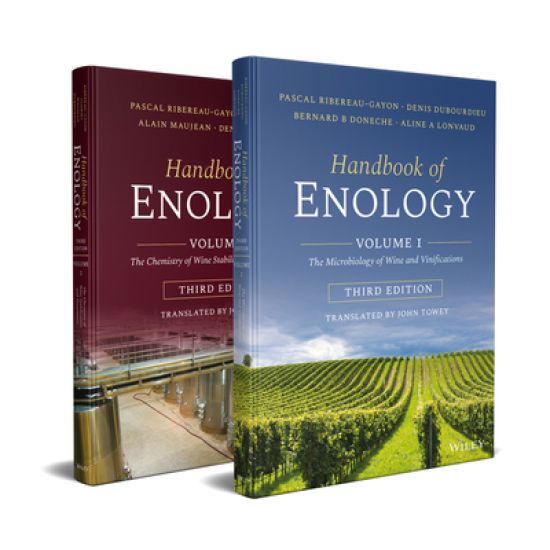
As an applied science, enology is a collection of knowledge from the fundamental sciences including chemistry, biochemistry, microbiology, bioengineering, psychophysics, cognitive psychology, etc., and nourished by empirical observations. The approach used in the Handbook of Enology is thus the same. It aims to provide practitioners, winemakers, technicians and enology students with foundational knowledge and the most recent research results. This knowledge can be used to contribute to a better definition of the quality of grapes and wine, a greater understanding of chemical and microbiological parameters, with the aim of ensuring satisfactory fermentations and predicting the evolution of wines, an7thd better mastery of wine stabilization processes. As a result, the purpose of this publication is to guide readers in their thought processes with a view to preserving and optimizing the identity and taste of wine and its aging potential. This third English edition of The Handbook of Enology, is an enhanced translation from the 7h French 2017 edition, and is published in print as individual themed volumes and as a two-volume set, describing aspects of winemaking using a detailed, scientific approach. The authors, who are highly-respected enologists, examine winemaking processes, theorizing what constitutes a perfect technique and the proper combination of components necessary to produce a quality vintage. They also illustrate methodologies of common problems, revealing the mechanism behind the disorder, thus enabling a diagnosis and solution. Volume 1: The Microbiology of Wine and Vinifications addresses the first phase of winemaking to produce an "unfinished" wine: grading grape quality and maturation, yeast biology then adding it to the grape crush and monitoring its growth during vinification; and identifying and correcting undesired conditions, such as unbalanced lactic and acetic acid production, use of sulfur dioxide and alternatives, etc. Coverage includes: Wine microbiology; Yeasts; Yeast metabolism; The conditions for the development of yeasts; Lactic acid bacteria, their metabolism and their development in wine; Acetic bacteria; The use of sulfur dioxide in the treatment of musts and wines; Products and processes acting in addition to sulfur dioxide; Winemaking; The grape and its maturation; Harvesting and processing of grapes after harvest; Vinification in red and white wine making. The target audience includes advanced viticulture and enology students, professors and researchers, and practicing grape growers and vintners.
As an applied science, Enology is a collection of knowledge from the fundamental sciences including chemistry, biochemistry, microbiology, bioengineering, psychophysics, cognitive psychology, etc., and nourished by empirical observations. The approach used in the Handbook of Enology is thus the same. It aims to provide practitioners, winemakers, technicians and enology students with foundational knowledge and the most recent research results. This knowledge can be used to contribute to a better definition of the quality of grapes and wine, a greater understanding of chemical and microbiological parameters, with the aim of ensuring satisfactory fermentations and predicting the evolution of wines, and better mastery of wine stabilization processes. As a result, the purpose of this publication is to guide readers in their thought processes with a view to preserving and optimizing the identity and taste of wine and its aging potential. This third English edition of The Handbook of Enology, is an enhanced translation from the 7th French 2017 edition, and is published as a two-volume set describing aspects of winemaking using a detailed, scientific approach. The authors, who are highly-respected enologists, examine winemaking processes, theorizing what constitutes a perfect technique and the proper combination of components necessary to produce a quality vintage. They also illustrate methodologies of common problems, revealing the mechanism behind the disorder, thus enabling a diagnosis and solution. The Handbook describes winemaking in two phases: Volume 1: The Microbiology of Wine and Vinifications addresses the first phase of winemaking to produce an "unfinished" wine: grading grape quality and maturation, yeast biology then adding it to the grape crush and monitoring its growth during vinification; and identifying and correcting undesired conditions, such as unbalanced lactic and acetic acid production, use of sulfur dioxide and alternatives, etc. Coverage includes: Wine microbiology; Yeasts; Yeast metabolism; The conditions for the development of yeasts; Lactic acid bacteria, their metabolism and their development in wine; Acetic bacteria; The use of sulfur dioxide in the treatment of musts and wines; Products and processes acting in addition to sulfur dioxide; Winemaking; The grape and its maturation; Harvesting and processing of grapes after harvest; Vinification in red and white wine making. Volume 2: The Chemistry of Wine and Stabilization and Treatments looks at the wine itself in two parts. Part One analyzes the chemical makeup of wine, including organic acids, alcoholic, volatile and phenolic compounds, carbohydrates, and aromas. Part Two describes the procedures necessary to achieve a perfect wine: the clarification processes of fining, filtering and centrifuging, stabilization, and aging. Coverage includes: Wine chemistry; Organic acids; Alcohols and other volatile products; Carbohydrates; Dry extract and mineral matter; Nitrogen substances; Phenolic compounds; The aroma of grape varieties; The chemical nature, origin and consequences of the main organoleptic defects; Stabilization and treatment of wines; The chemical nature, origin and consequences of the main organoleptic defects; The concept of clarity and colloidal phenomena; Clarification and stabilization treatments; Clarification of wines by filtration and centrifugation; The stabilization of wines by physical processes; The aging of wines in vats and in barrels and aging phenomena. The target audience includes advanced viticulture and enology students, professors and researchers, and practicing grape growers and vintners.
This beautifully designed monogram initial letter notebook is great for writing down your thoughts, to-do lists, ideas, poems, plans, and goals. Lined notebooks can be used for various purposes such as a journal, planner, diary, and organizer. A compact 6"x 9" notebook which is spacious enough for your writing needs yet portable. Features: 102 lined pages Glossy monogram design cover Joyful Creations offer a wide range of journals and notebooks that are suitable for back to school, home or office. Our journals make excellent gifts for birthdays, celebrations, Mother's Day, Father's Day, Valentine's Day, anniversaries, weddings, Secret Santa, bridal showers, Christmas and much more.
As early as 1884, in his Capital and Interest, Bohm-Bawerk joined issue with the first volume of Capital, and soon after the publication of the third volume of that work he issued a detailed criticism the substance of which was reproduced in the second edition of his Capital and Interest. He believes he has proved the untenability of economic Marxism, and confidently announces that "the beginning of the end of the labor theory of value" has been inaugurated by the publication of the third volume of Capital. Since his criticism deals with principles, since he does not attack isolated and arbitrarily selected points or conclusions, but questions and reflects as untenable the very foundation of the Marxist system, possibility is afforded for a fruitful discussion. But since the Marxist system has to be dealt with in its entirety, this discussion must be more detailed than that which is requisite to meet the objections of the eclectics, objections based upon misunderstanding and concerned only with individual details.
Society is fuelled by anger; dissatisfaction shapes Twitter feeds, online petitions and protest marches. But is that enough to bring about change?Alejandra and Marcela are female anarchists, nervously planning to plant bombs in the middle of the night. They don’t want violence. They just want to be heard. Prison’s not much of a threat when most of your friends are inside.Then they meet José Miguel. He is from a different generation, a time when revolution was ripe and activism alive, and he's committed to change by any means possible. B explores what revolution and violence mean to two different generations. As they talk. the women's naivety is exposed, and "Calderón manages successfully to convey the self-aggrandising absurdity that often lies behind terrorist acts." (The Guardian). B is written by Chilean playwright Guillermo Calderon and was developed as part of the Royal Court Theatre's international programme.
Floral Journal With Her Initial Monogram On ItIsn't that adorable?For those who like having personalized items in their life. Hint: this notebook makes a lovely gift...Features: Wide ruled. 110 pages. 8.5 x 11 inches. Soft cover.
Der zweite Band der philosophischen Korrespondenz zeigt Leibniz wahrend seiner Tatigkeit in Hannover und Wolfenbuttel, unterbrochen durch die mehrjahrige Reise nach Suddeutschland und Italien (1687-1690). Eine besondere Stellung nimmt der gewichtige Briefwechsel mit Antoine Arnauld ein, in dem es nach dem Anfang 1686 verfassten ersten metaphysischen Systementwurf, dem sogenannten "Discours de metaphysique," vor allem um Fragen des Substanzbegriffs und eine vertiefte Explikation seiner metaphysischen Grundpositionen geht. Wichtige metaphysische Diskussionen werden ebenfalls im Briefwechsel mit Foucher erortert, die schon nahe heran an den Entwurf des "Systeme nouveau de la communication des substances" von 1695 fuhren. Nach der Italienreise ist es dann vor allem die ausfuhrliche Korrespondenz mit Fardella, seit 1694 Professor fur Mathematik in Padua, in der es Leibniz um die Erorterung metaphysischer Grundgedanken geht. Leibniz ist bereits auf dem Weg zu seinem "Specimen dynamicum" von 1695. Infolgedessen spielt in dieser Zeit auch seine erneute (erstmals 1684 offentlich gemachte) und vertiefte Auseinandersetzung mit Descartes und dessen Materiebegriff und die Entwicklung eines eigenen Kraftbegriffs eine groe Rolle, so z. B. in den Korrespondenzen mit Bossuet, Pellisson-Fontanier, Huygens und Bayle. Leibniz beginnt einen Briefwechsel mit Basnage de Bauval in Den Haag, dem Herausgeber der "Histoire des ouvrages des savants," in dem es um allgemeine Neuigkeiten aus der respublica literaria, aber auch um die Kritik an Descartes geht. In den mit Bossuet, Pellisson-Fontanier und von Seckendorff gewechselten Briefen geht es daruber hinaus auch um theologische Probleme und Fragen der Reunion. Hauptthemen dieser Jahre sind demnach vor allem die Fundamentierung seines metaphysischen Systems und die damit verbundene Descartes-Kritik, wobei die Begriffe der Kraft und der Substanz im Zentrum stehen, insbesondere auch die logische Begrundung des vollstandigen Begriffs der singul
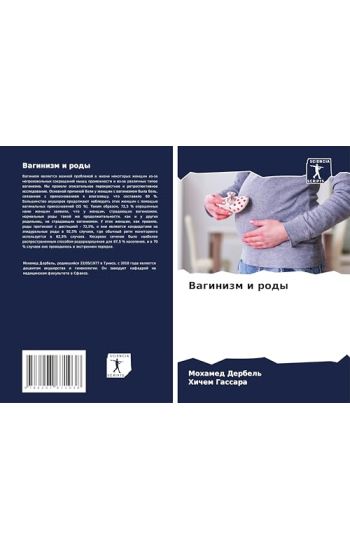
Вагинизм является важной проблемой в жизни некоторых женщин из-за непроизвольных сокращений мышц промежности и из-за различных типов вагинизма. Мы провели описательное перекрестное и ретроспективное исследование. Основной причиной боли у женщин с вагинизмом была боль, связанная с прикосновением к влагалищу, что составило 60 %. Большинство акушеров продолжают наблюдать этих женщин с помощью вагинальных прикосновений (55 %). Таким образом, 72,5 % опрошенных нами женщин заявили, что у женщин, страдающих вагинизмом, нормальные роды такой же продолжительности, как и у других родильниц, не страдающих вагинизмом. У этих женщин, как правило, роды протекают с дистоцией - 72,5%, и они являются кандидатами на эпидуральные роды в 92,5% случаев, где обычный ритм мониторинга используется в 62,5% случаев. Кесарево сечение было наиболее распространенным способом родоразрешения для 67,5 % населения, и в 70 % случаев оно проводилось в экстренном порядке.