Kirjahaku
Etsi kirjoja tekijän nimen, kirjan nimen tai ISBN:n perusteella.
1000 tulosta hakusanalla Bailey Van Hook
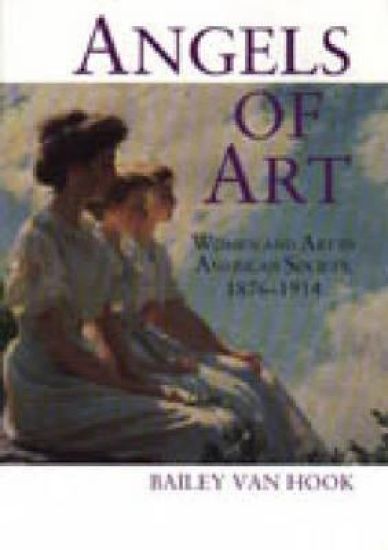
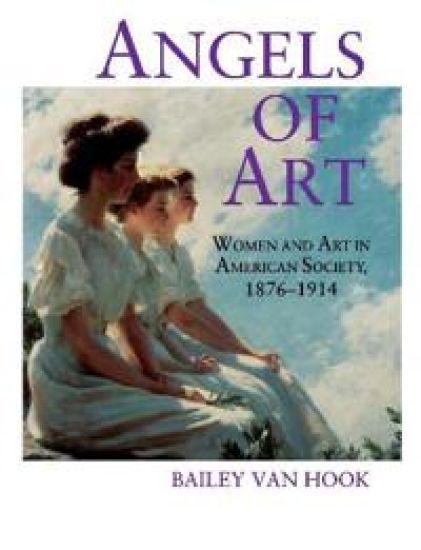
Images of women were ubiquitous in America at the turn of the last century. In painting and sculpture, they took on a bewildering variety of identities, from Venus, Ariadne, and Diana to Law, Justice, the Arts, and Commerce. Bailey Van Hook argues here that the artists' concepts of art coincided with the construction of gender in American culture. She finds that certain characteristics such as "ideal," "beautiful," "decorative," and "pure" both describe this art and define the perceived role of women in American society at the time. Most late nineteenth-century American artists had trained in Paris, where they learned to use female imagery as a pictorial language of provocative sensuality. Van Hook first places the American artists in an international context by discussing the works of their French teachers, including Jean-Léon Gérôme and Alexandre Cabanel. She goes on to explore why they soon had to distance themselves from that context, primarily because their art was perceived as either openly sensual or too obliquely foreign by American audiences. Van Hook delineates the modes of representation the American painters chose, which ranged from the more traditional allegorical or mythological subjects to a decorative figure painting indebted to Whistler. Changing American culture ultimately rejected these idealized female images as too genteel and, eventually, too academic and European.Angels of Art is the first study to discuss the predominance of images of women across stylistic boundaries and within the wider context of European art. It relies heavily on contemporary sources both to document critical responses and to find intersecting patterns in attitudes toward women and art.
The beaux-arts mural movement in America was fueled by energetic young artists and architects returning from training abroad. They were determined to transform American art and architecture to make them more thematically cosmopolitan and technically fluid and accomplished. The movement slowly coalesced around the decoration of mansions of the Gilded Age elite, mostly in New York, and of public buildings and institutions across the breadth of the country. The Virgin and the Dynamo: Public Murals in American Architecture, 1893-1917 is the first book in almost a century to concentrate exclusively on the beaux-arts mural movement in the United States. Beginning with a short history of the movement from its inception in Boston during the American Renaissance, Bailey Van Hook focuses on the movement's public manifestations in the period between the World's Columbian Exposition in Chicago in 1893 and the First World War. Professor Van Hook explores different aspects of the mural movement, the concept and meaning of "decoration," the claim that murals are inherently democratic, the shift in preference from allegory to history, the gendered concept of modernity, the ideologies behind the iconography, and, finally, the decline of the movement when it began to be seen as old fashioned and anachronistic. The Virgin and the Dynamo raises our understanding of the beaux-arts movement to a new level. For the general reader, this illustrated history will explain many familiar representations of local and national values.
Violet Oakley: An Artist's Life is the first full-length biography of Violet Oakley (1874–1961), the only major female artist of the beaux-arts mural movement in the United States, as well as an illustrator, stained glass artist, portraitist and author. There is much human interest here: a pampered and spoiled young woman who suddenly finds herself in near poverty, forced to make a living in illustration to support her parents; a sensitive and idealistic young woman who, in a desperate attempt to save her neurasthenic father, embraces Christian Science, a religion derided by her family and friends; a 28 year old woman who receives one of the plum commissions of the era, a mural cycle in the Pennsylvania State Capitol, in a field dominated by much older and predominantly male artists; a woman in her forties who although professionally successful finds herself very much alone and bonds with her student, Edith Emerson; a friend of artists like dancer Ruth St. Denis and violinist Albert Spalding who nevertheless was supremely conscious of social mores, the “Miss Oakley” of the Social Register who preferred the company of upper class to bohemian society; the tireless self-promoter who traveled abroad to become the unofficial visual historian of the League of Nations yet who ironically was increasingly regarded as a local artist.
Build a wholesome life focused on the seasonality of the food you grow with this chic and savvy guide to creating, tending, and sharing the goodness of a kitchen garden.While kitchen gardening brings freshness and flavor to your dinner plate, it’s no longer just about growing food. Kitchen gardening is also a lifestyle choice. It’s a unique way to show the world your commitment to the health of your family and your planet, reduce your food miles, and take control of what you feed your family. A one-of-a-kind kitchen garden is also an opportunity to show off your personal style and create a peaceful escape from the busyness of today’s world. It’s a chance to disconnect from the hustle and reconnect to what matters most—food, family, and your connection to the natural world. In Kitchen Garden Living, author and Kitchen Garden Society founder Bailey Van Tassel guides you through the process of establishing a kitchen garden of your own, helping you with all of the necessary steps to get your new garden started and holding your hand all the way through to the harvest and beyond. Organized by chapters titled Plan, Grow, Tend, Make, Gather, Connect, and Inspire, the projects and lessons found here are designed to help you succeed, no matter the size or location of your kitchen garden.Includes inspiration for: Finding your preferred garden styleDesigning and laying out the bedsLiving and eating seasonally Caring for the garden while also caring for yourselfPreparing and preserving the harvestGetting family involvedAnd so much moreWith this inspiring and supportive book as your guide, bring value to your family and your community in ways you never thought possible.
Leonard Bailey and his Woodworking Planes
Paul Van Pernis; John G. Wells
Astragal Press
2020
sidottu
New Englander Leonard Bailey was one of the inventive geniuses of the American Industrial Revolution. His designs and patented inventions solved problems with woodworking planes that had plagued craftsmen for centuries. His planes allowed woodworkers to transition from the age of wooden carpenter’s planes to modern, metallic, fully adjustable planes suitable for any kind of woodworking. His plane designs are still in use throughout the world and are essentially unchanged from the planes he first made in the 1860’s. He deserves more credit than he has received among America’s great inventors. This book covers the thirty-two-year period in Leonard Bailey’s life between 1852 when he began inventing, making and selling woodworking tools in Winchester, Massachusetts, through his years at the Stanley Rule & Level Company from 1869–1874, and ends in 1884 when he worked in Hartford, Connecticut, and sold his Victor Tool business to the Stanley Rule & Level Company.
A captivating and definitive account of the final days of Van Gogh's life and the incredible story of what followed. Divided into three parts, the book first examines the eventful days from the artists’ departure from the asylum in Saint-Remy and arrival in Auvers until the shooting which brought his life to an end. During this time Van Gogh completed 70 paintings in 70 days.The second part delves deeper into the story of the artist’s death, which has intrigued both experts and the public for years, revealing little-known stories and uncovering overlooked accounts.We then follow the story of how Van Gogh subsequently rose from relative obscurity to international renown and ultimately fame as one of the most recognisable and popular artists in the world.Leading Van Gogh specialist Martin Bailey writes with insight and intelligence, bringing these fateful days to life with colour and character as well as historical expertise, capturing the real sense of a tragic but meaningful life truly lived.
A captivating and definitive account of the final days of Van Gogh's life and the incredible story of what followed. Divided into three parts, the book first examines the eventful days from the artists’ departure from the asylum in Saint-Remy and arrival in Auvers until the shooting which brought his life to an end. During this time Van Gogh completed 74 paintings in 70 days.The second part delves deeper into the story of the artist’s death, which has intrigued both experts and the public for years, revealing little-known stories and uncovering overlooked accounts.We then follow the story of how Van Gogh subsequently rose from relative obscurity to international renown and ultimately fame as one of the most recognisable and popular artists in the world.Leading Van Gogh specialist Martin Bailey writes with insight and intelligence, bringing these fateful days to life with colour and character as well as historical expertise, capturing the real sense of a tragic but meaningful life truly lived.
Een samenloop van literaire apparaten in de vroege Amerikaanse literatuur
Rachel Bailey De Luise
Uitgeverij Onze Kennis
2020
nidottu
‘I cannot help that my pictures do not sell. Nevertheless, the time will come when people will see that they are worth more than the price of the paint …’ Vincent van Gogh Discover the moving story of Vincent van Gogh, with his artistic genius and emotional torment told through personal letters, sketches and paintings in this beautiful reissue of a previous bestseller. Vincent van Gogh’s letters are a written testimony to the artist’s struggle to survive and work. This fascinating book’s combination of deeply personal letters alongside rough sketches and finished paintings gives an intimate insight into the painter’s domestic life in Arles and Saint-Rémy-de-Provence, his spiritual torment and the creative process. The Illustrated Provence Letters of Van Gogh engages with the mind of the artist, reflecting his close bond with his brother and closest companion Theo, his relationship with fellow artists and friends, his ongoing struggle with mental illness, and his passion for art. Martin Bailey's introduction provides essential background information about Vincent's early life, setting the period in Provence in perspective. Biographical notes about the recipients of Vincent's letters are provided as well as a guide for visitors to those places painted by Van Gogh.
In Jason Van Otterloo's neighborhood, the Fourth of July fireworks are provided by his drunken parents brawling in the driveway. One moment they're not speaking to each other, the next they're on the couch like teenage lovers. He's not sure which is worse. He's been waiting for them to grow up for nearly 16 years, and it doesn't seem likely to happen any time soon.Desperate to escape, Jason takes on any job that comes his way with the dream of saving enough money to get his own place. When the border patrol snuffs out his landscaping career, he talks his best friend Drew into enlisting with him as a caddy at the local country club. His income might not be sufficient to move out on, but it's plenty to cover his first date with Gina-if she's willing to overlook the minor detail about having to take the bus to the movies. Life would be so much easier if Jason were old enough to drive.Gina proves a nice distraction from the circus at home, at least until Jason realizes he has competition for her attention. "I want to come right out and say something," he tells Drew, "but at the same time I don't want to know for sure." At coffeehouse poetry slams or via late-night email exchanges, his fellow intellectual Drew is always there to provide perspective. But the one topic he can't help Jason make sense of is Rob and Janice Van Otterloo's rocky relationship. "Maybe they'll learn how to become boring and safe like my parents," Drew suggests, when they finally seek marriage counseling. "I don't want them to be like your parents," Jason replies. "It wouldn't be authentic."Nor would it be as entertaining. Told entirely through emails between Jason, Drew, and others, The First World Problems of Jason Van Otterloo will appeal to fans of The Secret Diary of Adrian Mole and readers who best enjoy their teen angst cushioned in humor.
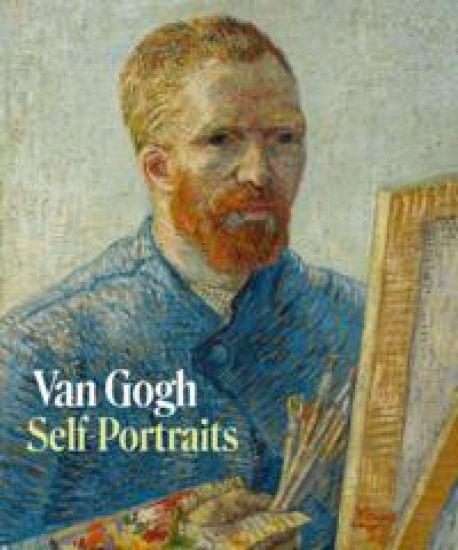
Van Gogh. Self-Portraits
Louis van Tilborgh; Martin Bailey
Paul Holberton Publishing Ltd
2022
nidottu
The myth of Van Gogh today is linked as much to his extraordinary life as it is to his stunning paintings. His biography has often shaped the way that his self-portraits have been (mis)understood. Van Gogh. Self-Portraits reconsiders this aspect of his production and places the artist’s self-representation in context to reveal the role it plays in his oeuvre. It also explores the power and profound emotion of these highly personal paintings. Van Gogh. Self-Portraits is the first time this theme has been exclusively addressed. Self-portraits painted during Van Gogh’s time in Paris (February 1886 – February 1888) have been the subject of two exhibitions (in 1960 at Marlborough Fine Arts in London and in 1995 at the Kunsthalle in Hamburg) but never has the full chronological range been explored. The exhibition at The Courtauld Gallery, which this volume accompanies, features paintings from both the Parisian and Provençal periods. It brings together half of Van Gogh’s thirty-five known self-portraits to examine the ways the artist approached this particular subject-matter. On a practical level, painting himself provided Van Gogh with the cheapest and most patient of models and represented an important conduit for stylistic experimentation. He also used self-portraiture as an homage to his illustrious Dutch predecessor Rembrandt, as well as a way of fashioning his own identity and presenting himself to the outside world. Of particular interest is the striking way the evolution of Van Gogh's self-representation over the short years of his artistic activity can be seen as a microcosm of his development as a painter. In addition to the world-famous Self-Portrait with Bandaged Ear in The Courtauld’s collection, the exhibition showcases a group of major masterpieces brought together from international collections, including the Van Gogh Museum in Amsterdam, the Muse d’Orsay in Paris, the Art Institute of Chicago and the National Gallery of Art in Washington, D.C., among others. This beautifully illustrated catalogue includes detailed entries on each work, an appendix illustrating all of Van Gogh’s self-portraits and three insightful essays on the theme.
Remonstrance of New Netherland, and the Occurrences There Addressed to the Highland Mighty Lords States General of the United Netherlands, on the 28th July, 1649. with Secretary Van Tienhoven's Answer. Translated from a Copy of the Original Dutch.
Adriaen Van Der Donck; Edmund Bailey O'Callaghan
British Library, Historical Print Editions
2011
pokkari
The Contrast, or, Plain Reasons Why William Henry Harrison Should be Elected President of the United States and Why Martin Van Buren Should not be Re-Elected
Jacob Bailey Moore
Antigonos Verlag
2025
nidottu
Instant Insights: Sensor Technologies in Livestock Monitoring
Mark Trotter; Derek Bailey; Jamie Barwick; Jaime Manning; Caitlin Evans; Diogo Costa; Elle Fogarty; Anita Chang; Dana L. M. Campbell; Marisa A. Erasmus; Michael Iwersen; Marc Drillich; Henk Hogeveen; Mariska van der Voort; Maciej Oczak; Kristina Maschat; Johannes Baumgartner
Burleigh Dodds Science Publishing Limited
2022
pokkari
This collection features five peer-reviewed literature reviews on sensor technologies in livestock monitoring.The first chapter considers the development of on-animal sensors as a means of monitoring an array of livestock species, as well as the challenges which arise with their deployment in commercial livestock management operations.The second chapter reviews the utilisation of wearable technologies to monitor the welfare of poultry, including accelerometers. The chapter also considers the effects of these sensors on bird welfare and behaviour.The third chapter provides a detailed overview of recent advances in techniques for monitoring dairy cow health and welfare. The chapter reviews the development of diagnostic tools and sensor technologies which enable automated, continuous monitoring of livestock.The fourth chapter reviews the potential of precision livestock farming (PLF) technology to monitor dairy cattle welfare in line with the Five Domains framework. The chapter explores how PLF can positively impact each of the five domains: nutrition, environment, health, behaviour and mental state.The final chapter reviews recent advances in technologies for monitoring key indicators of pig welfare by considering good feeding, good housing, good health and appropriate behaviour.
The Marquette Iron-Bearing District of Michigan
Charles Richard Van Hise; William Shirley Bayley; Henry Lloyd Smyth
Hansebooks
2018
nidottu
A moving and often harrowing account of one young woman's struggle against her childhood demons, Bailey explores the idea of self, and how the psyche can lose its way in a labyrinth of memory, fear and desire. Confined in an asylum, Bailey seeks to emerge from a hazy, tormented existence in which the only solid entity is Jim, her fellow inmate. The problem is that Jim is a creature as haunted as Bailey herself, and their respective pasts cloud a secret that makes their friendship more than a chance encounter. With its themes of social snobbery, family dysfunction and ultimate redemption, Bailey is a passionate, daring novel that reveals the underbelly of a society that presents itself as the epitome of respectability. For more, see: www.joanhawkins.net
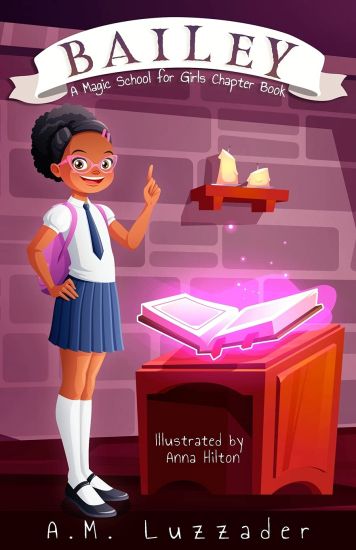
Bailey, Julie, and Kate are super excited The three friends have turned eight years old, which means they can finally go to Miss Annie's Magic School, where they'll learn to fly on brooms, cast magic spells, and learn important lessons as they study to become witches.But Miss Annie's School isn't always easy. Bailey is worried that her classmates think she's the teacher's pet. When she gets teased on the playground, Bailey stops raising her hand in class and she doesn't find Miss Annie's School very much fun. Can Bailey face her problems, ignore the teasing, and be herself? Read all about it in this fun and magical book for kids aged 6-8.The Magic School for Girls Chapter Books are a set of related beginning readers stories that can be read in any order.
Bailey, J: Lifelines
HARPERCOLLINS PUBLISHERS
sidottu