Kirjojen hintavertailu. Mukana 11 342 296 kirjaa ja 12 kauppaa.

Kirjahaku

Etsi kirjoja tekijän nimen, kirjan nimen tai ISBN:n perusteella.

1000 tulosta hakusanalla Bailey Victor

‘This Rash Act’

‘This Rash Act’

Bailey Victor

Stanford University Press
2000
pokkari
What made some 700 men and women in the Yorkshire town of Kingston-upon-Hull, in the years 1837 to 1900, decide to suffer no longer “the slings and arrows of outrageous fortune” and take their own lives? In this study, the author seeks to uncover the experiences that drove people to suicide; to analyze how suicide was understood by victims, by their families and friends, and by legal and medical authorities; to study how the presumed causes of suicide and the meanings of suicide changed over time and in response to changed social circumstances; and to see what “suicide narratives” elicited by coroners’ inquests can tell us about Victorian life, beliefs, and values in general. The book is based on an unprecedentedly complete and comprehensive collection of inquest files covering the entire Victorian era in Hull (most coroners’ files have not survived or exist only in fragmentary form). Hitherto, suicide in the Victorian period has been examined only on a national basis; where local evidence has been used, it has come chiefly from London. Through the testimony of relatives, neighbors, friends, and even the deceased (by means of suicide notes), the author has been able to get closer to the experience of suicide and its social construction than has been possible in any previous study. The framework within which the author evaluates the paths to suicide is the life cycle. By placing each suicide in its local socioeconomic context, and by examining each stage in the life course for each sex and for different social levels, the author has been able to assess causation factors with great confidence. He establishes arguments (such as the importance of declining wages and job security for older men and the loss of a marital partner for either sex) more securely than have earlier studies, and puts some new arguments on the agenda (such as the importance of the presence or absence of interpersonal ties and the influence of Poor Law policy).
The Rise and Fall of the Rehabilitative Ideal, 1895-1970
Spanning almost a century of penal policy and practice in England and Wales, this book is a study of the long arc of the rehabilitative ideal, beginning in 1895, the year of the Gladstone Committee on Prisons, and ending in 1970, when the policy of treating and training criminals was very much on the defensive. Drawing on a plethora of source material, such as the official papers of mandarins, ministers, and magistrates, measures of public opinion, prisoner memoirs, publications of penal reform groups and prison officers, the reports of Royal Commissions and Departmental Committees, political opinion in both Houses of Parliament and the research of the first cadre of criminologists, this book comprehensively examines a number of aspects of the British penal system, including judicial sentencing, law-making, and the administration of legal penalties. In doing so, Victor Bailey expertly weaves a complex and nuanced picture of punishment in twentieth-century England and Wales, one that incorporates the enduring influence of the death penalty, and will force historians to revise their interpretation of twentieth-century social and penal policy. This detailed and ground-breaking account of the rise and fall of the rehabilitative ideal will be essential reading for scholars and students of the history of crime and justice and historical criminology, as well as those interested in social and legal history.
The Rise and Fall of the Rehabilitative Ideal, 1895-1970
Spanning almost a century of penal policy and practice in England and Wales, this book is a study of the long arc of the rehabilitative ideal, beginning in 1895, the year of the Gladstone Committee on Prisons, and ending in 1970, when the policy of treating and training criminals was very much on the defensive. Drawing on a plethora of source material, such as the official papers of mandarins, ministers, and magistrates, measures of public opinion, prisoner memoirs, publications of penal reform groups and prison officers, the reports of Royal Commissions and Departmental Committees, political opinion in both Houses of Parliament and the research of the first cadre of criminologists, this book comprehensively examines a number of aspects of the British penal system, including judicial sentencing, law-making, and the administration of legal penalties. In doing so, Victor Bailey expertly weaves a complex and nuanced picture of punishment in twentieth-century England and Wales, one that incorporates the enduring influence of the death penalty, and will force historians to revise their interpretation of twentieth-century social and penal policy. This detailed and ground-breaking account of the rise and fall of the rehabilitative ideal will be essential reading for scholars and students of the history of crime and justice and historical criminology, as well as those interested in social and legal history.
'This Rash Act'

'This Rash Act'

Victor Bailey

Stanford University Press
1998
sidottu
What made some 700 men and women in the Yorkshire town of Kingston-upon-Hull, in the years 1837 to 1900, decide to suffer no longer "the slings and arrows of outrageous fortune" and take their own lives? In this study, the author seeks to uncover the experiences that drove people to suicide; to analyze how suicide was understood by victims, by their families and friends, and by legal and medical authorities; to study how the presumed causes of suicide and the meanings of suicide changed over time and in response to changed social circumstances; and to see what "suicide narratives" elicited by coroners' inquests can tell us about Victorian life, beliefs, and values in general. The book is based on an unprecedentedly complete and comprehensive collection of inquest files covering the entire Victorian era in Hull (most coroners' files have not survived or exist only in fragmentary form). Hitherto, suicide in the Victorian period has been examined only on a national basis; where local evidence has been used, it has come chiefly from London. Through the testimony of relatives, neighbors, friends, and even the deceased (by means of suicide notes), the author has been able to get closer to the experience of suicide and its social construction than has been possible in any previous study. The framework within which the author evaluates the paths to suicide is the life cycle. By placing each suicide in its local socioeconomic context, and by examining each stage in the life course for each sex and for different social levels, the author has been able to assess causation factors with great confidence. He establishes arguments (such as the importance of declining wages and job security for older men and the loss of a marital partner for either sex) more securely than have earlier studies, and puts some new arguments on the agenda (such as the importance of the presence or absence of interpersonal ties and the influence of Poor Law policy).
Judges and Convicts

Judges and Convicts

Victor Bailey

TAYLOR FRANCIS LTD
2025
nidottu
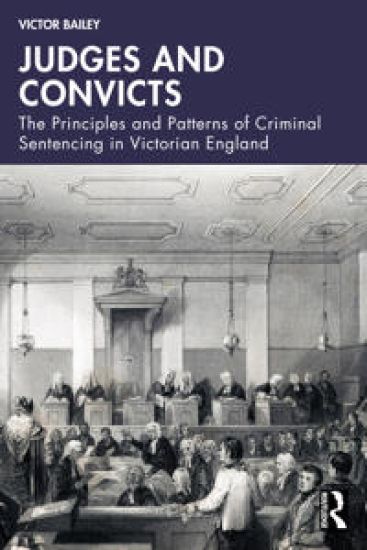
Uncovering the origins of the new sentencing structure that emerged in the course of the nineteenth century, this book travels from the demise of the "Bloody Code" in the 1830s, through the mid-century transition from convict transportation to home-based penal servitude, and on to the remarkable and unprecedented mitigation of sentencing severity in the final two decades of the century.By providing such an extended span of analysis, this book reveals the discrete stages of development in sentencing policy and practice, and particularly the contribution of the small coterie of professional judges at the county Assizes, the Old Bailey (or Central Criminal Court), and the Middlesex Sessions, around whose sentencing decisions the study revolves. In consequence, readers are offered an overarching survey of the nineteenth-century trends in sentencing, including an account of the struggle between politicians, mandarins, and judges for supremacy in sentencing, along with a detailed explanation of that remarkable mitigation of sentencing severity that ultimately defined a new equation between crime and punishment, or the modern sentencing tariff.Judges and Convicts: The Principles and Patterns of Criminal Sentencing in Victorian England will be of great appeal to students and scholars of history, law, criminology, and sociology, particularly to those with an interest in the history of the criminal trial, the judiciary, punishment, and sentencing.
Judges and Convicts

Judges and Convicts

Victor Bailey

TAYLOR FRANCIS LTD
2025
sidottu
Uncovering the origins of the new sentencing structure that emerged in the course of the nineteenth century, this book travels from the demise of the "Bloody Code" in the 1830s, through the mid-century transition from convict transportation to home-based penal servitude, and on to the remarkable and unprecedented mitigation of sentencing severity in the final two decades of the century.By providing such an extended span of analysis, this book reveals the discrete stages of development in sentencing policy and practice, and particularly the contribution of the small coterie of professional judges at the county Assizes, the Old Bailey (or Central Criminal Court), and the Middlesex Sessions, around whose sentencing decisions the study revolves. In consequence, readers are offered an overarching survey of the nineteenth-century trends in sentencing, including an account of the struggle between politicians, mandarins, and judges for supremacy in sentencing, along with a detailed explanation of that remarkable mitigation of sentencing severity that ultimately defined a new equation between crime and punishment, or the modern sentencing tariff.Judges and Convicts: The Principles and Patterns of Criminal Sentencing in Victorian England will be of great appeal to students and scholars of history, law, criminology, and sociology, particularly to those with an interest in the history of the criminal trial, the judiciary, punishment, and sentencing.
Cannibalism and The Copenhagen Interpretation

Cannibalism and The Copenhagen Interpretation

Victoria Woolf Bailey

Finishing Line Press
2022
pokkari
Cannibalism and the Copenhagen Interpretation: A Love Story is a unique book of short poems about a love relationship as it goes through many years of growth, from its beginning, through the ups and downs of life, until the very end. The narrator asks us to consider questions such as "did you think you could step into the same river twice?" and "who will lead and who will follow across this imaginary landscape?" which draw from the language of many fields including art, science, music and philosophy. Unique for a book of poetry in that it contains chapter review questions and a final exam which invite the reader to consider the meaning of such questions as "who can erase the past with its tearful hieroglyphics?" in their own lives.
Cannibalism and The Copenhagen Interpretation

Cannibalism and The Copenhagen Interpretation

Victoria Woolf Bailey

Finishing Line Press
2022
sidottu
Cannibalism and the Copenhagen Interpretation: A Love Story is a unique book of short poems about a love relationship as it goes through many years of growth, from its beginning, through the ups and downs of life, until the very end. The narrator asks us to consider questions such as "did you think you could step into the same river twice?" and "who will lead and who will follow across this imaginary landscape?" which draw from the language of many fields including art, science, music and philosophy. Unique for a book of poetry in that it contains chapter review questions and a final exam which invite the reader to consider the meaning of such questions as "who can erase the past with its tearful hieroglyphics?" in their own lives.
Victory

Victory

Breton Bailey

Tellwell Talent
2023
pokkari
This book attempts to tell the history of the greatest naval battle fought against overwhelming odds by Britain's greatest hero, Lord Horatio Nelson, in 1805 off the Spanish coast of Trafalgar. Nelson, with a fleet of 27 ships, met the larger combined navies of the French and Spanish, off the harbour town of Cadiz.On the evening prior to the battle, Nelson had each captain from each British ship of the fleet board the flagship HMS Victory to review his plan of attack the next day. Nelson referred to these captains as his "Band of Brother's," and they cheered while some became emotional over the simplicity of the plan.Great efforts have been made by the author to ensure the readers feel what life was like on board a ship of the line of three decks and 104 long guns (cannons), and the food, scheduling, and, most of all, discipline.The book is intended to be used if the school system to support learning of the era as well as studying the literary value of a book for young adults. This book details what may have been witnessed by a 14-year-old boy in the normal daily life on board a first-rate battleship in its daily life and in full battle.Most of the events discussed in this story are true and identified as such. Many of the situations told as occurring to the main character, James, were likely events to have occurred to a young boy on board as he went through the daily routine.
Victory

Victory

Breton Bailey

Tellwell Talent
2023
sidottu
This book attempts to tell the history of the greatest naval battle fought against overwhelming odds by Britain's greatest hero, Lord Horatio Nelson, in 1805 off the Spanish coast of Trafalgar. Nelson, with a fleet of 27 ships, met the larger combined navies of the French and Spanish, off the harbour town of Cadiz.On the evening prior to the battle, Nelson had each captain from each British ship of the fleet board the flagship HMS Victory to review his plan of attack the next day. Nelson referred to these captains as his "Band of Brother's," and they cheered while some became emotional over the simplicity of the plan.Great efforts have been made by the author to ensure the readers feel what life was like on board a ship of the line of three decks and 104 long guns (cannons), and the food, scheduling, and, most of all, discipline.The book is intended to be used if the school system to support learning of the era as well as studying the literary value of a book for young adults. This book details what may have been witnessed by a 14-year-old boy in the normal daily life on board a first-rate battleship in its daily life and in full battle.Most of the events discussed in this story are true and identified as such. Many of the situations told as occurring to the main character, James, were likely events to have occurred to a young boy on board as he went through the daily routine.
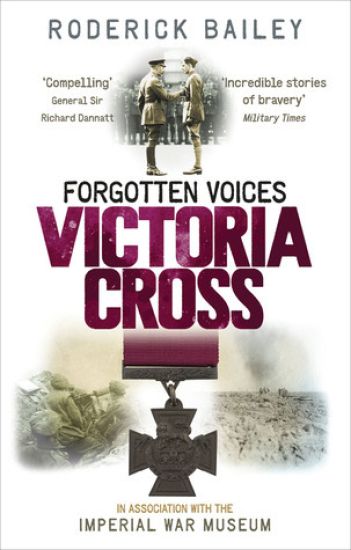
Forgotten Voices of the Victoria Cross

Forgotten Voices of the Victoria Cross

Roderick Bailey

Ebury Press
2011
pokkari
'It wasn't until after he was safely back in the aircraft again that I heard that he'd actually been out on the wing to try to put the fire out ... Remember that we were flying at about 90 miles an hour at a height of 13,000 feet'Squadron Leader RP Widdowson on Sergeant James Ward, who earned his VC in 1941 The Victoria Cross, awarded to the most courageous and determined servicemen, is the highest military decoration that can be bestowed.In Forgotten Voices: Victoria Cross, first-hand accounts of soldiers, sailors and airmen describe the incredible events that earned these extraordinary men the VC in the last century.Captivating and often humbling, these stories depict exceptional acts of bravery in unimaginable situations, of men who would say they were just doing their duty.Introduction by General Sir Richard Dannatt.
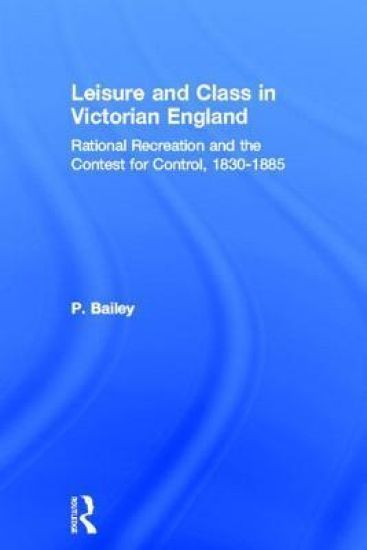
Leisure and Class in Victorian England
First published in 2006. Part of the Studies in Social History series, this volume looks at leisure and class in Victorian England, 1830-85, including topics of popular recreation, middle class and working class differences and rational recreation for the masses and the case of Victorian Music Halls in the entertainment industry.
Leisure and Class in Victorian England
First published in 2006. Part of the Studies in Social History series, this volume looks at leisure and class in Victorian England, 1830-85, including topics of popular recreation, middle class and working class differences and rational recreation for the masses and the case of Victorian Music Halls in the entertainment industry.