
Kirjahaku
Etsi kirjoja tekijän nimen, kirjan nimen tai ISBN:n perusteella.
1000 tulosta hakusanalla Barbara Bowen Feied

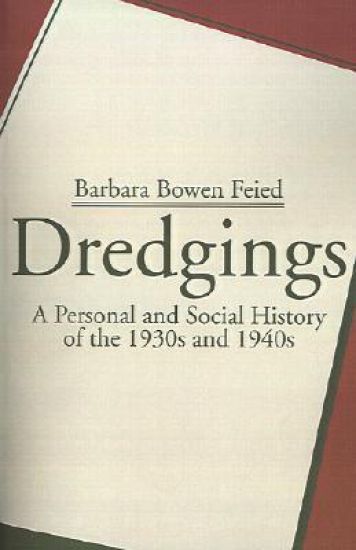
"DREDGED" is the third and final book in Barbara Bowen Feied's account of life in the United States from 1930 to 1980. The 1970s was a bridge decade between the social idealism of the 1960s and the materialistic "me"ism of the 1980s. But through recession, inflation, continuing anti-Vietnam War demonstrations, the Watergate scandals, life went on, children grew up, careers were begun and ended, new goals set and, sometimes, achieved.
American Ancestry; American Ancestors of Barbara Evelyn Bowen.
Harold King 1896- Bowen
Hassell Street Press
2021
nidottu
This work has been selected by scholars as being culturally important and is part of the knowledge base of civilization as we know it.This work is in the public domain in the United States of America, and possibly other nations. Within the United States, you may freely copy and distribute this work, as no entity (individual or corporate) has a copyright on the body of the work.Scholars believe, and we concur, that this work is important enough to be preserved, reproduced, and made generally available to the public. To ensure a quality reading experience, this work has been proofread and republished using a format that seamlessly blends the original graphical elements with text in an easy-to-read typeface.We appreciate your support of the preservation process, and thank you for being an important part of keeping this knowledge alive and relevant.
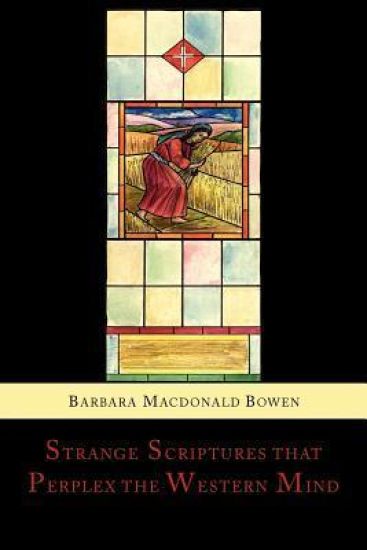
Strange Scriptures That Perplex the Western Mind
Barbara MacDonald Bowen
Martino Fine Books
2012
pokkari
Strange Scriptures That Perplex the Western Mind: Clarified in the Light of Customs and Conditions in Bible Lands
Barbara MacDonald 1876- Bowen
Hassell Street Press
2021
sidottu
Strange Scriptures That Perplex the Western Mind: Clarified in the Light of Customs and Conditions in Bible Lands
Barbara MacDonald 1876- Bowen
Hassell Street Press
2021
nidottu
Strange Scriptures That Perplex the Western Mind
Barbara M. Bowen
William B Eerdmans Publishing Co
1953
nidottu
Because the Bible describes a culture very different from that of Western countries today, what it says is sometimes puzzling to modern readers. In many cases, however, the ways in which Near Eastern merchants and farmers carry on their daily work have hardly changed over the intervening centuries since the inspired authors wrote. The aim of this interesting volume is to clarify familiar scriptural phrases and texts by explaining some unusual Eastern customs, thereby shedding new light on the unchanging truth of God's word. Here are fascinating insights into a number of areas of life in biblical lands yesterday and today--clothing and jewels, feasts, home life, women, peasants, fields, tombs, tents, trades, and much more.

This is an examination of the many facets of laughter and the comic in the writing of Rabelais. It analyses the many sides of Rabelais's humour, focusing on why it was so hilariously funny to 16th-century readers.
Of the articles in this volume, eight concern a world-famous author (François Rabelais); the others are studies of little-known authors (Cortesi, Corrozet, Mercier) or genres (the joke, the apophthegm). The common theme, in all but one, is humour: how it was defined, and how used, by orators and humanists but also by court jesters, princes, peasants and housewives. Though neglected by historians, this subject was of crucial importance to writers as different as Luther, Erasmus, Thomas More and François Rabelais. The book is divided into four sections. 'Humanist Wit' concerns the large and multi-lingual corpus of Renaissance facetiae. The second and third parts focus on French humanist humour, Rabelais in particular, while the last section is titled '"Serious" Humanists' because humour is by no means absent from it. For the Renaissance, as Erasmus and Rabelais amply demonstrate, and as the 'minor' authors studied here confirm, wit, whether affectionate or bitingly satirical, can coexist with, and indeed be inseparable from, serious purpose. Rabelais, as so often, said it best: 'Rire est le propre de l'homme.'

Of the articles in this volume, eight concern a world-famous author (François Rabelais); the others are studies of little-known authors (Cortesi, Corrozet, Mercier) or genres (the joke, the apophthegm). The common theme, in all but one, is humour: how it was defined, and how used, by orators and humanists but also by court jesters, princes, peasants and housewives. Though neglected by historians, this subject was of crucial importance to writers as different as Luther, Erasmus, Thomas More and François Rabelais. The book is divided into four sections. 'Humanist Wit' concerns the large and multi-lingual corpus of Renaissance facetiae. The second and third parts focus on French humanist humour, Rabelais in particular, while the last section is titled '"Serious" Humanists' because humour is by no means absent from it. For the Renaissance, as Erasmus and Rabelais amply demonstrate, and as the 'minor' authors studied here confirm, wit, whether affectionate or bitingly satirical, can coexist with, and indeed be inseparable from, serious purpose. Rabelais, as so often, said it best: 'Rire est le propre de l'homme.'
Strange Scriptures That Perplex the Western Mind
Barbara M. Bowen
Literary Licensing, LLC
2013
sidottu
""Strange Scriptures That Perplex The Western Mind"" is a book written by Barbara M. Bowen that explores various religious texts and practices from around the world that may seem unusual or perplexing to those from a Western background. The book delves into the beliefs and customs of various religions, including Hinduism, Buddhism, Taoism, and more, examining the ways in which these traditions can challenge Western assumptions and ways of thinking. Bowen draws on her own experiences and research to provide insight into the meanings and significance of these strange scriptures, offering readers a new perspective on the diversity of religious beliefs and practices around the world. Through her engaging and accessible writing style, Bowen encourages readers to consider new ways of understanding and appreciating the complexity of the human experience.This is a new release of the original 1944 edition.This scarce antiquarian book is a facsimile reprint of the old original and may contain some imperfections such as library marks and notations. Because we believe this work is culturally important, we have made it available as part of our commitment for protecting, preserving, and promoting the world's literature in affordable, high quality, modern editions, that are true to their original work.
Strange Scriptures That Perplex the Western Mind
Barbara M. Bowen
Literary Licensing, LLC
2013
nidottu

Strange Scriptures That Perplex the Western Mind
Barbara M. Bowen
Createspace Independent Publishing Platform
2013
nidottu
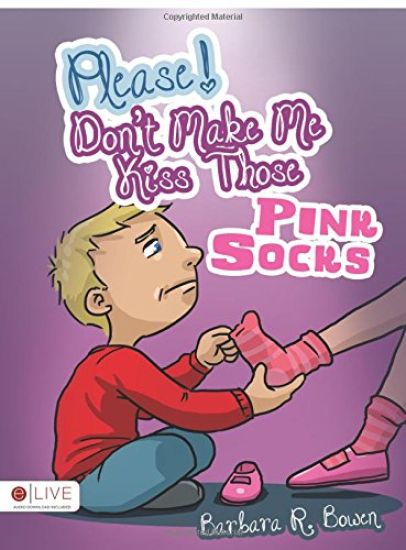
Please! Don't Make Me Kiss Those Pink Socks
Barbara R. Bowen
Tate Publishing Enterprises
2014
nidottu

The Everything Guide To The Low-FODMAP Diet
Barbara Bolen; Kathleen Bradley
Adams Media Corporation
2014
pokkari
150 recipes to ease painful symptoms and improve digestion!If you suffer with symptoms of IBS, you know that digestive troubles and pain can disrupt your day-to-day life. Fortunately, researchers have come up with a new treatment plan to help you control symptoms: a low-FODMAP diet. FODMAPs are a collection of short-chain carbohydrates that are difficult to digest and found in many common foods, like wheat, milk, beans, and some vegetables, fruits, and sweeteners. The Everything Guide to the Low-FODMAP Diet walks you through the step-by-step process for identifying your individual sensitivities--and gives you options and substitutions so you can enjoy your favorite foods again.Learn how to:Understand food allergies and intoleranceIdentify high- and low-FODMAP foodsEliminate FODMAP sources from your dietStock your pantry for successCreate your own personalized diet based on your unique needsRe-create favorite recipes using low-FODMAP ingredients Dr. Barbara Bolen, an IBS specialist, provides advice and tips for developing a personalized and realistic healthy eating plan. And with 150 low-FODMAP and gluten-free recipes, you can reduce digestive distress and feel great while enjoying satisfying and nutritious meals!
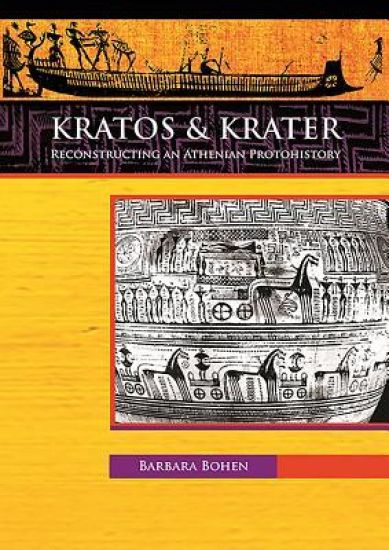
Athenian governance and culture are reconstructed from the Bronze Age into the historical era based on traditions, archaeological contexts and remains, foremost the formal commensal and libation krater. Following Mycenaean immigration from the Peloponnesos during the transitional years, changes in governance are observable. Groups under aristocratic leadership, local and immigrant, aspired to coexist under a surprisingly formal set of stipulations that should be recognized as Athens’ first constitution. Synoikismos did not refer to a political union of Attica, sometimes attributed to Theseus, but to a union of aristocratic houses (oikoi). The union replaced absolute monarchy with a new oligarchical-monarchy system, each king selected from one of the favoured aristocratic houses and ruling for life without inheritance. The system prevailed through the late eleventh to the mid-eighth c. and is corroborated by Athenian traditions cross-referenced with archaeological data from the burial grounds, and a formerly discredited list of Athenian Iron Age kings. Some burial grounds have been tentatively identified as those of the Melanthids, Alcmeonids, Philaids and Medontids, who settled the outskirts of Athens along with other migrant groups following the decline of the elite in the Peloponnesos. While the Melanthids left during the 11th c. Ionian Migration other aristocratic houses remained and contributed to the evolution of the historical era polis of Athens. One noble family, the Alcmeonids preserved their cemetery into the Archaic period in a burial record of 600 years’ duration. Incorporated into this work is a monograph on the Athenian formal krater used by these primarily Neleid aristocratic houses in assembly and ritual. Some Homeric practices parallel those found in Athens, so the Ionic poets may have documented customs that had existed on the Mainland and were transferred to Ionia during the Ionian Migration. The demise of both the constitution and the standard, ancestral krater in Athens following a mid-eighth c. watershed is testimony to an interval of political change, as noted by Ian Morris, before the systematized establishment of annual archonship in the following century. The support this research has given to the validity of the King List has resulted in a proposed new chronology, with an earlier onset for the Geometric period at 922 BC, rather than the currently accepted 900 BC. The relative chronology of Coldstream based on style is generally accepted here, but some intermediate stages are revised based on perceptible break data, such as the onset of a new kingship, a reported war, or the demise of a governance system.


