

Kirjahaku
Etsi kirjoja tekijän nimen, kirjan nimen tai ISBN:n perusteella.
1000 tulosta hakusanalla Barbara H Clark

Pacific Latin America in Prehistory
Mark S. Aldenderfer; Barbara Arroyo; Bruce F. Benz; John E. Clark; Richard G. Cooke; Arthur A. Demarest; Michael W. Love; George H. Michaels; Michael E. Moseley
Washington State University Press
1999
pokkari
A remarkable range of ancient societies and economies flourished in the environmentally diverse coastal regions of Pacific Latin America. This first ever synthesis from a Pacific perspective describes the archaeological investigations recently undertaken in the coastal littoral. Studying the similarities, and the many differences, of these varied prehistoric cultures can help us understand some central issues in archaeology--to what extent were cultural variations caused by different historical traditions, environmental conditions, and interactions with neighboring peoples, and how do civilizations arise?In this volume, specialists explain their latest findings in terms of archaic period adaptations, the development and spread of agriculture, the beginnings of sedentism, the formative periods of civilization, and the origins of socio-political inequality. The essays report on archaeological research in southern Mexico, Guatemala, Panama, Ecuador, and Peru--an are extending from the Marismas region of coastal Mexico to Chile's north coast.

Facing Up to Scarcity offers a powerful critique of the nonconsequentialist approaches that have been dominant in Anglophone moral and political thought over the last fifty years. In these essays Barbara H. Fried examines the leading schools of contemporary nonconsequentialist thought, including Rawlsianism, Kantianism, libertarianism, and social contractarianism. In the realm of moral philosophy, she argues that nonconsequentialist theories grounded in the sanctity of "individual reasons" cannot solve the most important problems taken to be within their domain. Those problems, which arise from irreducible conflicts among legitimate (and often identical) individual interests, can be resolved only through large-scale interpersonal trade-offs of the sort that nonconsequentialism foundationally rejects. In addition to scrutinizing the internal logic of nonconsequentialist thought, Fried considers the disastrous social consequences when nonconsequentialist intuitions are allowed to drive public policy. In the realm of political philosophy, she looks at the treatment of distributive justice in leading nonconsequentialist theories. Here one can design distributive schemes roughly along the lines of the outcomes favoured--but those outcomes are not logically entailed by the normative premises from which they are ostensibly derived, and some are extraordinarily strained interpretations of those premises. Fried concludes, as a result, that contemporary nonconsequentialist political philosophy has to date relied on weak justifications for some very strong conclusions.

A clear, engaging, evidence-based guide to monetizing data, for everyone from employee to board member.Most organizations view data monetization—converting data into money—too narrowly: as merely selling data sets. But data monetization is a core business activity for both commercial and noncommercial organizations, and, within organizations, it’s critical to have wide-ranging support for this pursuit. In Data Is Everybody’s Business, the authors offer a clear and engaging way for people across the entire organization to understand data monetization and make it happen. The authors identify three viable ways to convert data into money—improving work with data, wrapping products with data, and selling information offerings—and explain when to pursue each and how to succeed. Key features of the book:• Grounded in twenty-eight years of academic research, including nine years of research at the MIT Sloan Center for Information Systems Research (MIT CISR)• Definitions of key terms, self-reflection questions, appealing graphics, and easy-to-use frameworks• Rich with detailed case studies• Supplemented by free MIT CISR website resources (cisr.mit.edu)Ideal for organizations engaged in data literacy training, data-driven transformation, or digital transformation, Data Is Everybody’s Business is the essential guide for helping everybody in the organization—not just the data specialists—understand, get excited about, and participate in data monetization.
A clear, engaging, evidence-based guide to monetizing data, for everyone from employee to board member. Most organizations view data monetization converting data into money too narrowly: as merely selling data sets. But data monetization is a core business activity for both commercial and noncommercial organizations, and, within organizations, it s critical to have wide-ranging support for this pursuit. In Data Is Everybody s Business, the authors offer a clear and engaging way for people across the entire organization to understand data monetization and make it happen. The authors identify three viable ways to convert data into money improving work with data, wrapping products with data, and selling information offerings and explain when to pursue each and how to succeed. Key features of the book: Grounded in twenty-eight years of academic research, including nine years of research at the MIT Sloan Center for Information Systems Research (MIT CISR) Definitions of key terms, self-reflection questions, appealing graphics, and easy-to-use frameworks Rich with detailed case studies Supplemented by free MIT CISR website resources (cisr.mit.edu). Ideal for organizations engaged in data literacy training, data-driven transformation, or digital transformation, Data Is Everybody s Business is the essential guide for helping everybody in the organization not just the data specialists understand, get excited about, and participate in data monetization.
While family life has conspicuously changed in the past fifty years, it would be a mistake to conclude that family routines and rituals have lost their meaning. In this book Barbara H. Fiese, a clinical and developmental psychologist, examines how the practices of diverse family routines and the meanings created through rituals have evolved to meet the demands of today’s busy families. She discusses and integrates various research literatures and draws on her own studies to show how family routines and rituals influence physical and mental health, translate cultural values, and may even be used therapeutically.Looking at a range of family activities from bedtime stories to special holiday meals, Fiese relates such occasions to significant issues including parenting competence, child adjustment, and relational well-being. She concludes by underscoring the importance of flexible approaches to family time to promote healthier families and communities.

Tracing the story of anger from the Buddha to Twitter, Rosenwein provides a much-needed account of our changing and contradictory understandings of this emotion All of us think we know when we are angry, and we are sure we can recognize anger in others as well. But this is only superficially true. We see anger through lenses colored by what we know, experience, and learn. Barbara H. Rosenwein traces our many conflicting ideas about and expressions of anger, taking the story from the Buddha to our own time, from anger’s complete rejection to its warm reception. Rosenwein explores how anger has been characterized by gender and race, why it has been tied to violence and how that is often a false connection, how it has figured among the seven deadly sins and yet is considered a virtue, and how its interpretation, once largely the preserve of philosophers and theologians, has been gradually handed over to scientists—with very mixed results. Rosenwein shows that the history of anger can help us grapple with it today.
This book will introduce the reader to the wide variety of analytical techniques that are employed by those working on the conservation of materials. An introduction to each technique is provided with explanations of how data may be obtained and interpreted. Examples and case studies will be included to illustrate how each technique is used in practice. The fields studied include: inorganic materials, polymers, biomaterials and metals. Clear examples of data analysis feature, designed to assist the reader in their choice of analytical method.
This book will introduce the reader to the wide variety of analytical techniques that are employed by those working on the conservation of materials. An introduction to each technique is provided with explanations of how data may be obtained and interpreted. Examples and case studies will be included to illustrate how each technique is used in practice. The fields studied include: inorganic materials, polymers, biomaterials and metals. Clear examples of data analysis feature, designed to assist the reader in their choice of analytical method.

The book will be an open learning / distance learning text in the Analytical Techniques for the Sciences (AnTS) covering analytical techniques used in forensic science. No prior knowledge of the analytical techniques will be required by the reader. An introductory chapter will provide an overview of the science of the materials used as forensic evidence. Each of the following chapters will describe the techniques used in forensic analysis. The theory, instrumentation and sampling techniques will be explained and examples of the application of each technique to particular forensic samples will be provided. The reader will be able to assess their understanding with the use of regular self assessment questions and discussion questions throughout the book. The user of the book will be able to apply their understanding to the application of specific techniques to particular analyses encountered in their professional life.

Provides an introduction for those needing to use infrared spectroscopy for the first time, explaining the fundamental aspects of this technique, how to obtain a spectrum, and how to analyze infrared data covering a wide range of applications.

This book introduces the techniques used for the analysis of polymers. It covers the main aspects of polymer science and technology; identification, polymerization, molecular weight, structure, surface properties, degradation and mechanical properties. * Clear explanations of each analytical technique * Describes the application of techniques to the study of polymers * Encourages learning through numerous self-assessment questions and answers * Structured for flexible learning

Infrared spectroscopy (IR) is a well established analytical technique for the identification of organic molecules. In this first dedicated volume, the theory of IR is described and is then related to various biological systems. Chapters on instrumentation, sample preparation and the interpretation of spectra give the reader practical help in using the technique. A comprehensive applications chapter illustrates the diversity and power of this technique in real systems.
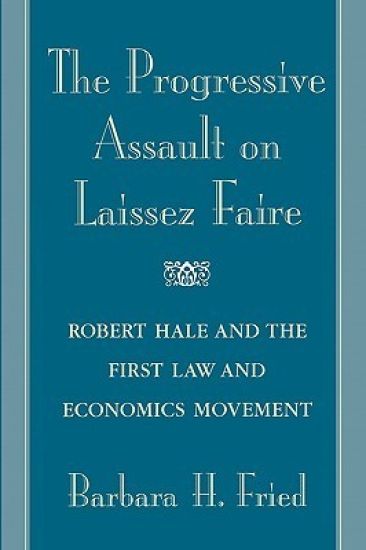
Law and economics is the leading intellectual movement in law today. This book examines the first great law and economics movement in the early part of the twentieth century through the work of one of its most original thinkers, Robert Hale. Beginning in the 1890s and continuing through the 1930s, progressive academics in law and economics mounted parallel assaults on free-market economic principles. They showed first that "private," unregulated economic relations were in fact determined by a state-imposed regime of property and contract rights. Second, they showed that the particular regime of rights that existed at that time was hard to square with any common-sense notions of social justice.Today, Hale is best known among contemporary legal academics and philosophers for his groundbreaking writings on coercion and consent in market relations. The bulk of his writing, however, consisted of a critique of natural property rights. Taken together, these writings on coercion and property rights offer one of the most profound and elaborated critiques of libertarianism, far outshining the better-known efforts of Richard Ely and John R. Commons. In his writings on public utility regulation, Hale also made important contributions to a theory of just, market-based distribution.This first, full-length study of Hale's work should be of interest to legal, economic, and intellectual historians.
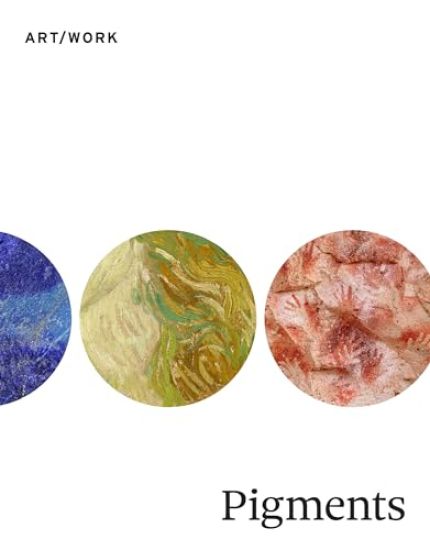
Pigments
Barbara H. Berrie; Caroline Fowler; Karin Leonhard; Ittai Weinryb
PRINCETON UNIVERSITY PRESS
2024
pokkari
A concise illustrated history of one of art’s most important and elusive elementsOver the millennia, humans have used pigments to decorate, narrate, and instruct. Charred bone, ground earth, stones, bugs, and blood were the first pigments. New pigments were manufactured by simple processes such as corrosion and calcination until the Industrial Revolution introduced colors outside the spectrum of the natural world. Pigments brings together leading art historians and conservators to trace the history of the materials used to create color and their invention across diverse cultures and time periods. This richly illustrated book features incisive historical essays and case studies that shed light on the many forms of pigments—the organic and inorganic; the edible and the toxic; and those that are more precious than gold. It shows how pigments were as central to the earliest art forms and global trade networks as they are to commerce, ornamentation, and artistic expression today. The book reveals the innate instability and mutability of most pigments and discusses how few artworks or objects look as they did when they were first created.From cave paintings to contemporary art, Pigments demonstrates how a material understanding of color opens new perspectives on visual culture and the history of art.

Steel Quarters: The Story of Theola Stacey Sellers Sermons
Barbara H. Judd
Speaklife Publishing
2017
nidottu

How To Keep From Breaking Your Heart
Barbara H. Roberts
Jones and Bartlett Publishers, Inc
2008
nidottu
Over 40% of all women will die of cardiovascular disease. This is a startling statistic, one that surprises most people -- and, unfortunately, many doctors, as well. In this ground-breaking book, Dr. Barbara Roberts explains the real-life effects of the grim statistics on women’s heart disease and provides a common sense guide to treatment and reducing risk. Aimed at women (and the men who love them), How to Keep From Breaking Your Heart will arm you with information about every weapon medicine has at its disposal to fight the nation’s number one killer. Dr. Roberts, a board certified cardiologist and Director of the Women's Cardiac Center at the Miriam Hospital in Providence, Rhode Island, shows how differences in symptoms, testing, treatment, and attitudes regarding female vs. male heart disease have resulted in inordinate illness and death amongst women. She then presents a clear, authoritative roadmap for readers to improve their cardiac health. By explaining how to improve your cardiac health and, where necessary, find the best treatment possible, Dr. Roberts provides a practical resource that teaches you how to keep your heart healthy. New! Updated drug information and and new studied and research!
Concepts and Definitions of Family for the 21st Century
Barbara H Settles; Suzanne Steinmetz
Routledge Member of the Taylor and Francis Group
1999
sidottu
Explore the breakdown of the universal family form into new living arrangements and the political and social implications of how they influence the definition of family today! Concepts and Definitions of Family for the 21st Century views families from a US perspective and from many different cultures and societies. You will examine the family as it has evolved from the 1950s traditional family to today’s family structures. The controversial question, “What is family?” is thoroughly examined as it has become an increasingly important social policy concern because of the recent change in the traditional family. Scholars and researchers in family studies and sociology will be intrigued by these thought-provoking articles that analyze the definition of the family from a multitude of perspectives.Concepts and Definitions of Family for the 21st Century looks at family in terms of its social construction, variations and the diversity in families, among others. You will examine the negative implications of using the term “The Family” as it implies “The Nuclear Family,” which many powerful lobbies (politics, morality, religion) claim to support and revere. You will also explore family ideology and identity from many different social and cultural contexts. Some of the family issues you will explore in Concepts and Definitions of Family for the 21st Century include:marrying, procreating, and divorcing in a traditional Jewish family redefining western families by taking into consideration the legal factors, history, tradition and the continued expansion of the definition of family in the US addressing family issues in Lithuania, a country amidst many political changes challenging and complicating the definition of family with stepfamilies exploring the question “What are families after divorce?” examining multicultural motives for marriage and how these motives effect courting behavior in Lithuania defining families through caregiving patternsConcepts and Definitions of Family for the 21st Century goes in-depth to broaden and interpret the meaning of family in today’s society. Through the exploration of legal implications, professional and personal needs this text takes into account the large variety of groups that have close living relationships. Concepts and Definitions of Family for the 21st Century will assist you in answering the difficult and complex question “What is family?”

Why did early medieval kings declare certain properties to be immune from the judicial and fiscal encroachments of their own agents? Did weakness compel them to prohibit their agents from entering these properties, as historians have traditionally believed? In a richly detailed book that will be greeted as a landmark addition to the literature on the Middle Ages, Barbara H. Rosenwein argues that immunities were markers of power. By placing restraints on themselves and their agents, kings demonstrated their authority, affirmed their status, and manipulated the boundaries of sacred space.Rosenwein transforms our understanding of an institution central to the political and social dynamics of medieval Europe. She reveals how immunities were used by kings and other leaders to forge alliances with the noble families and monastic centers that were central to their power. Generally viewed as unchanging juridical instruments, immunities as they appear here are as fluid and diverse as the disparate social and political conflicts that they at once embody and seek to defuse. Their legacy reverberates in the modern world, where liberal institutions, with their emphasis on state restraint, clash with others that encourage governmental intrusion. The protections against unreasonable searches and seizures provided by English common law and the U.S. Constitution developed in part out of the medieval experience of immunities and the institutions that were elaborated to breach them.