

Kirjahaku
Etsi kirjoja tekijän nimen, kirjan nimen tai ISBN:n perusteella.
1000 tulosta hakusanalla Barbara J. King

The Fungal Kingdom
Joseph Heitman; Barbara J. Howlett; Pedro W. Crous; Eva H. Stukenbrock; Timothy Yong James; Neil A. R. Gow
American Society for Microbiology
2017
sidottu
Members of the fungal kingdom—the decomposers, the fermenters, the pathogens, the symbiotes—play critical roles in the ecology of our planet and have provided both benefits and hazards to humans for millennia. Pathogenic fungi are responsible for ca. 1.5 million deaths each year, yet other members of the Kingdom Fungi provide foods, medicines, industrial products, and more: a window for researchers into the workings of all eukaryotes. In The Fungal Kingdom, an international team of experts has assembled reviews by more than 170 mycologists, cell biologists, systems biologists, mathematicians, geneticists, and genomicists that cover the latest research and knowledge about all aspects of the Eumycota. The Fungal Kingdom is a rich collection of articles on all things fungi. These reviews present the latest fungal research and the impacts of fungi on agriculture, ecology, human health, and industrial applications as well as what lies ahead.
Scientists have long cautioned against attributing familiar emotions to animals, arguing that it limits our ability to truly comprehend the lives of other creatures. Recently, however, things have begun to shift in the other direction, and anthropologist Barbara J. King is at the forefront of that movement, arguing strenuously that we can-and should-attend to animal emotions. With How Animals Grieve, she draws our attention to the specific case of grief, and relates story after story - from field sites, farms, homes, and more - of animals mourning lost companions, mates, or friends. The resulting book is both daring and down to earth, strikingly ambitious yet careful to acknowledge the limits of our understanding. Through the moving stories she chronicles and analyzes so beautifully, King brings us closer to the animals with whom we share a planet, and helps us see our own experiences, attachments, and emotions as part of a larger web of life, death, love, and loss.

In recent years, scientific advances in our understanding of animal minds have led to major changes in how we think about, and treat, animals in zoos and aquariums. The general public, it seems, is slowly coming to understand that animals like apes, elephants, and dolphins have not just brains, but complicated inner and social lives, and that we need to act accordingly. Yet that realization hasn't yet made its presence felt to any great degree in our most intimate relationship with animals: at the dinner table. Sure, there are vegetarians and vegans all over, but at the same time, meat consumption is up, and meat remains a central part of the culinary and dining experience for the majority of people in the developed world. With Personalities on the Plate, Barbara King asks us to think hard about our meat eating though this isn't a polemic intended to convert readers to veganism. What she is interested in is why we've not drawn food animals into our concern, and, as part of that, just what we do know about the minds and lives of chickens, cows, octopuses, fish, and more. Rooted in the latest science, and built on a mix of firsthand experience (including entomophagy, which, yes, is what you think it is) and close engagement with the work of scientists, farmers, vets, and chefs, Personalities on the Plate is an unforgettable journey through the world of animals we eat. Knowing what we know and what we may yet learn what is the proper ethical stance toward eating meat? What are the consequences for the planet? How can we life an ethically and ecologically sound life through our food choices? We could have no better guide to these fascinatingly thorny questions than King, whose deep empathy embraces human and animal alike. Readers will be moved, provoked, and changed by this powerful book.

Religion has been a central part of human experience since at least the dawn of recorded history. The gods change, as do the rituals, but the underlying desire remains a desire to belong to something larger, greater, most lasting than our mortal, finite selves. But where did that desire come from? Can we explain its emergence through evolution? Yes, says biological anthropologist Barbara J. King and doing so not only helps us to understand the religious imagination, but also reveals fascinating links to the lives and minds of our primate cousins. Evolving God draws on King's own fieldwork among primates in Africa and paleoanthropology of our extinct ancestors to offer a new way of thinking about the origins of religion, one that situates it in a deep need for emotional connection with others, a need we share with apes and monkeys. Though her thesis is provocative, and she's not above thoughtful speculation, King's argument is strongly rooted in close observation and analysis. She traces an evolutionary path that connects us to other primates, who, like us, display empathy, make meanings through interaction, create social rules, and display imagination the basic building blocks of the religious imagination. With fresh insights, she responds to recent suggestions that chimpanzees are spiritual or even religious beings, and that our ancient humanlike cousins carefully disposed of their dead well before the time of Neandertals. King writes with a scientist's appreciation for evidence and argument, leavened with a deep empathy and admiration for the powerful desire to belong, a desire that not only brings us together with other humans, but with our closest animal relations as well.
From the time of our earliest childhood encounters with animals, we casually ascribe familiar emotions to them. But scientists have long cautioned against such anthropomorphizing, arguing that it limits our ability to truly comprehend the lives of other creatures. Recently, however, things have begun to shift in the other direction, and anthropologist Barbara J. King is at the forefront of that movement, arguing strenuously that we can - and should - attend to animal emotions. With "How Animals Grieve", she draws our attention to the specific case of grief, and relates story after story - from fieldsites, farms, homes, and more - of animals mourning lost companions, mates, or friends. King tells of elephants surrounding their matriarch as she weakens and dies, and, in the following days, attending to her corpse as if holding a vigil. A housecat loses her sister, from whom she's never before been parted, and spends weeks pacing the apartment, wailing plaintively. A baboon loses her daughter to a predator and sinks into grief. In each case, King uses her anthropological training to interpret and try to explain what we see-to help us understand this animal grief properly, as something neither the same as nor wholly different from the human experience of loss. The resulting book is both daring and down to earth, strikingly ambitious even as it's careful to acknowledge the limits of our understanding. Through the moving stories she chronicles and analyzes so beautifully, King brings us closer to the animals with whom we share a planet and helps us see our own experiences, attachments, and emotions as part of a larger web of life, death, love, and loss.
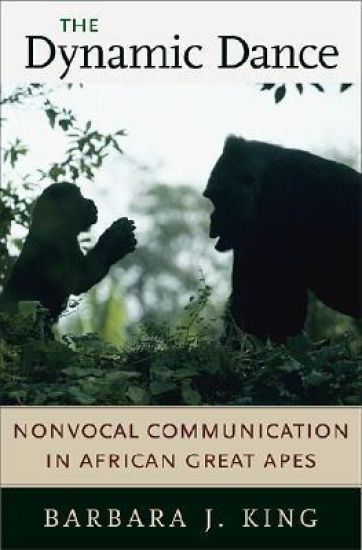
Mother and infant negotiate over food; two high-status males jockey for power; female kin band together to get their way. It happens among humans and it happens among our closest living relatives in the animal kingdom, the great apes of Africa. In this eye-opening book, we see precisely how such events unfold in chimpanzees, bonobos, and gorillas: through a spontaneous, mutually choreographed dance of actions, gestures, and vocalizations in which social partners create meaning and come to understand each other. Using dynamic systems theory, an approach employed to study human communication, Barbara King is able to demonstrate the genuine complexity of apes' social communication, and the extent to which their interactions generate meaning. As King describes, apes create meaning primarily through their body movements--and go well beyond conveying messages about food, mating, or predators. Readers come to know the captive apes she has observed, and others across Africa as well, and to understand "the process of creating social meaning."This new perspective not only acquaints us with our closest living relatives, but informs us about a possible pathway for the evolution of language in our own species. King's theory challenges the popular idea that human language is instinctive, with rules and abilities hardwired into our brains. Rather, The Dynamic Dance suggests, language has its roots in the gestural "building up of meaning" that was present in the ancestor we shared with the great apes, and that we continue to practice to this day.
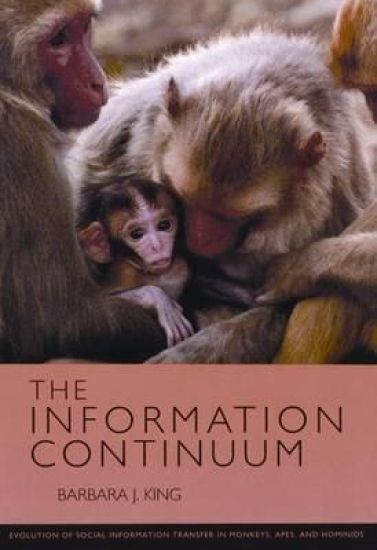
The Information Continuum creates a synthetic view of the evolution of communication among primates. King contends that the crucial element in the evolution of information acquisition and transfer is the acquired ability to donate information to others.
Tug Lake Tales: A novel about a one room country schoolhouse in northern Wisconsin
Barbara J. King
Createspace Independent Publishing Platform
2016
nidottu

As people come to understand more about animals’ inner lives—the intricacies of their thoughts and the emotions that are expressed every day by whales and cows, octopus and mice, even bees—we feel a growing compassion, a desire to better their lives. But how do we translate this compassion into helping other creatures, both those that are and are not our pets? Bringing together the latest science with heartfelt storytelling, Animals’ Best Friends reveals the opportunities we have in everyday life to help animals in our homes, in the wild, in zoos, and in science labs, as well as those considered to be food. Barbara J. King, an expert on animal cognition and emotion, guides us on a journey both animal and deeply human. We meet cows living relaxed lives in an animal sanctuary—and cows with plastic portals in their sides at a university research station. We observe bison free-roaming at Yellowstone National Park and chimpanzees confined to zoos. We learn with King how to negotiate vegetarian preferences in omnivore restaurants. We experience the touch of a giant Pacific octopus tasting King’s skin with one of his long, neuron-rich arms. We reflect on animal testing as King shares her own experience as the survivor of a particularly nasty cancer. And in a moment all too familiar to many of us, we recover from a close encounter with two spiders in the home. This is a book not of shaming and limitation, but of uplift and expansion. Throughout this journey, King makes no claims of personal perfection. Though an animal expert, she is just like the rest of us: on a journey still, learning each day how to be better, and do better, for animals. But as Animals’ Best Friends makes clear, challenging choices can bring deep rewards. By turning compassion into action on behalf of animals, we not only improve animals’ lives—we also immeasurably enrich our own.

Barbara Kingsolver wears the feminist mantle with joyful pride, and her spirited embrace of political themes is contagious. Responding to richly-drawn heroines along their journeys to do right by family and community, readers embrace Kingsolver's political novels, making them bestsellers. From the haunting Arizona landscape of Kingsolver's early trilogy of novels, to the lush African jungle that sets the scene in her latest, The Poisonwood Bible, Kingsolver weaves colorful tapestries with vivid prose, exceptional intelligence, and unexpected humor. DeMarr's comprehensive treatment covers not only Kingsolver's four novels, each with its own chapter, but also discusses with considerable insight her background as a feminist, as a journalist, and, most importantly, as a humanist.Introducing readers to Kingsolver, DeMarr devotes a chapter to her life and work, showing how the two are deeply intertwined. While Kingsolver's writing is never strictly autobiographical, the well-researched section on politics and genre discusses how experiences in Kingsolver's own life and in her work as a political journalist have influenced her fiction writing. In addition to the celebrated novels that readers have come to love: The Bean Trees, Pigs in Heaven, Animal Dreams, and The Poisonwood Bible, as well as the poems and short stories, DeMarr covers the nonfiction: the essays and political writings. A full chapter analyzes each novel in terms of plot and character development, thematic content, symbolism, and the importance of place and language. Students and fans of Kingsolver will find this work, including its well-organized bibliography, accessible and interesting.
Winning Widows: "A Study in the Book of Ruth" with Barbara J. White
Barbara J. White
Bold Truth Publishing
2019
nidottu
"We all can relate to Ruth's story, because most everyone at one time or another, has lost something. In this book, Barbara shares insightful truths about a God who cares. A faithful God that specializes in: taking nothing and making something, healing the brokenhearted, and restoring lives when all may seem lost."Uplifting and encouraging from cover to cover."

The J.M. Barrie Ladies' Swimming Society
BARBARA J. ZITWER; Barbara Jane Zitwer
Short Books Ltd
2012
nidottu
A warmhearted funny novel that explores the secret lives of women - from the ages of 15 to 85...


Would you really like to have a fulfilled and blessed life in Christ? This book will show you how. It is a treasure for your soul and a pathway to a sound relationship with Christ.This book is well worth the time spent reading it. Should you put into practice what you read in this book, your walk with Christ will change immensely. This book is a teaching tool as well as a spiritual guide. Your relationship with God will take on new meaning after you embrace the thought-provoking essence of this book, and you will be a much happier person.

English Aristocratic Women combines a collective portrait of aristocratic women with an analysis of the particular, class-specific form of patriarchy and gender relations that flourished among the upper classes in Yorkist and early Tudor England. The first book on the subject based on extensive archival research, it examines the apparent contradiction between the patriarchal institutions that shaped women's lives and the wide range of their activities, control of resources, and power over themselves and members of their families. It demonstrates that the roles of aristocratic wives, mothers, and wideows constituted careers for women that had as much public and political significance and were as crucial for the survival and prosperity of their families and class as the careers of their husbands. They managed their families' property and households; arranged the marriages and careers of their children; created, sustained, and exploited the client-patron relationships that were an essential element in politics at the regional and national levels and in the power of individual families; and, finally, managed the transmission and distribution of property from one generation to another, since most wives outlive their husbands. For women from the inner circle of court families, careers at court expanded and supported these roles. As in all careers, aristocratic women gained prestige, authority, power, and financial rewards for their activities. Recognising the full significance of aristocratic women's careers revises our understanding of Yorkist and early Tudor politics. In addition, the centrality of their roles means that reconstructing their activities creates a vivid picture of every aspect of aristocratic domestic, familial, economic, and political life.

Community Treatment for Youth
Barbara J. Burns; Kimberly Hoagwood
Oxford University Press Inc
2002
nidottu
Burns and Hoagwood bring together original articles by some of the country's leading experts on children's mental health services to create an outstanding text exploring innovative community interventions for youth with serious emotional disorders. These community-based interventions include home-based services, intensive case management, crisis care, therapeutic foster care, therapeutic group homes and community mentors. Part of the series on Innovations in Practice and Service Delivery with Vulnerable Populations, this book will be a needed reference for mental health workers and researchers in children's mental health, and an outstanding text for courses in community mental health and the mental health of children and adolescents.

Portraits of aristocratic women from the Yorkist and Tudor periods reveal elaborately clothed and bejeweled nobility, exemplars of their families' wealth. Unlike their male counterparts, their sitters have not been judged for their professional accomplishments. In this groundbreaking study, Barbara J. Harris argues that the roles of aristocratic wives, mothers, and widows constituted careers for women that had as much public and political significance and were as crucial for the survival and prosperity of their families and class as their husband's careers. Women, Harris demonstrates, were trained from an early age to manage their families' property and households; arrange the marriages and careers of their children; create, sustain, and exploit the client-patron relationships that were an essential element in politics at the regional and national levels; and, finally, manage the transmission and distribution of property from one generation to another, since most wives outlived their husbands. English Aristocratic Women unveils the lives of noblewomen whose historical influence has previously been dismissed, as well as those who became favourites at the court of Henry VIII. Through extensive archival research of documents belonging to more than twelve hundred families, Harris paints a collective portrait of upper-class women of this period. By recognising the full significance of the aristocratic women's careers, this book reinterprets the politics and gender relations of early modern England. Barbara J. Harris is Professor of History and Women's Studies at the University of North Carolina at Chapel Hill. Her previous works include Edward Stafford, Third Duke of Buckingham, 1478-1521.