

Kirjahaku
Etsi kirjoja tekijän nimen, kirjan nimen tai ISBN:n perusteella.
1000 tulosta hakusanalla Barbara J. Morris


The Secret of the Broken Stone: The Microscopic World Series Book 2
Barbara J. Morrison
Createspace Independent Publishing Platform
2015
nidottu

Merchiston, Bruntsfield and North Morningside 1896
Barbara Morris; R. J. Morris
ALAN GODFREY MAPS
1983
kartta, viikattu
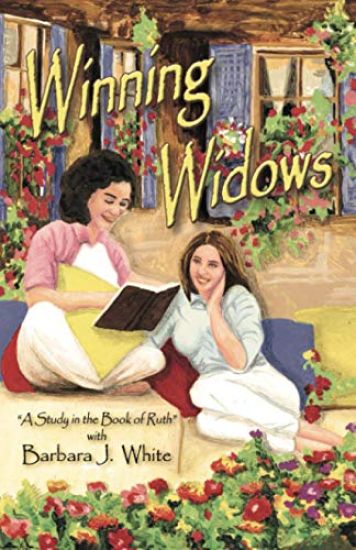
Winning Widows: "A Study in the Book of Ruth" with Barbara J. White
Barbara J. White
Bold Truth Publishing
2019
nidottu
"We all can relate to Ruth's story, because most everyone at one time or another, has lost something. In this book, Barbara shares insightful truths about a God who cares. A faithful God that specializes in: taking nothing and making something, healing the brokenhearted, and restoring lives when all may seem lost."Uplifting and encouraging from cover to cover."

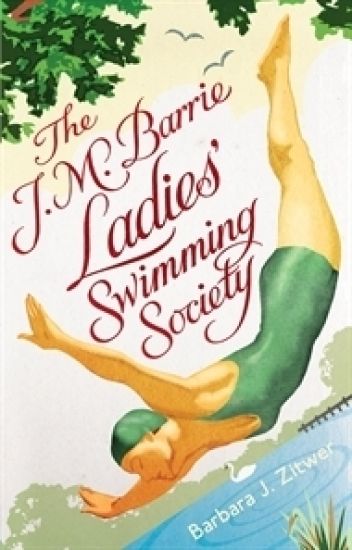
The J.M. Barrie Ladies' Swimming Society
BARBARA J. ZITWER; Barbara Jane Zitwer
Short Books Ltd
2012
nidottu
A warmhearted funny novel that explores the secret lives of women - from the ages of 15 to 85...


Would you really like to have a fulfilled and blessed life in Christ? This book will show you how. It is a treasure for your soul and a pathway to a sound relationship with Christ.This book is well worth the time spent reading it. Should you put into practice what you read in this book, your walk with Christ will change immensely. This book is a teaching tool as well as a spiritual guide. Your relationship with God will take on new meaning after you embrace the thought-provoking essence of this book, and you will be a much happier person.

English Aristocratic Women combines a collective portrait of aristocratic women with an analysis of the particular, class-specific form of patriarchy and gender relations that flourished among the upper classes in Yorkist and early Tudor England. The first book on the subject based on extensive archival research, it examines the apparent contradiction between the patriarchal institutions that shaped women's lives and the wide range of their activities, control of resources, and power over themselves and members of their families. It demonstrates that the roles of aristocratic wives, mothers, and wideows constituted careers for women that had as much public and political significance and were as crucial for the survival and prosperity of their families and class as the careers of their husbands. They managed their families' property and households; arranged the marriages and careers of their children; created, sustained, and exploited the client-patron relationships that were an essential element in politics at the regional and national levels and in the power of individual families; and, finally, managed the transmission and distribution of property from one generation to another, since most wives outlive their husbands. For women from the inner circle of court families, careers at court expanded and supported these roles. As in all careers, aristocratic women gained prestige, authority, power, and financial rewards for their activities. Recognising the full significance of aristocratic women's careers revises our understanding of Yorkist and early Tudor politics. In addition, the centrality of their roles means that reconstructing their activities creates a vivid picture of every aspect of aristocratic domestic, familial, economic, and political life.

Community Treatment for Youth
Barbara J. Burns; Kimberly Hoagwood
Oxford University Press Inc
2002
nidottu
Burns and Hoagwood bring together original articles by some of the country's leading experts on children's mental health services to create an outstanding text exploring innovative community interventions for youth with serious emotional disorders. These community-based interventions include home-based services, intensive case management, crisis care, therapeutic foster care, therapeutic group homes and community mentors. Part of the series on Innovations in Practice and Service Delivery with Vulnerable Populations, this book will be a needed reference for mental health workers and researchers in children's mental health, and an outstanding text for courses in community mental health and the mental health of children and adolescents.

Portraits of aristocratic women from the Yorkist and Tudor periods reveal elaborately clothed and bejeweled nobility, exemplars of their families' wealth. Unlike their male counterparts, their sitters have not been judged for their professional accomplishments. In this groundbreaking study, Barbara J. Harris argues that the roles of aristocratic wives, mothers, and widows constituted careers for women that had as much public and political significance and were as crucial for the survival and prosperity of their families and class as their husband's careers. Women, Harris demonstrates, were trained from an early age to manage their families' property and households; arrange the marriages and careers of their children; create, sustain, and exploit the client-patron relationships that were an essential element in politics at the regional and national levels; and, finally, manage the transmission and distribution of property from one generation to another, since most wives outlived their husbands. English Aristocratic Women unveils the lives of noblewomen whose historical influence has previously been dismissed, as well as those who became favourites at the court of Henry VIII. Through extensive archival research of documents belonging to more than twelve hundred families, Harris paints a collective portrait of upper-class women of this period. By recognising the full significance of the aristocratic women's careers, this book reinterprets the politics and gender relations of early modern England. Barbara J. Harris is Professor of History and Women's Studies at the University of North Carolina at Chapel Hill. Her previous works include Edward Stafford, Third Duke of Buckingham, 1478-1521.

The Oxford Handbook of Southwest Archaeology
Barbara J. Mills; Severin Fowles
OXFORD UNIVERSITY PRESS INC
2022
nidottu
The American Southwest is one of the most important archaeological regions in the world, with many of the best-studied examples of hunter-gatherer and village-based societies. Research has been carried out in the region for well over a century, and during this time the Southwest has repeatedly stood at the forefront of the development of new archaeological methods and theories. Moreover, research in the Southwest has long been a key site of collaboration between archaeologists, ethnographers, historians, linguists, biological anthropologists, and indigenous intellectuals. This volume marks the most ambitious effort to take stock of the empirical evidence, theoretical orientations, and historical reconstructions of the American Southwest. Over seventy top scholars have joined forces to produce an unparalleled survey of state of archaeological knowledge in the region. Themed chapters on particular methods and theories are accompanied by comprehensive overviews of the culture histories of particular archaeological sequences, from the initial Paleoindian occupation, to the rise of a major ritual center in Chaco Canyon, to the onset of the Spanish and American imperial projects. The result is an essential volume for any researcher working in the region as well as any archaeologist looking to take the pulse of contemporary trends in this key research tradition.

The recent explosion of neuroscience techniques has been game-changing in terms of understanding the healthy brain, and in the development of neuropsychiatric treatments. One of the key techniques is functional magnetic resonance imaging (fMRI), which allows us to examine the human brain non-invasively, and observe brain activity in real time. Through fMRI, we are beginning to build a deeper understanding of our thoughts, motivations, and behaviours. Already fMRI has been used to detect conscious activity in some patients who had all indications of being in a vegetative state, and even enabled us to communicate with some of them. This is just one of the many striking areas in which fMRI can be used to 'read minds'. As neuroscientists unravel the brain networks of self-control and morality, we might find abnormalities in criminal offenders. Could we predict crimes before they are committed? fMRI has also been used to detect racial bias in some people who regarded themselves as fair-minded. Meanwhile, the reliability of fMRI as a lie detector in murder cases or as a tool for marketing is being debated. Sex, Lies, and Brain Scans takes readers beyond the media headlines. Barbara Sahakian and Julia Gottwald consider what the technique of fMRI entails, and what information it can give us, showing which applications are possible today, and which ones are science fiction. They also consider the important ethical questions these techniques raise. Should brain scans be allowed at airports to screen for terrorists? Should they be used to vet future judges and teachers? How far will we allow neuroscience to go? It is time to make up our minds.

The recent explosion of neuroscience techniques has proved to be game changing in terms of understanding the healthy brain, and in the development of neuropsychiatric treatments. One of the key techniques available to us is functional magnetic resonance imaging (fMRI), which allows us to examine the human brain non-invasively, and observe brain activity in real time. Through fMRI, we are beginning to build a deeper understanding of our thoughts, motivations, and behaviours. Recent reports that some patients who have all indications of being in a persistent vegetative state actually show conscious awareness, and were able to communicate with researchers, demonstrate perhaps the most remarkable and dramatic use of fMRI. But this is just the most striking of a number of areas in which fMRI is being used to 'read minds', albeit in a very limited way. As neuroscientists unravel the regions of the brain involved in reward and motivation, and in romantic love, we are likely to develop the capacity to influence responses such as love using drugs. fMRI studies have also been used to indicate that many people who would not regard themselves as racist show a racial bias in their emotional responses to faces of another racial group. Meanwhile, the reliability of fMRI as a lie detector in murder cases is being debated - what if the individual simply believes, falsely, that he or she committed a murder? Sex, Lies, and Brain Scans takes readers beyond the media headlines. Barbara J. Sahakian and Julia Gottwald consider what the technique of fMRI entails, and what information it can give us, showing which applications are possible today, and which ones are science fiction. They also consider the important ethical questions these techniques raise. Should individuals applying for jobs as teachers or judges be screened for unconscious racial bias? What if the manipulation of love using 'love potions' was misused for economic or military ends? How far will we allow neuroscience to go? It is time to make up our minds.

Are today's young adults gender rebels or returning to tradition? In Where the Millennials Will Take Us, Barbara J. Risman reveals the diverse strategies youth use to negotiate the ongoing gender revolution. Using her theory of gender as a social structure, Risman analyzes life history interviews with a diverse set of Millennials to probe how they understand gender and how they might change it. Some are true believers that men and women are essentially different and should be so. Others are innovators, defying stereotypes and rejecting sexist ideologies and organizational practices. Perhaps new to this generation are gender rebels who reject sex categories, often refusing to present their bodies within them and sometimes claiming gender queer identities. And finally, many youths today are simply confused by all the changes swirling around them. As a new generation contends with unsettled gender norms and expectations, Risman reminds us that gender is much more than an identity; it also shapes expectations in everyday life, and structures the organization of workplaces, politics, and, ideology. To pursue change only in individual lives, Risman argues, risks the opportunity to eradicate both gender inequality and gender as a primary category that organizes social life.

Are today's young adults gender rebels or returning to tradition? In Where the Millennials Will Take Us, Barbara J. Risman reveals the diverse strategies youth use to negotiate the ongoing gender revolution. Using her theory of gender as a social structure, Risman analyzes life history interviews with a diverse set of Millennials to probe how they understand gender and how they might change it. Some are true believers that men and women are essentially different and should be so. Others are innovators, defying stereotypes and rejecting sexist ideologies and organizational practices. Perhaps new to this generation are gender rebels who reject sex categories, often refusing to present their bodies within them and sometimes claiming gender queer identities. And finally, many youths today are simply confused by all the changes swirling around them. As a new generation contends with unsettled gender norms and expectations, Risman reminds us that gender is much more than an identity; it also shapes expectations in everyday life, and structures the organization of workplaces, politics, and, ideology. To pursue change only in individual lives, Risman argues, risks the opportunity to eradicate both gender inequality and gender as a primary category that organizes social life.
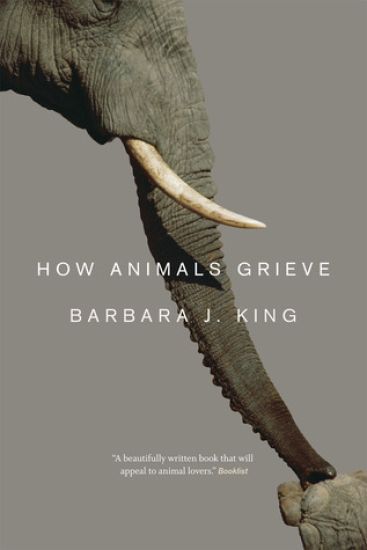
Scientists have long cautioned against attributing familiar emotions to animals, arguing that it limits our ability to truly comprehend the lives of other creatures. Recently, however, things have begun to shift in the other direction, and anthropologist Barbara J. King is at the forefront of that movement, arguing strenuously that we can-and should-attend to animal emotions. With How Animals Grieve, she draws our attention to the specific case of grief, and relates story after story - from field sites, farms, homes, and more - of animals mourning lost companions, mates, or friends. The resulting book is both daring and down to earth, strikingly ambitious yet careful to acknowledge the limits of our understanding. Through the moving stories she chronicles and analyzes so beautifully, King brings us closer to the animals with whom we share a planet, and helps us see our own experiences, attachments, and emotions as part of a larger web of life, death, love, and loss.

In recent years, scientific advances in our understanding of animal minds have led to major changes in how we think about, and treat, animals in zoos and aquariums. The general public, it seems, is slowly coming to understand that animals like apes, elephants, and dolphins have not just brains, but complicated inner and social lives, and that we need to act accordingly. Yet that realization hasn't yet made its presence felt to any great degree in our most intimate relationship with animals: at the dinner table. Sure, there are vegetarians and vegans all over, but at the same time, meat consumption is up, and meat remains a central part of the culinary and dining experience for the majority of people in the developed world. With Personalities on the Plate, Barbara King asks us to think hard about our meat eating though this isn't a polemic intended to convert readers to veganism. What she is interested in is why we've not drawn food animals into our concern, and, as part of that, just what we do know about the minds and lives of chickens, cows, octopuses, fish, and more. Rooted in the latest science, and built on a mix of firsthand experience (including entomophagy, which, yes, is what you think it is) and close engagement with the work of scientists, farmers, vets, and chefs, Personalities on the Plate is an unforgettable journey through the world of animals we eat. Knowing what we know and what we may yet learn what is the proper ethical stance toward eating meat? What are the consequences for the planet? How can we life an ethically and ecologically sound life through our food choices? We could have no better guide to these fascinatingly thorny questions than King, whose deep empathy embraces human and animal alike. Readers will be moved, provoked, and changed by this powerful book.

Religion has been a central part of human experience since at least the dawn of recorded history. The gods change, as do the rituals, but the underlying desire remains a desire to belong to something larger, greater, most lasting than our mortal, finite selves. But where did that desire come from? Can we explain its emergence through evolution? Yes, says biological anthropologist Barbara J. King and doing so not only helps us to understand the religious imagination, but also reveals fascinating links to the lives and minds of our primate cousins. Evolving God draws on King's own fieldwork among primates in Africa and paleoanthropology of our extinct ancestors to offer a new way of thinking about the origins of religion, one that situates it in a deep need for emotional connection with others, a need we share with apes and monkeys. Though her thesis is provocative, and she's not above thoughtful speculation, King's argument is strongly rooted in close observation and analysis. She traces an evolutionary path that connects us to other primates, who, like us, display empathy, make meanings through interaction, create social rules, and display imagination the basic building blocks of the religious imagination. With fresh insights, she responds to recent suggestions that chimpanzees are spiritual or even religious beings, and that our ancient humanlike cousins carefully disposed of their dead well before the time of Neandertals. King writes with a scientist's appreciation for evidence and argument, leavened with a deep empathy and admiration for the powerful desire to belong, a desire that not only brings us together with other humans, but with our closest animal relations as well.