Kirjojen hintavertailu. Mukana 11 244 527 kirjaa ja 12 kauppaa.

Kirjahaku

Etsi kirjoja tekijän nimen, kirjan nimen tai ISBN:n perusteella.

1000 tulosta hakusanalla Barbara Johnston

Bowing to Our Divine Essence, Within And Suppressing aspects of our ego-mind That impedes our Divine connection
The purpose of this book is to encourage us all to develop within the ability to distinguish between our Divine voice and that of our ego. In doing so we will become inspired through our Divine wisdom to navigate life with clarity that frees us of inner conflict, and allows us to embrace our strengths and weaknesses. We all have a quiet Divine essence within that is often dominated by the noisy aspirations of our ego-mind. Yet, life for us all would be entirely different if we all made a point daily of living life through our Divine lens. Bowing to the Divine essence within, allows our awareness merge into the sacred core of our being to discover our Divine nature. It is in this sacred space that we are able to reawaken our inner wisdom. We then experience life through our Divine lens, and we will never view our earthly life the same again, even after painful moments. We step into our inner power, and it is not about averting painful emotions, but rather seeing all from a higher perspective. Even though our Divine essence, is not visible and is buried in the recesses of our being, it is vividly present within us all and vibrates at an authentic higher reality. Until we connect and sense it within, we will not clearly understand who we are and who we are not. This is not a complicated path and does not require adherence to any particular practice or organisation. It is not an intellectual journey of our mind, and it is not based on any religion, philosophy or belief. It's a simple one that is inherent within us all. One that moves us into a higher consciousness and enriches our life, through our journey of self-discovery, self-understanding and spiritual inspiration.
Qualitative Methods in Sociolinguistics

Qualitative Methods in Sociolinguistics

Barbara Johnstone

Oxford University Press Inc
2000
nidottu
Qualitative Methods in Sociolinguistics is the only book on qualitative research methods designed especially for readers doing research on language and society. It provides a brief, accessible introduction to general theoretical and practical questions about research and also covers the principal means of selecting, collecting, and analyzing data for interpretive sociolinguistic work. Topics discussed include the historical context of contemporary sociolinguistic methodology, the development of research questions, standards of evidence, research ethics, ethnography, discourse analysis, and strategies for writing articles and essays. In each chapter the author considers both field methods and analytical methods, illustrating the approaches by describing studies that have employed them. Exercises, ideas for discussion, and suggestions for further reading enhance the text and provide starting points for student research projects. Clearly written and comprehensible to students at all levels, this unique work is an ideal supplementary text for courses in sociolinguistics, language and culture, and field methods. It is also a helpful reference for anyone contemplating sociolinguistic research on any level.
Speaking Pittsburghese

Speaking Pittsburghese

Barbara Johnstone

Oxford University Press Inc
2013
sidottu
This book explores the history of Pittsburghese, the language of the Pittsburgh, Pennsylvania area as it is imagined and used by Pittsburghers. Pittburghese is linked to local identity so strongly that it is alluded to almost every time people talk about what Pittsburgh is like, or what it means to be a Pittsburgher. But what happened during the second half of the 20th century to reshape a largely unnoticed way of speaking into this highly visible urban "dialect"? In this book, sociolinguist Barbara Johnstone focuses on this question. Treating Pittsburghese as a cultural product of talk, writing, and other forms of social practice, Johnstone shows how non-standard pronunciations, words, and bits of grammar used in the Pittsburgh area were taken up into a repertoire of words and phrases and a vocal style that has become one of the most resonant symbols of local identity in the United States today.
Speaking Pittsburghese

Speaking Pittsburghese

Barbara Johnstone

Oxford University Press Inc
2013
nidottu
This book explores the history of Pittsburghese, the language of the Pittsburgh, Pennsylvania area as it is imagined and used by Pittsburghers. Pittburghese is linked to local identity so strongly that it is alluded to almost every time people talk about what Pittsburgh is like, or what it means to be a Pittsburgher. But what happened during the second half of the 20th century to reshape a largely unnoticed way of speaking into this highly visible urban "dialect"? In this book, sociolinguist Barbara Johnstone focuses on this question. Treating Pittsburghese as a cultural product of talk, writing, and other forms of social practice, Johnstone shows how non-standard pronunciations, words, and bits of grammar used in the Pittsburgh area were taken up into a repertoire of words and phrases and a vocal style that has become one of the most resonant symbols of local identity in the United States today.
Pittsburgh Speech and Pittsburghese

Pittsburgh Speech and Pittsburghese

Barbara Johnstone; Daniel Baumgardt; Maeve Eberhardt; Scott F. Kiesling

De Gruyter Mouton
2015
sidottu
Linguists have sporadically noted peculiarities of pronunciation, lexis and morphosyntax in the speech of European Americans in the Pittsburgh area, and Pittsburgh speech, locally known as “Pittsburghese”, has been a topic of discussion in the Pittsburgh area for decades. This variety has never before been systematically documented, however. The first and only scholarly book to describe Pittsburgh-area varieties of English, Pittsburgh Speech and Pittsburghese is an essential reference tool for anyone studying the dialect of the Pittsburgh area and the only textbook choice for anyone teaching about it.
Uses for Journal Keeping

Uses for Journal Keeping

Anne C. Johnstone; Barbara Johnstone; Valerie Balester

Praeger Publishers Inc
1994
nidottu
This text reports on an ethnographic study of journal-keeping in a university science class. The author spent a summer semester attending a general education class in geology as a participant observer, took extensive notes, interviewed class members and the professor, and analyzed journal entries and other documents related to the class. She provides an example of ethnographic methods to be of use to other composition researchers, especially in her careful attention to reflexivity, that is, the effect of the researcher and the research on data. The book provides a detailed exploration of journal keeping from the perspective of both the students and the professor, as well as case studies of how two students in particular used journal keeping. Journal entries are examined not simply as texts produced by individuals for a class assignment, but as the outcome of a socio-political process, including the goals of the general education curriculum, the goals of the geology course and its instructor, the students' personal and educational goals, the institutional constraints on the professor, the methods of the researchers, and the dynamics of classroom interaction.
"Love Him For Us

"Love Him For Us

Barbara Marquart Johnston

Lutheran News Inc
2020
pokkari
"From Fort To Fort" might have been the title of this book, since my story begins in Fort Worth, TX and ends in Fort Wayne, IN.During those years, I have been surrounded by people of Faith, young and old. In Ft Worth, before I went to Australia, I was the Jr Youth Director, as well as the church secretary at my home congregation, St. Paul Lutheran Church.In Australia, I taught art, grades one through 10 in our Lutheran schools.Upon return to the States, I was secretary to Dr. Charles Evanson for three years, for Dr. Eugene Bunkowske for a year, served in acquisitions in the seminary library, resettled refugees with Catholic Charities, and taught English as a second language to Laotians.At Ascension Lutheran Church in Ft Wayne, I was first a teacher's aide at the preschool, followed by ten years in the capacity of full-time church/ school secretary under Dr. John Stube.These activities placed me in a position to appreciate the points of view of clergy as well as laity.Oh, yes, I was also the wife of a busy pastor/professor, mother to five great kids, foster mom to two teenage boys in Australia, and at last count, between Bob and me, I am grandmother to 31 children To God be the Glory
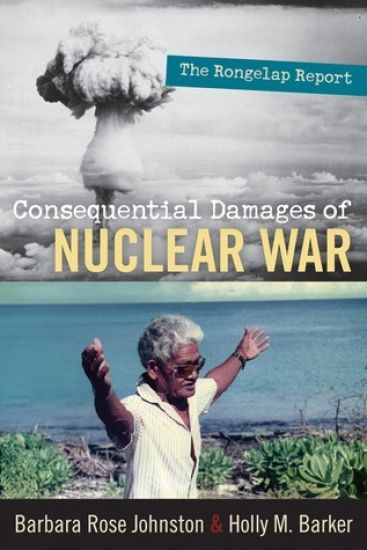
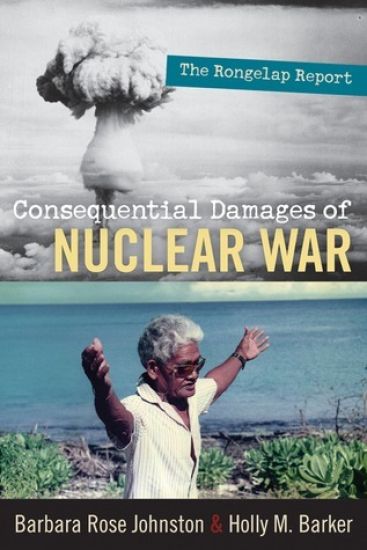
Consequential Damages of Nuclear War

Consequential Damages of Nuclear War

Barbara Rose Johnston; Holly M Barker

Left Coast Press Inc
2008
sidottu
The hydrogen test-bomb Bravo, dropped on the Marshall Islands in 1954, had enormous consequences for the Rongelap people. Anthropologists Barbara Rose Johnston and Holly Barker provide incontrovertible evidence of physical and financial damages to individuals and cultural and psycho-social damages to the community through use of declassified government documents, oral histories and ethnographic research, conducted with the Marshallese community within a unique collaborative framework. Their work helped produce a $1 billion award by the Nuclear Claims Tribunal and raises issues of bioethics, government secrecy, human rights, military testing, and academic activism. The report, reproduced here with accompanying materials, should be read by everyone concerned with the effects of nuclear war and is an essential text for courses in history, environmental studies, bioethics, human rights, and related subjects.
Consequential Damages of Nuclear War

Consequential Damages of Nuclear War

Barbara Rose Johnston; Holly M Barker

Left Coast Press Inc
2008
nidottu
The hydrogen test-bomb Bravo, dropped on the Marshall Islands in 1954, had enormous consequences for the Rongelap people. Anthropologists Barbara Rose Johnston and Holly Barker provide incontrovertible evidence of physical and financial damages to individuals and cultural and psycho-social damages to the community through use of declassified government documents, oral histories and ethnographic research, conducted with the Marshallese community within a unique collaborative framework. Their work helped produce a $1 billion award by the Nuclear Claims Tribunal and raises issues of bioethics, government secrecy, human rights, military testing, and academic activism. The report, reproduced here with accompanying materials, should be read by everyone concerned with the effects of nuclear war and is an essential text for courses in history, environmental studies, bioethics, human rights, and related subjects.
Who Pays the Price?

Who Pays the Price?

Barbara Rose (EDT) Johnston

Island Press
1994
pokkari
Drawing from a Society for Applied Anthropology study on human rights and the environment, Who Pays the Price? provides a detailed look at the human experience of environmental crisis. The issues examined span the globe -- loss of land and access to critical resources; contamination of air, water and soil; exposure to radiation, toxic chemicals, and other hazardous wastes. Topics considered in-depth include: human rights and environmental degradation nation-state struggles over indigenous rights rights abuse accompanying resource extraction, weapons production, and tourism development environmental racism, gender bias, and multinational industry double standards social justice environmentalism The book incorporates material from a wide range of economic and geographic contexts, including case studies from China, Russia, Latin America, the United States, Canada, Africa, and the South Pacific.
Theology for Preaching

Theology for Preaching

Allen Ronald J.; ; Johnston Scott Black; Barbara S. Blaisdell

Abingdon Press
1997
pokkari
The heart of the postmodern mind-set is an awareness of the relativity of all human thought and action. In Theology for Preaching, three authors collaborate about the implications for proclamation when the culture behaves as if all human thought and practices are relative. Tips for sermon composition and theme are proposed. Sample sermons are supplied to demonstrate awareness of the cultural shifts that make preaching a worthwhile challenge in a postmodern ethos.
Operations Management in Service Industries and the Public Sector

Operations Management in Service Industries and the Public Sector

Christopher Voss; Colin Armistead; Bob Johnston; Barbara Morris

John Wiley Sons Inc
1985
nidottu
Operations Management in Service Industries and the Public Sector Text and Cases Christopher Voss, School of Industrial and Business Studies, University of Warwick Colin Armistead, The European School of Management Studies, Oxford Bob Johnston, School of Industrial and Business Studies, University of Warwick Barbara Morris, Department of Management Studies, Sheffield City Polytechnic Aimed at teachers and students on business and management courses teaching and studying Operations as well as those concerned with the management of specific service industries, this book brings together concepts found in the wider literature as well as presenting some new concepts. Written from the standpoint of operations management specialists?rather than marketing managers?the book examines the operational aspects of service operations and includes vital links with marketing, organization and business policy by using a wide range of case studies from both the public and the private sector. Suitable as a teaching text at both graduate and postgraduate levels the book will also be of value to practitioners in service organizations, the public sector and those concerned with the management of internal services in manufacturing.
Integrating Complementary Medicine into Veterinary Practice

Integrating Complementary Medicine into Veterinary Practice

Paula Jo Broadfoot; Richard E. Palmquist; Karen Johnston; Jiu Jia Wen; Barbara Fougere

Iowa State University Press
2008
sidottu
Integrating complementary treatment options with traditional veterinary practice is a growing trend in veterinary medicine. Veterinarians and clients alike have an interest in expanding treatment options to include alternative approaches such as Western and Chinese Herbal Medicine, Acupuncture, Nano-Pharmacology, Homotoxicology, and Therapeutic Nutrition along with conventional medicine. Integrating Complementary Medicine into Veterinary Practice introduces and familiarizes veterinarians with the terminology and procedures of these complementary treatment modalities in a traditional clinical format that facilitates the easy integration of these methods into established veterinary practices.
Called to Lead

Called to Lead

Pegine Echevarria; Ulrike Aichhorn; Barbara Baron; Patricia Baxter; Julie Cottineau; Jessica Devenish; Dianne Devitt; Jennifer Einolf; Mindy Gibbins-Klein; Donna Hanson; Sydne Jacques; Carla Johnston; Shanna Kabatznick; Cindy Tschosik; Diana Watson; Jill Whipple; Bonnie Wims; Catherine Woodhouse

Panoma Press
2021
nidottu