Kirjahaku
Etsi kirjoja tekijän nimen, kirjan nimen tai ISBN:n perusteella.
1000 tulosta hakusanalla Barbara R. Ambros
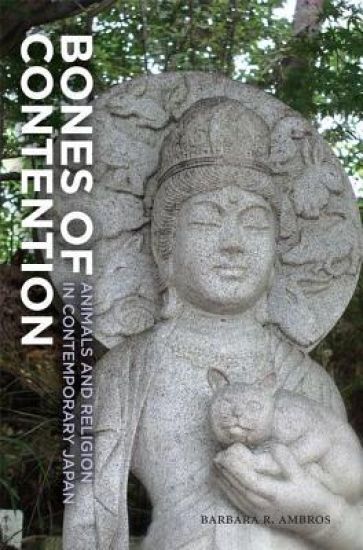
Since the 1990s the Japanese pet industry has grown to a trillion-yen business and estimates place the number of pets above the number of children under the age of fifteen. There are between 6,000 to 8,000 businesses in the Japanese pet funeral industry, including more than 900 pet cemeteries. Of these about 120 are operated by Buddhist temples, and Buddhist mortuary rites for pets have become an institutionalised practice. In Bones of Contention, Barbara Ambros investigates what religious and intellectual traditions constructed animals as subjects of religious rituals and how pets have been included or excluded in the necral landscapes of contemporary Japan.Pet mortuary rites are emblems of the ongoing changes in contemporary Japanese religions. The increase in single and nuclear-family households, marriage delays for both males and females, the falling birthrate and graying of society, the occult boom of the 1980s, the pet boom of the 1990s, the anti-religious backlash in the wake of the 1995 Aum Shinrikyo incident—all of these and more have contributed to Japan’s contested history of pet mortuary rites. Ambros uses this history to shed light on important questions such as: Who (or what) counts as a family member? What kinds of practices should the state recognise as religious and thus protect financially and legally? Is it frivolous or selfish to keep, pamper, or love an animal? Should humans and pets be buried together? How do people reconcile the deeply personal grief that follows the loss of a pet and how do they imagine the afterlife of pets? And ultimately, what is the status of animals in Japan? Bones of Contention is a book about how Japanese people feel and think about pets and other kinds of animals and, in turn, what pets and their people have to tell us about life and death in Japan today.

A comprehensive history of women in Japanese religious traditions Scholars have widely acknowledged the persistent ambivalence with which the Japanese religious traditions treat women. Much existing scholarship depicts Japan's religious traditions as mere means of oppression. But this view raises a question: How have ambivalent and even misogynistic religious discourses on gender still come to inspire devotion and emulation among women? In Women in Japanese Religions, Barbara R. Ambros examines the roles that women have played in the religions of Japan. An important corrective to more common male-centered narratives of Japanese religious history, this text presents a synthetic long view of Japanese religions from a distinct angle that has typically been discounted in standard survey accounts of Japanese religions. Drawing on a diverse collection of writings by and about women, Ambros argues that ambivalent religious discourses in Japan have not simply subordinated women but also given them religious resources to pursue their own interests and agendas. Comprising nine chapters organized chronologically, the book begins with the archeological evidence of fertility cults and the early shamanic ruler Himiko in prehistoric Japan and ends with an examination of the influence of feminism and demographic changes on religious practices during the "lost decades" of the post-1990 era. By viewing Japanese religious history through the eyes of women, Women in Japanese Religions presents a new narrative that offers strikingly different vistas of Japan's pluralistic traditions than the received accounts that foreground male religious figures and male-dominated institutions.
B.A.R.F. Junior - Artgerechte Rohernährung für Welpen und Junghunde
Barbara R. Messika; Sabine L. Schäfer
Kynos Verlag
2012
nidottu
Auch die kleinsten Hunde können schon von Anfang an nach den B.A.R.F.-Grundsätzen mit frischem Rohfutter ernährt werden. Die Autorinnen geben dazu umfangreiche Hilfestellungen mit vielen praktischen Futterplänen,Mengenangaben und Zutatenlisten. Die häufigsten Fragen werden ausführlich beantwortet und auf oft gehörte gesundheitliche Bedenken eingegangen. So fällt der Einstieg in die Rohernährung leicht.
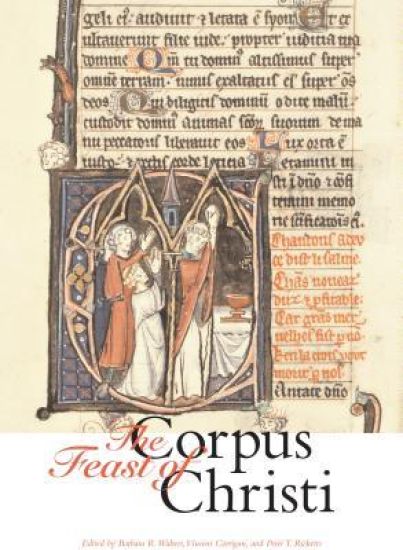
The Feast of Corpus Christi
Barbara R. Walters; Vincent Corrigan; Peter T. Ricketts
Pennsylvania State University Press
2006
sidottu
The feast of Corpus Christi, one of the most solemn feasts of the Latin Church, can be traced to the Fourth Lateran Council in 1215 and its resolution of disputes over the nature of the Eucharist. The feast was first celebrated in Liège in 1246, thanks largely to the efforts of a religious woman, Juliana of Mont Cornillon, who not only popularized the feast, but also wrote key elements of an original office.This volume presents for the first time a complete set of source materials germane to the study of the feast of Corpus Christi. In addition to the multiple versions of the original Latin liturgy, a set of poems in Old French, and their English translations, the book includes complete transcriptions of the music associated with the feast. An introductory essay lays out the historical context for understanding the initiation and reception of the feast.
The Feast of Corpus Christi
Barbara R. Walters; Vincent Corrigan; Peter T. Ricketts
Pennsylvania State University Press
2014
pokkari
The feast of Corpus Christi, one of the most solemn feasts of the Latin Church, can be traced to the Fourth Lateran Council in 1215 and its resolution of disputes over the nature of the Eucharist. The feast was first celebrated in Liège in 1246, thanks largely to the efforts of a religious woman, Juliana of Mont Cornillon, who not only popularized the feast, but also wrote key elements of an original office.This volume presents for the first time a complete set of source materials germane to the study of the feast of Corpus Christi. In addition to the multiple versions of the original Latin liturgy, a set of poems in Old French, and their English translations, the book includes complete transcriptions of the music associated with the feast. An introductory essay lays out the historical context for understanding the initiation and reception of the feast.
The New York area's premier forensic psychologist--the expert prosecutors turn to when a defendant claims insanity--looks back over her most celebrated cases to deliver a no-holds-barred critique of recent insanity defense abuses. Zeroing in on cases such as the Menendez brothers and Jeffrey Dahmer, Kirwin shows how unscrupulous defense attorneys and overzealous prosecutors have perverted the true purpose of the insanity defense. of photos.
Rigor in the K–5 Math and Science Classroom
Barbara R. Blackburn; Abbigail Armstrong
CRC Press
2019
sidottu
Learn how to incorporate rigorous activities in your math or science classroom and help students reach higher levels of learning. Expert educators and consultants Barbara R. Blackburn and Abbigail Armstrong offer a practical framework for understanding rigor and provide specialized examples for elementary math and science teachers. Topics covered include: Creating a rigorous environment High expectations Support and scaffolding Demonstration of learning Assessing student progress Collaborating with colleaguesThe book comes with classroom-ready tools, offered in the book and as free eResources on our website at www.routledge.com/9780367343194.
Rigor in the K–5 Math and Science Classroom
Barbara R. Blackburn; Abbigail Armstrong
CRC Press
2019
nidottu
Learn how to incorporate rigorous activities in your math or science classroom and help students reach higher levels of learning. Expert educators and consultants Barbara R. Blackburn and Abbigail Armstrong offer a practical framework for understanding rigor and provide specialized examples for elementary math and science teachers. Topics covered include: Creating a rigorous environment High expectations Support and scaffolding Demonstration of learning Assessing student progress Collaborating with colleaguesThe book comes with classroom-ready tools, offered in the book and as free eResources on our website at www.routledge.com/9780367343194.
Rigor for Students with Special Needs
Barbara R. Blackburn; Bradley S. Witzel
CRC Press
2021
nidottu
This practical guide explains how to raise the rigor for students with special needs so they can achieve higher levels of learning. Bestselling author Barbara R. Blackburn and intervention expert Bradley S. Witzel provide helpful information on assessment, planning, co-teaching models, high expectations, common obstacles, and emphasizing positive outcomes. This second edition offers new, expanded instructional strategies for literacy and math, as well as strategies that work across subject areas. In addition, each chapter is filled with tools and examples to help you implement the ideas.Perfect for general and special educators and supervisors, the book also comes with a study guide so you can collaborate on the book with building or district colleagues. With the practical information in this book, you’ll understand how to teach with higher expectations and rigor so that all students can feel successful.
Rigor for Students with Special Needs
Barbara R. Blackburn; Bradley S. Witzel
CRC Press
2021
sidottu
This practical guide explains how to raise the rigor for students with special needs so they can achieve higher levels of learning. Bestselling author Barbara R. Blackburn and intervention expert Bradley S. Witzel provide helpful information on assessment, planning, co-teaching models, high expectations, common obstacles, and emphasizing positive outcomes. This second edition offers new, expanded instructional strategies for literacy and math, as well as strategies that work across subject areas. In addition, each chapter is filled with tools and examples to help you implement the ideas.Perfect for general and special educators and supervisors, the book also comes with a study guide so you can collaborate on the book with building or district colleagues. With the practical information in this book, you’ll understand how to teach with higher expectations and rigor so that all students can feel successful.
How can you ensure students are engaged and learning at deeper levels? This book from bestselling author Barbara R. Blackburn is a treasure chest of more than 250 practical and effective tools that can be used across grade levels and subject areas to increase rigor, leading to higher levels of learning and success.Topics include scaffolding, differentiation, higher-level questions, high expectations, gradual release of responsibility, and more. This essential second edition offers more than 50 additional tools, updated research, and new topics such as teaching academic discourse, creating an environment of respect, and building students’ social and emotional learning. Rigor in Your Classroom will be your go-to resource throughout the school year, as you continually use new tools with your students. Bonus: The tools are accompanied by graphic organizers, charts, templates, and reproducibles for easy implementation.
Teachers are required to increase the rigor for students, but how? This book by bestselling author and rigor expert Barbara Blackburn has the answer! It is a treasure chest of more than 200 practical and highly-effective tools that can be used across grade levels and subject areas to increase student rigor, leading your students to higher engagement and deeper learning. Topics covered include… Asking higher-level questions Scaffolding to help all students achieve success Differentiating instruction and using modifications Fostering independence through gradual release of responsibility Increasing text difficulty and teaching close reading Setting high expectations Changing students’ views of success Encouraging effort and goal-setting Creating an environment that is conducive to learning Using effective grading policies and assessment tools Working with parents, colleagues, and administrators And much, much more!Rigor in Your Classroom will be your go-to resource throughout the school year, as you continually return to it to try new tools with your students. Bonus: The tools are accompanied by graphic organizers, charts, templates, and reproducibles for easy implementation.
Is Social Security Broke?
Barbara R. Bergmann; James Cleaver Bush
The University of Michigan Press
2000
nidottu
A funny, smart, and engaging book on Social Security? You bet! Let Bill and Betty Boomer, their parents Ed and Ethel Elderly, and the young married Steve and Sue Sprout take you through the thickets of this thorny issue. You will come to understand why people are so worried about Social Security, how it operates, how we can keep it going, the problems we would face under a privatized system, and why Americans have always chosen to shore up this important program. You will learn about the system and the current debates surrounding it--and find yourself enjoying it at the same time.Barbara R. Bergmann is Professor Emerita, University of Maryland and The American University. Jim Bush is the editorial cartoonist for the Providence Journal.
Is Social Security Broke?
Barbara R. Bergmann; James Cleaver Bush
The University of Michigan Press
2000
sidottu
A funny, smart, and engaging book on Social Security? You bet! Let Bill and Betty Boomer, their parents Ed and Ethel Elderly, and the young married Steve and Sue Sprout take you through the thickets of this thorny issue. You will come to understand why people are so worried about Social Security, how it operates, how we can keep it going, the problems we would face under a privatized system, and why Americans have always chosen to shore up this important program. You will learn about the system and the current debates surrounding it--and find yourself enjoying it at the same time.Barbara R. Bergmann is Professor Emerita, University of Maryland and The American University. Jim Bush is the editorial cartoonist for the Providence Journal.
At a time when women could not vote and very few were involved in the world outside the home, Annie Montague Alexander (1867-1950) was an intrepid explorer, amateur naturalist, skilled markswoman, philanthropist, farmer, and founder and patron of two natural history museums at the University of California, Berkeley. Barbara R. Stein presents a luminous portrait of this remarkable woman, a pioneer who helped shape the world of science in California, yet whose name has been little known until now. Alexander's father founded a Hawaiian sugar empire, and his great wealth afforded his adventurous daughter the opportunity to pursue her many interests. Stein portrays Alexander as a complex, intelligent, woman who - despite her frail appearance - was determined to achieve something with her life. Along with Louise Kellogg, her partner of forty years, Alexander collected thousands of animal, plant, and fossil specimens throughout western North America. Their collections serve as an invaluable record of the flora and fauna that were beginning to disappear as the West succumbed to spiraling population growth, urbanization, and agricultural development. Today at least seventeen taxa are named for Alexander, and several others honor Kellogg, who continued to make field trips after Alexander's death. Alexander's dealings with scientists and her encouragement - and funding - of women to do field research earned her much admiration, even from those with whom she clashed. Stein's extensive use of archival material, including excerpts from correspondence and diaries, allows us to see Annie Alexander as a keen observer of human nature who loved women and believed in their capabilities. Her legacy endures in the fields of zoology and paleontology and also in the lives of women who seek to follow their own star to the fullest degree possible.
When a person feels seen, they thrive and can share their best selves with the world. Seeing Autism guides professionals, community members, significant others, and parents to create environments that facilitate and allow autistics to join in partnerships. This book also helps autistics understand themselves and what they may need to feel safe, secure, and healthy in relationships. Seeing Autism pulls from the most current research on the core issues of autism and the voices of autistics themselves. By taking a developmental approach to social engagement, you will learn how to provide foundational practice for lifelong learning and relationships for yourself or someone you know of any age and any ability.Seeing Autism will help you to: -Understand the core issues of autism and why they need to be our focus with and for autistic children, teens, and adults-Learn how to create environments that ideally and respectfully address sensory needs-Engage with someone with autism in ways that help them feel respected, seen, and celebrated for who they are
Projection of a Metropolis
Barbara R Berman; Benjamin Chinitz; Edgar M Hoover
Harvard University Press
1960
sidottu